
The question “who owns JPMorgan Chase Bank” is one that often sparks curiosity, given the immense scale and influence of this financial titan. For many, the idea of ownership might conjure images of a single magnate, a founding family, or even the government. However, the reality of ownership for a global behemoth like JPMorgan Chase is far more intricate, reflecting the complex nature of modern corporate finance and the global investment landscape. In essence, JPMorgan Chase Bank, like most major publicly traded corporations, is owned by its shareholders. It’s a distributed ownership model, where millions of individual and institutional investors collectively hold stakes in the company, each with a fractional claim on its assets and earnings.
The Publicly Traded Reality: A Shareholder-Owned Entity
JPMorgan Chase & Co. is not a private enterprise but a publicly traded company, listed prominently on the New York Stock Exchange (NYSE) under the ticker symbol JPM. This fundamental characteristic dictates its ownership structure: it is owned by those who hold its shares (stock). When a company “goes public,” it sells portions of its ownership (shares) to investors in exchange for capital. These investors then become shareholders, and their collective holdings represent the company’s total ownership.
Dispelling Myths: No Single Owner
One of the most common misconceptions about massive corporations like JPMorgan Chase is that a single person, family, or even a small group of individuals holds ultimate control or ownership. While historical figures like J.P. Morgan himself founded the original entities that eventually merged to form the modern institution, their direct ownership has long been diluted and dispersed through decades of corporate evolution, mergers, acquisitions, and public offerings.
Today, there is no single individual or entity that owns a majority stake in JPMorgan Chase. The company’s ownership is highly fragmented across a vast array of investors worldwide. This distributed ownership is a hallmark of most large, established publicly traded companies, ensuring broad market participation and preventing concentrated control by a single party. This structure also implies that major decisions and strategic directions are subject to the influence of a diverse group of stakeholders, rather than the whims of one dominant owner.
The Role of Institutional Investors
While millions of individuals might own shares in JPMorgan Chase, the lion’s share of its stock is typically held by large institutional investors. These are professional organizations that manage vast sums of money on behalf of their clients. Examples include:
- Mutual Funds: Investment vehicles that pool money from many investors to purchase a diversified portfolio of securities, including JPM shares.
- Exchange-Traded Funds (ETFs): Similar to mutual funds but traded on stock exchanges like individual stocks. Many index-tracking ETFs hold JPM due to its inclusion in major indices like the S&P 500.
- Pension Funds: Funds established by employers or unions to provide retirement benefits for their employees or members. These funds often invest in stable, blue-chip companies like JPM to ensure long-term growth and income.
- Hedge Funds: Investment funds that use a variety of strategies to achieve high returns, often taking significant positions in major companies.
- Asset Managers: Firms like BlackRock, Vanguard, and State Street Global Advisors that manage portfolios for a wide range of clients, from individual investors to large institutions.
These institutional investors frequently hold significant, multi-billion-dollar stakes in JPMorgan Chase, not because they are trying to “control” the bank in a traditional sense, but because JPM is a component of the broader market and a core holding in diversified portfolios designed to track indices or generate long-term returns. Their ownership is strategic, reflecting their investment mandates and the perceived value of JPM stock.
Individual Investors and Diversified Portfolios
Beyond the colossal holdings of institutions, countless individual investors also own shares of JPMorgan Chase. These might be retail investors who purchase a few shares directly through a brokerage account, or indirectly through their retirement accounts (like 401(k)s or IRAs) which are often invested in mutual funds or ETFs that, in turn, hold JPM stock.
For individual investors, owning a piece of JPMorgan Chase is often part of a broader strategy to build a diversified investment portfolio. Investing in a financially sound, globally recognized bank can offer exposure to the financial sector, potential dividend income, and long-term capital appreciation. It signifies a belief in the bank’s stability, profitability, and future growth prospects.
Understanding JPMorgan Chase’s Ownership Structure
To truly grasp who “owns” JPMorgan Chase, it’s essential to look at the major players and the distribution of their holdings. While the exact percentages fluctuate daily with market trading, a consistent picture emerges of institutional dominance.
Large Institutional Holdings: Vanguard, BlackRock, State Street
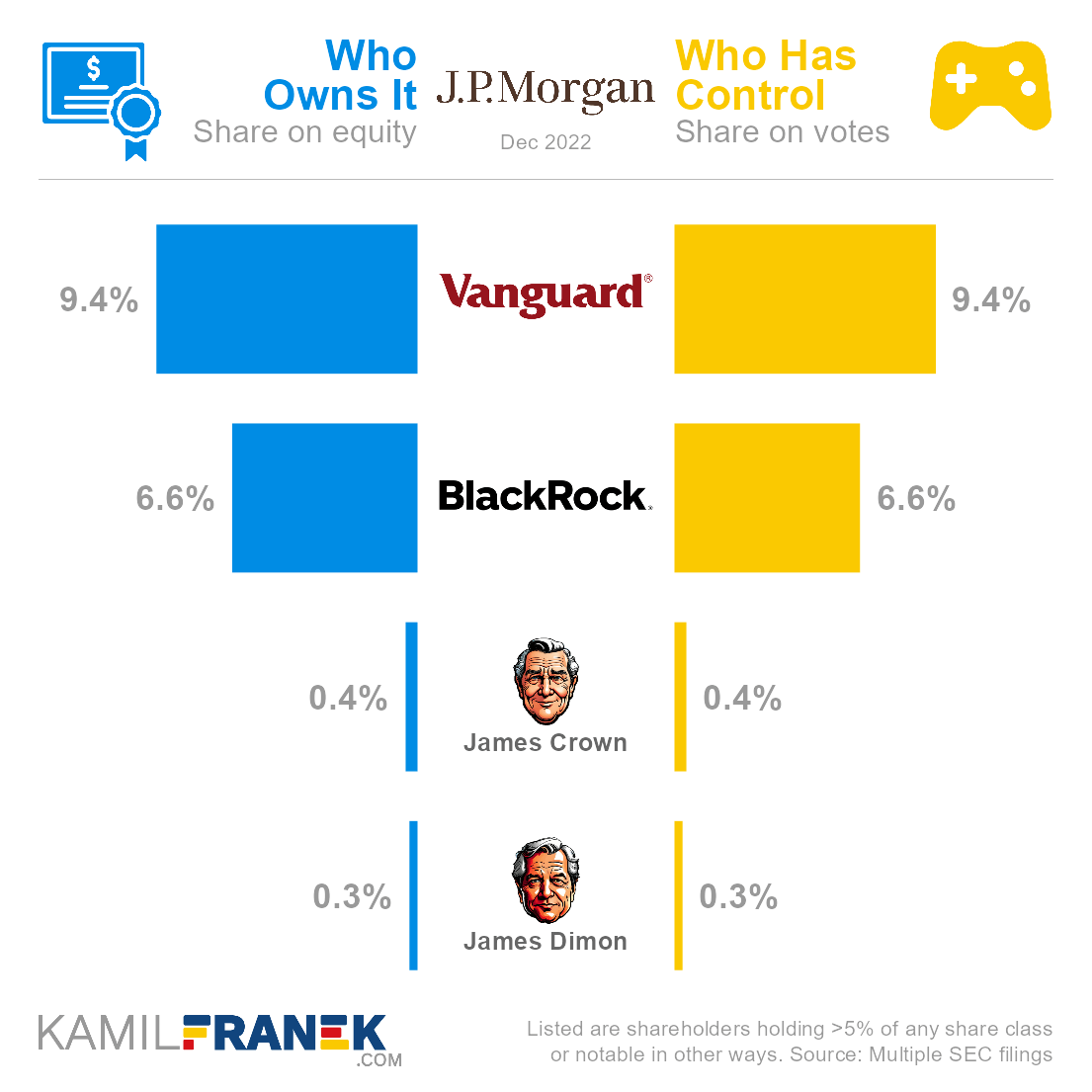
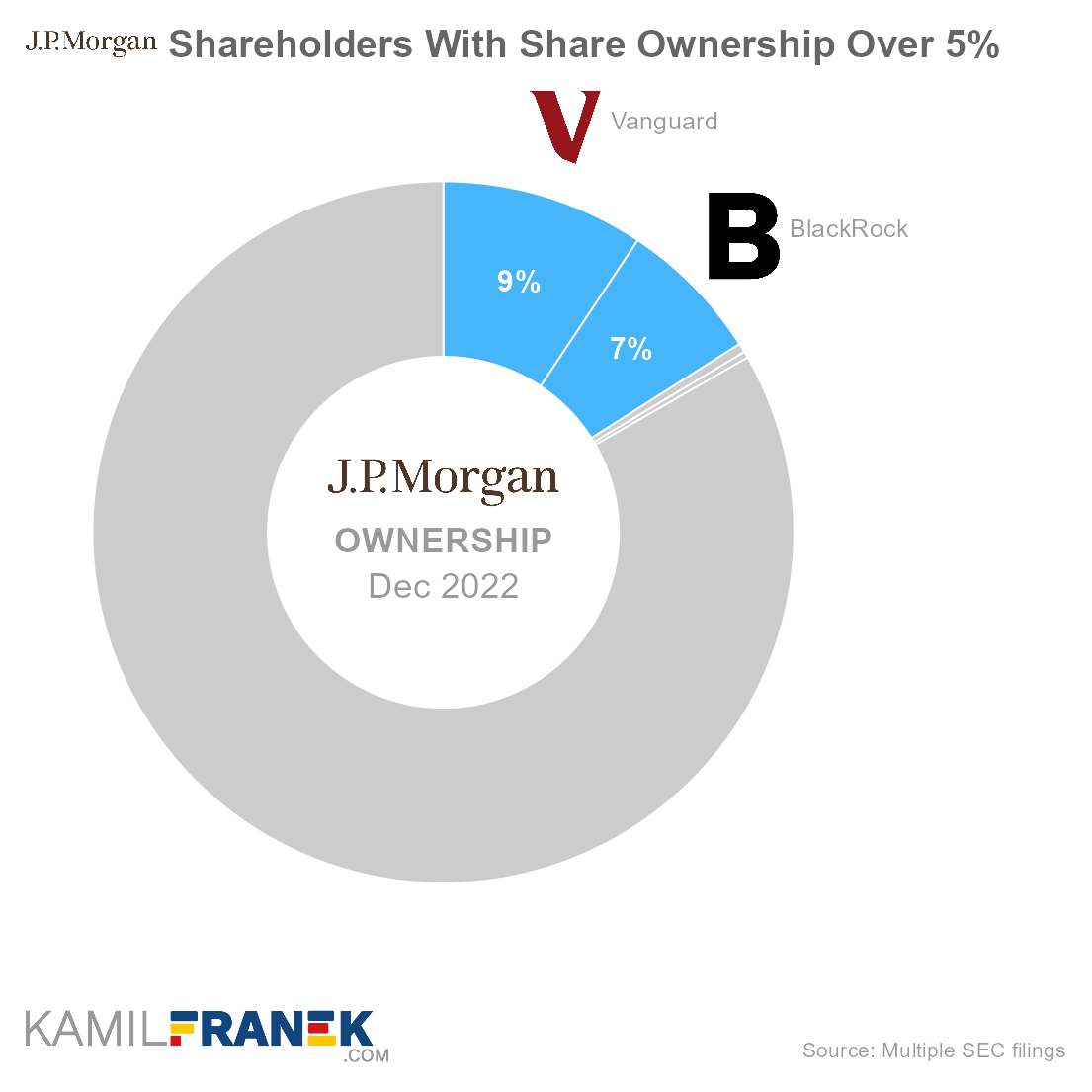
Leading the pack of JPMorgan Chase’s largest shareholders are typically the world’s most prominent asset management firms. As of recent data, companies like The Vanguard Group, BlackRock Inc., and State Street Global Advisors consistently rank among the top institutional owners. These firms collectively manage trillions of dollars in assets and hold substantial stakes in virtually every major publicly traded company.
For instance, it’s not uncommon for Vanguard or BlackRock to each hold over 5-8% of JPMorgan Chase’s outstanding shares. It’s crucial to understand that these holdings are not necessarily “proprietary” in the sense that the asset manager owns them for its own balance sheet. Rather, they manage these shares on behalf of their countless clients who invest in their various funds. So, when Vanguard is listed as a major owner, it means millions of individual investors, pension fund participants, and other institutional clients who invest through Vanguard’s funds are collectively JPM’s ultimate beneficial owners.
The Dynamics of Shareholder Power and Influence
While no single entity owns a controlling stake, the large institutional investors do exert significant influence. Their collective voting power in shareholder meetings, where decisions like electing board members or approving executive compensation are made, is substantial. This power allows them to advocate for corporate governance best practices, push for certain strategic directions (e.g., sustainability initiatives, executive accountability), and hold management accountable for financial performance.
However, this influence is rarely exercised as overt control. Rather, it’s a dynamic of engagement, dialogue, and oversight. Institutional investors, particularly the passive index fund managers, often prioritize long-term value creation, sound governance, and alignment with ESG (Environmental, Social, and Governance) principles, recognizing that these factors contribute to sustainable returns for their own investors.
Executive Leadership and Board Governance: Representation, Not Ownership
It’s also important to distinguish between management and ownership. While the executive leadership team, headed by the CEO (Jamie Dimon for JPMorgan Chase), runs the day-to-day operations and sets strategic direction, they do so as fiduciaries for the shareholders, not as owners in the primary sense. Executives and board members typically own shares in the company, often as part of their compensation packages, which aligns their interests with those of other shareholders. However, their collective ownership usually represents a tiny fraction of the company’s total outstanding shares.
The Board of Directors, elected by shareholders, plays a critical oversight role. They are responsible for appointing and overseeing the CEO, approving major corporate strategies, and ensuring the company operates in the best interests of its shareholders. The board is composed of both independent directors (who have no direct ties to the company’s management) and executive directors, ensuring a balance of perspectives and minimizing conflicts of interest.
Implications of Distributed Ownership for Investors and the Market
The distributed ownership model of JPMorgan Chase has profound implications for investors, the financial markets, and even the broader economy.
Transparency and Regulatory Oversight
As a publicly traded company, JPMorgan Chase is subject to stringent regulatory requirements, particularly from the U.S. Securities and Exchange Commission (SEC). This means the company must regularly disclose detailed financial information, corporate governance practices, and material events to the public. These disclosures, including quarterly and annual reports (10-Q and 10-K filings), provide a high degree of transparency into the company’s operations, financial health, and ownership structure.
This transparency is a direct benefit to investors, enabling them to make informed decisions based on reliable data. It also allows regulators to monitor the bank’s activities, ensuring compliance with banking laws and regulations designed to protect depositors, investors, and the stability of the financial system.
Shareholder Value and Corporate Performance
The primary objective of the management and board of a publicly traded company like JPMorgan Chase is to maximize shareholder value. This means making decisions that will ultimately increase the value of the company’s stock over time, either through capital appreciation (the stock price going up) or through dividend payments.
Corporate performance, therefore, is under constant scrutiny from investors. Strong earnings, efficient operations, strategic growth initiatives, and responsible risk management all contribute to a positive outlook for shareholders. Conversely, poor performance, scandals, or missteps can lead to a decline in share price and investor dissatisfaction. The market acts as a continuous feedback mechanism, rewarding success and penalizing failure, thereby encouraging management to act in the best interests of its diverse ownership base.
Investing in JPM: What It Means for Individual Portfolios
For an individual investor, owning JPM stock means becoming a fractional owner of one of the world’s most powerful financial institutions. It provides exposure to the global banking sector, diversified revenue streams from consumer banking, investment banking, asset management, and commercial banking. Investing in JPM can be seen as a vote of confidence in the stability and long-term growth of the financial industry.
However, like all stock investments, it comes with risks. The value of JPM shares can fluctuate based on market conditions, economic cycles, regulatory changes, and the bank’s own performance. Therefore, investors considering JPM for their portfolios typically evaluate its financial health, dividend history, growth prospects, and overall position within a well-diversified portfolio strategy.
How Ownership Influences Business Finance and Strategy
The collective ownership by shareholders directly shapes JPMorgan Chase’s business finance decisions and its long-term strategic direction.
Capital Allocation and Growth Initiatives
Shareholders expect their capital to be deployed effectively to generate returns. This means the bank’s management must make crucial decisions about capital allocation: how much to invest in new technologies, how much to expand into new markets, how much to allocate to various business lines, and how much to retain for regulatory capital requirements. These decisions are often informed by shareholder expectations for growth and profitability. Shareholders also influence merger and acquisition strategies, as major deals often require shareholder approval and significantly impact the company’s future trajectory.
Dividend Policies and Share Buybacks
A key way JPMorgan Chase returns value to its shareholders is through dividend payments – a portion of its earnings distributed to stockholders. The dividend policy is a critical financial decision, balancing the need to reinvest in the business for future growth with the desire to reward current shareholders. Share buybacks, where the company repurchases its own stock from the open market, are another mechanism to return capital to shareholders, often signaling management’s belief that the stock is undervalued and reducing the number of outstanding shares, thereby increasing earnings per share. Both of these financial strategies are closely watched by shareholders and reflect the company’s commitment to delivering shareholder value.
Long-Term Vision vs. Short-Term Shareholder Pressure
While management generally aims for long-term sustainable growth, the quarterly reporting cycle and the immediate demands of the stock market can sometimes create pressure for short-term performance. Balancing these two perspectives is a constant challenge for the leadership of publicly traded companies. Informed institutional investors, however, increasingly advocate for a long-term perspective, recognizing that sustainable value creation often requires strategic investments and patient capital, even if it impacts short-term earnings.
The Broader Landscape: Ownership of Major Financial Institutions
The ownership structure of JPMorgan Chase is not unique; it is representative of virtually all major global financial institutions.
Similarities Across Global Banks
From Bank of America to Citigroup, Wells Fargo, HSBC, or Deutsche Bank, the pattern holds true: these are publicly traded entities primarily owned by a vast network of institutional and individual shareholders. The scale and global reach of these banks necessitate broad capital bases that only public markets can provide. This model promotes capital mobility, efficient allocation of resources, and a degree of market discipline that would be absent in a privately held structure of such immense size.
The Interconnectedness of the Financial System
The distributed ownership model, particularly the significant holdings by global asset managers, highlights the interconnectedness of the modern financial system. When major institutions like BlackRock or Vanguard hold substantial stakes in numerous large banks and corporations across various sectors and geographies, it creates a complex web of financial relationships. This interconnectedness has implications for systemic risk, as issues affecting one major shareholder or a particular sector can ripple through the entire market.

The Significance for Economic Stability
Understanding who owns major banks like JPMorgan Chase is not just an academic exercise; it has real implications for economic stability. The health and governance of these financial institutions are paramount to the functioning of global commerce, capital markets, and the stability of national economies. The transparency and oversight inherent in the publicly traded, shareholder-owned model are crucial safeguards, promoting responsible management and helping to prevent the kind of concentrated power that could destabilize the financial system.
In conclusion, “who owns JPMorgan Chase Bank” is not a simple answer of a single person or entity. It is a complex tapestry of millions of shareholders – primarily large institutional investors managing funds for countless beneficiaries, alongside individual retail investors – all collectively owning a piece of this global financial powerhouse. This distributed ownership model is fundamental to its operation, governance, and its role within the broader global financial landscape, embodying the principles of modern corporate finance and investment.
aViewFromTheCave is a participant in the Amazon Services LLC Associates Program, an affiliate advertising program designed to provide a means for sites to earn advertising fees by advertising and linking to Amazon.com. Amazon, the Amazon logo, AmazonSupply, and the AmazonSupply logo are trademarks of Amazon.com, Inc. or its affiliates. As an Amazon Associate we earn affiliate commissions from qualifying purchases.