
Understanding how your Social Security benefits are calculated is a critical component of effective retirement planning. For many Americans, Social Security represents a foundational pillar of their financial security in their later years, providing a reliable income stream that can supplement pensions, 401(k)s, and other savings. However, the system for determining these benefits can appear complex and, at times, opaque. This article aims to demystify the process, providing a clear and comprehensive guide to understanding the factors that influence your Social Security payout, empowering you to make informed decisions about your financial future.

Social Security is more than just a retirement check; it’s a social insurance program that also provides disability and survivor benefits. While the basic premise is simple – you contribute throughout your working life, and the program pays you back – the specific amount you receive is far from one-size-fits-all. It depends on a unique interplay of your earnings history, the age at which you choose to claim benefits, and several other personal factors. Gaining clarity on these elements is not just an academic exercise; it’s a practical step toward building a robust and resilient financial plan for your retirement years.
Understanding the Foundation of Social Security Benefits
The cornerstone of your Social Security benefit determination lies in your work history and the contributions you’ve made to the system. The Social Security Administration (SSA) meticulously tracks your earnings, and these records form the basis of all future calculations. Without a solid understanding of these foundational elements, it’s impossible to accurately project your future benefits.
Earning Credits and Eligibility
The first hurdle to clear for Social Security eligibility is earning enough “credits.” These credits are the building blocks of your Social Security coverage. In 2024, you earn one credit for every $1,730 in earnings, up to a maximum of four credits per year. To qualify for retirement benefits, most individuals need to have accumulated 40 credits, which typically translates to 10 years of work. It’s important to note that these credits are based on your total annual earnings, not how many hours you work or how many employers you have. For example, if you earn $6,920 or more in 2024, you will have earned all four credits for that year, regardless of when those earnings occurred or how many different jobs contributed to that total.
Beyond retirement benefits, credits also determine eligibility for disability and survivor benefits, though the number of required credits can vary depending on your age at the time of disability or death. For instance, younger workers need fewer credits to qualify for disability benefits. Ensuring you’re on track to earn your 40 credits is the very first step in securing your Social Security future.
The Role of Your Earnings Record
Once you’ve met the credit requirement, the actual dollar amount of your benefit is primarily determined by your lifetime earnings. The SSA maintains a detailed record of your earnings for every year you’ve worked and paid Social Security taxes. This earnings record is paramount. The SSA uses your highest 35 years of indexed earnings to calculate your Primary Insurance Amount (PIA), which is the benefit you would receive if you claim at your Full Retirement Age (FRA).
It is crucial to periodically review your Social Security earnings record for accuracy. Errors, such as missing earnings from a past employer, can lead to a lower benefit payment. You can access your earnings record through your “my Social Security” account online, an essential tool for monitoring and correcting any discrepancies. Your earnings record is the immutable data set from which all calculations derive; its integrity directly impacts your financial well-being in retirement.
Key Factors Influencing Your Benefit Amount
In summary, three primary factors converge to shape your Social Security benefit:
- Credits Earned: As established, you need at least 40 credits to be eligible for retirement benefits.
- Lifetime Earnings: The higher your earnings over your 35 highest-earning years, the higher your Average Indexed Monthly Earnings (AIME), and consequently, your Primary Insurance Amount (PIA).
- Age at Which You Claim: This is perhaps the most significant variable you have direct control over, as it can significantly increase or decrease your monthly payout compared to your PIA. We will delve into this in more detail later.
These three elements, interwoven with specific SSA formulas, create your personalized benefit structure. Understanding how they interact is fundamental to forecasting your future income.
Navigating the Calculation Process
The actual calculation of your Social Security benefit involves a series of steps that translate your earnings record into your monthly payment. While the SSA handles these complex calculations, understanding the underlying methodology provides valuable insight into how your benefit is derived and what factors have the most impact.
The Average Indexed Monthly Earnings (AIME)
The first major step in the calculation process is determining your Average Indexed Monthly Earnings (AIME). The SSA doesn’t simply average your raw historical earnings. Instead, it “indexes” your past earnings to account for changes in the average wage level in the economy. This indexing ensures that your past earnings reflect their relative value at the time you earned them, providing a more accurate measure of your lifetime contributions in today’s terms. Earnings from the year you turn 60 and later are not indexed but are included at their nominal value.
From your entire indexed earnings history, the SSA selects the 35 years in which you had the highest indexed earnings. If you have fewer than 35 years of earnings, the missing years are counted as zeros, which can significantly lower your AIME. This underscores the importance of a long and consistent work history. Once the 35 highest indexed earning years are identified, these amounts are summed and then divided by 420 (the number of months in 35 years) to arrive at your AIME. This figure is the foundation upon which your PIA is built.
The Primary Insurance Amount (PIA) Formula
Once your AIME is established, the SSA uses a progressive three-part formula, incorporating “bend points,” to calculate your Primary Insurance Amount (PIA). The PIA is the monthly benefit you are entitled to if you claim exactly at your Full Retirement Age (FRA). The formula is designed to be progressive, meaning lower-income workers receive a higher percentage of their average indexed earnings back as benefits compared to higher-income workers.
For individuals who become eligible for retirement benefits in 2024, the PIA formula applies specific percentages to different tiers of your AIME:
- 90% of the first $1,174 of your AIME.
- 32% of your AIME over $1,174 and up to $7,078.
- 15% of your AIME over $7,078.
These “bend points” ($1,174 and $7,078 for 2024) are adjusted annually for inflation. For example, if your AIME is $4,000, your PIA would be calculated as: (90% of $1,174) + (32% of ($4,000 – $1,174)). This formula ensures a basic level of support for all beneficiaries while providing additional benefits for those with higher lifetime earnings, albeit at a decreasing percentage rate.
The Impact of Full Retirement Age (FRA)
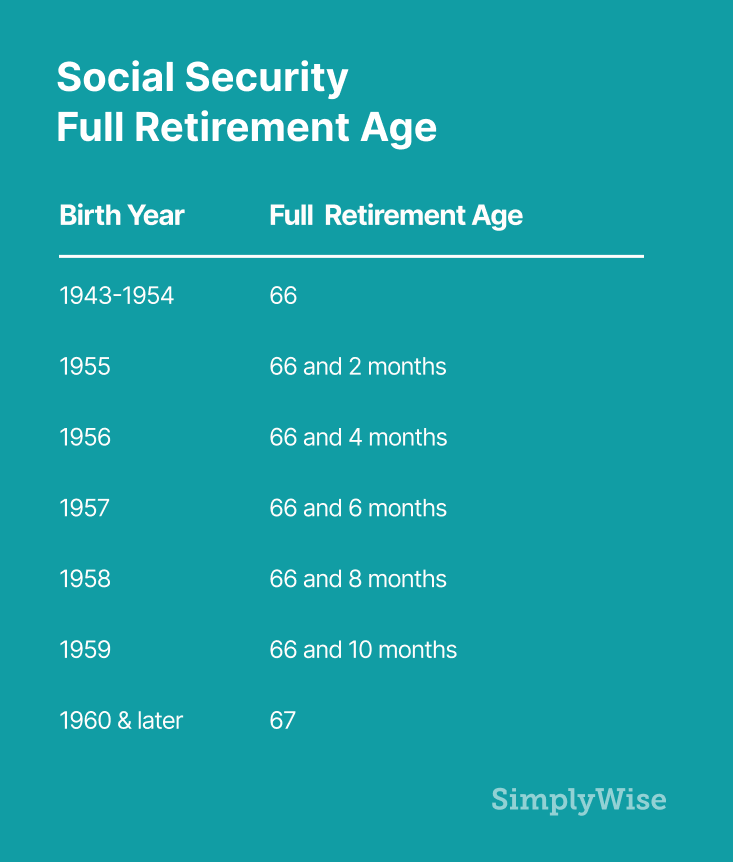
Your Full Retirement Age (FRA) is a crucial concept in Social Security planning. It’s the age at which you are eligible to receive 100% of your PIA. FRA is not universal; it depends on your birth year. For those born between 1943 and 1954, FRA is 66. For those born in 1960 or later, FRA is 67. For birth years in between, FRA gradually increases by a few months.
Claiming benefits before your FRA results in a permanent reduction of your monthly payment, while delaying benefits beyond your FRA can lead to a significant increase. Understanding your specific FRA is vital because it serves as the benchmark for calculating any adjustments (up or down) to your PIA based on your claiming age.
Strategic Decisions Affecting Your Benefits
While your earnings record and FRA form the backbone of your benefit, the most impactful decision you have control over is when you choose to start receiving benefits. This choice can lead to thousands of dollars difference over your lifetime and is a central element of Social Security optimization.
Claiming Age: Early vs. Late
The earliest you can claim retirement benefits is age 62, and the latest you can claim is age 70. The decision to claim early, at FRA, or to delay is a complex one, influenced by health, other retirement savings, longevity expectations, and family circumstances.
- Early Claiming (Age 62): Claiming benefits at age 62 offers immediate income, which can be appealing if you’re facing unexpected job loss, health issues, or simply wish to retire early. However, claiming early results in a permanent reduction of your monthly benefit. The reduction is typically around 25% to 30% compared to your PIA, depending on your FRA. This reduction is applied because you will theoretically receive benefits for a longer period. For example, if your FRA is 67, claiming at 62 means your benefit will be reduced by roughly 30%. This is a permanent reduction that applies for the rest of your life.
- Delaying Claiming (Up to Age 70): Conversely, delaying your claim past your FRA can significantly increase your monthly benefit through Delayed Retirement Credits (DRCs). For each year you defer claiming beyond your FRA, up to age 70, your benefit increases by a certain percentage, typically 8% per year. For someone with an FRA of 67, delaying until age 70 could result in a 24% increase (8% per year for three years) in their monthly benefit compared to their PIA. This is a powerful incentive for those who can afford to wait, providing a guaranteed, inflation-adjusted return on their deferred benefits that often outpaces other low-risk investments.
The “breakeven point” – the age at which the cumulative total benefits received from early claiming equals that of delayed claiming – is often around age 78-82. If you expect to live beyond this age, delaying benefits typically results in a higher cumulative lifetime payout.
Working While Receiving Benefits
If you claim Social Security benefits before your Full Retirement Age (FRA) and continue to work, your benefits may be temporarily reduced if your earnings exceed a certain annual limit. This is known as the “earnings test.” For 2024, if you are under FRA for the entire year, the SSA deducts $1 from your benefits for every $2 you earn above $22,320.
In the year you reach your FRA, a different earnings test applies: the SSA deducts $1 from your benefits for every $3 you earn above a higher limit ($59,520 in 2024) until the month you reach your FRA. Importantly, once you reach your FRA, the earnings test no longer applies, and you can earn as much as you like without your Social Security benefits being reduced. Any benefits withheld due to the earnings test are not permanently lost; your future benefits are recalculated at your FRA to account for the withheld amounts, effectively increasing your monthly payment from that point forward.
Spousal and Survivor Benefits
Social Security is not just for individual workers; it also provides benefits for spouses and survivors. A spouse can claim benefits based on their own earnings record or, if higher, up to 50% of their spouse’s PIA. If the spouse claims spousal benefits before their own FRA, the benefit is reduced. If divorced, a former spouse may also be eligible for benefits based on their ex-spouse’s record, provided the marriage lasted at least 10 years and other conditions are met.
Survivor benefits are paid to eligible family members (widows, widowers, children) upon the death of a worker. A surviving spouse can receive up to 100% of the deceased worker’s benefit if they claim at their own FRA or later. These benefits offer crucial financial protection for families and are an important consideration in retirement and estate planning. Understanding these family benefits can influence an individual’s claiming strategy, particularly in married couples where one spouse has significantly higher earnings.
Tools and Resources for Estimation
Navigating the complexities of Social Security benefits doesn’t have to be a solo endeavor. A variety of tools and professional resources are available to help you accurately estimate your future benefits and craft an optimal claiming strategy.
Your Social Security Statement
The single most important document for understanding your Social Security benefits is your personalized Social Security Statement. This statement provides an estimate of your future benefits at different claiming ages (62, FRA, and 70), your earnings history, and estimates for disability and survivor benefits. It’s recommended that you review this statement annually to ensure your earnings record is accurate and to track your benefit projections.
You can easily access your Social Security Statement by creating a “my Social Security” account online at the official SSA website (www.ssa.gov). This online portal is an invaluable resource, offering not only your statement but also various calculators and tools to help you model different claiming scenarios.
Online Calculators and Tools
Beyond your personalized statement, the SSA website offers several online calculators, including:
- Retirement Estimator: Provides instant, personalized estimates of your future retirement benefits based on your actual earnings record.
- Life Expectancy Calculator: Helps you estimate your life expectancy, a critical factor in determining the optimal claiming age.
- Benefit Calculators: Tools to help estimate survivor and disability benefits.
Numerous reputable third-party financial planning websites and software also offer Social Security calculators. While these can be helpful, always cross-reference their outputs with information from the official SSA website to ensure accuracy, as the SSA’s data is the definitive source.
Seeking Professional Guidance
For complex situations or for those who desire a more personalized and holistic approach to retirement planning, consulting with a qualified financial advisor is highly recommended. A financial planner can help you:
- Integrate your Social Security benefits into your overall retirement strategy, considering all your assets, income sources, and expenses.
- Analyze the pros and cons of different claiming strategies based on your individual health, longevity expectations, marital status, and other financial goals.
- Address complex scenarios involving spousal, survivor, or divorced spouse benefits.
- Advise on strategies for minimizing taxes on your Social Security benefits.
While online tools provide valuable estimates, a professional advisor can offer tailored advice, ensuring your Social Security claiming decision aligns perfectly with your broader financial objectives and optimizes your lifetime benefits.

Conclusion
Determining your Social Security benefits is a multifaceted process that integrates your lifetime earnings, the age you choose to claim, and various family circumstances. Far from a simple calculation, it’s a strategic decision that can significantly impact your financial well-being throughout your retirement years. By understanding the core concepts of earning credits, the AIME and PIA calculations, the critical role of your Full Retirement Age, and the implications of early versus delayed claiming, you gain the knowledge necessary to navigate this essential program.
Proactive engagement with your Social Security planning is key. Regularly reviewing your Social Security Statement, utilizing the online tools provided by the SSA, and considering professional financial advice are all crucial steps. Social Security is a foundational element of financial security for millions, and by taking an informed and strategic approach, you can maximize its potential and ensure it serves as a robust pillar in your comprehensive retirement plan. Don’t leave your benefits to chance; take control of your Social Security future today.
aViewFromTheCave is a participant in the Amazon Services LLC Associates Program, an affiliate advertising program designed to provide a means for sites to earn advertising fees by advertising and linking to Amazon.com. Amazon, the Amazon logo, AmazonSupply, and the AmazonSupply logo are trademarks of Amazon.com, Inc. or its affiliates. As an Amazon Associate we earn affiliate commissions from qualifying purchases.