
Understanding your monthly income is not just a good idea; it’s the cornerstone of sound financial management. Whether you’re an individual navigating personal expenses, a freelancer with fluctuating earnings, or a business owner analyzing profitability, accurately determining your monthly income provides the clarity needed to make informed financial decisions. Without this fundamental insight, budgeting becomes guesswork, financial goals remain elusive, and managing debt becomes an uphill battle. This comprehensive guide will walk you through the process, from identifying all your income streams to handling variable earnings and leveraging tools for ongoing accuracy.
The Imperative of Knowing Your Monthly Income
Before diving into the mechanics, it’s crucial to grasp why this exercise is so vital. Your monthly income figure is more than just a number; it’s the foundation upon which your entire financial life is built.

Foundation for Financial Planning
Every financial plan, from short-term saving goals to long-term retirement strategies, begins with an understanding of your income. It dictates how much you can realistically save, invest, or allocate towards specific objectives. Without a clear picture of your earnings, any plan you devise will be based on assumptions, significantly increasing the risk of financial shortfalls or missed opportunities. Knowing your income helps you set achievable milestones and track your progress effectively, providing a roadmap to financial security and prosperity.
Budgeting and Expense Management
Perhaps the most immediate and tangible benefit of knowing your monthly income is its role in budgeting. A budget is essentially a spending plan that helps you track where your money goes. To create an effective budget, you need to know exactly how much money you have coming in each month. This allows you to allocate funds to different categories – housing, food, transportation, entertainment, savings – ensuring that your outflows do not exceed your inflows. When your income is precisely determined, you can identify areas where you might be overspending, make necessary adjustments, and proactively manage your finances to avoid debt and build wealth. It empowers you to live within your means and direct your money purposefully.
Setting Financial Goals and Milestones
From saving for a down payment on a house to planning a dream vacation or building an emergency fund, financial goals require dedicated resources. Your monthly income directly influences how quickly you can achieve these goals. By knowing your precise income, you can realistically assess how much you can afford to put aside each month, set realistic timelines, and adjust your goals if necessary. It transforms abstract aspirations into concrete, actionable steps, allowing you to celebrate milestones and stay motivated on your financial journey. This clarity is invaluable for staying disciplined and committed to your long-term objectives.
Impact on Loan Applications and Creditworthiness
Financial institutions, landlords, and other creditors will invariably ask about your income when you apply for loans, mortgages, or even rental agreements. They use this information to assess your ability to repay debt and determine your creditworthiness. Providing an accurate and well-documented account of your monthly income can significantly improve your chances of approval and potentially secure better terms. Misrepresenting or being uncertain about your income can lead to rejections or less favorable interest rates, highlighting the practical implications of precise income determination beyond just personal planning.
Identifying and Categorizing Your Income Streams
To accurately determine your monthly income, you must first meticulously identify every source of money flowing into your accounts. Many people underestimate the various ways they receive income, leading to an incomplete picture.
W-2 Employment Income (Salaries and Wages)
For most individuals, this is the most straightforward category. If you are employed by a company, your primary income will typically come in the form of a salary or hourly wages. This is usually documented on a W-2 form at the end of the year. For monthly income calculation, you’ll refer to your pay stubs. It’s crucial to distinguish between your gross pay (the total amount earned before deductions) and your net pay (what you actually receive after taxes, benefits, and other deductions). While gross pay is your total compensation, net pay is what directly impacts your monthly spending and savings capacity.
Self-Employment and Freelance Income (1099 Income)
This category includes income from independent contractor work, consulting, freelance projects, small businesses, or gig economy activities. Unlike W-2 income, this often involves varying amounts, different clients, and no employer-withheld taxes. For self-employed individuals, keeping diligent records of all invoices, payments received, and business expenses is paramount. Your monthly income in this category is your total revenue minus any direct business expenses incurred for that period. This net figure is what you truly take home and on which you’ll typically pay self-employment taxes.
Investment and Passive Income (Dividends, Interest, Rental Income)
Many individuals overlook income generated from their assets. This can include:
- Dividends: Payments from stocks or mutual funds.
- Interest: Earnings from savings accounts, bonds, or Certificates of Deposit (CDs).
- Rental Income: Money received from properties you own and lease out, minus associated expenses (mortgage interest, property taxes, maintenance).
- Royalties: Income from intellectual property like books, music, or patents.
- Annuities: Regular payments from an insurance product.
These sources can be sporadic or consistent. For monthly calculation, it’s often best to sum up the year’s expected income from these sources and divide by 12, especially if they don’t arrive monthly.
Other Income Sources (Alimony, Benefits, Gifts, Side Gigs)
Don’t forget less conventional or more sporadic income streams:
- Alimony or Child Support: Regular payments received post-divorce or for child care.
- Government Benefits: Social Security, disability benefits, unemployment benefits.
- Gifts: While often one-off, regular financial gifts from family can be considered.
- Side Gigs: Income from occasional jobs, selling items online, or small personal services.
- Tax Refunds: While not regular, large refunds can be factored in as a bonus.
It’s important to differentiate between truly recurring “other” income and one-off windfalls when determining your regular monthly income figure.
Gross vs. Net Income: Understanding the Difference
This distinction is critical for accurate financial planning.
- Gross Income: The total amount of money you earn before any deductions are taken out. This includes your salary, wages, bonuses, commissions, and the full amount from self-employment before expenses and taxes.
- Net Income: Also known as “take-home pay,” this is the amount of money you actually receive after all mandatory and voluntary deductions are subtracted from your gross income. Deductions can include federal, state, and local taxes, Social Security, Medicare, health insurance premiums, retirement contributions (401k, IRA), union dues, and other pre-tax or post-tax withholdings.
For budgeting and day-to-day spending, net income is the figure you should primarily focus on. For loan applications or broader financial analysis, both gross and net figures might be relevant.
Methods for Calculating Consistent and Fixed Income
For individuals with stable employment, determining monthly income is generally straightforward, though still requires attention to detail.
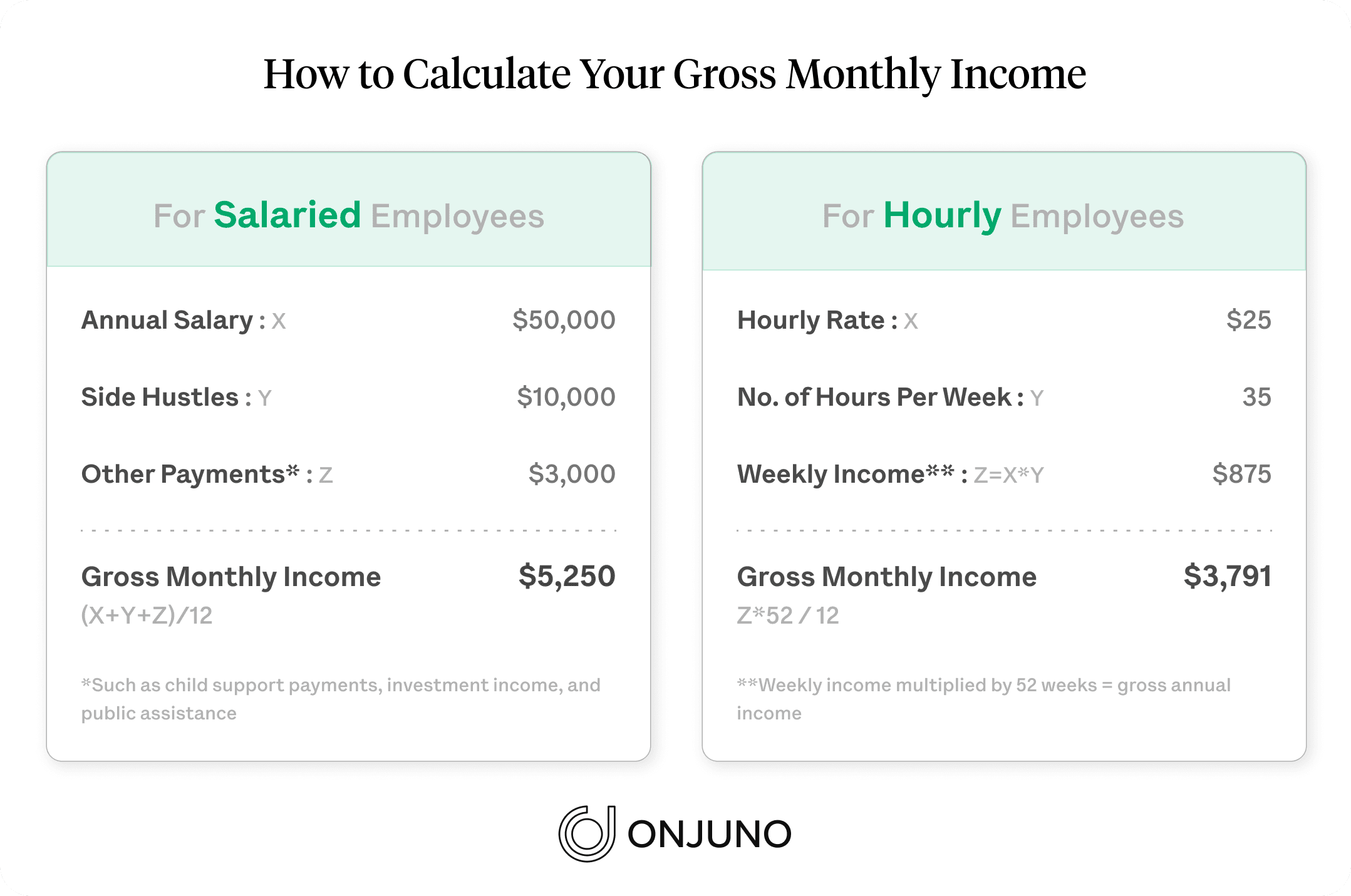
Salaried Employees: The Straightforward Approach
If you receive a fixed salary, your gross monthly income is simply your annual salary divided by 12. However, the crucial step is to calculate your net monthly income. You’ll need to look at your pay stubs.
- If paid bi-weekly (26 times a year): Multiply your net bi-weekly pay by 26, then divide by 12.
- If paid semi-monthly (24 times a year): Multiply your net semi-monthly pay by 24, then divide by 12.
- If paid weekly (52 times a year): Multiply your net weekly pay by 52, then divide by 12.
Always use your net pay to get an accurate representation of what’s available for your monthly expenses and savings.
Hourly Workers: Projecting Your Regular Hours
For hourly employees, the calculation depends on the consistency of your hours.
- Consistent Hours: If you work a fixed number of hours each week (e.g., 40 hours), calculate your gross weekly pay (hourly rate x hours) and then factor in deductions based on your pay stub to find your net weekly pay. Multiply this by 52 (weeks in a year) and divide by 12 (months) to get your average net monthly income.
- Variable Hours: If your hours fluctuate, it’s best to average your net pay over a reasonable period (e.g., the last three to six months) to get a more realistic monthly figure. Sum up your total net earnings for that period and divide by the number of months.
Accounting for Deductions and Pre-Tax Contributions
This is where many people make mistakes. Your gross pay is rarely what hits your bank account. Deductions can significantly reduce your take-home pay. These include:
- Mandatory Deductions: Federal income tax, state income tax (if applicable), Social Security (FICA), Medicare.
- Voluntary Deductions (Pre-tax): Contributions to 401(k), 403(b), traditional IRA, Health Savings Accounts (HSAs), Flexible Spending Accounts (FSAs), health insurance premiums, dental, vision. These reduce your taxable income.
- Voluntary Deductions (Post-tax): Roth 401(k) contributions, life insurance premiums, union dues, garnishments.
When determining your net monthly income, ensure all these deductions are accurately subtracted from your gross earnings. Your pay stub is the most reliable source for these figures.
Annualizing and Averaging for Monthly Figures
For any income that isn’t paid monthly (e.g., quarterly bonuses, annual dividends), it’s best to annualize the expected amount and then divide by 12 to get an average monthly figure. For instance, if you expect a $2,400 bonus annually, you can add $200 ($2400/12) to your average monthly income. This approach helps normalize fluctuating or infrequent payments into a stable monthly equivalent for budgeting purposes. Be conservative with variable bonuses; only include amounts that are reasonably certain.
Strategies for Taming Variable and Irregular Income
For freelancers, small business owners, or anyone with fluctuating income, determining a reliable monthly figure requires a more strategic approach than simply looking at a pay stub.
The Look-Back Method: Averaging Past Earnings
One of the most effective ways to estimate variable income is to look at your earnings over a historical period.
- Choose a timeframe: A minimum of three to six months is good, but a full year (12 months) is ideal as it accounts for seasonal fluctuations.
- Sum total net income: Add up all your net income (revenue minus business expenses) from all variable sources for your chosen period.
- Calculate the average: Divide the total sum by the number of months in your chosen period.
This average becomes your estimated monthly income. While it’s a historical figure, it often provides the most realistic basis for future budgeting. For example, if you earned $30,000 net over the past 12 months, your average monthly income is $2,500.
Forecasting Future Income: Realistic Projections
While historical data is solid, sometimes you need to project forward, especially if your business is new or experiencing rapid growth/decline.
- Current Contracts: Account for any existing contracts or retainer clients that guarantee a certain level of income.
- Pipeline Analysis: Estimate potential income from leads, proposals, or projects currently in your sales pipeline, applying a realistic conversion rate.
- Industry Trends: Consider market demand, seasonal trends in your industry, and any upcoming changes that might impact your work.
- Conservative Estimates: Always err on the side of caution. It’s better to underestimate your income and be pleasantly surprised than to overestimate and face shortfalls.
Use forecasting as a supplementary tool to the look-back method, adjusting your average upwards or downwards based on well-justified future expectations.
Building a Buffer for Fluctuations
One of the biggest challenges with variable income is managing cash flow. It’s prudent to account for the “lean months” by building a financial buffer.
- Emergency Fund: Aim for at least 3-6 months of living expenses in an easily accessible savings account. This is crucial for covering your costs during periods of low income.
- Income Smoothing: Some self-employed individuals open a separate savings account where they deposit a portion of their high-income months. During low-income months, they draw from this account to supplement their earnings, effectively “smoothing” their monthly take-home pay to a consistent level.
This strategy doesn’t change your actual monthly income, but it provides stability and predictability to your available monthly funds.
Tracking Business Revenue and Expenses for Net Profit
For true self-employment or small business income, the calculation isn’t just about revenue; it’s about net profit.
- Revenue Tracking: Meticulously record all income received from sales, services, or contracts.
- Expense Tracking: Keep detailed records of all business-related expenses (software subscriptions, office supplies, marketing costs, travel, etc.). Categorize them for tax purposes.
- Tax Considerations: Remember that as a self-employed individual, you are responsible for paying self-employment taxes (Social Security and Medicare), as well as estimated federal and state income taxes. It’s wise to set aside a portion of each payment for taxes, usually 25-35% depending on your income bracket.
Your “monthly income” from a business perspective is your net profit after all business expenses, but before personal taxes and owner draws. For personal budgeting, you’d then subtract your estimated tax liability to arrive at your personal net disposable income. Utilizing accounting software can greatly simplify this process.
Tools and Best Practices for Ongoing Income Tracking
Accurately determining your monthly income isn’t a one-time task; it’s an ongoing discipline. Leveraging the right tools and establishing good habits ensures you maintain a precise and up-to-date financial picture.
Spreadsheet Templates and Manual Tracking
For those who prefer a hands-on approach, a simple spreadsheet (Google Sheets, Excel) can be an incredibly powerful tool.
- Columns: Create columns for date, income source, gross amount, deductions (if applicable), net amount, and notes.
- Rows: Each row represents a specific payment received.
- Formulas: Use basic formulas to sum up your net income for the month and calculate averages.
- Categorization: Add tabs or sections for different income types (W-2, freelance, investments) to keep things organized.
While manual, this method offers complete control and customization. It forces you to actively engage with your income data, often leading to a deeper understanding of your financial flow.
Budgeting Software and Apps
For a more automated and integrated approach, numerous budgeting software and apps can connect directly to your bank accounts and credit cards, automatically categorizing transactions and providing a real-time overview of your income and expenses.
- Popular Options: Mint, YNAB (You Need A Budget), Personal Capital, Quicken, Simplifi by Quicken.
- Features: These tools often include features like income tracking dashboards, goal setting, net worth calculations, and alerts.
- Benefits: Automation reduces manual entry errors, provides instant insights, and helps you visualize your financial situation with graphs and reports. They are particularly useful for those with multiple income streams or complex financial lives. While they can auto-categorize, it’s always good practice to review and confirm the accuracy of their classifications.
Financial Advisors and Accountants
For complex income situations, business owners, or high-net-worth individuals, consulting with financial professionals can be invaluable.
- Accountants: Can help track business income and expenses, ensure compliance with tax regulations, prepare financial statements, and provide advice on tax planning. They are essential for accurate net income calculations for self-employed individuals.
- Financial Advisors: Offer broader financial planning services, including income management as part of a holistic wealth management strategy. They can help you integrate your income with your investment goals, retirement planning, and estate planning.
These professionals bring expertise and an objective perspective, ensuring accuracy and optimizing your financial strategies, especially when dealing with varied and complex income sources.

Regular Review and Adjustment
Determining your monthly income is not a static exercise. Your income sources, amounts, and deductions can change over time.
- Monthly Check-ins: At least once a month, review your income figures. Compare them against your budget and financial goals.
- Quarterly or Annual Review: Conduct a more thorough review quarterly or annually, especially if you have variable income. This is a good time to reassess averages and adjust projections.
- Life Events: Any significant life event (new job, career change, marriage, birth of a child, new business venture) should trigger an immediate re-evaluation of your monthly income and financial plan.
By regularly reviewing and adjusting your income determination methods, you ensure that your financial decisions are always based on the most accurate and current information, leading to greater financial stability and peace of mind.
In conclusion, knowing how to accurately determine your monthly income is a foundational skill for anyone seeking financial control and independence. By systematically identifying all your income streams, distinguishing between gross and net earnings, employing appropriate calculation methods for both consistent and variable income, and utilizing effective tracking tools, you equip yourself with the insights needed to budget effectively, set achievable goals, and navigate your financial journey with confidence.
aViewFromTheCave is a participant in the Amazon Services LLC Associates Program, an affiliate advertising program designed to provide a means for sites to earn advertising fees by advertising and linking to Amazon.com. Amazon, the Amazon logo, AmazonSupply, and the AmazonSupply logo are trademarks of Amazon.com, Inc. or its affiliates. As an Amazon Associate we earn affiliate commissions from qualifying purchases.