
The Affordable Care Act (ACA), widely known as Obama Care, represents a landmark piece of legislation designed to expand health insurance coverage across the United States. For millions, it has opened doors to essential health benefits, but a fundamental question remains for both current enrollees and those considering their options: “How much is Obama Care?” The answer is far from a single number; it’s a dynamic calculation influenced by a multitude of personal, financial, and geographic factors. Understanding the true cost of ACA plans goes beyond just the monthly premium; it encompasses deductibles, copayments, coinsurance, and crucial financial assistance programs that can dramatically alter the final bill. This article will delve into the financial architecture of the ACA, breaking down its various cost components and illustrating how individuals and families can navigate the system to make informed financial decisions about their healthcare. By demystifying these elements, we aim to provide a clearer picture of the real financial commitment involved and empower consumers to select plans that align with their personal finance goals and health needs.
Understanding the Core Components of ACA Costs
When evaluating the cost of an ACA plan, it’s essential to look beyond the headline premium and understand the full spectrum of expenses you might incur. These components collectively determine your total out-of-pocket spending on healthcare throughout the year.
Premiums: Your Monthly Payment for Coverage
The premium is the most straightforward cost component: it’s the fixed amount you pay, usually monthly, to maintain your health insurance coverage. Think of it as your subscription fee for access to a network of healthcare services. However, this seemingly simple figure is influenced by several critical factors:
- Age: Generally, older individuals face higher premiums because they are statistically more likely to utilize healthcare services. The ACA limits how much more older adults can be charged compared to younger adults (typically a 3:1 ratio).
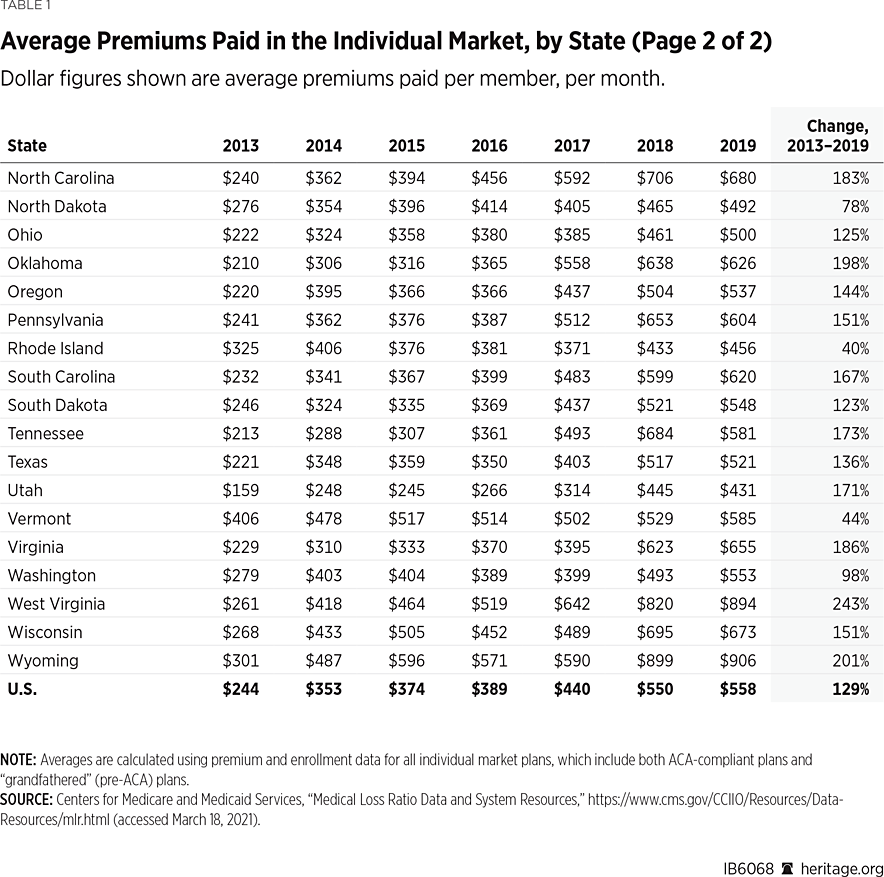
- Geographic Location: Premiums vary significantly by state and even by county within a state. This is due to differences in local healthcare costs, the number of competing insurers in the market, state regulations, and regional healthcare utilization patterns. A competitive market with more insurers often leads to lower premiums.
- Plan Metal Tier: ACA plans are categorized into metal tiers: Bronze, Silver, Gold, and Platinum. These tiers reflect the percentage of healthcare costs the plan is expected to cover on average:
- Bronze: Covers approximately 60% of costs; generally has the lowest premiums but highest out-of-pocket costs (deductibles, copays, coinsurance).
- Silver: Covers approximately 70% of costs; moderate premiums and out-of-pocket costs. Crucially, Silver plans are the only ones eligible for Cost-Sharing Reductions (CSRs), making them a unique option for lower-income individuals.
- Gold: Covers approximately 80% of costs; higher premiums but lower out-of-pocket costs.
- Platinum: Covers approximately 90% of costs; highest premiums but lowest out-of-pocket costs.
The choice of tier is a strategic financial decision, balancing lower monthly payments against potentially higher costs when you actually need care.
- Tobacco Use: Insurers are permitted to charge tobacco users higher premiums, although the specific surcharge amount can vary by state and is capped by federal law.
- Individual vs. Family Plans: A plan covering a single individual will naturally have a lower premium than one covering a couple or an entire family.
Deductibles: What You Pay Before Your Plan Kicks In
Your deductible is the amount of money you must pay out-of-pocket for covered medical services before your health insurance plan begins to pay. For example, if your plan has a $3,000 deductible, you would generally need to pay the first $3,000 of your medical bills yourself before your insurer starts contributing. Preventive services, as mandated by the ACA, are typically covered 100% even before you meet your deductible, but most other services (hospital stays, specialist visits, certain prescription drugs) will count towards it. Plans with lower monthly premiums often come with higher deductibles, requiring careful financial planning to ensure you can cover these initial costs should you need significant medical care.
Copayments and Coinsurance: Shared Costs for Services
Once your deductible is met, your plan doesn’t necessarily cover 100% of subsequent costs immediately. This is where copayments and coinsurance come into play:
- Copayment (Copay): A fixed amount you pay for a covered healthcare service after you’ve met your deductible. For instance, you might pay a $30 copay for a doctor’s visit, and your insurer covers the rest of the visit’s cost. Some plans offer copays for certain services (like primary care visits) even before the deductible is met.
- Coinsurance: A percentage of the cost of a covered healthcare service that you pay after you’ve met your deductible. If your plan’s coinsurance is 20% for a hospital stay, and the bill is $10,000 after your deductible is met, you would pay $2,000 (20%), and your insurer would pay $8,000 (80%).
Both copayments and coinsurance contribute to your overall out-of-pocket spending and should be factored into your financial calculations for healthcare.
Out-of-Pocket Maximum: Your Financial Safety Net
The out-of-pocket maximum (OOP max) is a crucial protection feature of ACA plans. It’s the most you will have to pay for covered services in a plan year. Once you reach this limit, your health insurance plan pays 100% of the cost of all covered essential health benefits for the remainder of the year. This maximum includes payments towards your deductible, copayments, and coinsurance. It does not typically include your monthly premiums, payments for services not covered by your plan, or out-of-network care if you have an HMO or EPO plan. Understanding your OOP max is vital for financial planning, as it sets an upper limit on your potential healthcare expenditures in a given year, providing a significant safeguard against catastrophic medical bills.
The Role of Financial Assistance: Making ACA Affordable
For many individuals and families, the most significant factor in determining the actual cost of “Obama Care” is the availability of financial assistance programs. These subsidies are designed to make coverage more accessible and affordable, particularly for those with modest incomes.
Premium Tax Credits (Subsidies): Reducing Your Monthly Premiums
Premium Tax Credits (PTCs), often simply referred to as subsidies, are funds provided by the government to help eligible individuals and families lower their monthly health insurance premiums. These credits are paid directly to your insurance company, reducing the amount you owe each month. You can also choose to pay the full premium and claim the credit when you file your taxes, though most opt for the upfront reduction.
- Eligibility Criteria: Eligibility for PTCs is primarily based on your household income relative to the Federal Poverty Level (FPL) and your household size. Generally, individuals and families with incomes between 100% and 400% of the FPL may qualify.
- Income Brackets: The American Rescue Plan (ARP) and subsequently the Inflation Reduction Act (IRA) significantly enhanced these subsidies, expanding eligibility and increasing the amount of financial aid available. Under current provisions (extended through 2025), no one pays more than 8.5% of their household income for the benchmark (second-lowest cost Silver plan) premium, regardless of how high their income is, provided they do not have access to affordable employer-sponsored coverage. This “subsidy cliff” removal has made coverage affordable for more middle-income households.
- How They Work: When you apply for coverage through Healthcare.gov or your state marketplace, you’ll provide income and household information. The marketplace then calculates your estimated PTC, which you can apply directly to your chosen plan’s premium. It’s crucial to report any significant changes in income or household size throughout the year, as this can affect your subsidy eligibility and amount.
Cost-Sharing Reductions (CSRs): Lowering Deductibles and Copays
Cost-Sharing Reductions (CSRs) are a less visible but equally powerful form of financial assistance. Unlike Premium Tax Credits, which reduce your monthly premiums, CSRs lower your out-of-pocket costs when you actually use healthcare services. This means lower deductibles, copayments, and coinsurance.
- Eligibility: CSRs are available to individuals and families with incomes up to 250% of the FPL.
- Exclusive to Silver Plans: A key feature of CSRs is that they are only available if you enroll in a Silver-tier plan. If you qualify for CSRs and choose a Bronze or Gold plan, you will not receive these reductions in your out-of-pocket costs. This makes Silver plans particularly attractive for lower-income individuals who qualify for CSRs, as they effectively get a plan with Gold or even Platinum-like out-of-pocket costs for a Silver plan premium (which is further reduced by PTCs).
- Impact: CSRs can significantly reduce the financial burden of receiving medical care. For example, a Silver plan’s typical $5,000 deductible might be reduced to $1,000 or even a few hundred dollars for someone qualifying for strong CSRs. This provides a robust financial safety net for those who need it most.
Factors Influencing Your Specific ACA Costs
Beyond the general cost components and financial assistance, several personal and market-driven elements will uniquely shape your individual or family’s ACA costs. Understanding these can help you strategize your plan selection.
Geographic Location: Where You Live Matters
As mentioned, premiums vary considerably based on where you reside. State-level regulations, the number of insurance companies offering plans in your specific rating area (often a county), and the overall cost of healthcare services in that region all contribute to these variations. Some states have more robust markets with multiple insurers competing for business, leading to more affordable options. Others might have fewer choices, potentially driving up costs. This makes comparative shopping within your local marketplace essential.
Age and Tobacco Use: Personal Demographics

Your age is a primary rating factor, with premiums increasing as you get older, up to a certain limit (3:1 ratio of oldest to youngest enrollee). This means a 60-year-old will pay more than a 30-year-old for the same plan, even if both are healthy. Similarly, insurers are allowed to charge a tobacco surcharge, adding up to 50% to your premium in some states, for those who use tobacco products. These demographic factors are fixed for an individual and directly impact the baseline premium before any subsidies are applied.
Plan Metal Tiers: Bronze, Silver, Gold, Platinum
The metal tier you select is perhaps the most direct financial lever you have. Each tier represents a different actuarial value—the average percentage of medical costs the plan pays.
- Bronze: Ideal for those who anticipate minimal healthcare use and want the lowest possible monthly premium, but are prepared for potentially high out-of-pocket costs if they need significant care. It’s a balance of low premium, high deductible.
- Silver: A popular choice due to its balance of moderate premiums and out-of-pocket costs. Crucially, Silver plans are the only ones eligible for Cost-Sharing Reductions (CSRs), making them the optimal choice for lower-income individuals who qualify for these additional subsidies.
- Gold: Suits those who expect to use a moderate amount of healthcare services and prefer to pay higher monthly premiums in exchange for lower deductibles and copays when they seek care.
- Platinum: Best for individuals who anticipate frequent or extensive healthcare needs and are willing to pay the highest premiums to minimize out-of-pocket expenses for medical services.
Choosing the right tier requires a careful assessment of your anticipated healthcare usage and your financial capacity to handle potential deductibles and copayments.
Household Income and Size: The Basis for Subsidies
Your household’s Modified Adjusted Gross Income (MAGI) and the number of people in your tax household are the fundamental criteria for determining your eligibility for Premium Tax Credits and Cost-Sharing Reductions. The marketplace uses your estimated annual income to project your subsidy eligibility. A lower income relative to the FPL for your household size will result in larger subsidies, making coverage significantly more affordable. It’s critical to accurately estimate your income, including all sources, to ensure you receive the correct amount of financial assistance. Any changes to your income or household size (marriage, divorce, birth of a child, etc.) should be reported to the marketplace promptly to avoid owing money back at tax time or missing out on increased subsidies.
Navigating the Marketplace and Enrollment for Financial Planning
Successfully managing your ACA costs involves more than just understanding the components; it also requires effectively navigating the enrollment process and utilizing available tools.
Healthcare.gov and State Marketplaces
The primary portal for enrolling in ACA plans and accessing financial assistance is Healthcare.gov, the federal marketplace. Many states, however, operate their own state-based marketplaces (e.g., Covered California, NY State of Health). These platforms are designed to be user-friendly, allowing you to:
- Compare Plans: Easily view and compare various plans offered in your area, including their premiums, deductibles, copays, coinsurance, and out-of-pocket maximums.
- Estimate Subsidies: Input your income and household information to get an instant estimate of the Premium Tax Credits and Cost-Sharing Reductions you qualify for.
- Access Essential Health Benefits: All plans offered through the marketplace cover a comprehensive set of essential health benefits, including prescription drugs, mental health services, maternity care, and preventive care.
Utilizing these marketplaces is crucial for understanding your true costs and selecting a plan.
Open Enrollment and Special Enrollment Periods
Enrollment in ACA plans typically occurs during the annual Open Enrollment Period (OEP), which usually runs from November 1st to January 15th for coverage beginning the following year. It’s vital to enroll during this window to secure coverage. Outside of OEP, you may qualify for a Special Enrollment Period (SEP) if you experience a qualifying life event, such as:
- Losing existing health coverage (e.g., job loss, aging off a parent’s plan).
- Changes in household size (marriage, divorce, birth/adoption of a child).
- Moving to a new area where new plans are available.
- Significant changes in income affecting subsidy eligibility.
These SEPs are time-limited, often 60 days from the qualifying event, so acting quickly is essential to avoid gaps in coverage and to secure potential financial assistance.
Understanding Total Cost of Ownership: Beyond Just Premiums
When choosing a plan, it’s a common mistake to focus solely on the monthly premium. A truly insightful financial decision considers the total cost of ownership for your healthcare. This involves weighing:
- Monthly Premiums: Your fixed, recurring cost.
- Potential Out-of-Pocket Expenses: Your deductible, estimated copays, and coinsurance based on your anticipated healthcare usage.
- Out-of-Pocket Maximum: The absolute ceiling on your annual spending for covered services.
For someone who rarely visits the doctor, a Bronze plan with a low premium but high deductible might be financially advantageous, provided they have savings to cover that deductible if an unexpected emergency arises. For someone with a chronic condition requiring regular doctor visits and prescriptions, a Gold or Silver plan with CSRs (if eligible) might be more cost-effective overall, despite a higher premium, because their ongoing out-of-pocket costs will be lower. Using the marketplace tools to project these costs based on your health needs is a smart financial move.
Future Outlook and Continued Financial Considerations
The financial landscape of the Affordable Care Act is not static; it’s subject to ongoing policy discussions, economic shifts, and changes in healthcare utilization. Staying informed and proactive in your financial planning is key.
Policy Changes and Their Potential Financial Impact
The ACA has faced numerous political challenges and modifications since its inception. While the core structure remains, specific provisions, especially those related to subsidies, can be influenced by legislative action. For instance, the enhanced subsidies introduced by the American Rescue Plan and extended by the Inflation Reduction Act have dramatically improved affordability for millions. However, these enhancements are currently temporary (through 2025). Future legislative decisions will determine whether these crucial financial protections are made permanent, extended further, or allowed to expire. Such changes could significantly alter the “how much” of Obama Care for many households. Consumers should keep an eye on federal and state healthcare policy developments, as they can directly impact their financial obligations.

Maximizing Value from Your ACA Plan
Beyond choosing the right plan and securing financial assistance, there are proactive steps you can take to maximize the financial value of your ACA coverage:
- Utilize Preventive Care: ACA plans cover a range of preventive services (screenings, vaccinations, annual check-ups) at no out-of-pocket cost. Utilizing these services is essential for maintaining health and potentially preventing more costly conditions down the line.
- Stay In-Network: Always confirm that your doctors, specialists, and facilities are within your plan’s network. Out-of-network care can be significantly more expensive and may not count towards your deductible or out-of-pocket maximum.
- Understand Your Benefits: Read your plan’s Summary of Benefits and Coverage (SBC) carefully. Know what services are covered, what requires prior authorization, and what your specific copays and coinsurance amounts are for different types of care.
- Shop for Prescriptions: Compare prices for prescription drugs, both within your plan’s formulary and at different pharmacies. Generic alternatives are often much cheaper than brand-name drugs.
- Budget for Out-of-Pocket Costs: Even with subsidies, you’ll likely have some out-of-pocket expenses. Factor your deductible, copays, and coinsurance into your personal financial budget. Building an emergency fund specifically for healthcare costs can provide peace of mind.
In conclusion, “how much is Obama Care” is a complex financial question with a highly individualized answer. It’s a sum of premiums, deductibles, copays, and coinsurance, offset by potentially substantial government subsidies. By meticulously evaluating your income, health needs, and available plan options through the marketplace, and by proactively managing your healthcare utilization, you can effectively navigate the financial landscape of the Affordable Care Act and secure coverage that is both comprehensive and financially manageable.
aViewFromTheCave is a participant in the Amazon Services LLC Associates Program, an affiliate advertising program designed to provide a means for sites to earn advertising fees by advertising and linking to Amazon.com. Amazon, the Amazon logo, AmazonSupply, and the AmazonSupply logo are trademarks of Amazon.com, Inc. or its affiliates. As an Amazon Associate we earn affiliate commissions from qualifying purchases.