
Understanding how your Social Security benefit is calculated is one of the most crucial aspects of retirement planning, yet it remains a mystery for many. Far from being a simple, one-size-fits-all formula, the amount you receive is the culmination of decades of your work history, inflation adjustments, and strategic decisions about when you choose to claim benefits. This intricate system, designed to provide a safety net for retirees, the disabled, and survivors, is rooted in a progressive structure that aims to replace a higher percentage of pre-retirement earnings for lower-income workers. Demystifying this calculation is not just an academic exercise; it’s a vital step towards securing your financial future and making informed choices that can significantly impact your retirement income.

The Foundational Pillars of Social Security Calculation
At its core, the Social Security Administration (SSA) uses a formula that considers your lifetime earnings to determine your monthly benefit. This process begins with establishing your “averaged indexed monthly earnings” and then translating that into your “primary insurance amount.”
AIME: The Averaged Indexed Monthly Earnings
Your journey to understanding your Social Security benefit begins with your Averaged Indexed Monthly Earnings (AIME). This figure represents your average monthly earnings over your working career, adjusted for changes in general wage levels. The “indexed” part is critical because a dollar earned in 1985 is worth more than a dollar earned in 2024 due to inflation and rising wages. To ensure fairness, the SSA adjusts (indexes) your past earnings to reflect their value in a more current context, typically up to two years before you become eligible for benefits (usually age 62).
To calculate your AIME, the SSA first identifies your 35 highest-earning years. If you’ve worked for less than 35 years, “zero” years will be factored into the calculation, which can significantly reduce your AIME and, consequently, your benefit. This highlights the importance of a consistent and long working history. Once these 35 years of indexed earnings are identified, they are summed up and then divided by 420 (35 years x 12 months) to arrive at your monthly average. For instance, if your indexed earnings over your 35 highest years totaled $2,100,000, your AIME would be $5,000 ($2,100,000 / 420). This AIME figure is the bedrock upon which your initial benefit amount is built.
PIA: Your Primary Insurance Amount
Once your AIME is established, the SSA uses a progressive formula to determine your Primary Insurance Amount (PIA). The PIA is the monthly benefit you would receive if you claim Social Security at your Full Retirement Age (FRA). The formula for calculating PIA is progressive, meaning it replaces a higher percentage of earnings for lower-income workers than for higher-income workers. This is achieved through what are known as “bend points.”
For a given year, there are specific dollar amounts (bend points) that divide your AIME into segments, with different percentages applied to each segment. For example, for someone turning 62 in 2024, the PIA formula might look something like this (exact bend points change annually):
- 90% of the first “X” dollars of your AIME.
- 32% of your AIME amount between “X” and “Y” dollars.
- 15% of your AIME amount above “Y” dollars.
These bend points ensure that everyone receives 90% of their lowest indexed earnings, but the percentage drops for higher earnings. This progressive structure is a fundamental aspect of Social Security, reflecting its intent to provide a basic level of income replacement for all beneficiaries, with a more substantial safety net for those with lower lifetime earnings. Your PIA is the starting point before any adjustments for claiming age, cost-of-living adjustments, or other factors are applied.
Factors Influencing Your Final Benefit Amount
While AIME and PIA form the foundation, your actual monthly Social Security check can vary significantly based on several personal decisions and life events. The most impactful of these is when you decide to start receiving benefits relative to your Full Retirement Age.
Your Full Retirement Age (FRA): A Moving Target
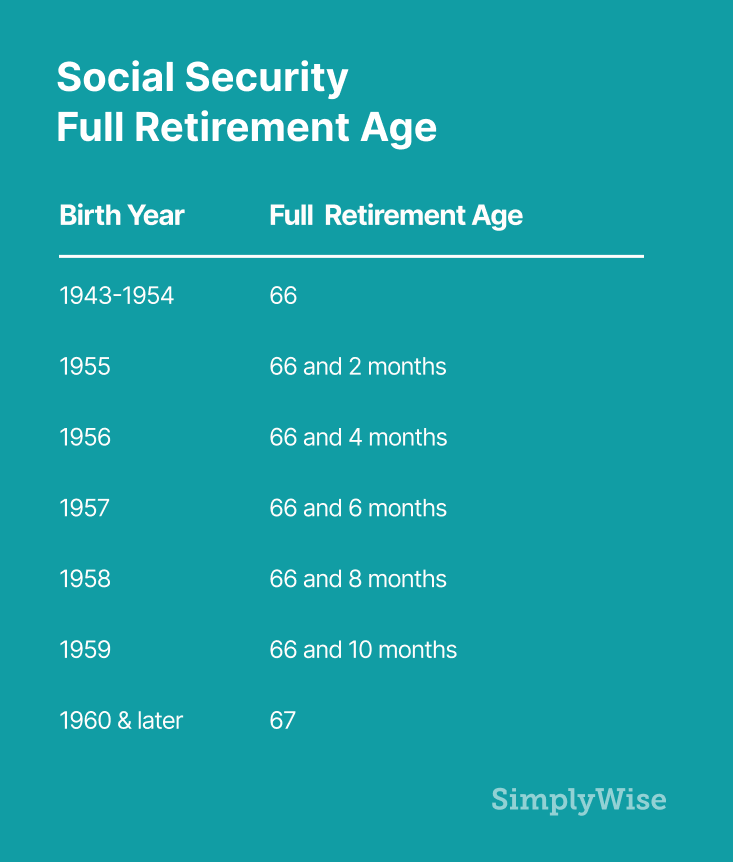
Your Full Retirement Age (FRA) is the age at which you are entitled to receive 100% of your PIA. This age is not static; it depends on your birth year. For individuals born between 1943 and 1954, FRA is 66. For those born between 1955 and 1959, it gradually increases by a few months each year, reaching 67 for anyone born in 1960 or later. Knowing your specific FRA is vital because it serves as the benchmark for calculating any increases or decreases to your benefit based on your claiming decision. Claiming before your FRA will result in a permanent reduction, while claiming after will lead to a permanent increase.
Claiming Age: The Earliest vs. The Latest
The timing of when you file for Social Security benefits is perhaps the most critical decision influencing your monthly payment.
-
Early Claiming (Age 62): You can start receiving Social Security benefits as early as age 62. However, claiming before your FRA results in a permanent reduction in your monthly benefit. The reduction is calculated on a prorated basis: your benefit is reduced by five-ninths of one percent for each month you claim before your FRA, up to 36 months. If you claim more than 36 months early, the reduction is five-twelfths of one percent per month. For someone with an FRA of 67, claiming at age 62 would result in a permanent reduction of about 30% of their PIA. While this provides earlier access to funds, it means a significantly smaller monthly check for the rest of your life. Reasons for early claiming often include health issues, job loss, or a desire to retire sooner, despite the financial trade-off.
-
Delayed Claiming (Up to Age 70): Conversely, delaying benefits past your FRA can substantially increase your monthly payment. For each year you delay claiming past your FRA, up to age 70, you earn Delayed Retirement Credits (DRCs). These credits permanently increase your benefit by 8% per year. For someone with an FRA of 67, delaying until age 70 would result in a 24% increase (3 years x 8% per year) above their PIA. This strategy is often favored by individuals who are healthy, have other income sources, and can afford to wait, as it provides a higher guaranteed income stream later in life, acting as longevity insurance. For example, if your PIA is $2,000, claiming at 62 could reduce it to $1,400, while delaying to 70 could boost it to $2,480. This significant range underscores the power of claiming age decisions.
Earnings During Retirement (for Early Claimers)
If you claim Social Security benefits before your FRA and continue to work, your earnings can temporarily reduce your Social Security payment. This is known as the earnings test. For 2024, if you are under FRA for the entire year, the SSA will deduct $1 from your benefits for every $2 you earn above a certain annual limit (e.g., $22,320 in 2024). In the year you reach your FRA, the deduction rate is $1 for every $3 earned above a higher annual limit (e.g., $59,520 in 2024), and this only applies to earnings before the month you reach FRA.
Once you reach your FRA, the earnings test no longer applies, and you can earn any amount without it affecting your Social Security benefits. It’s important to note that any benefits withheld due to the earnings test are not permanently lost; your benefit amount will be recalculated at your FRA to account for the withheld amounts, potentially increasing your monthly payments slightly for the rest of your life.
Beyond Individual Earnings: Other Influences and Considerations
The Social Security system extends its reach beyond just individual worker benefits, encompassing provisions for spouses, survivors, and periodic adjustments to keep pace with economic changes.
Spousal and Survivor Benefits
Social Security also provides benefits to eligible family members based on a worker’s earnings record.
- Spousal Benefits: If you are married, divorced, or widowed, you may be eligible for benefits based on your spouse’s (or ex-spouse’s) earnings record. A spouse can receive up to 50% of their partner’s PIA if they claim at their own FRA. If they claim spousal benefits early, those benefits are also reduced. Spousal benefits are generally paid only if they are higher than the individual’s own earned benefit.
- Survivor Benefits: When a worker dies, certain family members (including spouses, children, and dependent parents) may be eligible for survivor benefits. A surviving spouse can receive up to 100% of the deceased worker’s PIA, especially if they wait until their own FRA to claim. Similar to individual benefits, claiming survivor benefits early will result in a permanent reduction. These benefits provide a critical financial lifeline during a time of loss.
Cost-of-Living Adjustments (COLAs)
To protect the purchasing power of Social Security benefits against inflation, the SSA implements Cost-of-Living Adjustments (COLAs). These adjustments are typically applied annually, usually beginning in January. The COLA is determined by changes in the Consumer Price Index for Urban Wage Earners and Clerical Workers (CPI-W) from the third quarter of the previous year to the third quarter of the current year. If inflation is high, the COLA will be higher, resulting in a larger increase in benefits. Conversely, in periods of low or no inflation, COLAs might be minimal or even zero. These adjustments are crucial for ensuring that retirees’ benefits maintain their real value over time.
Taxation of Social Security Benefits
It’s a common misconception that Social Security benefits are entirely tax-free. For many beneficiaries, a portion of their benefits can be subject to federal income tax, depending on their “combined income.” Combined income is defined as your adjusted gross income (AGI) plus any tax-exempt interest income, plus one-half of your Social Security benefits.
- If your combined income is between $25,000 and $34,000 for an individual ($32,000 and $44,000 for those filing jointly), up to 50% of your benefits may be taxable.
- If your combined income exceeds $34,000 for an individual (or $44,000 for those filing jointly), up to 85% of your benefits may be taxable.
Some states also tax Social Security benefits, adding another layer of complexity. Understanding these taxation rules is essential for accurate financial planning and managing your overall retirement income.
Accessing Your Information and Planning Your Future
Navigating the intricacies of Social Security can seem daunting, but the SSA provides valuable tools to help you understand your specific situation and plan effectively.
The Importance of Your Social Security Statement
The single most important document for understanding your Social Security benefits is your Social Security Statement. This personalized statement provides a detailed summary of your earnings history, estimated benefits at different claiming ages (62, FRA, and 70), and estimates for disability and survivor benefits. You can access your statement and create a secure online account at the official SSA website, www.ssa.gov/myaccount. Regularly reviewing your statement is critical to:
- Verify your earnings record: Ensure that all your employers have correctly reported your earnings. Errors can impact your future benefits.
- Estimate your future benefits: Get personalized projections based on your actual earnings history, helping you plan when to claim.
- Understand potential family benefits: See estimates for what your family members might receive in the event of your disability or death.

Strategic Retirement Planning
Understanding how your Social Security amount is calculated empowers you to make strategic decisions about your retirement. It allows you to:
- Optimize your claiming age: Weigh the trade-offs between immediate income and a larger lifetime benefit, considering your health, longevity expectations, and other income sources.
- Coordinate with other retirement savings: Integrate Social Security into your broader retirement income strategy, whether it involves 401(k)s, IRAs, or pensions.
- Plan for potential income taxes: Factor in the possibility of your benefits being taxed to avoid surprises.
- Make informed decisions about working in retirement: Understand the implications of the earnings test if you plan to work while collecting benefits before your FRA.
Consulting with a qualified financial advisor can provide invaluable assistance in integrating Social Security into a holistic retirement plan, considering your unique financial situation and goals.
In conclusion, your Social Security benefit is not a arbitrary figure but a carefully calculated amount derived from your indexed lifetime earnings (AIME), translated into your Primary Insurance Amount (PIA), and then adjusted based on your claiming age relative to your Full Retirement Age. Additional factors like spousal provisions, annual COLAs, and potential taxation further shape your net benefit. By taking the time to understand these foundational principles and utilizing the resources available through the SSA, you can transform perceived complexity into clarity, enabling you to make confident decisions that secure a more stable and predictable financial future.
aViewFromTheCave is a participant in the Amazon Services LLC Associates Program, an affiliate advertising program designed to provide a means for sites to earn advertising fees by advertising and linking to Amazon.com. Amazon, the Amazon logo, AmazonSupply, and the AmazonSupply logo are trademarks of Amazon.com, Inc. or its affiliates. As an Amazon Associate we earn affiliate commissions from qualifying purchases.