
Understanding interest is not just an academic exercise; it’s a fundamental pillar of personal finance, investing, and business operations. Whether you’re saving for retirement, taking out a loan for a home, or simply trying to make sense of your credit card statement, grasping the mechanics of interest is crucial. At its core, interest is the cost of borrowing money or the reward for lending it. It can be a powerful engine for wealth creation when it works for you, or a formidable adversary when it works against you, particularly in the realm of debt. This comprehensive guide will demystify interest, breaking down its various forms, calculation methods, and real-world implications, empowering you to make more informed financial decisions.

The Fundamentals of Simple Interest
Simple interest is the most straightforward way to calculate interest. It’s determined solely on the original principal amount of a loan or deposit. Unlike its more complex counterpart, compound interest, simple interest does not take into account any accumulated interest from previous periods. This makes it easier to calculate and understand, particularly for short-term financial arrangements.
Understanding the Components
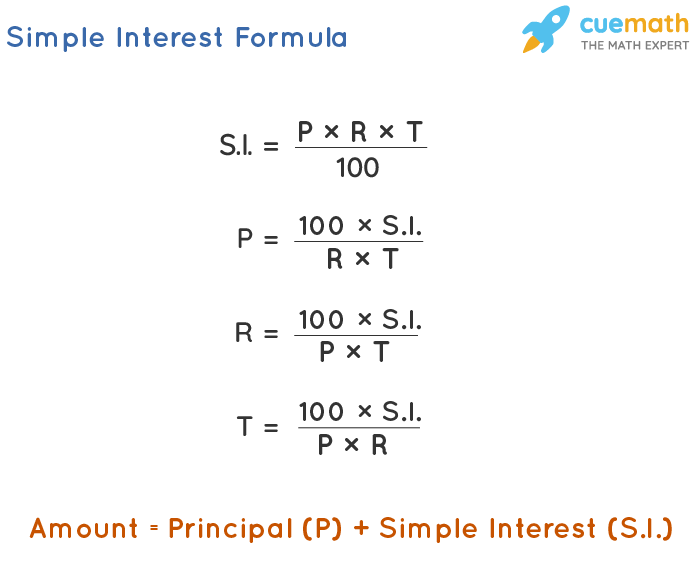
To calculate simple interest, you only need three pieces of information:
- Principal (P): This is the initial amount of money borrowed or invested. It’s the base sum upon which the interest will be calculated.
- Rate (R): This is the annual interest rate, expressed as a decimal. For instance, an interest rate of 5% would be written as 0.05 in calculations. It represents the percentage of the principal charged or earned over one year.
- Time (T): This is the duration of the loan or investment, expressed in years. If the term is in months, you would divide the number of months by 12 to convert it to years (e.g., 6 months = 0.5 years).
The formula for simple interest is elegantly simple: Interest = P × R × T.
Practical Applications of Simple Interest
While compound interest dominates long-term financial products, simple interest still has its place in the financial landscape:
- Short-Term Loans: Many personal loans, especially those with shorter repayment periods, and some payday loans, might use simple interest calculations. This means you only pay interest on the initial amount borrowed, not on any accrued interest.
- Basic Savings Accounts: While less common now, some very basic savings accounts or money market accounts might advertise simple interest, though often even these offer some form of compounding.
- Bonds: The interest payments (coupon payments) on many types of bonds are calculated using simple interest on the bond’s face value.
- Intercompany Loans: In business finance, internal loans between subsidiaries or short-term credit agreements might utilize simple interest for ease of calculation.
Calculating Simple Interest: Step-by-Step Example
Let’s illustrate with an example. Suppose you lend a friend $1,000 at a simple interest rate of 6% per year for 3 years.
- Identify the Principal (P): $1,000
- Identify the Rate (R): 6% per year = 0.06
- Identify the Time (T): 3 years
Now, apply the formula:
Interest = P × R × T
Interest = $1,000 × 0.06 × 3
Interest = $180
After 3 years, your friend would owe you the original principal of $1,000 plus $180 in interest, for a total of $1,180. Simple interest provides a clear and predictable cost or return, making it easy to budget and forecast.
Unlocking the Power of Compound Interest
Compound interest is often referred to as the “eighth wonder of the world” due to its incredible power to generate wealth over time. Unlike simple interest, compound interest is calculated on the initial principal plus all the accumulated interest from previous periods. This “interest on interest” effect creates an exponential growth curve, making it a critical concept for both savers and borrowers.
The Compound Interest Formula
Calculating compound interest requires a slightly more complex formula, as it accounts for the frequency with which interest is compounded:
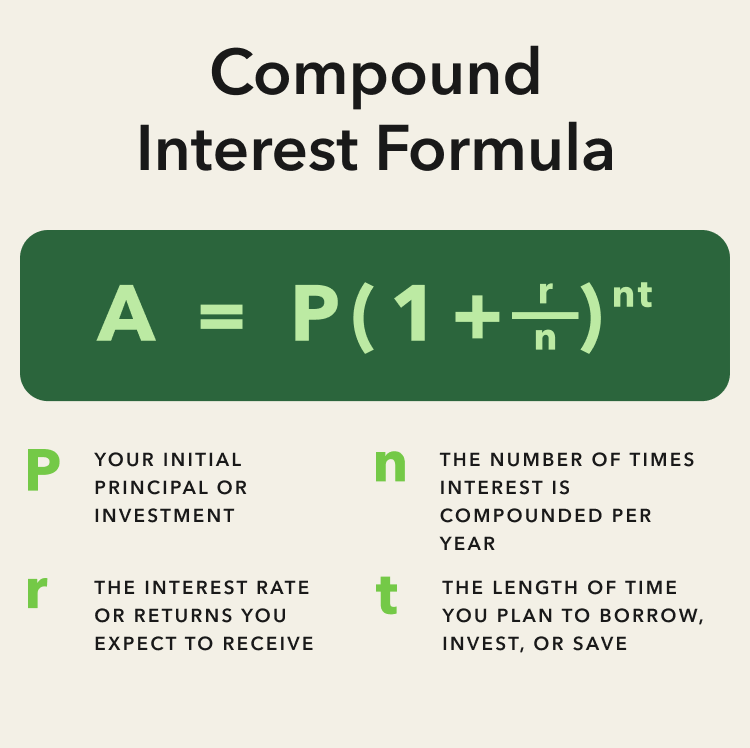
A = P(1 + r/n)^(nt)
Let’s break down each component:
- A: The future value of the investment/loan, including interest. This is the total amount you will have at the end of the term.
- P: The principal investment amount (the initial deposit or loan amount).
- r: The annual interest rate (as a decimal).
- n: The number of times that interest is compounded per year (e.g., 1 for annually, 4 for quarterly, 12 for monthly, 365 for daily).
- t: The number of years the money is invested or borrowed for.
Frequency of Compounding Matters
The frequency of compounding (represented by ‘n’ in the formula) has a significant impact on the final amount. The more frequently interest is compounded, the faster your money grows (or your debt accumulates).
- Annually (n=1): Interest is calculated once a year.
- Semi-annually (n=2): Interest is calculated twice a year.
- Quarterly (n=4): Interest is calculated four times a year.
- Monthly (n=12): Interest is calculated twelve times a year.
- Daily (n=365): Interest is calculated every day.
Even a slight increase in compounding frequency can lead to a substantial difference over long periods. This is why a savings account compounded daily will yield more than one compounded annually, even if they have the same stated annual interest rate.
A useful rule of thumb for quickly estimating the effect of compounding is the Rule of 72. This rule states that to find the approximate number of years it will take for an investment to double at a given annual rate of return, you divide 72 by the annual interest rate. For example, an investment earning 8% annually will roughly double in 9 years (72 / 8 = 9).
Real-World Impact: Savings, Investments, and Debt
The power of compound interest is a double-edged sword:
- For Savings & Investments: This is where compound interest truly shines. It is the engine that drives wealth growth in retirement accounts (like 401(k)s and IRAs), mutual funds, and long-term investment portfolios. Starting early allows your principal and accumulated interest to compound for more years, leading to significantly larger sums. Even small, consistent contributions can grow into substantial wealth over decades.
- For Debt: Conversely, compound interest can be a formidable foe when applied to debt. High-interest credit card debt, for instance, compounds frequently, often daily or monthly. If you only make minimum payments, the interest continues to accrue on the outstanding balance and the previously accumulated interest, making it incredibly difficult to pay down the principal. Mortgages and student loans also utilize compound interest, and understanding how it affects your total repayment can save you thousands of dollars.
Calculating Compound Interest: Step-by-Step Example
Let’s compare the previous simple interest example with compound interest. Suppose you invest $1,000 at an annual interest rate of 6% for 3 years, but this time, the interest is compounded annually.
- Identify the Principal (P): $1,000
- Identify the Rate (r): 6% per year = 0.06
- Identify the Number of Compounding Periods per Year (n): Annually = 1
- Identify the Time (t): 3 years
Now, apply the compound interest formula:
A = P(1 + r/n)^(nt)
A = $1,000(1 + 0.06/1)^(1*3)
A = $1,000(1 + 0.06)^3
A = $1,000(1.06)^3
A = $1,000 * 1.191016
A = $1,191.02
In this case, the total amount after 3 years is $1,191.02, meaning you earned $191.02 in interest ($1,191.02 – $1,000). Compare this to the $180 earned with simple interest over the same period. While the difference is small over three years, imagine this over 20, 30, or even 40 years, and the divergence becomes immense.
Beyond the Basics: APR, APY, and Effective Interest Rates
While simple and compound interest calculations form the bedrock, the financial world often presents interest rates in slightly different, though related, terms. Understanding Annual Percentage Rate (APR) and Annual Percentage Yield (APY) is crucial for making accurate comparisons between different financial products.
Annual Percentage Rate (APR)
The Annual Percentage Rate (APR) represents the annual cost of borrowing. It is typically expressed as a percentage and includes the interest rate plus certain other fees associated with the loan, such as origination fees or discount points.
- For Loans: APR is commonly used for credit cards, mortgages, car loans, and personal loans. It’s intended to give consumers a more comprehensive view of the true cost of borrowing than the simple nominal interest rate alone.
- Key Distinction: It’s important to note that APR often does not account for the effect of compounding within the year. While it represents an annual rate, it might be calculated as a simple annual rate even if the interest is compounded more frequently (e.g., monthly). This means that the actual interest paid could be slightly higher than what the APR might initially suggest, especially for loans with daily or monthly compounding. For example, a credit card might have an 18% APR, but if interest is compounded daily, the effective rate will be slightly higher.
Annual Percentage Yield (APY)
The Annual Percentage Yield (APY), also known as the Effective Annual Rate (EAR), provides a more accurate representation of the actual annual rate of return an investment or savings account earns. Unlike APR, APY does account for the effect of compounding.
- For Savings and Investments: APY is typically used for savings accounts, certificates of deposit (CDs), and money market accounts. It tells you exactly how much interest you’ll earn in a year, taking into account how often the interest is compounded and added back to your principal.
- Why APY Matters: When comparing savings accounts, always look at the APY. A bank might advertise a nominal interest rate of 4.9%, but if it compounds daily, the APY might be 5%. Another bank might advertise 5% but compound annually, meaning its APY is also 5%. Comparing nominal rates without considering compounding frequency can be misleading; APY levels the playing field.
Effective Interest Rate
The term “Effective Interest Rate” is often used interchangeably with APY, especially in the context of savings and investments, as it represents the true annual rate of return after factoring in compounding. However, it can also refer more broadly to the actual interest rate paid or earned on a loan or investment after accounting for all fees, compounding frequency, and other charges.
- Comparison is Key: When you’re looking at a loan, compare the APRs from different lenders. When you’re looking at a savings account, compare the APYs. Understanding these distinctions allows you to make an apples-to-apples comparison and choose the financial product that truly offers the best value for your situation, whether you are borrowing or saving. For instance, a loan with a lower nominal rate but higher fees and frequent compounding might actually have a higher effective rate than one with a slightly higher nominal rate but fewer fees and less frequent compounding.
Tools and Strategies for Managing Interest
Effectively managing interest is a cornerstone of sound financial health. By understanding how interest works, you can leverage it to grow your wealth and strategically minimize its impact on your debts. This requires a combination of smart tools, proactive planning, and continuous financial education.
Financial Calculators and Spreadsheets
In today’s digital age, you don’t need to be a math wizard to figure out complex interest calculations. Numerous tools are at your disposal:
- Online Interest Calculators: Websites of banks, financial institutions, and dedicated financial education platforms offer free, user-friendly calculators for simple interest, compound interest, loan payments, and retirement planning. These tools allow you to quickly plug in variables and see the outcomes.
- Spreadsheet Software: Programs like Microsoft Excel or Google Sheets are incredibly powerful for financial modeling.
FV(Future Value) Function: Calculates the future value of an investment based on a constant interest rate and periodic payments. This is excellent for compound interest projections.PV(Present Value) Function: Calculates the present value of an investment or loan.PMT(Payment) Function: Calculates the payment for a loan based on constant payments and a constant interest rate.- Custom Formulas: You can also build your own formulas using the simple and compound interest equations, giving you complete control and transparency.
Learning basic spreadsheet functions can empower you to create personalized financial forecasts and comparisons.
Leveraging Interest for Wealth Building
To make interest work for you, strategic actions are essential:
- Start Early with Investments: The most potent factor in compound interest is time. The longer your money has to grow, the more significantly compounding will impact your returns. Begin investing as early as possible, even with small amounts.
- Maximize Contributions to Interest-Bearing Accounts: Regularly contribute to high-yield savings accounts, retirement funds (like 401(k)s and IRAs), and investment portfolios. Take advantage of employer matching programs, which are essentially free money that compounds.
- Understand Dividend Reinvestment: For stock investments that pay dividends, opting for dividend reinvestment plans (DRIPs) means your dividends automatically purchase more shares. This increases your principal, allowing future dividends and capital gains to compound on a larger base, accelerating your wealth accumulation.
- Diversify Your Investments: While not directly an interest calculation strategy, diversifying your portfolio across various asset classes (stocks, bonds, real estate, etc.) can help manage risk and potentially enhance overall long-term returns through compounding.
Minimizing Interest on Debt
When interest works against you in the form of debt, proactive strategies can mitigate its impact:
- Pay More Than the Minimum: On credit cards and other revolving debt, paying only the minimum allows interest to compound heavily. Paying extra reduces your principal faster, which in turn reduces the amount on which future interest is calculated, saving you significant money and shortening your repayment period.
- Consolidate High-Interest Debt: Consider strategies like balance transfers to a lower-APR credit card or a debt consolidation loan at a lower interest rate. This can reduce the overall interest you pay and simplify your repayment process.
- Negotiate Lower Rates: If you have a good payment history, contact your credit card company or loan provider to inquire about lowering your interest rate. A small reduction can have a considerable impact over time.
- Understand Grace Periods: On credit cards, a grace period is the time between the end of a billing cycle and the payment due date, during which no interest is charged if you pay your balance in full. Always pay off your credit card balance in full before the due date to avoid interest charges altogether.
- Refinance Loans: For large loans like mortgages or student loans, refinancing when interest rates are lower can significantly reduce your monthly payments and the total interest paid over the life of the loan.
The Importance of Continuous Learning
The financial landscape is dynamic, and interest rates are influenced by a multitude of economic factors.
- Stay Informed: Keep abreast of macroeconomic trends, central bank policies (like changes to the federal funds rate), and inflation, as these directly impact interest rates on savings and loans.
- Understand Different Loan Structures: Be aware of the difference between fixed-rate and variable-rate loans. Fixed-rate loans offer predictable payments, while variable-rate loans can fluctuate with market rates, potentially leading to higher or lower payments.
- Seek Professional Advice: For complex financial situations or significant investment decisions, consulting a qualified financial advisor can provide tailored strategies for optimizing interest for your specific goals.
Conclusion
Understanding “how to figure out interest” is more than just knowing a few formulas; it’s about gaining a fundamental financial literacy that empowers you to navigate the complexities of money management. From the simplicity of basic interest calculations to the exponential power of compounding, and the nuanced differences between APR and APY, each concept plays a vital role in your financial journey.
By actively leveraging compound interest for your investments and diligently minimizing its impact on your debts, you can take control of your financial destiny. Utilize the tools available, adopt smart strategies, and commit to continuous learning. The ability to grasp how interest works will not only save you money but also unlock pathways to significant wealth creation, securing a more stable and prosperous financial future.
aViewFromTheCave is a participant in the Amazon Services LLC Associates Program, an affiliate advertising program designed to provide a means for sites to earn advertising fees by advertising and linking to Amazon.com. Amazon, the Amazon logo, AmazonSupply, and the AmazonSupply logo are trademarks of Amazon.com, Inc. or its affiliates. As an Amazon Associate we earn affiliate commissions from qualifying purchases.