
In the intricate tapestry of personal finance, investing, business operations, and online income generation, percentages serve as an indispensable language. They are the fundamental tools we use to quantify change, compare values, assess performance, and make critical financial decisions. From understanding the interest rate on your savings account to deciphering profit margins in a business venture, a solid grasp of how to find and interpret percentages is not just an academic exercise – it’s a vital skill for anyone aiming for financial literacy and success. This article will demystify percentages, breaking down their calculation and illustrating their profound relevance across various facets of the money world.
The Core Concept: What is a Percentage?
At its heart, a percentage is a way of expressing a number as a fraction of 100. The word “percent” originates from the Latin “per centum,” meaning “by the hundred.” It’s a standardized way to compare parts of a whole, making it easier to understand proportions and relative values, regardless of the actual size of the whole.
Defining the Basics: Part, Whole, and Rate
Every percentage calculation involves three key components:
- The Whole (Base): This is the total amount, the original value, or the complete set of which a part is being considered. It represents 100%.
- The Part: This is a portion of the whole that you are interested in expressing as a percentage.
- The Rate (Percentage): This is the fraction of the whole, expressed in hundredths.
The foundational formula to find a percentage is straightforward:
Percentage = (Part / Whole) × 100
Let’s illustrate with a simple financial example. If you earned $1,500 from a freelance project, and you paid $150 in taxes on that income, you can calculate the tax rate (percentage) as follows:
- Part = $150 (tax paid)
- Whole = $1,500 (total earnings)
- Percentage = ($150 / $1,500) × 100 = 0.1 × 100 = 10%
So, you paid 10% in taxes on your earnings.
Understanding which number is the ‘part’ and which is the ‘whole’ is crucial, as misidentifying them is a common source of error in percentage calculations.
Converting Decimals and Fractions to Percentages
While the core formula is for finding the percentage from a part and a whole, it’s equally important to know how to convert between different numerical forms, especially when dealing with financial ratios or data.
-
Decimal to Percentage: To convert a decimal to a percentage, simply multiply the decimal by 100 and add the percent symbol (%).
- Example: An interest rate expressed as 0.05 is 0.05 × 100 = 5%.
- Example: A growth factor of 1.25 means 1.25 × 100 = 125% (indicating a 25% increase).
-
Fraction to Percentage: To convert a fraction to a percentage, first convert the fraction to a decimal by dividing the numerator by the denominator, then multiply the resulting decimal by 100.
- Example: If you invested 1/4 of your income, this is (1 ÷ 4) × 100 = 0.25 × 100 = 25%.
These conversions are fundamental when interpreting financial reports where data might be presented in various formats. For instance, understanding that a profit margin of 1/5 is equivalent to 20% provides immediate clarity on profitability.
Practical Applications in Personal Finance
Percentages are the bedrock of sound personal financial management. From day-to-day budgeting to long-term wealth building, they provide the metrics necessary for informed decision-making.
Budgeting and Expense Tracking
One of the most immediate applications of percentages in personal finance is in budgeting. Understanding how your income is allocated across different spending categories is key to controlling your finances.
- Calculating Expense Ratios: You can determine what percentage of your monthly income goes towards housing, food, transportation, and discretionary spending.
- Example: If your net monthly income is $4,000, and your rent is $1,200, then your rent accounts for ($1,200 / $4,000) × 100 = 30% of your income.
- Identifying Areas for Adjustment: By seeing these percentages, you can quickly identify categories that might be disproportionately high and target them for reduction to free up funds for savings or investments. Many financial advisors recommend adhering to rules like the 50/30/20 budget (50% needs, 30% wants, 20% savings/debt repayment), which relies entirely on percentage breakdowns.
Savings and Investments
Percentages are at the core of how your money grows (or shrinks) over time in savings and investment vehicles.
- Understanding Interest Rates: Whether it’s the annual percentage yield (APY) on your savings account or the interest rate on a certificate of deposit (CD), these are percentages that dictate how much your money will earn. Understanding simple interest (P × R × T) versus the powerful effect of compound interest, where interest is earned on both the initial principal and accumulated interest, is critical for long-term wealth accumulation.
- Calculating Investment Returns (ROI): When you invest in stocks, bonds, or real estate, you want to know your return on investment (ROI).
- Formula: ROI = ((Current Value – Original Cost) / Original Cost) × 100.
- Example: If you bought shares for $10,000 and they are now worth $12,500, your ROI is (($12,500 – $10,000) / $10,000) × 100 = 25%. This percentage tells you the efficiency of your investment.
- Inflation’s Impact: Inflation, often expressed as a percentage, erodes the purchasing power of your money over time. Knowing the current inflation rate helps you understand whether your investments are truly growing in real terms (after accounting for inflation).
Debt Management
Debt is an inevitable part of modern life for many, but managing it effectively requires a clear understanding of percentages.

- Interest Rates on Loans: Mortgages, credit cards, personal loans, and student loans all come with interest rates, usually expressed as an Annual Percentage Rate (APR). A higher APR means more of your payment goes towards interest rather than the principal, increasing the total cost of borrowing.
- Calculating Debt-to-Income Ratio: Lenders often use your debt-to-income (DTI) ratio to assess your ability to manage monthly payments and repay new loans.
- Formula: DTI = (Total Monthly Debt Payments / Gross Monthly Income) × 100.
- A high DTI percentage (e.g., above 43%) can make it harder to qualify for new credit.
- Understanding Minimum Payments: While minimum payments might seem small, the percentage of your total balance they represent, and the percentage of that payment going to interest, can reveal how long it will take to pay off a debt and how much interest you’ll accrue.
Business and Online Income Scenarios
For entrepreneurs, small business owners, and those generating online income, percentages move from being merely helpful to absolutely essential. They are the metrics that drive strategic decisions, measure performance, and determine profitability.
Profitability Metrics
Businesses live and die by their profitability, and percentages provide the clearest picture.
- Gross Profit Margin: This tells you the percentage of revenue left after deducting the cost of goods sold (COGS).
- Formula: Gross Profit Margin = ((Revenue – COGS) / Revenue) × 100. A healthy gross margin indicates efficient production or sourcing.
- Net Profit Margin: This is the ultimate measure of a company’s profitability, showing the percentage of revenue remaining after all expenses (including COGS, operating expenses, interest, and taxes) have been deducted.
- Formula: Net Profit Margin = (Net Profit / Revenue) × 100. This percentage is crucial for assessing a business’s overall financial health and operational efficiency.
- Calculating Markups and Discounts:
- Markup: Used to price products. If an item costs you $50 and you sell it for $75, your markup is (($75 – $50) / $50) × 100 = 50%.
- Discount: When offering sales, knowing how to apply and calculate discounts (e.g., 20% off) is fundamental to pricing strategy and revenue management.
- Understanding Sales Commissions: Many sales roles and affiliate marketing programs operate on a percentage-based commission structure. Calculating your potential earnings from sales or referrals requires understanding these percentages.
Growth and Performance Analysis
Businesses constantly track growth and performance to gauge success and identify areas for improvement. Percentages are the primary language for this analysis.
- Revenue Growth Percentage: This measures the percentage increase or decrease in revenue over a period.
- Formula: Revenue Growth = ((Current Period Revenue – Previous Period Revenue) / Previous Period Revenue) × 100. This shows how fast a business is expanding.
- Market Share Percentage: In competitive markets, knowing your market share (your company’s sales as a percentage of total industry sales) indicates your position relative to competitors.
- Conversion Rates for Online Businesses: For e-commerce and online content creators, conversion rates are vital.
- Formula: Conversion Rate = (Number of Conversions / Number of Visitors) × 100. This could be website visitors who make a purchase, subscribers who sign up for a newsletter, or leads who become customers. Optimizing these percentages directly impacts online income.
Taxes and Deductions
The world of business finance is heavily influenced by taxes, which are almost universally expressed as percentages.
- Calculating Income Tax Percentages: Businesses must understand the various tax brackets and rates that apply to their income, from federal to state and local taxes.
- Understanding Sales Tax and VAT: Businesses that sell goods or services are responsible for collecting sales tax or Value Added Tax (VAT), which are calculated as a percentage of the sale price. Accurate calculation and remittance are critical for compliance.
- Percentage-Based Business Deductions: Certain business expenses are tax-deductible as percentages of income or other metrics, reducing taxable income. Understanding these can significantly impact a business’s bottom line.
Mastering Percentage Calculations: Tips and Tools
While the fundamental formulas for finding percentages are straightforward, truly mastering them involves more than just memorization. It requires practice, a conceptual understanding of what the numbers represent, and the ability to leverage appropriate tools.
Mental Math and Estimation
For quick assessments, sometimes you don’t need exact figures; an estimate will suffice. Developing mental math skills for percentages can be incredibly useful in day-to-day financial scenarios.
- The 10% Rule: To find 10% of any number, simply move the decimal point one place to the left. For example, 10% of $450 is $45. This can be a building block for other percentages (e.g., 20% is twice 10%, 5% is half of 10%).
- The 1% Rule: To find 1% of any number, move the decimal point two places to the left. For example, 1% of $450 is $4.50.
- Estimation for Discounts: If a shirt is $78 and it’s 20% off, you can quickly estimate: 10% of $78 is about $7.80, so 20% is roughly $15.60. The final price would be around $78 – $15.60 = $62.40. This allows for quick decision-making without pulling out a calculator every time.
Utilizing Calculators and Spreadsheets
For more complex calculations, larger numbers, or when precision is paramount, calculators and spreadsheet software are indispensable.
- Basic Calculator Functions: Most scientific or even smartphone calculators have a dedicated percentage key (%). Understanding how it works can simplify calculations like adding sales tax or applying discounts. For instance, to calculate 15% of $200, you might type “200 * 15 %”.
- Leveraging Excel/Google Sheets: For financial modeling, budgeting, and tracking investments, spreadsheets are powerful.
- Direct Calculation: You can directly input formulas like
=(A1/B1)*100to find a percentage. - Percentage Formatting: Cells can be formatted to display numbers as percentages (e.g.,
0.25becomes25%automatically). - Common Financial Formulas: Spreadsheets can handle complex calculations for compound interest (e.g.,
FVfunction), loan payments (e.g.,PMTfunction), and internal rate of return, all of which heavily rely on percentage inputs and outputs. - Data Visualization: Once percentages are calculated, charts and graphs can visually represent financial data, making trends and insights clearer.
- Direct Calculation: You can directly input formulas like
Avoiding Common Pitfalls
Even with tools, misinterpreting percentages is common.
- Understanding the “Base” or “Whole”: Always be clear about what the percentage is of. A “20% increase” means 20% of the original value.
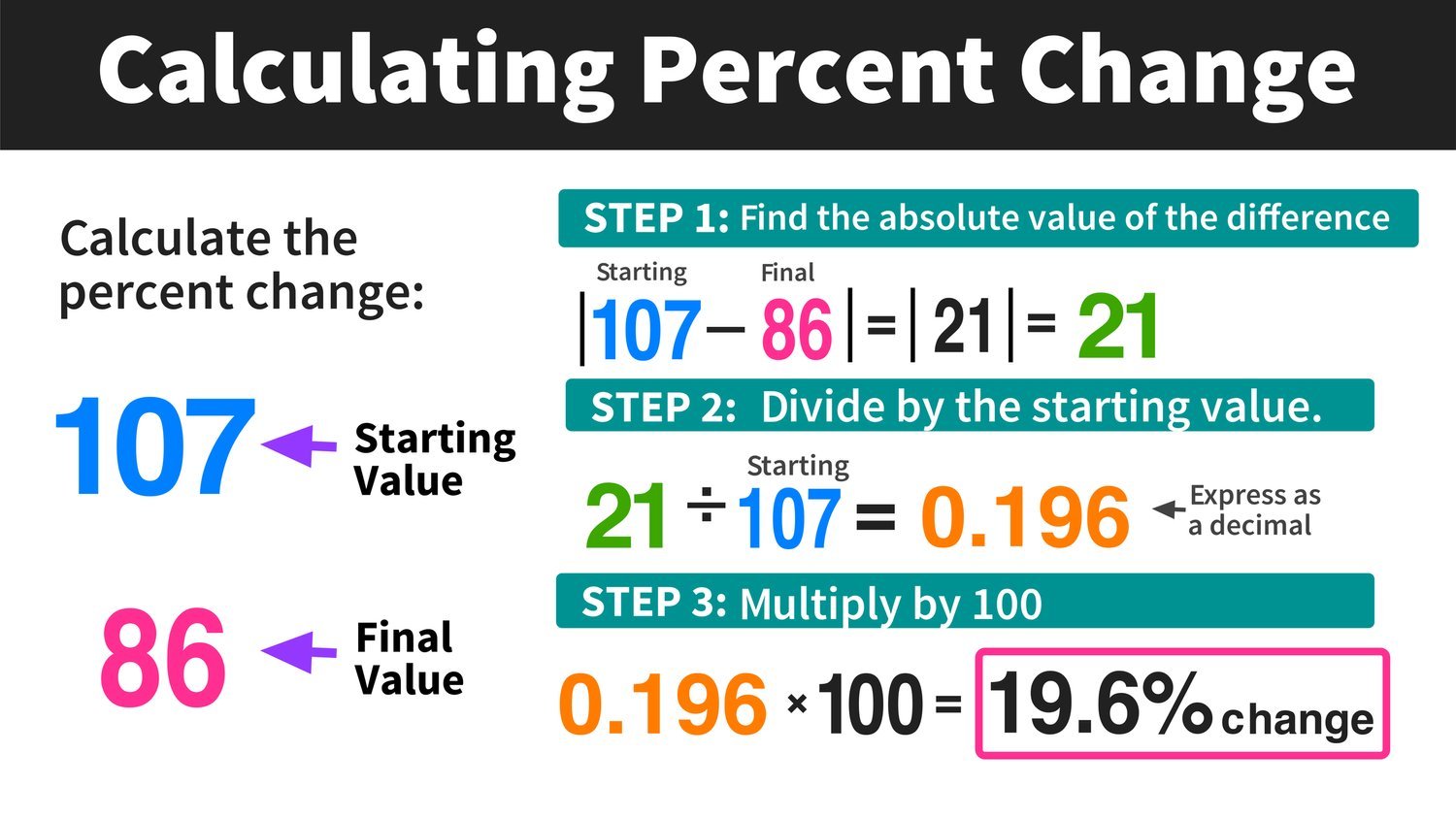
- Percentage Points vs. Percentage Change: These are often confused. If an interest rate goes from 5% to 7%, that’s a 2 percentage point increase. However, it’s a ((7-5)/5) * 100 = 40% percentage change or relative change. Understanding the distinction is crucial in financial analysis.
- The Dangers of Compounding Without Understanding: While compound interest is powerful for growth, compound interest on debt can be equally destructive. Understanding how these percentages accumulate over time is vital.

Conclusion
The question “how do you find percentage?” opens the door to a fundamental understanding of financial mechanics. Percentages are not just abstract mathematical concepts; they are the bedrock upon which sound personal finance, astute investing, and successful business operations are built. By mastering the core calculation, recognizing their omnipresence in budgeting, savings, debt, business profitability, and growth metrics, and effectively utilizing tools for calculation and analysis, individuals and entrepreneurs alike can unlock greater financial clarity. In a world increasingly driven by data and quantitative insights, a confident grasp of percentages empowers you to make informed decisions, achieve your financial goals, and navigate the complex financial landscape with greater proficiency and peace of mind.
aViewFromTheCave is a participant in the Amazon Services LLC Associates Program, an affiliate advertising program designed to provide a means for sites to earn advertising fees by advertising and linking to Amazon.com. Amazon, the Amazon logo, AmazonSupply, and the AmazonSupply logo are trademarks of Amazon.com, Inc. or its affiliates. As an Amazon Associate we earn affiliate commissions from qualifying purchases.