
In the dynamic world of finance, numbers tell a story. But raw figures alone rarely paint the complete picture. To truly understand growth, performance, and impact—whether it’s your investment portfolio, a company’s revenue, or the relentless march of inflation—you need to grasp the concept of percentage increase. It’s not just a mathematical curiosity; it’s a vital tool for making informed financial decisions, setting realistic goals, and communicating financial performance effectively.
Imagine being told your investment grew by $1,000. Is that good? It depends. If you started with $10,000, it’s a stellar 10% gain. If you started with $100,000, it’s a modest 1% gain. The percentage provides the crucial context, turning absolute changes into relative, comparable metrics. This article will demystify the calculation of percentage increase, guide you through its myriad applications in the money realm, highlight common pitfalls, and ultimately empower you to leverage this essential skill for greater financial acumen.
The Fundamental Formula: Unpacking Percentage Increase
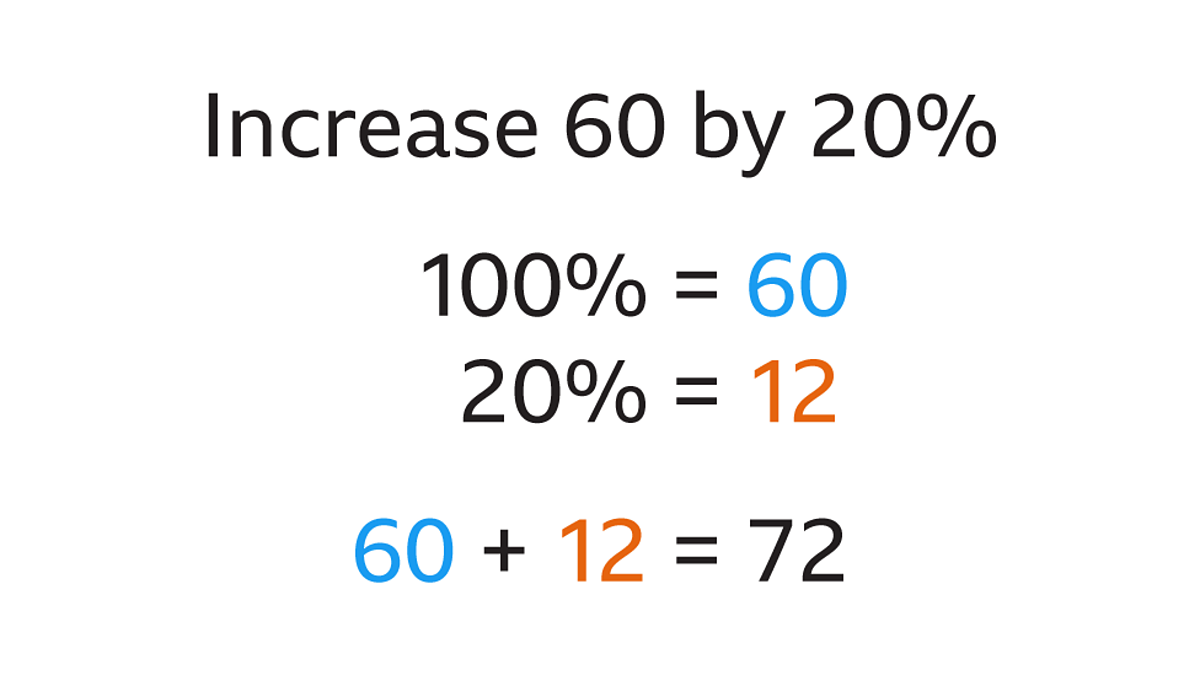
At its core, calculating a percentage increase is straightforward. It quantifies the relative change between an initial value and a new, larger value. This simple calculation underpins a vast array of financial analyses, from personal budgeting to corporate financial reporting.
The Basic Calculation: Step-by-Step
To find an increase in percentage, you need two numbers: an original value (or starting value) and a new value (or ending value). The new value must be greater than the original value for it to be an increase.
Here’s the formula and the steps:
Formula:
Percentage Increase = ((New Value - Original Value) / Original Value) * 100
Step-by-Step Breakdown:
- Find the Difference: Subtract the original value from the new value. This gives you the absolute amount of the increase.
Increase Amount = New Value - Original Value
- Divide by the Original Value: Divide the increase amount by the original value. This expresses the increase as a decimal fraction relative to the starting point.
Decimal Increase = Increase Amount / Original Value
- Multiply by 100: Multiply the result by 100 to convert the decimal into a percentage.
Percentage Increase = Decimal Increase * 100
Example:
Let’s say your savings account had $5,000 at the beginning of the year, and by the end of the year, it grew to $5,300.
- Find the Difference: $5,300 – $5,000 = $300
- Divide by the Original Value: $300 / $5,000 = 0.06
- Multiply by 100: 0.06 * 100 = 6%
Your savings account saw a 6% increase.
Why Percentage, Not Just Absolute Change?
While an absolute change ($300 in the example above) tells you the raw monetary difference, a percentage increase provides invaluable context and comparability.
- Relativity: A $1,000 profit might seem significant, but if it came from a $10,000 investment, it’s a 10% return. If it came from a $1 million investment, it’s a mere 0.1% return. The percentage immediately tells you the efficiency or scale of the gain relative to the initial commitment.
- Comparability: Percentages allow you to compare different financial instruments, projects, or periods regardless of their initial scale. You can compare the growth of a small business’s revenue against a multinational corporation’s, or the returns of two different investment funds, even if their starting capital vastly differs.
- Standardization: Financial reports, economic indicators, and investment analyses almost universally use percentages to convey growth, decline, and relative performance, making them a standard language for financial communication.
Real-World Example: Salary Growth
Consider a situation where your annual salary increased from $60,000 to $63,000.
- Increase Amount: $63,000 – $60,000 = $3,000
- Decimal Increase: $3,000 / $60,000 = 0.05
- Percentage Increase: 0.05 * 100 = 5%
You received a 5% raise. This percentage is more informative than just saying “my salary went up by $3,000” because it allows you to compare it against inflation rates, average industry raises, or your previous year’s increase, providing a clearer picture of your financial progression.
Applying Percentage Increase in Personal Finance
For individuals striving for financial independence, understanding percentage increase is not optional; it’s essential. It arms you with the knowledge to track your progress, anticipate future challenges, and make smarter decisions about your money.
Tracking Savings & Investment Growth
One of the most motivating applications of percentage increase is observing your wealth grow. Whether it’s a high-yield savings account, a mutual fund, or a stock portfolio, calculating the percentage gain helps you:
- Evaluate Performance: Compare the percentage return of your investments against benchmarks (like the S&P 500), inflation, or other investment opportunities. If your portfolio grew by 8% while inflation was 3%, you achieved a real return of 5%.
- Project Future Growth: Understanding your historical percentage gains can help you make more realistic projections for future wealth accumulation, especially when considering the power of compound interest.
- Assess Risk vs. Reward: Higher percentage returns often come with higher risk. Knowing the percentage allows you to weigh the risk taken against the reward received.
Understanding Inflation’s Impact
Inflation, often expressed as a percentage, is the rate at which the general level of prices for goods and services is rising, and consequently, the purchasing power of currency is falling.
- Real vs. Nominal Returns: If your investment yields a 5% nominal return but inflation is 3%, your “real” percentage increase in purchasing power is only 2%. This distinction is critical for long-term financial planning.
- Cost of Living Adjustments: Your salary increase, expressed as a percentage, needs to be compared against the percentage increase in the cost of living to determine if your purchasing power has truly improved or merely kept pace.
Analyzing Budgetary Changes
Budgets are living documents, and percentage increases help you understand shifts in your spending and income.
- Expense Creep: If your grocery bill increased from $400 to $450, that’s a 12.5% increase in a single category. Identifying such percentage increases helps you pinpoint areas where spending might be getting out of control.
- Income Fluctuations: Percentage increases in income from side hustles, bonuses, or raises can inform how much more you can save or invest.
- Category Allocation: As your income or expenses change, you can use percentages to maintain your desired allocation across different budget categories (e.g., spending 30% of your income on housing).
Deciphering Loan and Interest Rate Changes
Interest rates on loans, credit cards, and mortgages are fundamentally expressed as percentages. Understanding increases in these percentages is crucial for managing debt.
- Variable Interest Rates: If your mortgage rate increases from 3.5% to 4.0%, while seemingly small, that 0.5 percentage point increase can significantly raise your monthly payments. Calculating the percentage increase in the rate itself (e.g., an increase from 3.5% to 4.0% is a (0.5/3.5)*100 = ~14.3% increase in the rate) can provide a starker perspective on the change in cost.
- Credit Card Interest: A small increase in your credit card APR can translate to substantially higher interest charges, especially if you carry a balance.
Leveraging Percentage Increase in Business & Investing

Beyond personal finance, percentage increases are the bedrock of business analytics and investment strategy. They allow professionals to gauge health, predict trends, and make high-stakes decisions.
Evaluating Business Performance: Revenue & Profit Growth
For businesses, growth is often measured by percentage increases in key financial metrics.
- Revenue Growth: A company’s ability to grow its top-line revenue year-over-year (YoY) or quarter-over-quarter (QoQ) is a primary indicator of its market acceptance and operational success. Investors scrutinize percentage revenue increases to assess a company’s momentum.
- Profit Growth: Beyond revenue, the percentage increase in net profit or earnings per share (EPS) demonstrates a company’s efficiency and ability to translate sales into actual income. Consistent, high percentage profit growth is a hallmark of a healthy, well-managed business.
- Operational Efficiency: Metrics like gross margin percentage increase or operating expense reduction percentage provide insights into how effectively a business is controlling costs and maximizing profitability.
Assessing Investment Returns: ROI and Compound Growth
Percentage increases are indispensable in the realm of investing, enabling the calculation of returns and the understanding of long-term wealth accumulation.
- Return on Investment (ROI): ROI is almost always expressed as a percentage. It measures the profitability of an investment relative to its cost, allowing investors to compare the efficiency of different capital allocations.
ROI = ((Current Value of Investment - Cost of Investment) / Cost of Investment) * 100 - Compound Annual Growth Rate (CAGR): For investments over multiple periods, CAGR provides a smoothed, annualized percentage growth rate, accounting for the effect of compounding. This is crucial for understanding the true long-term performance of an asset.
- Stock Price Fluctuations: The daily or annual percentage change in a stock’s price is a fundamental metric for investors, indicating volatility and short-term performance.
Market Share and Sales Performance
In competitive markets, percentage increases are vital for understanding a company’s standing and market penetration.
- Market Share Growth: An increase in a company’s market share percentage indicates it is growing faster than its competitors or capturing new customers, a critical metric for strategic planning.
- Sales Conversion Rates: An increase in the percentage of website visitors who make a purchase, or leads that convert into customers, directly impacts revenue and marketing effectiveness.
Common Pitfalls and Advanced Considerations
While the basic calculation of percentage increase is simple, its application in finance can hide nuances and potential misinterpretations. Being aware of these advanced considerations can prevent misguided conclusions.
The “Base Effect” and Misleading Percentages
The “base effect” refers to the impact that the initial value has on the calculated percentage change. A small absolute increase can appear as a massive percentage increase if the original value was very small.
Example: A startup’s revenue jumps from $1,000 to $5,000 in a year. That’s a 400% increase! Impressive on paper. However, a mature company’s revenue might go from $10 million to $11 million, a mere 10% increase. While the startup’s percentage growth is higher, the mature company added significantly more absolute dollars ($1 million vs. $4,000). Always consider the absolute numbers alongside the percentages, especially when comparing entities of different scales.
Annualized vs. Period-Specific Increases
It’s crucial to distinguish between an increase over a specific, short period (e.g., a single month) and an annualized rate.
- Short-Term Growth: If your investment grew by 1% in one month, that doesn’t automatically mean it will grow by 12% in a year (1% * 12 months). Markets are volatile, and growth isn’t linear.
- Annualized Rates: To compare investments effectively, particularly those with different durations, it’s best to annualize returns. The Compound Annual Growth Rate (CAGR) is a sophisticated way to do this for multi-year periods, providing a more accurate picture of sustained growth.
The Role of Financial Tools and Software
While manual calculation is good for understanding the concept, financial professionals and individuals increasingly rely on software for efficiency and accuracy.
- Spreadsheets (Excel, Google Sheets): These are perhaps the most common tools. Formulas like
=(B2-A2)/A2(where A2 is the original value and B2 is the new value) followed by formatting the cell as a percentage make calculations instant and scalable. - Financial Calculators: Many online and handheld financial calculators have dedicated functions for percentage change, simplifying complex multi-step calculations.
- Investment Platforms: Most brokerage accounts and investment tracking apps automatically display percentage gains and losses for your portfolio and individual holdings.
When to Use Percentage Points vs. Percentage Increase
Sometimes, the distinction between a “percentage increase” and an “increase in percentage points” can be confusing but is vital in financial discourse.
- Percentage Points: This refers to the absolute difference between two percentages. If an interest rate goes from 4% to 5%, that’s an increase of 1 percentage point.
- Percentage Increase: This refers to the relative increase of the rate itself. In the same example, going from 4% to 5% is a ((5-4)/4) * 100 = 25% increase in the interest rate.
The context dictates which terminology is appropriate. When discussing changes in rates (like interest rates or inflation rates), “percentage points” is often clearer to avoid the confusion of a “percentage increase of a percentage.” However, when discussing the growth of a value that is a percentage (e.g., market share increasing from 20% to 22%), you’d typically use percentage increase or simply state the new percentage.
Mastering Percentage Increase for Financial Empowerment
Understanding how to find an increase in percentage moves you from being a passive observer of numbers to an active participant in your financial journey. This skill is more than just arithmetic; it’s a cornerstone of financial literacy and strategic thinking.
Strategic Decision-Making
Every major financial decision, from taking out a loan to investing in a new venture, involves analyzing potential gains, costs, and returns—all often expressed as percentages.
- Investment Choices: Comparing the projected percentage returns of different investment vehicles helps you allocate capital wisely based on your risk tolerance and financial goals.
- Business Expansion: Evaluating the percentage increase in projected revenue, profit margins, or market share helps businesses decide if an expansion or new product launch is viable.
- Debt Management: Understanding the percentage increase in interest rates on your variable loans can prompt you to refinance or prioritize paying down certain debts.
Setting Realistic Financial Goals
Whether saving for a down payment, planning for retirement, or aiming for a certain investment portfolio size, percentage increases help you set achievable milestones.
- Retirement Planning: If you aim for your retirement nest egg to grow by an average of 7% annually, you can calculate how much you need to contribute regularly to reach your target.
- Savings Targets: Knowing the percentage yield on your savings account can help you calculate how long it will take to reach a specific savings goal.

Communicating Financial Performance Clearly
Whether you’re presenting a business report, explaining your personal budget to a spouse, or discussing investment performance with an advisor, the ability to articulate changes using percentages is invaluable. It provides a clear, universally understood metric that avoids ambiguity and allows for meaningful comparisons.
In conclusion, the simple act of finding an increase in percentage is a powerful analytical tool. It contextualizes growth, standardizes comparisons, and underpins virtually every aspect of financial analysis. By mastering this fundamental concept, you equip yourself with the insights necessary to navigate the complexities of personal finance, investment, and business, leading to more informed decisions and greater financial success.
aViewFromTheCave is a participant in the Amazon Services LLC Associates Program, an affiliate advertising program designed to provide a means for sites to earn advertising fees by advertising and linking to Amazon.com. Amazon, the Amazon logo, AmazonSupply, and the AmazonSupply logo are trademarks of Amazon.com, Inc. or its affiliates. As an Amazon Associate we earn affiliate commissions from qualifying purchases.