
In the complex world of personal finance, business operations, and investment strategies, numbers are the language of success. Among the most frequently encountered, yet often misunderstood, numerical concepts is the percentage. While many are comfortable calculating a percentage of a number, the inverse—how to divide by a percentage—can often stump even financially savvy individuals. Yet, mastering this seemingly simple operation is a cornerstone of true financial literacy, enabling deeper insights into everything from calculating original prices and gross incomes to analyzing profit margins and investment returns.
Dividing by a percentage isn’t just a mathematical trick; it’s a vital tool for reverse-engineering financial scenarios, understanding underlying values, and making informed decisions. It allows you to peel back layers of financial data to reveal the foundational figures that drive budgets, profits, and growth. This article will demystify the process, demonstrating its practical applications across various financial domains, and empowering you with a skill that will profoundly enhance your financial acumen.

The Core Concept: Translating Percentages into Actionable Numbers
At its heart, dividing by a percentage is about understanding relationships and proportions. A percentage is merely a fraction of 100, and once you grasp this fundamental truth, the operation becomes much clearer.
Understanding Percentages as Decimals
Before you can divide by a percentage, you must first convert it into a usable format: a decimal. A percentage (e.g., 25%) literally means “per one hundred” or “out of one hundred.” So, 25% is equivalent to 25/100.
To convert any percentage to a decimal, simply divide it by 100 (or move the decimal point two places to the left).
- 25% becomes 0.25
- 5% becomes 0.05
- 120% becomes 1.20
- 0.5% becomes 0.005
This conversion is non-negotiable. Attempting to perform calculations with the percentage symbol still attached will lead to incorrect results.
The Mechanics of “Dividing By”: Unveiling the Base Value
When you divide by a percentage, you are typically trying to find the original whole or the base value from which a smaller (or sometimes larger) part was derived. Consider the phrase “X is Y percent of what number?” The “what number” is your base, and division by a percentage helps you find it.
The general formula is:
Base Value = Part / Percentage (as a decimal)
For instance, if you know that $50 is 20% of a certain amount, you would divide $50 by 0.20 to find that amount: $50 / 0.20 = $250. This means $50 is 20% of $250.
This operation effectively scales up the ‘part’ to reveal the full ‘base’ based on its proportional relationship. It’s the inverse operation of finding a percentage of a number, which typically involves multiplication.
The Inverse Relationship: Multiplication vs. Division with Percentages
It’s crucial to distinguish when to multiply and when to divide by a percentage.
- Multiplication: You multiply by a percentage (as a decimal) when you want to find a part of a known whole.
- Example: What is 20% of $250? Answer: $250 * 0.20 = $50.
- Division: You divide by a percentage (as a decimal) when you know the part and the percentage, and you want to find the original whole or base value.
- Example: $50 is 20% of what amount? Answer: $50 / 0.20 = $250.
Understanding this distinction is key to applying percentages correctly in any financial calculation.
Practical Applications in Personal Finance
The ability to divide by a percentage is not an abstract mathematical exercise; it’s a powerful tool with direct, tangible benefits for managing your personal finances.
Calculating Original Price from a Discounted Price
One of the most common scenarios involves deciphering sales and discounts. Imagine you buy an item for $80, and you know it was sold at a “20% off” discount. To find the original price, you can’t simply add 20% of $80 back. Why? Because the 20% discount was applied to the original price, not the discounted price.
Here’s how to do it:
- If the item is 20% off, you paid 100% – 20% = 80% of the original price.
- So, $80 represents 80% (or 0.80) of the original price.
- Original Price = $80 / 0.80 = $100.
This calculation is invaluable for determining the true value of a discount or understanding potential savings.
Determining Gross Income from Net Pay (After Taxes/Deductions)
When you receive a paycheck, the amount deposited into your account is your net pay, after various deductions like taxes, health insurance premiums, and retirement contributions. If you know the percentage of your gross income that goes to these deductions, you can reverse-engineer your true gross income.
Suppose your deductions total 30% of your gross pay, and your net pay is $700.
- Your net pay represents 100% – 30% = 70% of your gross income.
- Gross Income = $700 / 0.70 = $1,000.
This helps you understand the full cost of employment and accurately plan your budget based on your actual earnings before deductions.
Understanding Financial Ratios and Allocations
Budgeting often involves allocating portions of your income to different categories, sometimes expressed as percentages (e.g., the 50/30/20 rule). If you know how much you spend in one category and its percentage of your total budget, you can easily find your total budget.
For instance, if you spend $1,500 on housing, and this represents 30% of your total monthly budget:
- Total Monthly Budget = $1,500 / 0.30 = $5,000.
This allows you to quickly assess if your spending aligns with your overall financial goals or identify areas where adjustments might be needed.
Calculating Required Savings or Investment for a Target
While often framed as multiplication, understanding the inverse for investments is equally useful. If you know you want a certain amount in interest or growth, and you know the percentage return you expect, you can work backward to determine the principal needed. For example, if you want to earn $500 in annual interest and your account offers a 5% return:
- Principal Needed = $500 / 0.05 = $10,000.
This helps in setting realistic savings goals and understanding the scale of investment required to achieve specific financial targets.
Strategic Uses in Business & Investing
Beyond personal finance, dividing by percentages is a cornerstone of business analysis, strategic planning, and investment valuation. It allows businesses to understand their cost structures, profitability, and growth metrics more deeply.
Deriving Original Revenue from Profit Margins
Business owners and analysts frequently use profit margins to gauge financial health. A profit margin is typically expressed as a percentage of revenue. If you know your profit and your profit margin percentage, you can calculate the total revenue required to achieve that profit.
Let’s say your net profit for a quarter was $10,000, and your profit margin is 25%.
- Total Revenue = Net Profit / Profit Margin (as a decimal)
- Total Revenue = $10,000 / 0.25 = $40,000.
This calculation is critical for setting sales targets, evaluating pricing strategies, and understanding the efficiency of operations.
Calculating Break-Even Points for Sales Volume
While break-even analysis is more complex, the principle of dividing by a percentage is embedded within it, particularly when considering contribution margins. If you know your fixed costs and your contribution margin percentage (the percentage of sales revenue that contributes to covering fixed costs and generating profit), you can find the sales revenue needed to break even.
Example: If fixed costs are $5,000, and your product has a 40% contribution margin (meaning 40% of each sales dollar covers fixed costs/profit).
- Break-Even Sales Revenue = Fixed Costs / Contribution Margin Percentage
- Break-Even Sales Revenue = $5,000 / 0.40 = $12,500.
This provides a vital benchmark for operational planning and strategic decision-making.
Analyzing Investment Returns and Growth Rates
Investors often encounter scenarios where they know a current value and a percentage change, needing to find the original value. Suppose your investment portfolio grew by 15% over the year and is now worth $115,000.
- The current value ($115,000) represents 100% + 15% = 115% (or 1.15) of the initial investment.
- Initial Investment Value = $115,000 / 1.15 = $100,000.
This helps in accurately assessing portfolio performance, comparing actual returns against targets, and understanding the compounding effect over time. Similarly, if your investment decreased, say by 10% to $90,000, the original value would be $90,000 / (1 – 0.10) = $90,000 / 0.90 = $100,000.
Adjusting for Inflation and Real Value
In economics and long-term financial planning, adjusting for inflation is crucial. If an item cost $103 today and inflation was 3% since its original purchase, you can find its original price in unadjusted dollars.
- Original Price = Current Price / (1 + Inflation Rate as a decimal)
- Original Price = $103 / 1.03 = $100.
This allows for a more accurate comparison of purchasing power over time and understanding the true cost of goods and services.
Common Pitfalls and Best Practices
While dividing by a percentage is straightforward in theory, several common errors can lead to incorrect results. Awareness of these pitfalls, coupled with best practices, ensures accuracy.
The ‘Percentage Point’ vs. ‘Percentage Change’ Confusion
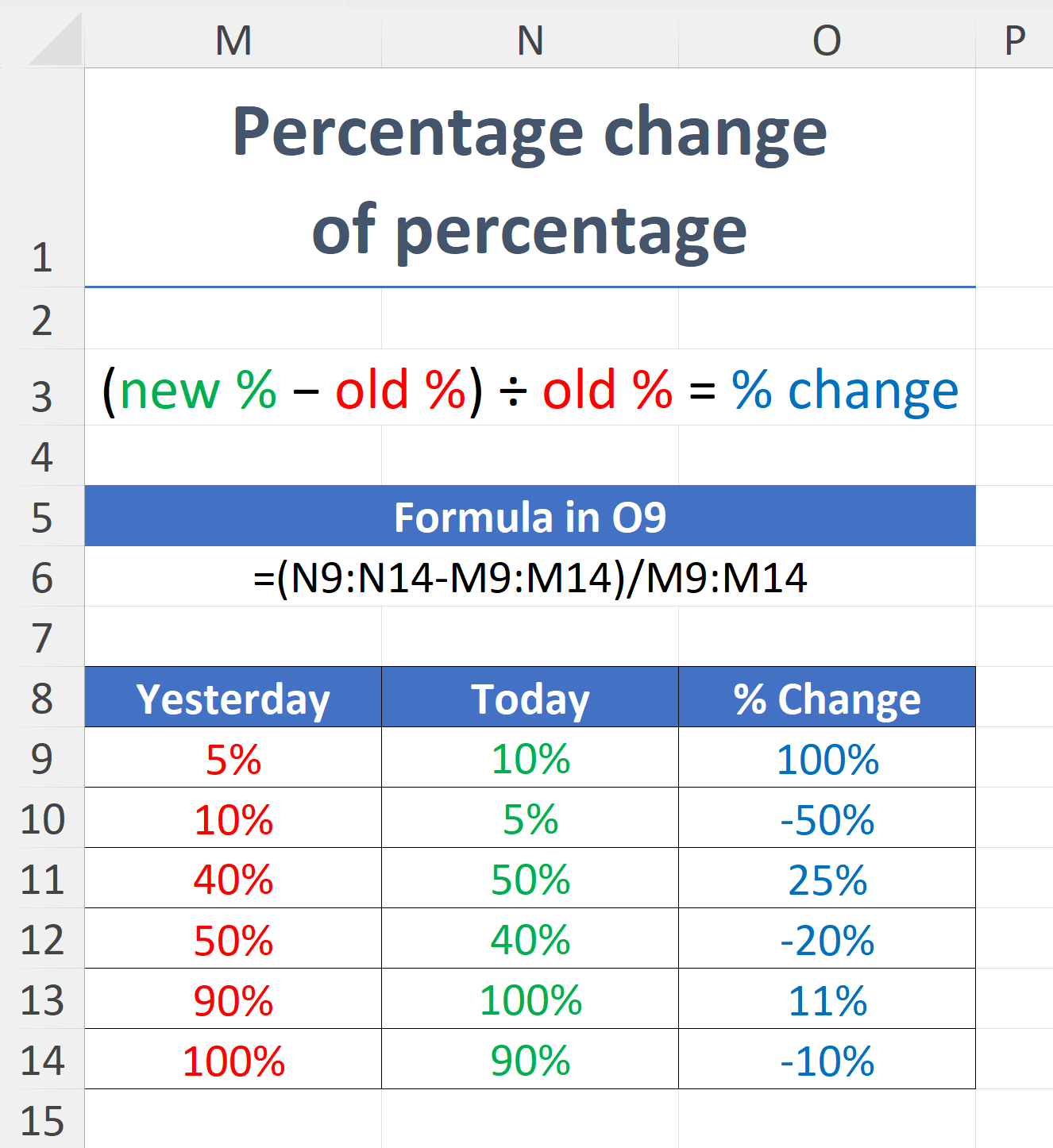
One of the most frequent misinterpretations in financial discussions is confusing a change in “percentage points” with a “percentage change.” For example, if an interest rate goes from 5% to 6%, that’s a 1-percentage-point increase, but a (6-5)/5 = 20% percentage change. When performing calculations, always be clear whether you’re dealing with a direct percentage value or a percentage change.
Incorrect Conversion to Decimal
The single most critical step is converting the percentage to its decimal equivalent. Forgetting to divide by 100 (or move the decimal two places left) will invariably lead to results that are 100 times too large or too small. Double-check this step every time.
Misinterpreting the Base
Ensure you are dividing by the correct percentage that represents the ‘part’ in relation to the ‘whole’ you are trying to find. For discounts, remember the discount is applied to the original price, so your remaining percentage (100% – discount %) is what you divide by. For profit margins, you divide profit by the profit margin percentage to get revenue, not by other cost percentages.
Utilizing Financial Tools for Accuracy and Efficiency
While understanding the manual calculation is essential, modern financial tools can automate these operations, reducing the chance of human error, especially with complex figures.
- Spreadsheets (Excel, Google Sheets): These are incredibly powerful for financial modeling. You can easily set up formulas where one cell contains a percentage (e.g., 0.25) and another divides a value by it.
- Online Calculators: Many websites offer specialized calculators for discounts, loan amortization, investment growth, etc., which incorporate these percentage divisions behind the scenes.
- Financial Calculators (physical): Dedicated financial calculators have functions that streamline percentage-based computations.
Using these tools doesn’t diminish the need to understand the underlying math; rather, it allows you to apply your knowledge more efficiently and accurately across larger datasets or more intricate scenarios.
Conclusion
The ability to divide by a percentage is more than a mathematical skill; it’s a fundamental aspect of financial empowerment. From dissecting personal expenses and understanding the true cost of purchases to analyzing complex business financials and strategic investment returns, this operation provides clarity and enables more informed decision-making.
By mastering the simple conversion of percentages to decimals and understanding the inverse relationship between multiplication and division with these values, you unlock a powerful analytical tool. It allows you to reverse-engineer financial outcomes, uncover original values, and gain a deeper appreciation for the proportional relationships that govern money. Embrace this skill, practice its applications, and watch as your financial literacy—and your confidence in managing your money—grows exponentially.
aViewFromTheCave is a participant in the Amazon Services LLC Associates Program, an affiliate advertising program designed to provide a means for sites to earn advertising fees by advertising and linking to Amazon.com. Amazon, the Amazon logo, AmazonSupply, and the AmazonSupply logo are trademarks of Amazon.com, Inc. or its affiliates. As an Amazon Associate we earn affiliate commissions from qualifying purchases.