
In the vast and often complex world of finance, few concepts are as fundamental and universally applicable as the percentage. From managing your personal budget to analyzing intricate investment portfolios or evaluating business performance, understanding how to calculate and interpret percentages is not merely a mathematical exercise—it is a critical financial literacy skill. It empowers individuals and organizations to make informed decisions, identify trends, track progress, and ultimately achieve their financial goals. Without a solid grasp of percentages, navigating the landscape of discounts, interest rates, investment returns, and profit margins becomes akin to sailing without a compass. This guide will demystify percentage calculations, illustrating their pervasive importance across various financial domains and equipping you with the knowledge to wield this powerful tool effectively.

The Fundamentals: What is a Percentage and Why It Matters for Your Money
Before diving into complex financial scenarios, it’s essential to solidify our understanding of what a percentage truly represents and its foundational role in monetary contexts.
Defining the Percentage
At its core, “percent” means “per hundred.” It’s a way to express a number as a fraction of 100, indicating how many parts of a whole there are if that whole were divided into 100 equal parts. The symbol “%” is universally recognized to denote percentages.
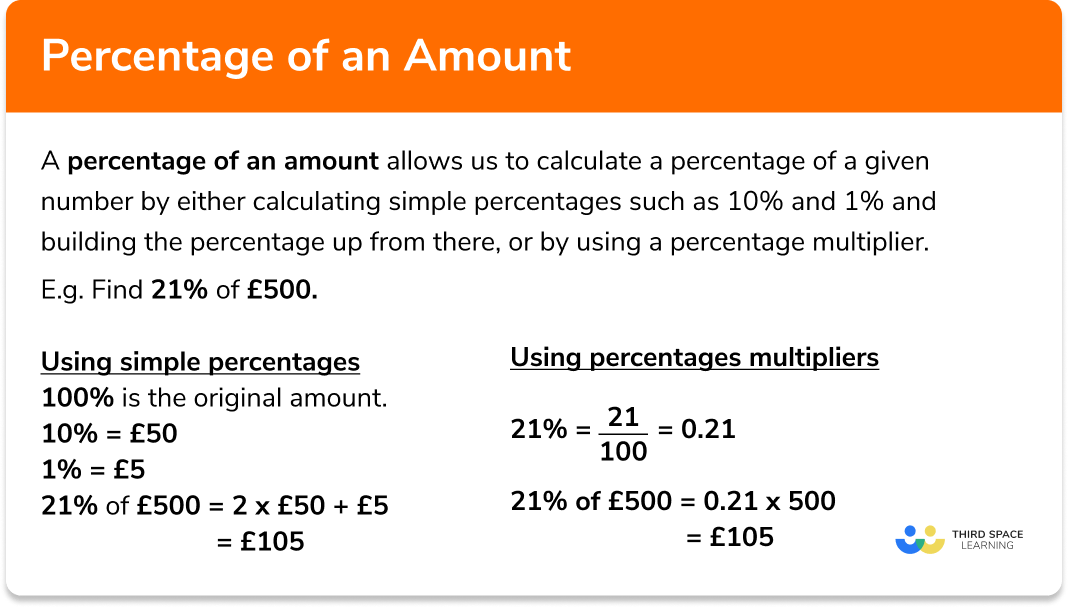
The basic formula for calculating a percentage is straightforward:
$$ text{Percentage} = left( frac{text{Part}}{text{Whole}} right) times 100 $$
For instance, if you spent $30 on groceries from a $200 weekly budget, you can calculate the percentage of your budget allocated to groceries: ($30 / $200) * 100 = 15%. This simple calculation immediately gives you an insightful proportion, indicating that 15% of your weekly funds went to food.
Bridging the Gap: Decimals, Fractions, and Percentages
Financial calculations often involve converting between fractions, decimals, and percentages. Understanding these conversions is crucial for accuracy and interpretation.
- Decimal to Percentage: Multiply the decimal by 100. (e.g., 0.15 = 15%)
- Percentage to Decimal: Divide the percentage by 100. (e.g., 15% = 0.15)
- Fraction to Percentage: Convert the fraction to a decimal first by dividing the numerator by the denominator, then multiply by 100. (e.g., 3/20 = 0.15 = 15%)
Many financial figures, such as interest rates (5% = 0.05) or tax rates (25% = 0.25), are often used in their decimal form for calculations, making these conversions indispensable.
Everyday Financial Scenarios Requiring Percentages
Percentages are woven into the fabric of our daily financial lives:
- Discounts and Sales: A store offering “20% off” requires you to calculate the saving.
- Tips: When dining out, you often calculate a 15-20% tip based on the bill total.
- Taxes: Sales tax, income tax, and property tax are all calculated as percentages of a base amount.
- Loan Payments: Understanding the percentage of your payment that goes towards principal versus interest.
These examples highlight why a firm grasp of percentage fundamentals is not just academic; it’s a practical necessity for sound financial decision-making.
Essential Percentage Calculations for Personal Finance
Personal finance is replete with situations where percentages are key to effective money management, budgeting, and goal attainment.
Calculating Discounts and Savings
When shopping, understanding “X% off” helps you determine the actual savings and final price.
- Finding the New Price: To calculate a 20% discount on a $100 item, you can either find 20% of $100 ($20) and subtract it from the original price ($100 – $20 = $80), or simply calculate 80% of the original price ($100 * 0.80 = $80).
- Determining the Discount Percentage: If an item originally priced at $100 now costs $75, the discount amount is $25. The percentage discount is ($25 / $100) * 100 = 25%.
Mastering these calculations can lead to significant savings over time, both on consumer goods and larger purchases like homes or cars where closing costs or interest rate reductions are expressed as percentages.
Understanding Interest Rates (Simple vs. Compound)
Interest rates are arguably one of the most impactful percentage figures in personal finance, affecting everything from savings growth to debt accumulation.
- Simple Interest: Calculated only on the principal amount. Formula: Principal * Rate * Time (I = PRT). If you invest $1,000 at 5% simple interest for 2 years, you earn $1,000 * 0.05 * 2 = $100.
- Compound Interest: The “eighth wonder of the world,” compound interest is calculated on the initial principal and also on the accumulated interest from previous periods. This leads to exponential growth for investments and exponential cost for debt. A savings account earning 5% compounded annually will yield more than a simple interest account over time because interest is earned on interest. Credit card debt, with high compounding interest rates, can quickly spiral out of control if not managed.
- APR vs. APY: Understanding the Annual Percentage Rate (APR) and Annual Percentage Yield (APY) is vital. APR represents the annual cost of a loan or the interest earned on an investment, but doesn’t always account for compounding. APY, on the other hand, factors in compounding, giving a more accurate picture of the total return or cost.
Budgeting and Allocating Funds
A budget is essentially a percentage allocation strategy for your income.
- The 50/30/20 Rule: A popular budgeting guideline suggests allocating 50% of your after-tax income to needs, 30% to wants, and 20% to savings and debt repayment. Calculating these percentages from your income is the first step to implementing such a system.
- Tracking Spending: By categorizing your expenses and expressing them as percentages of your total income or budget, you can quickly identify where your money is going and make adjustments. For example, if you find 40% of your income is going to dining out (a “want”), you might reallocate some of that to savings or debt.
Savings Goals and Progress
Percentages provide a clear metric for tracking progress towards financial goals.
- Goal Achievement: If your goal is to save $10,000 and you currently have $2,500, you’ve achieved ($2,500 / $10,000) * 100 = 25% of your goal. This offers motivation and a tangible measure of success.
- Required Savings Rate: To reach a $50,000 down payment in 5 years, you might need to save a certain percentage of your income each month. If your monthly income is $4,000 and you need to save $833 per month ($50,000 / 60 months), that’s ($833 / $4,000) * 100 = approximately 20.8% of your monthly income.

Leveraging Percentages for Investment and Business Insights
Beyond personal finance, percentages are the universal language for assessing investment performance, evaluating business health, and making strategic decisions.
Investment Returns and Growth
For investors, percentages are indispensable for measuring performance and making portfolio adjustments.
- Return on Investment (ROI): The most common measure, ROI calculates the percentage gain or loss relative to the initial investment. If you buy a stock for $100 and sell it for $120, your ROI is (($120 – $100) / $100) * 100 = 20%.
- Annualized Returns: To compare investments over different timeframes, returns are often annualized. If an investment yields 10% over six months, the annualized return might be closer to 21% (compounded).
- Compound Annual Growth Rate (CAGR): For investments that grow over multiple periods, CAGR provides a smoothed annual growth rate, accounting for the effect of compounding. This helps in understanding the true long-term performance.
- Portfolio Allocation: Investors typically diversify their portfolios by allocating specific percentages to different asset classes (e.g., 60% stocks, 30% bonds, 10% cash). This percentage allocation is critical for managing risk and achieving desired returns.
Profit Margins and Business Health
Businesses rely heavily on percentages to gauge profitability and operational efficiency.
- Gross Profit Margin: This indicates the percentage of revenue left after deducting the cost of goods sold (COGS). Formula: ((Revenue – COGS) / Revenue) * 100. A high gross margin suggests efficient production or strong pricing power.
- Net Profit Margin: This is the percentage of revenue remaining after all expenses, including taxes and interest, have been deducted. Formula: (Net Income / Revenue) * 100. It’s a key indicator of a company’s overall profitability and efficiency.
- Operating Margin: Reveals the percentage of revenue left after covering operating expenses. These margins are vital for comparing a company’s performance against industry benchmarks and competitors.
Sales Commissions and Performance Metrics
Sales performance and incentives are often percentage-driven.
- Sales Commissions: Salespeople frequently earn a percentage of their total sales or gross profit. Calculating these commissions accurately is essential for payroll and motivation.
- Sales Growth Percentage: Businesses track month-over-month or year-over-year sales growth as a percentage to assess market penetration and business expansion.
- Market Share: Understanding what percentage of the total market a company commands is crucial for strategic planning and competitive analysis.
Advanced Applications and Avoiding Common Pitfalls
While basic percentage calculations are foundational, mastering advanced concepts and understanding common errors can significantly refine your financial acumen.
Percentage Change vs. Percentage Point Change
This is a critical distinction, especially when interpreting financial news or economic data.
- Percentage Point Change: Refers to the absolute difference between two percentage figures. If an interest rate increases from 2% to 3%, that’s a 1 percentage point increase.
- Percentage Change: Refers to the relative change between two numbers, expressed as a percentage of the original number. In the above example, the interest rate itself increased by ( (3 – 2) / 2 ) * 100 = 50%. Confusing these two can lead to drastically different interpretations of the same event.
The Impact of Inflation and Deflation
Inflation, a general increase in prices and fall in the purchasing value of money, is expressed as a percentage.
- Eroding Purchasing Power: If inflation is 3% annually, your money buys 3% less each year. Understanding this helps you calculate the “real return” on investments, which is your nominal return minus the inflation rate.
- Deflation: The opposite of inflation, a decrease in the general price level, also has percentage implications for economic activity and debt.
Financial Ratios and Benchmarking
Many financial health indicators for individuals and businesses are expressed as percentages or ratios easily converted to percentages.
- Debt-to-Income Ratio (DTI): For personal finance, DTI (total monthly debt payments / gross monthly income) is a crucial percentage used by lenders to assess creditworthiness. A lower DTI (e.g., below 36%) indicates better financial health.
- Current Ratio (Business): Current assets / current liabilities. While not a percentage, this ratio is interpreted relative to 1 or 2, providing a quick assessment of short-term liquidity. Understanding these ratios in percentage terms allows you to benchmark your financial position against industry averages or personal goals.
Tools and Resources to Simplify Percentage Calculations
While the underlying math is crucial, modern tools can significantly simplify and automate percentage calculations, allowing you to focus on interpretation and decision-making.
Your Smartphone Calculator
The most accessible tool, your phone’s built-in calculator can handle all basic percentage operations. Most have a “%” button that can be used for quick calculations, such as finding a discount or adding tax. For example, to find 20% off $100, you can often input “100 – 20%” directly.
Spreadsheets (Excel, Google Sheets)
Spreadsheets are indispensable for more complex financial modeling, budgeting, and investment tracking.
- Formulas: You can set up formulas to automatically calculate percentages based on changing inputs. For example,
= (A2/B2)*100calculates the percentage of the part in cell A2 to the whole in cell B2. - Automation: Create a budget template where your income and expenses are entered, and percentages for each category are automatically calculated, allowing for real-time tracking and adjustment.
- Conditional Formatting: Highlight cells based on percentage thresholds (e.g., if a budget category exceeds 10%, turn red).
Online Financial Calculators
Numerous websites offer specialized calculators for specific financial scenarios.
- Mortgage Calculators: Determine monthly payments, breaking down the percentage of principal vs. interest.
- Loan Calculators: Evaluate interest costs and amortization schedules.
- Retirement Planners: Project future savings and required contribution percentages to reach retirement goals.
- Compound Interest Calculators: Visually demonstrate the power of compounding for investments or the burden of compounding debt.
Financial Software and Apps
Many personal finance and investment platforms integrate percentage calculations seamlessly.
- Budgeting Apps: Apps like Mint or YNAB categorize your spending and display expenses as percentages of your income or budget, often with visual charts.
- Investment Platforms: Brokerage accounts and robo-advisors automatically show percentage gains or losses on your portfolio and individual holdings, as well as your asset allocation percentages. These tools provide instant insights without manual calculations.
Conclusion
The ability to figure out the percent of something is far more than a basic arithmetic skill; it is a cornerstone of financial literacy, empowering individuals and businesses to navigate the modern economic landscape with clarity and confidence. From the daily decisions of managing personal budgets, calculating discounts, and understanding interest rates, to the strategic considerations of investment returns, profit margins, and economic indicators, percentages provide an indispensable framework for analysis and action. By mastering the fundamentals, understanding their diverse applications, being aware of common pitfalls, and leveraging available tools, you gain the power to make informed choices, track your progress effectively, and ultimately achieve your financial aspirations. Embrace percentages as your constant companion in your journey toward financial wisdom and prosperity.
aViewFromTheCave is a participant in the Amazon Services LLC Associates Program, an affiliate advertising program designed to provide a means for sites to earn advertising fees by advertising and linking to Amazon.com. Amazon, the Amazon logo, AmazonSupply, and the AmazonSupply logo are trademarks of Amazon.com, Inc. or its affiliates. As an Amazon Associate we earn affiliate commissions from qualifying purchases.