
Understanding the operating hours of financial markets is a fundamental aspect of successful trading and investing. For the futures market, this understanding is particularly nuanced, given its global and nearly continuous nature. Unlike traditional stock exchanges that adhere to strict daily opening and closing bells, the futures market offers a vastly different landscape, characterized by extended trading sessions that often span multiple time zones and almost the entire week. This extensive accessibility provides both unique opportunities and significant challenges for traders, requiring a sophisticated grasp of market timing, liquidity patterns, and risk management.

Futures contracts are agreements to buy or sell an asset at a predetermined price on a specified future date. These assets can range from commodities like crude oil, gold, and agricultural products to financial instruments such as stock indices, currencies, and interest rates. The global nature of these underlying assets necessitates a trading environment that can accommodate participants from all corners of the world, responding to economic data, geopolitical events, and supply-demand dynamics as they unfold around the clock. Therefore, asking “what time does the futures market open?” isn’t a simple question with a singular answer; rather, it opens a discussion about primary trading sessions, electronic accessibility, global exchanges, and the strategic implications for participants. This article will delve into the intricacies of futures market hours, equipping you with the knowledge to navigate this dynamic trading environment effectively.
The Global, Nearly 24-Hour Nature of Futures Trading
One of the most defining characteristics of the futures market is its impressive operational duration. Unlike the conventional 9:30 AM to 4:00 PM (Eastern Time) trading window of major U.S. stock exchanges, many futures contracts trade for almost 24 hours a day, five days a week. This continuous trading cycle reflects the global interconnectedness of the underlying assets, ensuring that market participants can react promptly to events occurring in any part of the world, whether it’s an economic report from China, a central bank announcement in Europe, or an oil supply disruption in the Middle East.
Core Trading Sessions vs. Extended Hours
While many futures contracts boast near 24-hour electronic trading, it’s crucial to distinguish between their core trading sessions and extended hours. The core trading sessions, often aligned with the business hours of the exchange’s home country (e.g., U.S. hours for CME Group products), typically exhibit the highest liquidity and tightest bid-ask spreads. These periods are when the majority of market participants are active, leading to more efficient price discovery and easier execution of larger orders. Outside these core hours, during what are known as extended or overnight sessions, trading continues electronically, but with potentially lower liquidity and wider spreads. This doesn’t mean these periods are unimportant; significant price movements can occur overnight, especially in response to major news. However, traders must be aware of the altered trading conditions and adjust their strategies accordingly.
Understanding Electronic vs. Open Outcry Trading
Historically, futures trading was dominated by open outcry, a method where traders gathered on a physical trading floor, using verbal bids and hand signals to execute trades. In this environment, trading hours were strictly limited by the physical presence of participants. However, the advent of technology has dramatically transformed the landscape. Today, electronic trading systems account for the vast majority of futures volume across all major exchanges. These systems allow for continuous order matching and execution from virtually anywhere in the world, largely eliminating the geographical and temporal constraints of open outcry. While some exchanges, like the CME Group, maintain a symbolic open outcry pit for certain contracts (e.g., Eurodollars), electronic trading platforms like Globex (CME Group) and ICE Futures are the primary avenues for accessing the market round the clock. This shift to electronic trading is the fundamental reason behind the near 24/5 availability of most futures contracts.
Key Futures Exchanges and Their Respective Hours
The global futures market is dominated by several key exchanges, each with its own schedule, though often overlapping due to the continuous nature of electronic trading.
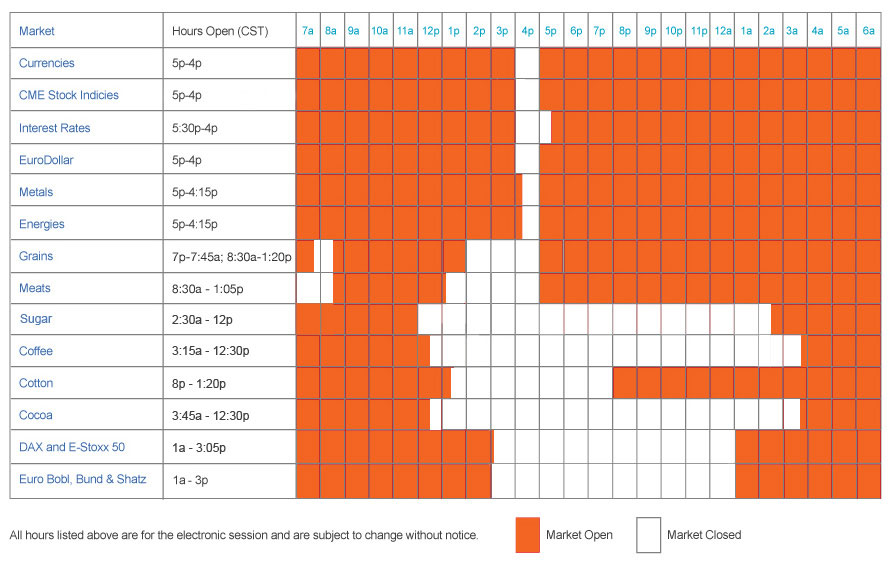
- CME Group (Chicago Mercantile Exchange, Chicago Board of Trade, NYMEX, COMEX): As one of the largest and most diverse derivatives marketplaces, the CME Group offers a vast array of futures contracts, including equity indices (E-mini S&P 500), commodities (crude oil, natural gas, gold), currencies, and interest rates. Most CME Group products trade on their Globex electronic platform from Sunday evening through Friday afternoon, with a brief daily maintenance break (typically 60 minutes) and a longer break over the weekend. For instance, many contracts open Sunday at 5:00 PM CT (6:00 PM ET) and close Friday at 4:00 PM CT (5:00 PM ET).
- Intercontinental Exchange (ICE): ICE operates several exchanges globally, offering futures primarily in energy (Brent Crude, Natural Gas), agricultural products, and financial derivatives. Their trading hours are also extensive, with many contracts trading electronically for nearly 24 hours, often mirroring the CME Group’s Sunday evening to Friday afternoon schedule, with daily breaks.
- Eurex: Based in Europe, Eurex is a major exchange for European derivatives, including equity index futures (e.g., DAX, Euro Stoxx 50), interest rate futures (e.g., Bund, Bobl), and equity options. Its trading hours are designed to cater to European market participants, typically opening early in the European morning and extending into the evening, with electronic trading often continuing much longer, sometimes into Asian hours.
Understanding the specific nuances of each exchange and contract is vital, as minor differences in open, close, and daily maintenance windows can impact trading strategies.
Specific Opening Times for Major Futures Contracts
While the general rule for electronic futures trading is “nearly 24/5,” the precise opening and closing times, as well as daily breaks, vary by contract and exchange. These schedules are meticulously designed to align with the underlying asset’s primary market hours and global demand.
Equity Index Futures (e.g., S&P 500 E-mini)
Equity index futures are among the most actively traded contracts, providing a way to speculate on or hedge against the performance of major stock market indices. The CME E-mini S&P 500 futures (ES) contract is a prime example. Its electronic trading hours on the CME Globex platform are typically:
- Sunday – Friday: 5:00 PM CT (6:00 PM ET) to 4:00 PM CT (5:00 PM ET) the following day.
- Daily Break: There’s a 60-minute break each day from 4:00 PM CT to 5:00 PM CT.
This extensive schedule allows traders to react to economic news and market sentiment from Asia, Europe, and North America before, during, and after the cash equity market hours.
Commodity Futures (e.g., Crude Oil, Gold, Corn)
Commodity futures exhibit similar extended trading hours, reflecting the global nature of their supply and demand.
- Crude Oil Futures (NYMEX WTI, CL): Traded on the CME Group’s NYMEX exchange, crude oil futures are critical for energy traders. Their electronic trading hours are generally:
- Sunday – Friday: 5:00 PM CT (6:00 PM ET) to 4:00 PM CT (5:00 PM ET) the following day.
- Daily Break: 4:00 PM CT to 5:00 PM CT.
This continuous trading is vital as oil prices are highly sensitive to geopolitical events and supply data that can emerge at any time.
- Gold Futures (COMEX Gold, GC): Gold, a safe-haven asset, also trades extensively on the CME Group’s COMEX exchange:
- Sunday – Friday: 5:00 PM CT (6:00 PM ET) to 4:00 PM CT (5:00 PM ET) the following day.
- Daily Break: 4:00 PM CT to 5:00 PM CT.
This allows participants to respond to global economic uncertainty and central bank policies around the clock.
- Agricultural Futures (e.g., Corn, Soybeans, Wheat): These contracts, primarily traded on the CME Group’s CBOT exchange, often have slightly different schedules due to their more concentrated impact from U.S. weather and crop reports. For example, Corn Futures (ZC) typically trade:
- Sunday – Friday: 7:00 PM CT (8:00 PM ET) to 7:45 AM CT (8:45 AM ET)
- Monday – Friday: 8:30 AM CT (9:30 AM ET) to 1:15 PM CT (2:15 PM ET)
These contracts often have an overnight session, followed by a break, and then a daytime session more aligned with U.S. business hours. It’s crucial for traders to consult the specific exchange’s website for precise hours, as these can be subject to change.
Currency Futures
Currency futures, such as the Euro FX (6E), track exchange rates between major global currencies. Given that foreign exchange (forex) markets operate 24 hours a day during the week, currency futures reflect this continuous nature:
- Sunday – Friday: 5:00 PM CT (6:00 PM ET) to 4:00 PM CT (5:00 PM ET) the following day.
- Daily Break: 4:00 PM CT to 5:00 PM CT.
This mirrors the broad forex market, allowing for seamless trading as financial centers like Sydney, Tokyo, London, and New York open and close.
Interest Rate Futures
Interest rate futures, like the 30-Year U.S. Treasury Bond (ZB), are pivotal for managing interest rate risk. Their trading hours are also extensive:
- Sunday – Friday: 5:00 PM CT (6:00 PM ET) to 4:00 PM CT (5:00 PM ET) the following day.
- Daily Break: 4:00 PM CT to 5:00 PM CT.
These hours accommodate reactions to global economic data, central bank statements, and bond market developments that can occur at any time.
Always verify the exact trading hours for any specific futures contract directly from the exchange’s official website, as schedules can be adjusted for holidays or other market events.
Why Trading Hours Matter: Implications for Traders
The unique, extended trading hours of the futures market profoundly impact trading strategies, risk management, and profitability. Understanding when liquidity is high, when volatility spikes, and when global influences are most potent is crucial for any serious futures trader.
Volatility and Liquidity Patterns
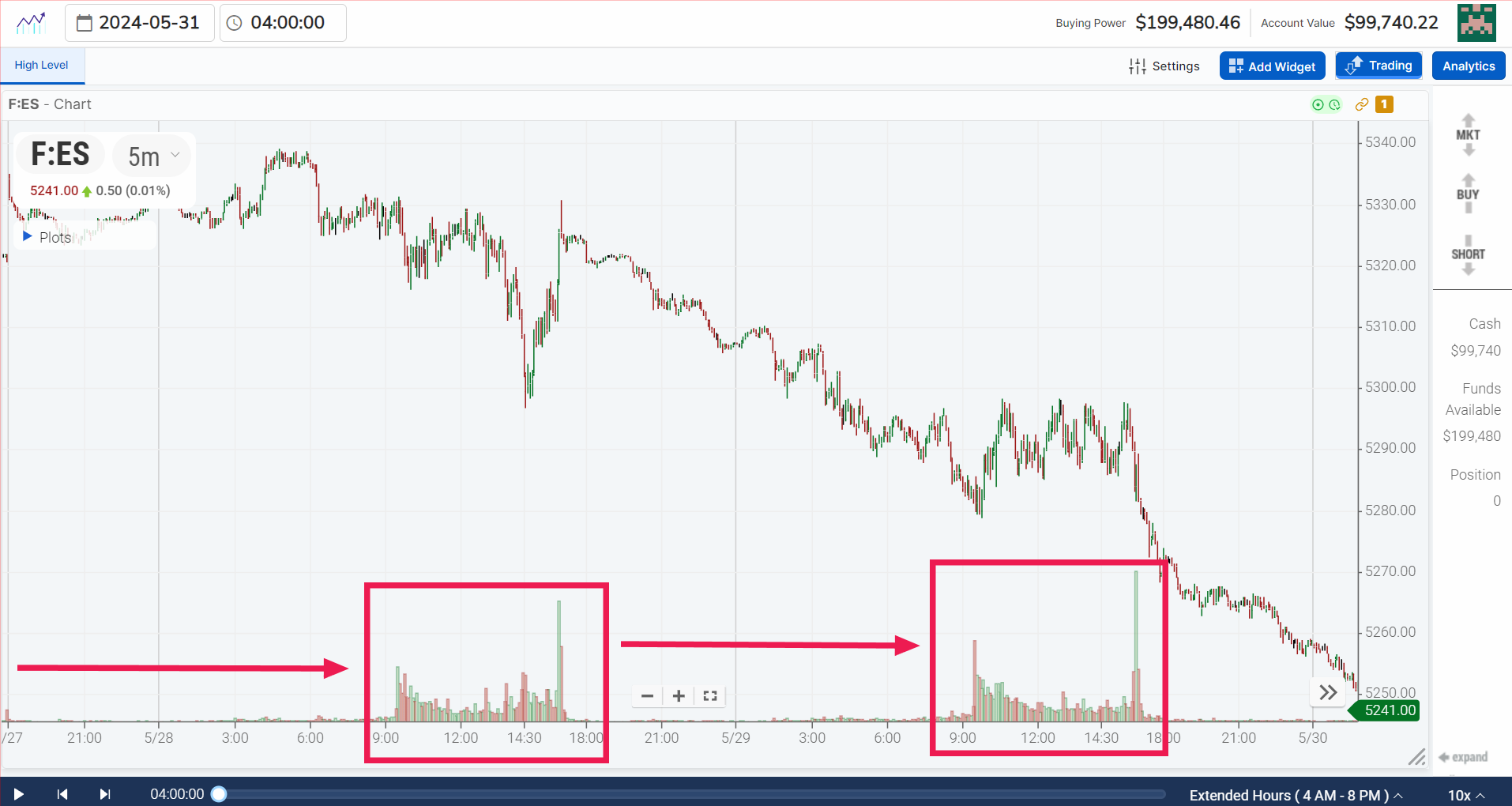
Liquidity refers to the ease with which an asset can be bought or sold without significantly affecting its price, while volatility measures the rate at which a price moves. In futures markets, both are highly time-dependent. Core trading sessions, particularly when major financial centers are active (e.g., New York, London overlap for financial futures), typically offer the highest liquidity and often, but not always, higher volatility. This means tighter spreads, better execution prices, and the ability to enter and exit positions more efficiently. During overnight or extended sessions, liquidity can drop significantly, leading to wider bid-ask spreads and potentially choppy price action. This reduced liquidity can amplify the impact of large orders and lead to greater price slippage, making it riskier for high-frequency or large-volume traders. Conversely, periods of low liquidity can sometimes precede sharp moves if a significant news event breaks.
Risk Management Considerations (Overnight Gaps, Weekend Risk)
The extended trading hours, while offering continuous opportunity, also introduce unique risks.
- Overnight Gaps: Even with near 24-hour trading, there are daily maintenance breaks and weekend closures. Major news events or economic data releases during these brief offline periods can lead to significant price gaps when the market reopens. A position held overnight or over the weekend can be negatively affected if the market opens substantially against the trader’s position, potentially exceeding pre-set stop-loss orders.
- Weekend Risk: The risk of unexpected, market-moving events occurring between Friday’s close and Sunday’s open is substantial. Geopolitical crises, natural disasters, or major policy announcements can drastically alter market sentiment, leading to substantial gaps at the week’s opening. Traders must decide whether to carry positions through the weekend, knowing they are exposed to these uncontrolled variables.
Arbitrage Opportunities and Global Influences
The global nature of futures trading fosters unique arbitrage opportunities. For instance, a futures contract for a commodity traded on both the CME in the US and the SGX in Singapore might present temporary price discrepancies that can be exploited by sophisticated traders. Moreover, the continuous nature means that futures markets are constantly reacting to global economic indicators and geopolitical events. For example, a major economic report released in Japan during Asian trading hours will immediately impact relevant futures contracts, such as equity index futures or currency futures, well before European or US cash markets open. Traders who monitor global news and understand its potential impact across different time zones can gain a significant edge.
Impact on Trading Strategies (Day Trading vs. Swing Trading)
The choice of trading hours significantly influences a trader’s strategy:
- Day Traders: These traders typically focus on the most liquid and volatile core trading sessions, aiming to open and close all positions within the same day to avoid overnight risk. They often thrive on the higher volumes and tighter spreads during these periods.
- Swing Traders: Swing traders, who hold positions for several days or weeks, must carefully consider the impact of overnight and weekend risks. While they benefit from the ability to respond to global developments, they also need robust risk management strategies to handle potential gaps against their positions.
- Algorithmic Traders: Automated trading systems can be programmed to exploit specific patterns across different time zones, taking advantage of varying liquidity and volatility profiles throughout the 24-hour cycle. However, these systems also need to account for maintenance breaks and potential data feed interruptions.
Practical Tips for Navigating Futures Market Hours
Successfully navigating the extensive and dynamic hours of the futures market requires diligent preparation and awareness. Here are several practical tips to help traders optimize their approach.
Utilizing Trading Platforms and Data Feeds
Modern trading platforms are indispensable tools for futures traders. They provide real-time data feeds, charting capabilities, and order execution functionalities. Most reputable platforms will display the current trading status (open, closed, on break) for each contract, along with countdowns to the next open or close. It’s crucial to select a platform that offers reliable, low-latency data and clear visualizations of market hours. Traders should also familiarize themselves with their platform’s settings for stop-loss and take-profit orders, especially understanding how they function during periods of low liquidity or potential price gaps. Some platforms offer “OCO” (One-Cancels-the-Other) orders or bracket orders that can help manage risk even when not actively monitoring the market.
Awareness of Rollover Dates and Expiries
Futures contracts have a finite lifespan; they expire on a specific date. Before expiry, traders must either close their positions or “roll over” to the next available contract month. Rollover dates typically occur a few days before the contract’s expiry and are critical for continuous trading strategies. Failing to manage rollovers can result in being forced to liquidate a position or, worse, being assigned delivery of the underlying asset if physical delivery is involved. Exchanges publish these dates well in advance, and trading platforms often provide reminders. Liquidity tends to shift from the expiring contract to the next active contract in the days leading up to rollover, so knowing these dates is paramount for maintaining efficient trading.
Holiday Schedules and Early Closures
While futures markets are nearly 24/5, they are not immune to holidays or special events. Major national holidays in the exchange’s home country (e.g., Christmas, New Year’s Day, U.S. Thanksgiving) will lead to market closures or significantly reduced hours. Furthermore, sometimes exchanges announce early closures or special trading schedules around certain events or holidays. Always check the official exchange calendars well in advance for any contract you trade. Trading during holiday-shortened weeks or periods immediately preceding holidays can also result in lower liquidity and increased volatility, presenting additional risks.
Time Zone Conversions and Personal Trading Schedule
Given the global nature of futures trading, managing time zones is a constant challenge. Most exchanges quote their hours in their local time (e.g., CT for CME Group, CET for Eurex), so traders must accurately convert these to their local time zone. Many trading platforms offer customizable time zone displays, which can be incredibly helpful. More importantly, traders should establish a personal trading schedule that aligns with the most opportune market hours for their chosen contracts and strategy, while also being sustainable for their well-being. Trying to trade all 24 hours is a recipe for burnout and poor decision-making. Focus on the sessions that offer the best confluence of liquidity, volatility, and personal energy.
The Future of Futures Trading Hours
The trend toward increasing market accessibility and continuous trading is likely to continue in the futures market. Technological advancements, particularly in high-speed data transmission and algorithmic trading, consistently push the boundaries of what’s possible in financial markets.
The Continued Shift Towards Electronic Trading
The dominance of electronic trading is undeniable and will only grow. As technology evolves, exchanges will continue to invest in faster, more resilient platforms that can handle ever-increasing volumes and provide sub-millisecond execution speeds. This will further solidify the 24-hour nature of futures trading, making physical trading floors even more of a historical artifact. This shift also means that geographical location becomes less of a barrier, democratizing access to these markets for a wider range of participants globally.
Impact of Global News on Continuous Markets
In a world driven by instant information, the ability of futures markets to react immediately to global news, regardless of the time of day, is a significant advantage. Economic data releases, corporate earnings announcements, central bank decisions, and geopolitical developments from anywhere on the planet are absorbed and priced in by futures contracts without delay. This continuous price discovery mechanism enhances market efficiency and ensures that prices reflect the latest available information. For traders, this means constant vigilance and the ability to integrate real-time global news into their trading decisions, further emphasizing the importance of understanding the comprehensive trading cycle.
Conclusion
The question “what time does the futures market open?” reveals a complex and dynamic reality: for most contracts, the market is virtually always open, operating on a nearly 24-hour, five-day-a-week schedule. This continuous trading environment, driven by global demand and sophisticated electronic platforms, stands in stark contrast to the fixed hours of traditional stock exchanges. From equity indices to commodities and currencies, futures contracts offer unparalleled flexibility, allowing traders worldwide to react to market-moving events as they unfold across different time zones.
However, this extended accessibility comes with its own set of considerations. Traders must distinguish between high-liquidity core sessions and potentially thinly traded extended hours, understand the implications of overnight and weekend gaps, and be vigilant about rollover dates and holiday schedules. Successful navigation of the futures market demands not just an understanding of specific opening and closing times, but also a deep appreciation for the underlying patterns of volatility and liquidity that shift throughout the trading cycle. By leveraging reliable trading platforms, meticulously planning their trading schedules, and staying abreast of global events, futures traders can harness the power of this truly global and continuous market to pursue their financial objectives effectively and professionally.
aViewFromTheCave is a participant in the Amazon Services LLC Associates Program, an affiliate advertising program designed to provide a means for sites to earn advertising fees by advertising and linking to Amazon.com. Amazon, the Amazon logo, AmazonSupply, and the AmazonSupply logo are trademarks of Amazon.com, Inc. or its affiliates. As an Amazon Associate we earn affiliate commissions from qualifying purchases.