
In the intricate world of finance, few concepts are as fundamental yet often misunderstood as “stock.” For many, the stock market conjures images of chaotic trading floors, flashing screens, and rapid wealth creation or loss. At its core, however, a stock represents something far simpler and more tangible: a piece of ownership in a company. Understanding this foundational concept is the first crucial step for anyone looking to navigate the financial markets, make informed investment decisions, or simply comprehend how businesses are funded and valued. This article will delve into the essence of stock, explore why companies issue it, demystify the stock market where it’s traded, categorize different types of stocks, and equip you with the knowledge to begin evaluating these powerful financial instruments.
The Fundamental Concept: What is a Stock?
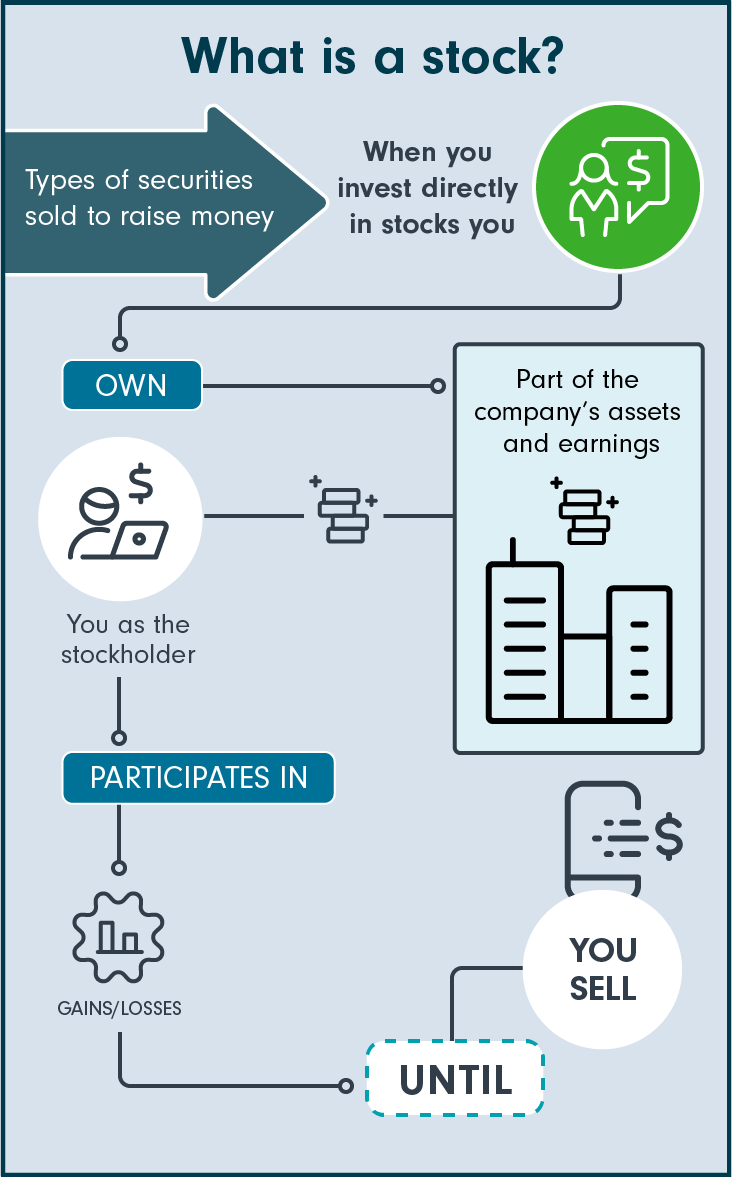
At its most basic level, a stock, also known as equity or a share, signifies a fractional ownership interest in a corporation. When you buy a stock, you become a part-owner of the company that issued it. This ownership is proportionate to the number of shares you hold relative to the total number of shares outstanding. This concept is vital because it implies a direct stake in the company’s future successes and challenges.
Fractional Ownership in a Company
Imagine a large cake representing a company. When the company goes public or issues new shares, it’s essentially slicing that cake into many small, equal pieces. Each piece is a share of stock. If a company issues one million shares, and you own one thousand of them, you own 0.1% of that company. This percentage, however small, grants you certain rights and exposes you to the company’s financial performance. It means that as the company grows, profits, or expands its operations, your fractional ownership theoretically increases in value. Conversely, if the company struggles, the value of your shares may decline.
Shares, Equity, and Capital
The terms “shares” and “equity” are often used interchangeably with “stock.” “Shares” refers to the individual units of ownership. “Equity” is a broader term encompassing the total ownership stake in a company, often appearing on a company’s balance sheet under “shareholders’ equity,” which represents the residual value of assets minus liabilities.
The issuance of stock is a primary method for companies to raise “capital” – the money needed to fund operations, invest in growth, research and development, or pay off debt. When a company sells stock, it receives cash from investors, which then becomes part of its capital structure. This capital is crucial for driving innovation and economic expansion.
The Legal Entitlement of a Shareholder
As a shareholder, you are not merely a passive bystander. Your ownership comes with specific legal entitlements, though these can vary based on the type of stock you own (which we will discuss later). The most common rights include:
- Voting Rights: Holders of common stock typically have the right to vote on important corporate matters, such as electing the board of directors, approving mergers, or making significant changes to company policy. Each share usually entitles the holder to one vote.
- Dividends: Shareholders may be entitled to receive dividends, which are distributions of a portion of the company’s profits. Dividends can be paid out in cash, additional shares, or other assets. However, dividend payments are not guaranteed and are at the discretion of the company’s board.
- Preemptive Rights: In some cases, existing shareholders may have the right to purchase new shares issued by the company before they are offered to the general public, allowing them to maintain their proportionate ownership.
- Residual Claim on Assets: In the event of a company’s liquidation, common shareholders have a residual claim on the company’s assets after creditors and preferred shareholders have been paid. This is why stock ownership carries more risk than debt, but also greater potential for reward.
Why Companies Issue Stocks and What It Means for Investors
The decision for a company to issue stock and become publicly traded is a strategic one, driven by the need for capital and often a desire for increased visibility and liquidity. For investors, this decision opens a gateway to participating in the growth and profitability of diverse businesses.
Capital Generation for Growth
The primary reason companies issue stock is to raise capital. Unlike debt financing, where a company borrows money and must pay it back with interest, equity financing involves selling ownership stakes. This method offers several advantages for a company:
- No Repayment Obligation: The capital raised through stock issuance doesn’t have to be paid back, nor does it typically incur interest payments (though dividends might be paid). This provides financial flexibility.
- Funding Growth and Expansion: The funds can be used for a wide range of purposes, including expanding operations, launching new products, entering new markets, acquiring other companies, or investing in research and development.
- Enhanced Credibility and Visibility: Being a publicly traded company can enhance its reputation, attract top talent, and increase its brand recognition among consumers and business partners.
- Employee Incentives: Stock options or restricted stock units can be offered to employees as a form of compensation, aligning their interests with the company’s success and providing an incentive for long-term commitment.
Shareholder Rights and Responsibilities
As discussed, shareholders acquire specific rights upon purchasing stock. These rights empower them to influence the company’s direction to some degree and benefit from its success. However, shareholders also bear the responsibility of due diligence. While they are not liable for the company’s debts beyond their investment, prudent investors are expected to research the companies they invest in, understand their business models, financial health, and management team. Active shareholders might attend annual general meetings, cast proxy votes, and engage with investor relations.
Potential Returns: Dividends and Capital Appreciation
For investors, the allure of stock ownership lies in two primary avenues for potential returns:
- Capital Appreciation: This is the most common way investors profit from stocks. If the company performs well, grows its earnings, and expands its market share, the demand for its stock might increase, driving up its price. If you buy a stock at $50 and sell it later at $70, you’ve realized a $20 capital gain per share. This appreciation is often a key driver for long-term wealth creation.
- Dividends: As mentioned, some companies distribute a portion of their profits to shareholders in the form of dividends. These can be a significant source of income, particularly for investors focused on generating regular cash flow from their portfolios. Companies with a history of consistent dividend payments are often sought after by income-oriented investors. Dividends can also be reinvested to buy more shares, compounding returns over time.
It’s important to remember that these are potential returns. Stock prices can also depreciate, leading to capital losses, and dividends are not guaranteed.
Navigating the Stock Market: Where Shares Are Traded
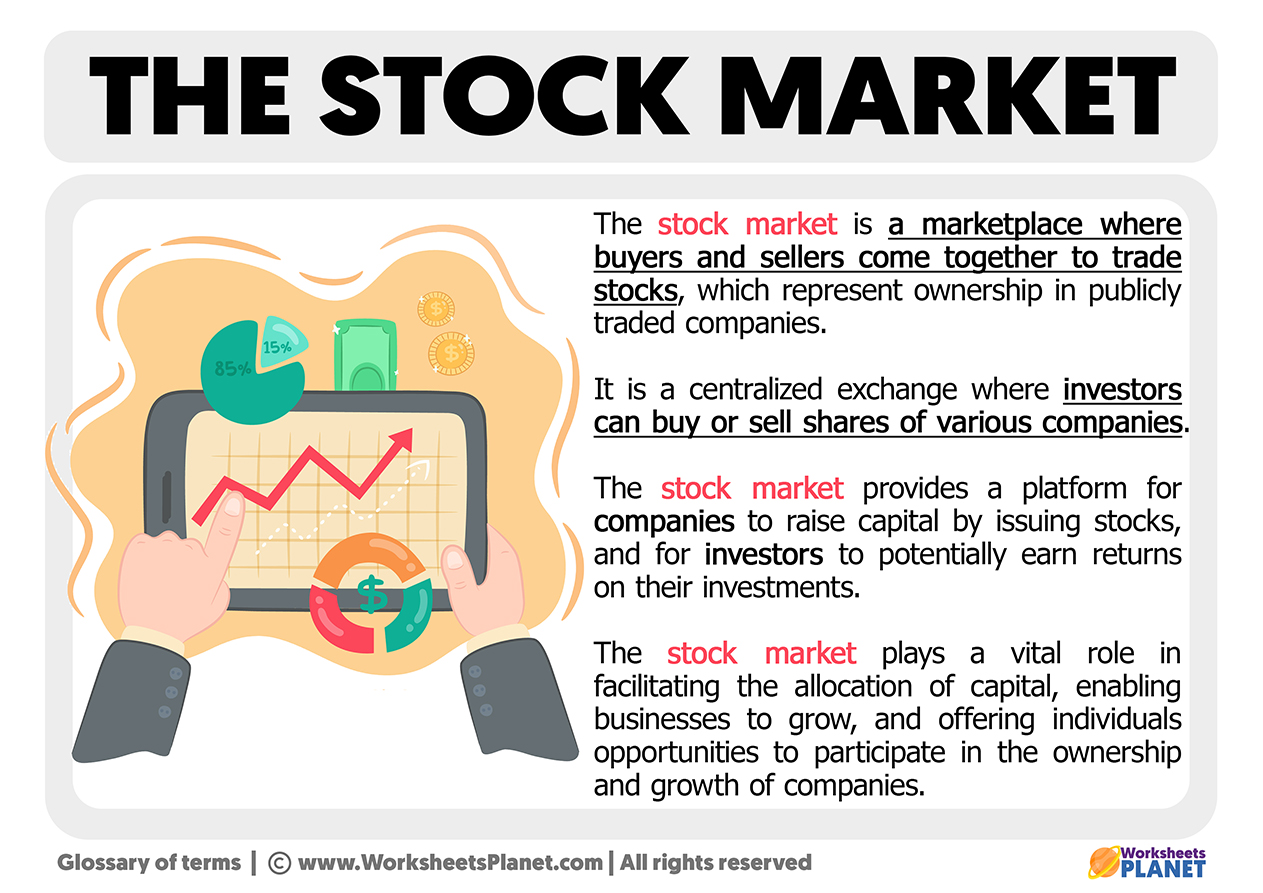
Once a company decides to go public and issues stock, these shares don’t just sit in a vault. They are traded on what is known as the stock market. The stock market is not a single physical location but rather a vast, interconnected network of exchanges and platforms facilitating the buying and selling of securities. Its existence is crucial for liquidity, price discovery, and efficient capital allocation.
Primary vs. Secondary Markets (IPOs vs. Exchanges)
The journey of a stock typically begins in the primary market and continues in the secondary market:
- Primary Market (Initial Public Offering – IPO): This is where new stocks are issued for the first time. When a private company decides to “go public,” it undertakes an Initial Public Offering (IPO), selling shares directly to institutional investors and the public. The purpose is to raise substantial capital for the company. Investment banks play a critical role in underwriting these offerings, setting the initial price, and distributing the shares.
- Secondary Market (Stock Exchanges): After the IPO, the shares are then traded among investors on various stock exchanges. This is the “stock market” that most people are familiar with. Companies themselves do not receive money from these secondary market transactions; instead, ownership simply transfers from one investor to another. The secondary market provides liquidity for investors, meaning they can easily buy or sell their shares. Examples include the New York Stock Exchange (NYSE) and Nasdaq.

Major Stock Exchanges Around the World
Stock exchanges are regulated marketplaces where buyers and sellers can meet to trade securities. They provide a structured environment with rules and systems to ensure fair and orderly trading. Some of the most prominent stock exchanges globally include:
- New York Stock Exchange (NYSE): One of the oldest and largest exchanges, known for its “floor trading” model (though now largely electronic) and listing many large, established companies.
- Nasdaq Stock Market: Primarily an electronic exchange, known for listing many technology and growth-oriented companies.
- London Stock Exchange (LSE): A major global exchange, particularly strong in international listings.
- Japan Exchange Group (JPX – Tokyo Stock Exchange): The largest exchange in Asia.
- Shanghai Stock Exchange (SSE) and Shenzhen Stock Exchange (SZSE): Dominant exchanges in mainland China.
- Euronext: A pan-European exchange covering multiple countries like France, Netherlands, Belgium, and Portugal.
These exchanges are critical infrastructure for the global financial system, facilitating capital formation and economic activity.
The Role of Brokers and Trading Platforms
Individual investors typically don’t trade directly on exchanges. Instead, they use the services of brokerage firms. A broker acts as an intermediary, executing buy and sell orders on behalf of their clients. In the digital age, online trading platforms have democratized access to the stock market, allowing individuals to open accounts, fund them, and place trades with relative ease and often low fees. These platforms provide tools for research, analysis, and portfolio management, empowering individual investors to manage their own portfolios.
Types of Stocks and Their Characteristics
Not all stocks are created equal. Different types of stocks cater to various investor preferences, risk tolerances, and investment goals. Understanding these distinctions is crucial for building a diversified and effective portfolio.
Common Stock vs. Preferred Stock
These are the two main classifications of stock:
- Common Stock: As discussed, common stock represents general ownership and usually comes with voting rights. It offers the potential for higher capital appreciation but also carries more risk, as common shareholders are last in line to receive assets if a company liquidates.
- Preferred Stock: Preferred stock typically does not carry voting rights but often offers a fixed dividend payment that takes precedence over common stock dividends. In the event of liquidation, preferred shareholders have a higher claim on the company’s assets than common shareholders. Because of these features, preferred stocks are often considered a hybrid between stocks and bonds, offering more stability but less growth potential than common stock.
Growth Stocks vs. Value Stocks
These categories refer to the underlying investment strategy:
- Growth Stocks: These are shares of companies expected to grow sales and earnings at a faster rate than the overall market. They often reinvest most of their earnings back into the business rather than paying dividends. Growth stocks typically trade at higher valuations (e.g., higher price-to-earnings ratios) because investors are paying for future growth potential. Examples often include technology and innovative startups. They carry higher risk but also higher potential returns.
- Value Stocks: These are shares of companies that are perceived to be undervalued by the market relative to their intrinsic worth. They often belong to mature industries, pay dividends, and may have lower growth prospects but stable earnings. Investors buy value stocks hoping that the market will eventually recognize their true worth, leading to capital appreciation. They typically trade at lower valuations.
Income Stocks vs. Blue-Chip Stocks
- Income Stocks: These are stocks of companies that pay consistent, often high, dividends. They are typically mature companies in stable industries that generate consistent cash flows. Investors primarily seek these stocks for their regular income stream rather than significant capital appreciation. Utilities, real estate investment trusts (REITs), and some consumer staples companies often fall into this category.
- Blue-Chip Stocks: These refer to the stocks of large, well-established, financially sound companies with a long history of reliable earnings and dividends. They are often leaders in their respective industries and are considered less volatile and more stable investments. Examples include many companies in the Dow Jones Industrial Average. While they may not offer explosive growth, they are often a cornerstone of a stable investment portfolio.
Evaluating Stocks and Understanding Investment Dynamics
Investing in the stock market requires more than just knowing what a stock is; it demands an understanding of how to evaluate a company’s potential and the factors that influence its stock price. This process involves both fundamental analysis (looking at a company’s financials) and considering broader market dynamics.
Key Metrics for Stock Analysis (P/E, EPS, Market Cap)
Investors use various financial metrics to assess a company’s health and valuation:
- Price-to-Earnings (P/E) Ratio: This is one of the most common valuation metrics. It is calculated by dividing the current share price by the company’s earnings per share (EPS). A high P/E ratio suggests investors expect higher future growth, while a low P/E might indicate an undervalued stock or a company with slower growth prospects.
- Earnings Per Share (EPS): This metric represents the portion of a company’s profit allocated to each outstanding share of common stock. It’s calculated by dividing a company’s net income by the total number of outstanding shares. A consistently increasing EPS is generally a positive sign.
- Market Capitalization (Market Cap): This is the total value of a company’s outstanding shares. It’s calculated by multiplying the current share price by the total number of shares outstanding. Market cap is used to categorize companies as small-cap, mid-cap, or large-cap, which often correlates with their growth potential and risk profile.
- Dividend Yield: For income-focused investors, this is the annual dividend per share divided by the current share price, expressed as a percentage. It indicates the return on investment from dividends alone.
These metrics, among others (like debt-to-equity ratio, revenue growth, profit margins), provide crucial insights into a company’s financial standing and future prospects.
Factors Influencing Stock Prices
Stock prices are dynamic and can fluctuate due to a multitude of factors:
- Company-Specific Performance: Earnings reports, new product launches, management changes, mergers or acquisitions, and competitive landscape significantly impact investor sentiment and, thus, stock prices.
- Industry Trends: The overall health and growth prospects of the industry a company operates in can affect its stock. Technological advancements, regulatory changes, and consumer preferences can create headwinds or tailwinds.
- Economic Conditions: Broader economic indicators like GDP growth, inflation rates, interest rates, and unemployment figures can influence corporate profits and investor confidence across the entire market.
- Market Sentiment: Investor psychology, often driven by news, rumors, or prevailing optimism/pessimism, can lead to irrational buying or selling, creating volatility.
- Geopolitical Events: International conflicts, trade wars, or major political shifts can introduce uncertainty and affect global markets.
Understanding these interconnected factors is key to appreciating why stock prices move the way they do and why the market can be unpredictable.
The Importance of Diversification and Long-Term Perspective
Given the inherent risks and volatility of the stock market, two principles are paramount for investors:
- Diversification: This involves spreading your investments across various types of stocks, industries, geographical regions, and asset classes (e.g., stocks, bonds, real estate). The goal is to reduce overall portfolio risk by ensuring that a poor performance in one investment does not devastate your entire portfolio. “Don’t put all your eggs in one basket” is a timeless investing adage.
- Long-Term Perspective: Historically, the stock market has demonstrated an upward trend over extended periods, despite short-term fluctuations and downturns. Adopting a long-term investment horizon (several years or even decades) allows investors to ride out market volatility, benefit from compounding returns, and let their investments grow with economic progress. Attempting to time the market by frequently buying and selling based on short-term predictions is often counterproductive and risky.
In conclusion, a stock is much more than just a number on a screen; it’s a tangible stake in a company’s future, a conduit for capital generation, and a powerful vehicle for wealth creation for individual investors. By grasping its fundamental nature, understanding the market’s mechanisms, and embracing sound investment principles, anyone can begin their journey into the exciting and potentially rewarding world of stock market investing.
aViewFromTheCave is a participant in the Amazon Services LLC Associates Program, an affiliate advertising program designed to provide a means for sites to earn advertising fees by advertising and linking to Amazon.com. Amazon, the Amazon logo, AmazonSupply, and the AmazonSupply logo are trademarks of Amazon.com, Inc. or its affiliates. As an Amazon Associate we earn affiliate commissions from qualifying purchases.