
The story of Amazon is often romanticized as a tale of a visionary in a garage, but through the lens of business finance and investment strategy, it is a masterclass in capital allocation, risk management, and long-term value creation. When Jeff Bezos founded Amazon in 1994, he wasn’t just starting a bookstore; he was leveraging a specific financial insight regarding the exponential growth of the internet. By analyzing the mechanics of how Amazon started, we can uncover the financial blueprints that allowed a niche online retailer to evolve into a global economic powerhouse.

The Seed Capital and the High-Risk Bet on E-Commerce
The financial genesis of Amazon began not with a product, but with a realization about growth rates. While working at the hedge fund D.E. Shaw & Co., Jeff Bezos observed that web usage was growing at 2,300% per year. From a purely financial perspective, an asset class or market growing at that velocity represents an unprecedented opportunity for early-mover advantage.
The $250,000 Bridge: Parental Investment and Risk Management
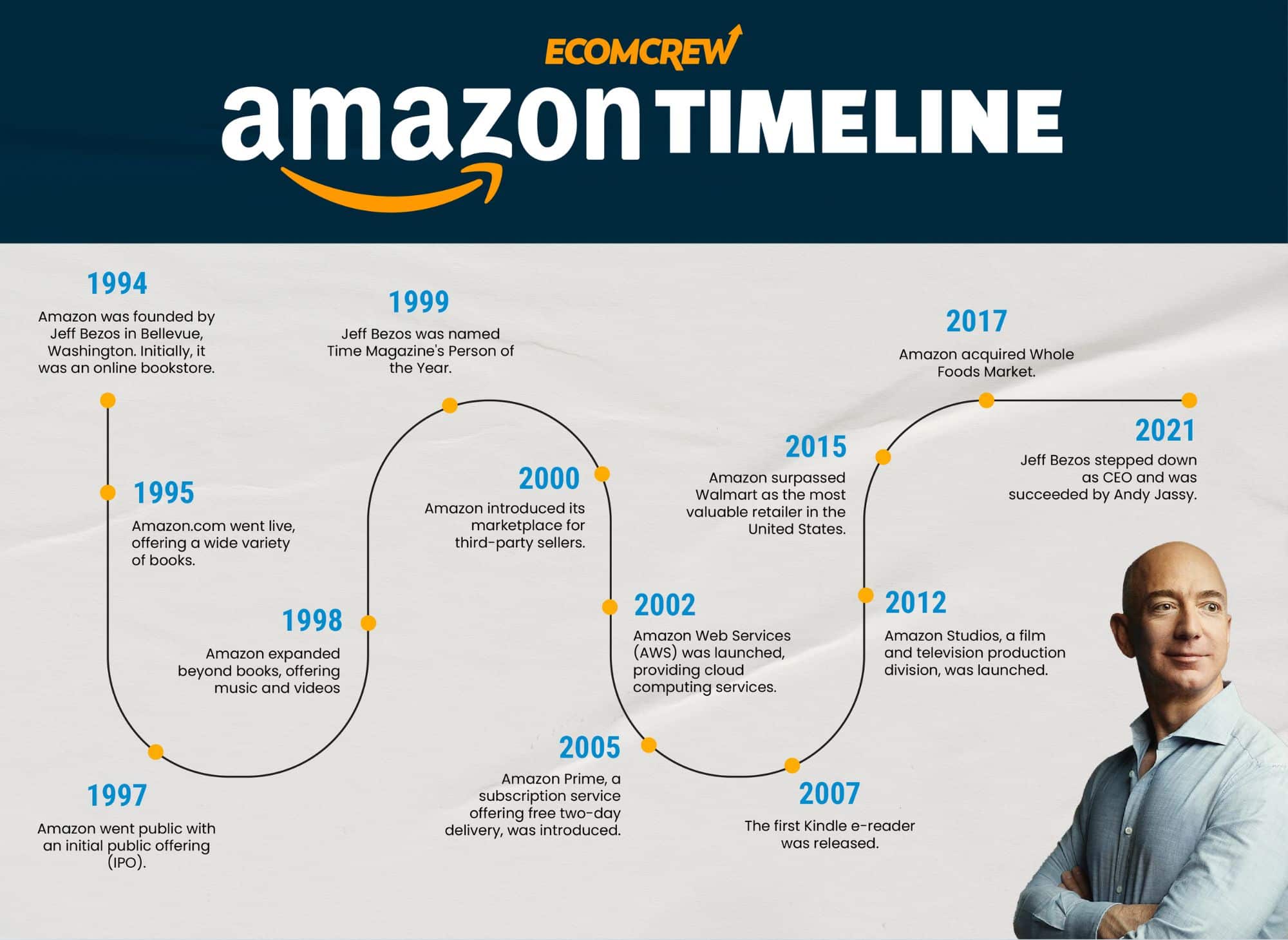
Every startup requires initial liquidity, and Amazon’s first significant “round” came from a source common in the world of personal finance: family. Bezos’s parents invested roughly $245,573 in 1995. This was a high-risk gamble; Bezos famously told them there was a 70% chance they would lose their entire investment. From a portfolio management perspective, this was “alpha” seeking at its most extreme. This capital allowed Amazon to move out of the “garage” phase and into a more robust operational structure, proving that even the largest empires often begin with a small, concentrated pool of private capital.
Selecting the Vertical: Why Books Were the Ideal Financial Entry Point
The decision to sell books was a calculated financial strategy based on inventory management and SKU (Stock Keeping Unit) density. Unlike clothing or electronics, books are non-perishable, easy to ship, and—most importantly—there were millions of titles in print. No physical bookstore could possibly hold every title. By choosing books, Amazon created a “virtual inventory” model. This allowed them to offer a massive selection without the crushing overhead costs of physical real estate, a move that maximized their capital efficiency from day one.
Scaling the Financial Model: Beyond the Initial Sale
As Amazon moved past its first year, the focus shifted from mere survival to the mechanics of scaling a high-volume, low-margin business. The goal was to build what is now known as the “Amazon Flywheel,” a financial virtuous cycle where lower prices lead to more customers, which attracts more third-party sellers, which lowers costs further.
The Inventory Problem and the Move Toward Third-Party Logistics
In the early days, Amazon’s cash flow was heavily tied up in inventory. To improve their liquidity and operational efficiency, they had to rethink how they moved goods. The financial breakthrough came when they realized they could act as a middleman for other retailers. By launching “Amazon Marketplace” in 2000, they shifted a portion of the financial risk of inventory onto third-party sellers while taking a percentage of every sale. This transition from a pure retailer to a platform provider drastically improved their margins and diversified their revenue streams.
Reinvesting Profits: The Philosophy of Long-Term Capital Allocation
For nearly two decades, Amazon was famously “unprofitable” on paper. However, this was a deliberate financial tactic rather than a failure of the business model. Bezos practiced a strategy of aggressive reinvestment. Instead of returning dividends to shareholders or showing a net profit, every dollar of free cash flow was plowed back into infrastructure, technology, and logistics. This “Day 1” philosophy meant that the company was constantly expanding its moat, using its tax-advantaged status (as losses or reinvestments often offset taxable income) to build a logistical network that no competitor could afford to duplicate.
The Path to IPO and the Survival of the Dot-Com Bubble
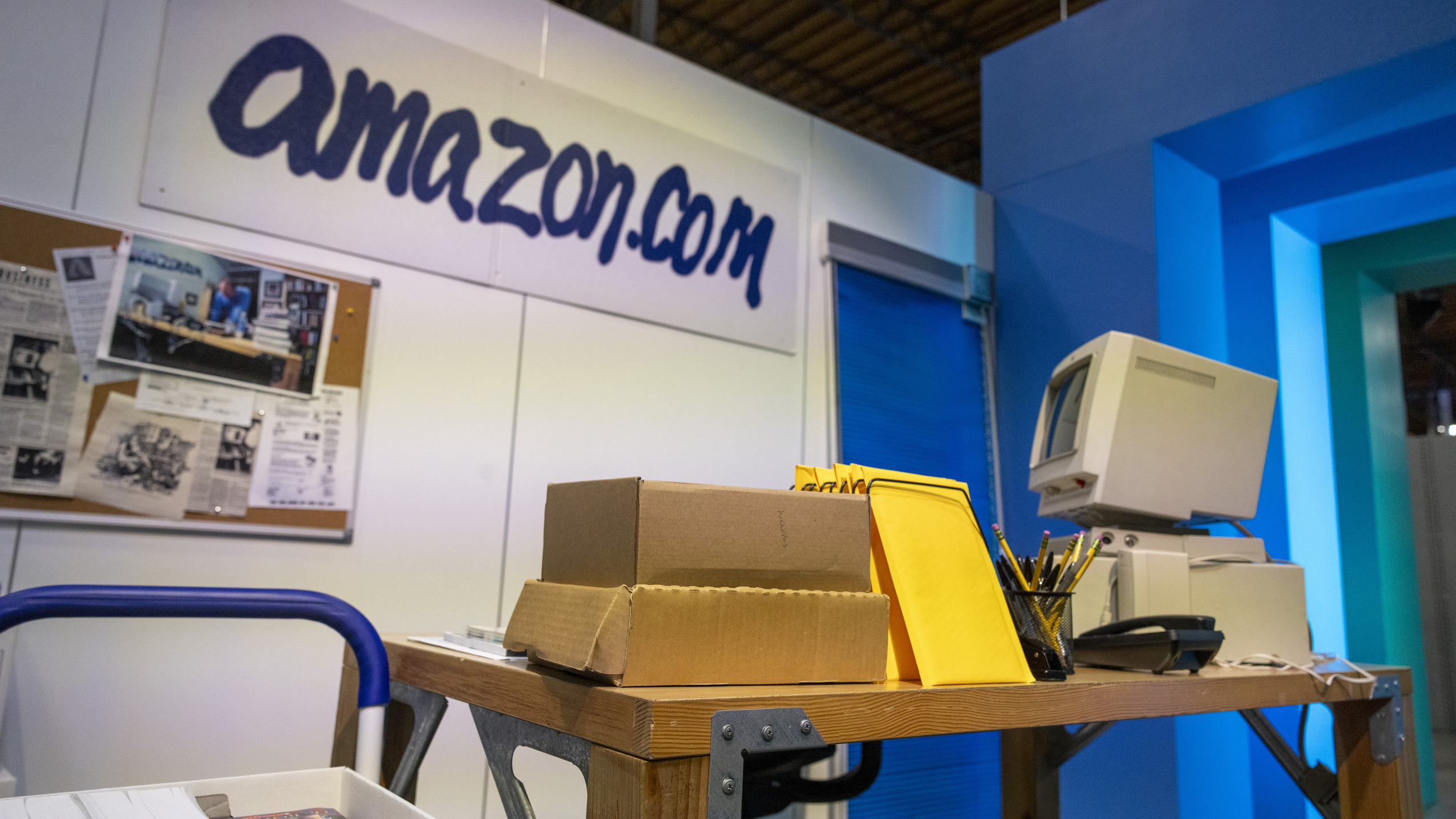
The true test of Amazon’s financial durability came during the transition from a private startup to a public entity, and the subsequent market crash that wiped out the majority of its peers.
1997: Going Public as a Strategic Growth Lever
Amazon went public on May 15, 1997, at $18 per share. The IPO was not just an exit strategy for early investors; it was a necessary infusion of capital to fund the massive warehouses (fulfillment centers) required to dominate the market. By tapping into public equity markets, Amazon secured the “dry powder” necessary to expand into music, movies, and electronics. The IPO valued the company at roughly $438 million—a figure that seems quaint today but provided the liquidity needed to survive the looming economic storm.
Weathering the Storm: Lessons in Liquidity from the 2000 Crash
The “Dot-Com” crash of 2000 was a graveyard for early internet companies like Pets.com and Kozmo.com. Amazon survived largely due to a well-timed financial maneuver. Just one month before the stock market collapsed, Amazon issued $672 million in convertible bonds to European investors. This massive cushion of debt-turned-capital provided the company with enough “runway” to continue operations while its stock price plummeted from over $100 to below $10. This moment highlights a crucial lesson in business finance: timing the market and securing liquidity during periods of irrational exuberance can be the difference between bankruptcy and becoming a market leader.
Diversifying Revenue Streams: The Birth of AWS and Prime
By the mid-2000s, Amazon’s financial identity began to shift from an e-commerce store to a diversified tech and services conglomerate. This diversification was essential for stabilizing cash flow and increasing the company’s valuation multiple.
Subscription Revenue: Building Predictable Cash Flow with Prime
Launched in 2005, Amazon Prime was a radical financial experiment. By charging an upfront annual fee for “free” shipping, Amazon fundamentally changed consumer behavior. From a personal finance perspective, Prime encouraged “sunk cost” thinking; because users had already paid for the membership, they were incentivized to consolidate all their spending on Amazon to maximize the value of the fee. For Amazon, this meant a massive influx of predictable, recurring subscription revenue, which is far more valuable to investors than one-off retail sales.
AWS: Transforming Internal Costs into a Profit Powerhouse
Perhaps the most significant financial pivot in corporate history was the launch of Amazon Web Services (AWS) in 2006. Amazon had spent years and millions of dollars building a robust technical infrastructure to handle holiday shopping surges. Most of that computing power sat idle for 11 months of the year. In a stroke of financial genius, Amazon decided to rent out this excess capacity to other businesses.
AWS transformed a massive operational expense into a high-margin revenue stream. Today, while the retail side of the business generates the most “top-line” revenue, AWS often generates the majority of the company’s operating profit. This shift allowed Amazon to subsidize its low-margin retail business with high-margin cloud services, creating a financial powerhouse that is virtually impossible to compete with on price alone.
Conclusion: The Financial Legacy of Amazon’s Start
How Amazon started is a story of disciplined financial scaling. It began with the identification of a high-growth market, moved into a capital-efficient product category, and survived through strategic debt management and an unwavering commitment to reinvesting free cash flow.
By prioritizing long-term market share over short-term quarterly profits, Jeff Bezos and his team utilized the principles of compounding—not just in the stock market, but in operational capacity. For the modern investor or entrepreneur, Amazon’s origins serve as a reminder that the strongest businesses are built on a foundation of aggressive reinvestment, diversified revenue streams, and the strategic use of capital to build a moat that competitors simply cannot afford to cross. Amazon didn’t just change how we shop; it changed the financial playbook for how a modern corporation is built from the ground up.
aViewFromTheCave is a participant in the Amazon Services LLC Associates Program, an affiliate advertising program designed to provide a means for sites to earn advertising fees by advertising and linking to Amazon.com. Amazon, the Amazon logo, AmazonSupply, and the AmazonSupply logo are trademarks of Amazon.com, Inc. or its affiliates. As an Amazon Associate we earn affiliate commissions from qualifying purchases.