
In the modern landscape of global technology, few companies hold as much invisible influence as Broadcom Inc. While consumer-facing giants like Apple, Google, and Microsoft dominate headlines, Broadcom operates as the essential architect behind the scenes. If you have used a smartphone today, connected to a Wi-Fi network, accessed data from a cloud server, or conducted a secure bank transaction, you have likely interfaced with Broadcom’s technology.
Broadcom is a global technology leader that designs, develops, and supplies a broad range of semiconductor and infrastructure software solutions. Their product portfolio serves the data center, networking, enterprise software, broadband, wireless, storage, and industrial markets. To understand what Broadcom does, one must look past the “chipmaker” label and see a diversified powerhouse that enables the digital world to function, scale, and remain secure.
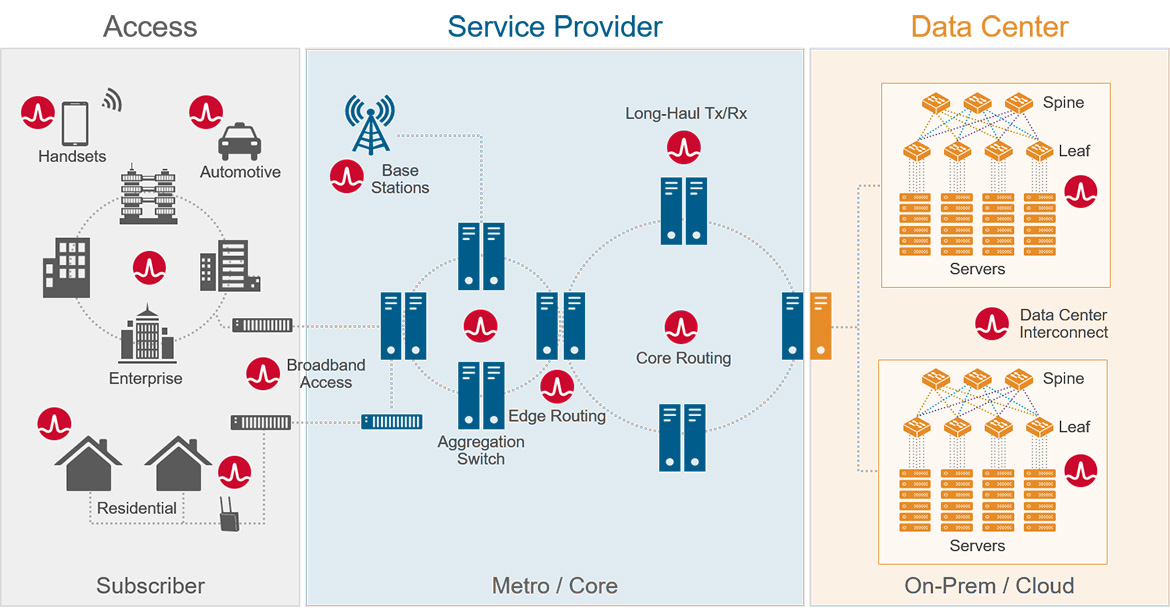
Semiconductor Solutions: The Silicon Powering Connectivity
At its core, Broadcom is a titan of the semiconductor industry. However, unlike companies that focus on consumer CPUs or GPUs, Broadcom specializes in “Category A” components—the high-performance chips that manage how data moves across networks. Their semiconductor business is built on a foundation of intellectual property that defines how devices talk to one another.
Networking and Data Center Excellence
Broadcom is arguably the world leader in Ethernet switching and routing silicon. In the massive data centers managed by hyperscalers like Amazon Web Services (AWS) and Microsoft Azure, Broadcom’s “Tomahawk” and “Trident” chip families act as the traffic controllers. These chips determine the speed and efficiency with which data packets move from one server to another. As global data consumption explodes due to streaming and cloud computing, Broadcom’s innovations in high-bandwidth switching allow data centers to handle petabytes of information with minimal latency.
Wireless Communications and the 5G Revolution
If you open a high-end smartphone, you will find Broadcom silicon responsible for critical wireless functions. They are a primary provider of Wi-Fi and Bluetooth “combo” chips, which allow devices to maintain stable, high-speed connections to local networks. Furthermore, Broadcom is a leader in Radio Frequency (RF) front-end modules and Film Bulk Acoustic Resonator (FBAR) filters. These components are vital for 5G connectivity, as they help isolate specific frequency bands to prevent interference, ensuring that your mobile device can maintain a clear signal even in crowded environments.
Storage and Industrial Innovations
Beyond networking and wireless, Broadcom provides the critical interfaces for data storage. They manufacture controllers and adapters for Serial Attached SCSI (SAS), SATA, and NVMe systems. These components ensure that data can be written to and retrieved from hard drives and solid-state drives (SSDs) at enterprise speeds. In the industrial sector, Broadcom produces optical sensors and motion control encoders used in factory automation and automotive systems, demonstrating the sheer breadth of their hardware reach.
The Strategic Pivot to Infrastructure Software
Over the last decade, Broadcom has executed a massive strategic shift. While semiconductors remain a cornerstone, the company has spent tens of billions of dollars to acquire some of the most important names in enterprise software. This move was designed to create a more stable, recurring revenue stream and to provide a “full-stack” solution to corporate clients who need both the hardware and the software to run their digital operations.
Enterprise Software and Mainframe Management
Broadcom’s entry into major software began with the acquisition of CA Technologies. CA provided the software backbone for many of the world’s largest banks, insurance companies, and government agencies. This software is used to manage mainframes—the heavy-duty computers that handle massive transaction volumes. By owning the software that manages these legacy systems, Broadcom ensures it remains indispensable to the world’s financial and administrative infrastructure.
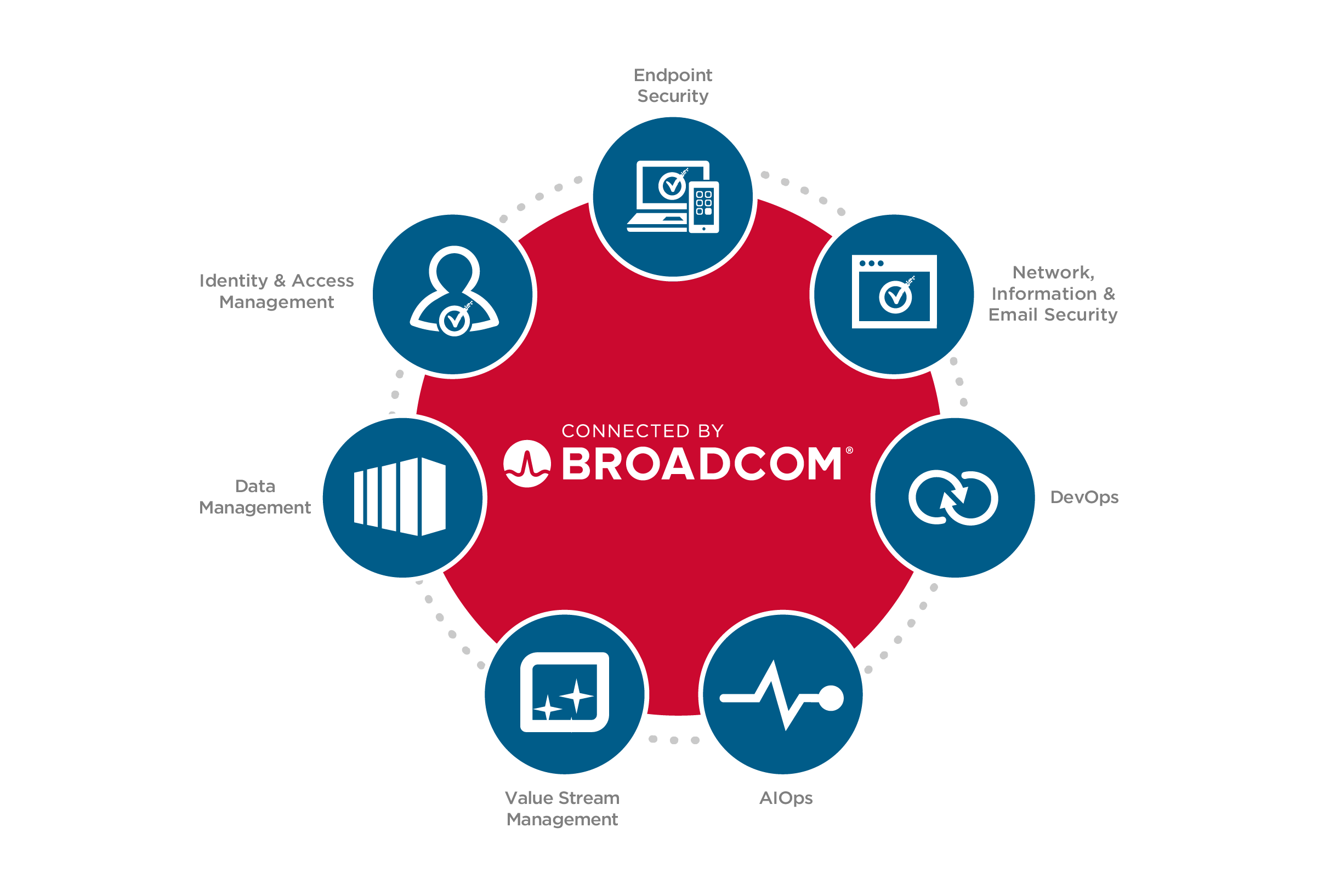
The Impact of the VMware Acquisition
The most significant milestone in Broadcom’s software journey is the $69 billion acquisition of VMware, which closed in late 2023. VMware is the pioneer of virtualization—the technology that allows one physical server to run multiple virtual machines. This is the fundamental technology that makes cloud computing possible. By integrating VMware, Broadcom has moved from being a supplier of chips to the cloud to being the provider of the software environment that runs the cloud. Broadcom is currently refocusing VMware on private and hybrid cloud solutions, helping enterprises build their own secure, cloud-like infrastructures on-premises.
Cybersecurity and Symantec Integration
Security is a non-negotiable component of modern infrastructure. With the acquisition of Symantec’s enterprise security business, Broadcom added a robust layer of digital defense to its portfolio. This includes endpoint security, web security, and data loss prevention. By integrating security directly into its infrastructure software stack, Broadcom offers enterprise clients a unified way to protect their data as it moves from the chip level through the network and into the cloud.
Broadcom’s Role in the Artificial Intelligence Era
As Artificial Intelligence (AI) becomes the defining technology of the 2020s, Broadcom has emerged as a primary beneficiary and enabler of the AI revolution. AI models, such as Large Language Models (LLMs), require an unprecedented amount of computing power and networking speed. Broadcom’s expertise in high-performance silicon makes them the “arms dealer” for the AI era.
Custom AI Accelerators (ASICs)
While NVIDIA dominates the market for general-purpose AI GPUs, Broadcom leads in the market for custom Application-Specific Integrated Circuits (ASICs). Large tech companies (often called “hyperscalers”) like Google and Meta frequently partner with Broadcom to design their own AI chips tailored to their specific workloads. For example, Broadcom has been a long-term partner in developing Google’s Tensor Processing Units (TPUs). These custom chips allow companies to run AI tasks more efficiently and at a lower cost than using off-the-shelf hardware.
High-Bandwidth Networking for AI Clusters
AI does not happen on a single chip; it happens across thousands of processors working in parallel. The bottleneck in AI performance is often the speed at which these processors can share data. Broadcom’s high-speed Ethernet fabric and optical interconnects are the “glue” that holds AI clusters together. Their Jericho and Tomahawk switches are being deployed specifically to manage the intense data traffic required for AI training, ensuring that the massive investment in AI hardware doesn’t go to waste due to networking congestion.
Engineering the Connected World: The Broadcom Business Philosophy
To understand what Broadcom does, one must also understand how they do it. The company follows a rigorous engineering-first philosophy. Unlike many tech companies that focus on consumer marketing and flashy interfaces, Broadcom focuses on solving the most difficult physics and engineering problems in data transmission.
Focus on R&D and Intellectual Property
Broadcom’s success is built on a massive moat of patents. They invest billions of dollars annually into Research and Development (R&D) to stay ahead of the “Moore’s Law” curve. Whether it is reducing power consumption in a Wi-Fi 7 chip or increasing the throughput of a fiber-optic transceiver, Broadcom’s engineers are focused on the “hard” side of tech. Their goal is to create products that are so technologically superior that they become the industry standard.
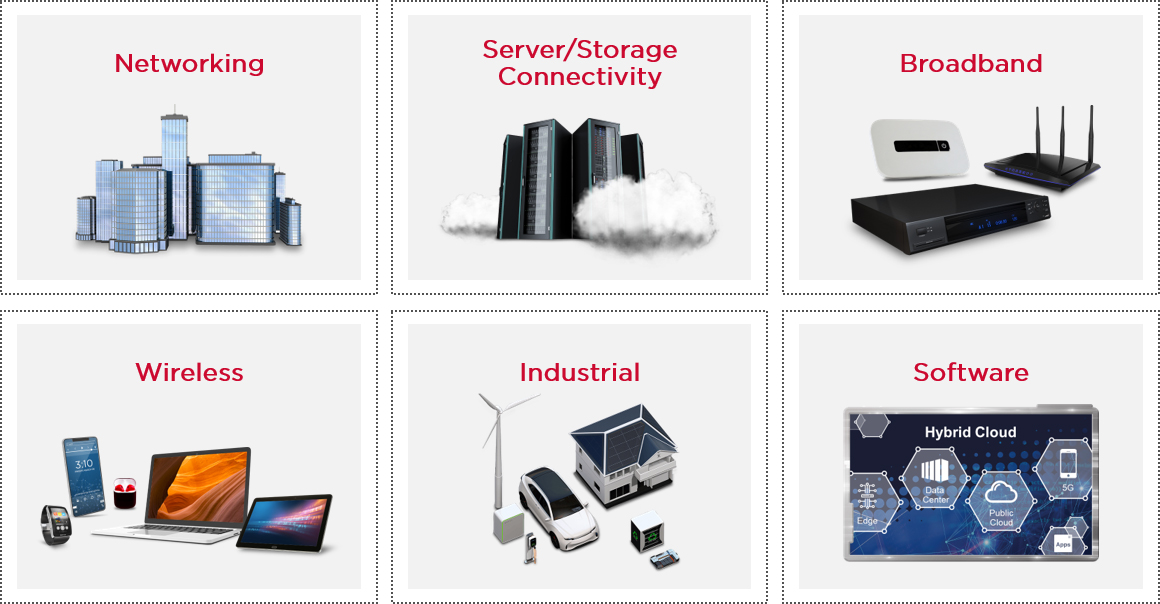
Integrated Infrastructure for a Hybrid Future
The future of technology is not just in the public cloud, nor is it strictly on-premises; it is “hybrid.” Broadcom’s unique position allows them to bridge these worlds. By providing the chips for the routers, the software for the virtual servers, and the security for the data, Broadcom offers a cohesive ecosystem. This integration is vital for enterprises that need to manage complex global operations while maintaining high levels of performance and security.
In conclusion, Broadcom is the silent engine of the digital economy. It is a company that builds the roads (networking), the vehicles (semiconductors), and the traffic laws (software) of the information age. While the average consumer may never buy a product with a Broadcom logo on the box, the modern world—from the smartphone in your pocket to the AI models of the future—simply could not function without the technology Broadcom creates. By mastering the intersection of hardware and software, Broadcom has positioned itself as the indispensable foundation of the global technological infrastructure.
aViewFromTheCave is a participant in the Amazon Services LLC Associates Program, an affiliate advertising program designed to provide a means for sites to earn advertising fees by advertising and linking to Amazon.com. Amazon, the Amazon logo, AmazonSupply, and the AmazonSupply logo are trademarks of Amazon.com, Inc. or its affiliates. As an Amazon Associate we earn affiliate commissions from qualifying purchases.