
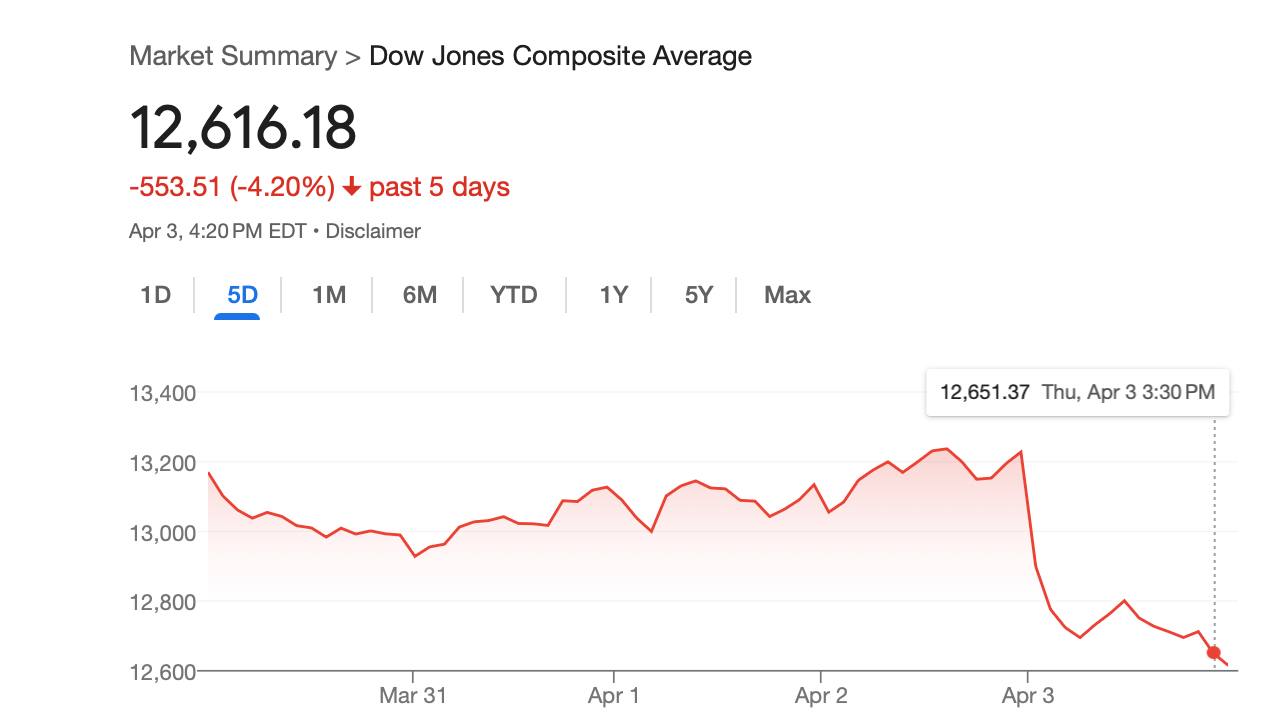
The stock market’s daily fluctuations often trigger immediate concern, encapsulated by the question, “how much did the stock market drop today?” While precise real-time data answers the immediate query, true investor insight extends beyond a single number. It involves understanding market mechanics, their causes, and, critically, how to strategically navigate volatility. For those building wealth through investments, discerning between fleeting market noise and long-term trends is paramount for informed decisions aligned with financial goals. This article delves into the broader context of market declines, offering professional insights and actionable strategies to empower investors within personal finance.

Decoding Market Movements: Beyond the Daily Ticker
A “market drop” is a multi-faceted phenomenon, impacting various indices and equities differently. Understanding key indicators and their significance is crucial for investors to contextualize market events.
Immediate Significance of a Decline
A market drop signifies an overall decrease in the average value of publicly traded companies. For a diversified portfolio, this means a temporary value reduction. Individually, stock price falls indicate more sellers than buyers, driven by concerns about future performance. While immediate, such impacts are often temporary, with market history showing numerous recoveries.
Primary Market Barometers: Dow, S&P 500, Nasdaq
Market reports typically reference major indices: the Dow Jones Industrial Average (DJIA) (30 large U.S. companies), the S&P 500 (benchmark for U.S. large-cap equities, 500 leading companies, offering a comprehensive view), and the Nasdaq Composite (heavily weighted towards technology and growth stocks). Each provides a distinct lens, but for long-term investors, the S&P 500 often offers the most relevant overall market context.
Catalysts for Market Downturns
Market declines are seldom capricious, responding to economic realities and psychological factors prompting asset re-evaluation. Grasping these root causes aids in understanding downturns without undue panic.
Economic Indicators & Corporate Performance
Economic health and corporate profitability are primary drivers. Slowing GDP growth, persistent inflation, or rising unemployment signal reduced consumer spending and corporate revenues. Missing earnings expectations or cautious guidance from major companies can trigger widespread selling, indicating broader trends.
Geopolitical Events & Central Bank Policy
Global events resonate in financial markets. International conflicts, natural disasters, or pandemics disrupt supply chains, inflate commodity prices, and breed uncertainty. Central bank decisions, especially interest rate hikes, increase borrowing costs, potentially cooling an economy but also making stocks less attractive relative to fixed-income assets.
Investor Sentiment & Market Psychology
Collective investor psychology wields immense power. Fear and greed drive irrational behavior. Rapid information flow, amplified by social media, can exacerbate market movements, leading to herd mentality. Technical trading factors and algorithms can further contribute to accelerated shifts.
Strategic Responses to Volatility: Investor Playbook
Market drops are an inevitable part of investing. Effective investors prepare and react strategically. Adhering to time-tested principles transforms perceived threats into tangible opportunities.
Embracing a Long-Term Investment Horizon
A long-term perspective is paramount. Stock market history demonstrates an upward trajectory over extended periods, despite numerous corrections. Panicking and selling during a dip solidifies losses, forfeiting participation in recovery. For investors with a horizon of several years, daily fluctuations are temporary blips within a larger growth narrative.
The Protective Power of Diversification
Diversification—spreading investments across asset classes (stocks, bonds), sectors, and geographies—is a critical risk mitigant. When one area underperforms, others may hold steady or grow, cushioning overall portfolio impact. A well-diversified portfolio is less vulnerable to severe downturns in single market segments.
Dollar-Cost Averaging & Portfolio Rebalancing
Dollar-Cost Averaging (DCA) involves investing a fixed sum regularly. During a dip, consistent investment buys more shares at lower prices, reducing your average cost. Portfolio rebalancing ensures asset allocation aligns with risk tolerance, using dips to strategically buy undervalued assets.
Personal Financial Impact: Beyond the Daily News
While market indices grab headlines, a stock market drop’s true impact resonates within your personal financial landscape and long-term aspirations. It’s a prime opportunity to reassess your financial health and investment strategy.
Impact on Retirement Savings (401k, IRAs)
For those accumulating wealth for retirement, a market drop can be advantageous. Ongoing contributions buy shares at reduced prices, positioning your 401(k) or IRA for greater upside upon rebound. The critical error is to panic and stop contributions or withdraw funds, jeopardizing future security. Nearing retirement? A conservative asset allocation may safeguard capital.
Aligning Investments with Goals and Time Horizon
A market downturn reminds us to review investment goals and time horizons. Short-term goals require less volatile investments. Long-term goals can absorb more risk, confident in the market’s historical upward trend over decades. This review ensures your portfolio’s risk profile suits your unique circumstances.
Mitigating Emotional Investment Decisions
Emotional responses are the most detrimental. Fear can compel selling at the bottom, converting temporary paper losses into permanent real losses. Successful investing demands an objective, disciplined approach: sticking to a pre-defined strategy, focusing on long-term objectives, and filtering out daily market noise.
Leveraging Financial Acumen and Expert Guidance
In today’s complex financial world, investors have numerous resources to navigate market volatility and make informed decisions. Employing these tools and seeking professional advice significantly bolsters portfolio management.
Digital Tools and Strategic Resource Utilization
Modern robo-advisors offer automated portfolio management, building diversified portfolios based on risk tolerance, helping maintain discipline. Reputable investment platforms provide extensive educational content, market analysis, and intuitive tools, empowering self-directed investors to research and manage holdings efficiently. These resources are invaluable for gaining perspective.
The Value of Professional Financial Advice
While digital tools empower many, complex situations often benefit from a qualified financial advisor. During a downturn, an advisor offers objective perspective, assesses specific implications, and adjusts strategies without emotional bias. They provide comprehensive financial planning, integrating market movements into broader considerations. For critical decisions or overwhelming anxiety, professional counsel is invaluable.

Conclusion
The immediate query, “how much did the stock market drop today?”, while pressing, is merely the surface of broader investment understanding. True financial acumen lies not just in knowing the daily percentage change, but in comprehending market cycles, the forces driving them, and adopting a resilient, long-term philosophy.
Market declines are intrinsic, often healthy, components of economic cycles. Shaped by economic indicators, geopolitical events, central bank policies, and investor psychology, these periods offer crucial opportunities for strategic re-evaluation, rebalancing, and disciplined asset accumulation at potentially undervalued prices. By applying diversification, dollar-cost averaging, and a clear-eyed long-term perspective, investors transform volatility from fear into strategic advantage.
Ultimately, successful wealth building is less about flawlessly timing the market and more about maximizing time in the market, underpinned by a well-conceived financial plan. Whether using digital tools or an advisor, the core objective remains constant: navigate the market’s ebb and flow with intelligence, discipline, and an unclouded vision for enduring financial prosperity. Understanding today’s drop is a starting point; mastering the response is the pathway to long-term success.
aViewFromTheCave is a participant in the Amazon Services LLC Associates Program, an affiliate advertising program designed to provide a means for sites to earn advertising fees by advertising and linking to Amazon.com. Amazon, the Amazon logo, AmazonSupply, and the AmazonSupply logo are trademarks of Amazon.com, Inc. or its affiliates. As an Amazon Associate we earn affiliate commissions from qualifying purchases.