
The closing bell on Wall Street marks the culmination of another day of economic activity, a moment millions of investors, analysts, and everyday citizens eagerly await. For many, the first question isn’t about specific stocks or complex market dynamics, but a simple yet profound one: “How did the Dow Jones finish today?” This seemingly straightforward query is a window into the broader health of the U.S. economy, corporate sentiment, and the collective mood of the market. The Dow Jones Industrial Average (DJIA), one of the oldest and most widely recognized stock market indices, serves as a critical barometer, its daily fluctuations offering clues about the forces shaping our financial landscape. Understanding its movements goes beyond just noting a number; it involves deciphering the intricate interplay of economic data, geopolitical shifts, corporate earnings, and the ever-present undercurrents of investor psychology.

Understanding the Dow Jones Industrial Average (DJIA)
To truly appreciate the significance of the Dow’s daily close, one must first grasp what the index represents and how it functions within the larger financial ecosystem. It’s more than just a collection of companies; it’s a carefully curated snapshot of American industrial and economic might.
What is the DJIA and Why Does It Matter?
The Dow Jones Industrial Average is a stock market index that shows how 30 large, publicly owned companies based in the United States have traded during a standard trading session in the stock market. Founded by Charles Dow in 1896, it is the second-oldest U.S. market index after the Dow Jones Transportation Average. What makes the DJIA particularly influential is its selection criteria: the companies included are typically well-established, blue-chip corporations with a long history of stability and significant market capitalization, representing various industrial sectors crucial to the nation’s economy.
The DJIA matters immensely because it offers a simplified yet powerful gauge of the overall health and direction of the U.S. stock market and, by extension, the broader economy. While it only comprises 30 companies, their collective performance often mirrors the sentiment across a wider spectrum of businesses. For many, it’s the headline number they hear on the evening news or read in financial summaries, making it a primary indicator for non-professional investors and the general public to quickly assess market trends. A rising Dow typically signals economic optimism and growth, while a falling Dow can suggest caution or contraction.
Composition and Calculation: A Brief Overview
Unlike some market-cap weighted indices, the DJIA is a price-weighted average. This means that stocks with higher share prices have a greater impact on the index’s movement than stocks with lower share prices, regardless of their total market value. While this methodology has drawn criticism for not fully reflecting the true market capitalization of its components, it remains a fundamental characteristic of the Dow.
The 30 companies within the DJIA are not static. They are selected by a committee at S&P Dow Jones Indices, and changes are made infrequently, typically only when a company’s business is no longer representative of the broader economy, or if there is a merger, acquisition, or significant financial distress. Recent examples include companies like Salesforce, Amgen, and Honeywell joining the index, reflecting shifts towards technology and healthcare as dominant economic forces, while long-standing members like ExxonMobil have been removed. This dynamic ensures that the DJIA, while rooted in tradition, attempts to stay relevant to the modern economic landscape.
The DJIA as a Barometer of Economic Health
While the DJIA doesn’t encompass the entire stock market, its components are so integral to the American economy that its movements often serve as a bellwether. Companies like Apple, Microsoft, Boeing, JPMorgan Chase, and Procter & Gamble represent a diverse array of sectors including technology, finance, manufacturing, and consumer goods. Their collective performance provides insights into consumer spending, corporate profitability, international trade, and technological innovation – all critical facets of economic health. A strong performance by these titans suggests robust corporate earnings, investor confidence, and a positive outlook for future economic growth, whereas significant declines can signal impending challenges or existing economic headwinds.
Today’s Market Close: A Deep Dive into Performance
When we ask “how did the Dow Jones finish today,” we’re not just looking for a single number. We’re seeking context, understanding the magnitude of the movement, and identifying the underlying forces.
Key Metrics: Points, Percentage Change, and Trading Volume
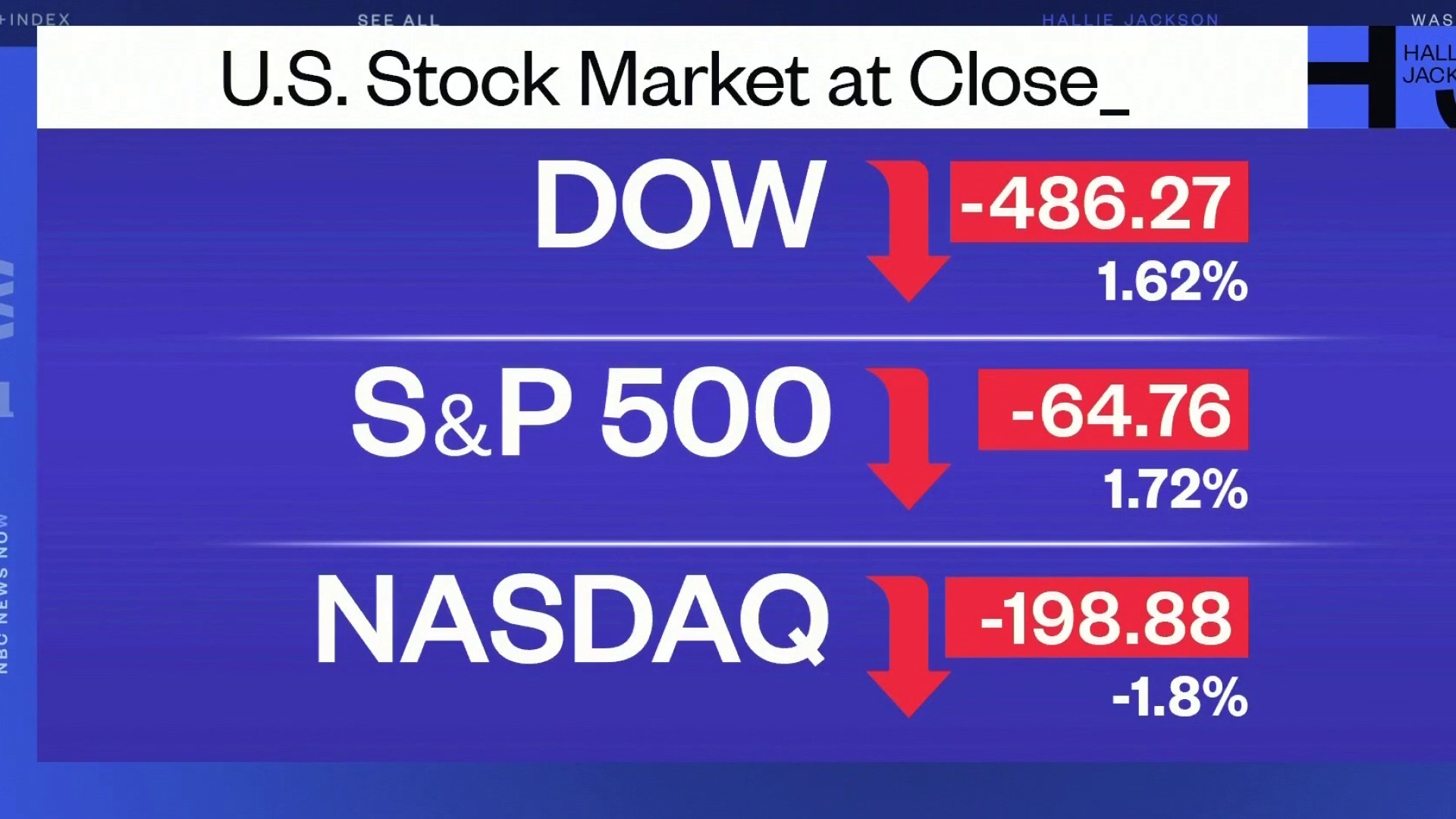
The most immediate answer to the question is typically given in “points” and “percentage change.” For example, “The Dow closed up 150 points, or 0.45%.” The point change provides the raw magnitude of the index’s movement, while the percentage change offers a more relative measure, allowing for comparison across different time periods. A 100-point move today is less significant in percentage terms than it would have been decades ago when the index was much lower.
Trading volume, though not directly part of the Dow’s price calculation, is another crucial metric reported at the close. High trading volume accompanying a significant move (either up or down) can indicate strong conviction behind that move, suggesting broad market participation and potentially signaling a more sustainable trend. Conversely, low volume on a big move might suggest a less robust conviction or a temporary fluctuation.
Identifying Top Movers and Laggards (Hypothetical Examples)
Beyond the index’s overall performance, analysts and investors keenly observe which individual components performed exceptionally well (top movers) and which lagged (laggards). For instance, on a given day, Apple might surge due to robust iPhone sales figures, while Boeing could dip on news of production delays. These individual movements offer micro-insights into specific sectors and company-specific news that contributed to the Dow’s overall finish. If a few heavyweight components experience extreme movements, they can disproportionately influence the index’s final tally due to the DJIA’s price-weighted nature. Understanding these individual stories helps paint a fuller picture of the day’s market dynamics.
Comparing Today’s Performance to Recent Trends
A single day’s performance is rarely isolated. Financial professionals always contextualize today’s close within broader trends. Was today’s gain a continuation of a multi-day rally, or a rebound after a significant correction? Was it an outlier event driven by specific news, or does it fit into a pattern observed over weeks or months? Comparing today’s finish to the index’s performance over the past week, month, or even year provides invaluable perspective. It helps determine whether the market is in an uptrend, downtrend, or trading sideways, which is crucial for making informed investment decisions. Volatility, or the degree of fluctuation, is also assessed; a day with sharp swings indicates higher volatility, often linked to uncertainty or significant news.
Factors Influencing Today’s Dow Jones Performance
The Dow’s daily close is not a random outcome but the result of a complex interplay of various economic, political, and psychological forces. Understanding these drivers is key to interpreting market movements.
Macroeconomic Indicators: Inflation, Interest Rates, Employment
Macroeconomic data releases are among the most powerful catalysts for market movement. Reports on inflation (e.g., Consumer Price Index – CPI), interest rates (decisions by the Federal Reserve), and employment figures (e.g., Non-Farm Payrolls, unemployment rate) can send the Dow soaring or plummeting. Strong employment numbers, for example, often signal a healthy economy, boosting corporate profits and investor confidence. Conversely, unexpectedly high inflation could lead to concerns about rising interest rates, which can increase borrowing costs for companies and reduce consumer spending, typically dampening market enthusiasm. The market often anticipates these announcements, and any deviation from expectations can trigger significant reactions.
Geopolitical Events and Their Market Impact
Beyond economic data, global events regularly inject volatility into the markets. Geopolitical tensions, such as trade disputes between major economies, military conflicts, or political instability in key regions, can create widespread uncertainty. Such events can disrupt supply chains, alter commodity prices (like oil), or impact international business operations, all of which directly affect the earnings and outlook of global companies listed on the Dow. Major policy announcements from governments, whether related to fiscal spending, taxation, or regulation, can also have profound implications for specific industries or the entire market.
Corporate Earnings and Sector-Specific News
At the micro-level, the financial performance of the 30 companies within the Dow itself is a primary driver. Quarterly earnings reports, which detail revenue, profits, and future guidance, can cause significant swings in individual stock prices and, consequently, the entire index. Positive earnings surprises and optimistic outlooks often lead to rallies, while misses or cautious guidance can trigger sell-offs. Furthermore, sector-specific news – breakthroughs in technology, new drug approvals, shifts in consumer preferences, or regulatory changes affecting particular industries – can elevate or depress the performance of relevant Dow components.
Investor Sentiment and Market Psychology
Finally, the less tangible but equally potent force of investor sentiment and market psychology plays a crucial role. Fear and greed are powerful emotions that can drive irrational exuberance or panic selling. News headlines, analyst ratings, social media trends, and even general public mood can coalesce to create bullish (optimistic) or bearish (pessimistic) market sentiment. When confidence is high, investors are more willing to take risks and buy stocks, pushing prices up. When fear dominates, they tend to sell, leading to market declines. This psychological aspect often magnifies the impact of fundamental news and data, creating periods of market momentum or correction.
Implications for Investors and the Broader Economy
The Dow’s daily finish is more than just a historical data point; it carries significant implications for various stakeholders, from individual savers to corporate executives.
Short-Term Volatility vs. Long-Term Strategy
For many long-term investors, the Dow’s day-to-day fluctuations are often viewed as “noise.” While interesting to observe, a single day’s gain or loss rarely alters a well-thought-out, diversified investment strategy. Short-term traders, however, thrive on this volatility, seeking to profit from rapid price movements. It’s crucial for individuals to distinguish between these two perspectives. Panicking over a single day’s dip in the Dow and making rash selling decisions can be detrimental to long-term wealth accumulation. A consistent, disciplined approach, focusing on asset allocation and diversification, typically outperforms attempts to time the market based on daily headlines.
Impact on Different Investment Portfolios
The impact of the Dow’s performance varies depending on an investor’s portfolio composition. Those heavily invested in large-cap U.S. equities, especially index funds tracking the Dow or S&P 500, will see their portfolio values directly affected. Retirees living off their investments might feel a more immediate impact from downturns, while younger investors with a longer time horizon might view dips as opportunities to buy assets at lower prices. The Dow’s performance can also indirectly influence other asset classes, such as bonds (as investors seek safety during equity downturns) or international markets (due to global interconnectedness).
The Dow’s Message for Consumers and Businesses
Beyond financial portfolios, the Dow’s performance sends a powerful message to consumers and businesses. A consistently rising Dow can boost consumer confidence, making people more likely to spend and invest, which further fuels economic growth. Conversely, prolonged declines can create a “wealth effect” in reverse, leading consumers to tighten their belts, which can slow down economic activity. For businesses, a strong market can signal favorable conditions for raising capital, expanding operations, and making strategic investments. A weak market, however, might lead to caution, reduced hiring, and delayed expansion plans, impacting job creation and economic output.
How to Stay Informed About Daily Market Movements
In today’s fast-paced world, access to real-time financial information is unprecedented. However, discerning reliable sources and putting data into proper context is paramount.
Reliable Financial News Sources
To accurately answer “how did the Dow Jones finish today,” one should consult reputable financial news outlets. Major players like The Wall Street Journal, Bloomberg, Reuters, CNBC, and Yahoo Finance offer comprehensive coverage, expert analysis, and real-time market data. These platforms provide not just the closing numbers but also detailed reports on top movers, sector performance, and the underlying reasons for market shifts. They also often feature commentary from economists and market strategists, offering diverse perspectives. Relying on such established sources helps filter out misinformation and provides credible data for analysis.
Utilizing Financial Tools and Platforms
Beyond traditional news, a plethora of financial tools and platforms are available. Many brokerage accounts offer integrated market data, charting tools, and news feeds. Dedicated financial apps and websites often provide customizable watchlists, real-time quotes, and alerts for specific indices or stocks. These tools empower investors to track the Dow’s performance throughout the day, analyze historical trends, and understand the various metrics contributing to its daily close. Learning to navigate these platforms effectively can enhance an investor’s ability to stay informed and make timely decisions.

The Importance of Context and Perspective
Ultimately, understanding “how did the Dow Jones finish today” requires more than just noting a final number. It demands context. One day’s performance is but a single brushstroke in a much larger economic tapestry. It’s essential to look beyond the immediate headlines and consider the broader economic cycle, long-term trends, and one’s personal financial goals. Volatility is an inherent characteristic of financial markets; historically, markets tend to trend upwards over the long term, despite periodic downturns. Maintaining a long-term perspective, avoiding emotional reactions to daily fluctuations, and continually educating oneself on market dynamics are the hallmarks of a savvy investor. The Dow’s daily close is a critical data point, but its true value lies in how it informs a more comprehensive and strategic understanding of the financial world.
aViewFromTheCave is a participant in the Amazon Services LLC Associates Program, an affiliate advertising program designed to provide a means for sites to earn advertising fees by advertising and linking to Amazon.com. Amazon, the Amazon logo, AmazonSupply, and the AmazonSupply logo are trademarks of Amazon.com, Inc. or its affiliates. As an Amazon Associate we earn affiliate commissions from qualifying purchases.