
For millions of investors, financial professionals, and curious onlookers, the question “How was the Dow Jones today?” is more than just a passing inquiry; it’s a vital pulse check on the health of the American economy and the broader global market. The Dow Jones Industrial Average (DJIA), often simply referred to as “the Dow,” is perhaps the most famous stock market index in the world, a venerable barometer that has tracked the fortunes of leading U.S. companies for over a century. Its daily fluctuations are meticulously scrutinized, debated, and often serve as the headline for financial news reports worldwide.

However, understanding “how the Dow was today” goes far beyond simply quoting a number. It involves appreciating the index’s composition, the myriad factors that drive its movements, and how its performance translates into actionable insights for personal finance and investment strategies. In a rapidly evolving economic landscape, a deep dive into the Dow’s daily narrative offers invaluable perspectives on market dynamics, investor sentiment, and the underlying currents shaping our financial future.
Understanding the Dow Jones Industrial Average (DJIA)
To truly grasp the significance of the Dow’s daily performance, one must first understand what it represents and why it holds such a prominent position in financial discourse. It’s more than just a collection of stocks; it’s a carefully curated snapshot of American industrial might and economic prowess.
What is the DJIA?
The Dow Jones Industrial Average is a stock market index that measures the stock performance of 30 large companies listed on stock exchanges in the United States. Founded by Charles Dow in 1896, it is the second-oldest U.S. market index after the Dow Jones Transportation Average. Unlike broader indices like the S&P 500, which are market-capitalization weighted, the DJIA is a price-weighted index. This means that stocks with higher share prices are given greater weight in the index’s calculation, irrespective of their companies’ overall market values. This unique weighting mechanism means that a $1 change in a high-priced stock like UnitedHealth Group (UNH) will have a greater impact on the Dow’s overall movement than a $1 change in a lower-priced stock, even if the latter company has a larger market cap.
The selection of the 30 companies is not governed by quantitative rules but by a committee from S&P Dow Jones Indices. Their goal is to select companies that maintain an excellent reputation, demonstrate sustained growth, and are of interest to a large number of investors. These companies are generally sector leaders, often referred to as “blue chips,” symbolizing their stability and financial health. The composition changes infrequently, typically only when a company’s business is no longer representative of the broader economy or undergoes significant structural shifts.
The “Blue Chip” Barometer
The term “blue chip” originates from poker, where blue chips hold the highest value. In finance, it refers to large, well-established, and financially sound companies with a long history of reliable earnings and dividends. These companies are often household names—Apple, Microsoft, Coca-Cola, Johnson & Johnson, McDonald’s, Boeing, and Visa, among others. Because these companies represent a significant portion of the U.S. economy’s output and employment, their collective performance is often seen as a reliable indicator of the overall economic climate.
While the Dow comprises only 30 stocks, its significance as a barometer extends beyond its numerical count. Its movements reflect investor confidence in the largest and most influential segments of the U.S. corporate sector. A strong showing by the Dow can signal robust corporate profits and economic growth, while a significant downturn might point to underlying economic vulnerabilities or investor apprehension. For many, it’s the first number they check to gauge the general direction of the stock market and, by extension, the economy itself.
Decoding Daily Movements: Key Influencers
The Dow’s daily performance is never an isolated event. It’s the culmination of countless forces, both domestic and international, tangible and psychological. Understanding these key influencers provides a more nuanced answer to “how the Dow was today” than just the final closing number.
Corporate Earnings and News
The financial results of the 30 companies within the Dow have an immediate and direct impact on the index. Quarterly earnings reports, which detail a company’s revenue, profit, and future outlook, are particularly potent. If a major Dow component like Microsoft reports earnings that beat expectations, its stock price is likely to rise, pulling the entire index upward. Conversely, a miss on earnings or a cautious outlook from a company like Boeing can drag the Dow down.
Beyond earnings, corporate news such as mergers and acquisitions, leadership changes, product launches, or even significant regulatory hurdles can sway individual stock prices and, by extension, the Dow. Analyst upgrades or downgrades, based on their assessments of a company’s prospects, also play a role in influencing investor sentiment and stock movements.
Economic Indicators
Macroeconomic data provides the broader context for the Dow’s daily dance. Investors keenly watch a plethora of economic indicators, each offering clues about the economy’s health and potential future trajectory:
- Inflation Reports (CPI, PPI): Rising inflation can erode corporate profits and consumer purchasing power, leading to concerns about interest rate hikes by the Federal Reserve, which can make borrowing more expensive and damp stock market enthusiasm.
- Employment Data (Non-Farm Payrolls, Unemployment Rate): Strong job growth signals a healthy economy with robust consumer spending, generally positive for corporate earnings. Weak data can suggest an impending slowdown or recession.
- Interest Rates (Federal Reserve decisions): The Fed’s decisions on interest rates are perhaps the most influential economic factor. Higher rates can increase borrowing costs for companies and consumers, potentially slowing economic activity and making bonds more attractive than stocks.
- GDP Growth: The overall growth rate of the economy dictates the environment in which Dow companies operate. Strong GDP growth provides a tailwind, while contraction signals headwinds.
- Consumer Confidence: Surveys of consumer sentiment can indicate future spending patterns, which are crucial for many Dow components involved in consumer goods and services.
Geopolitical Events and Global Markets
The Dow does not operate in a vacuum. Major geopolitical events—such as wars, trade disputes, political instability in key regions, or even significant natural disasters—can send ripples across global markets, inevitably impacting the Dow. For instance, heightened tensions in the Middle East can drive up oil prices, affecting transportation and manufacturing companies. A trade war with a major economic partner can disrupt supply chains and reduce demand for goods, hurting multinational Dow components.
Furthermore, the performance of major international stock markets (e.g., in Europe or Asia) often influences U.S. markets. A significant sell-off in European markets due to regional economic concerns can lead to a cautious opening or a pullback in the Dow as investors anticipate similar challenges. The interconnectedness of the global economy means that a crisis or boom in one region can have far-reaching effects.
Market Sentiment and Investor Psychology
Beyond hard data, market sentiment and investor psychology play an enormous, albeit less quantifiable, role in daily Dow movements. The collective mood of investors—driven by fear, greed, optimism, or pessimism—can lead to momentum-driven trading. News cycles, social media trends, and even prominent financial commentators can sway sentiment, sometimes leading to irrational exuberance or panic selling that is not entirely justified by underlying fundamentals.
Technical analysis, the study of past market data to predict future price movements, also influences some traders. Patterns in charts, trading volumes, and various indicators can trigger buy or sell signals, contributing to daily fluctuations. While not universally accepted as a predictor, its influence on short-term trading decisions cannot be ignored.

Interpreting Today’s Performance for Investors
For investors, understanding the Dow’s daily movements isn’t about immediate reaction but about placing the day’s performance into a broader, strategic context. Overreacting to daily swings can be detrimental to long-term financial goals.
Beyond the Headline Number
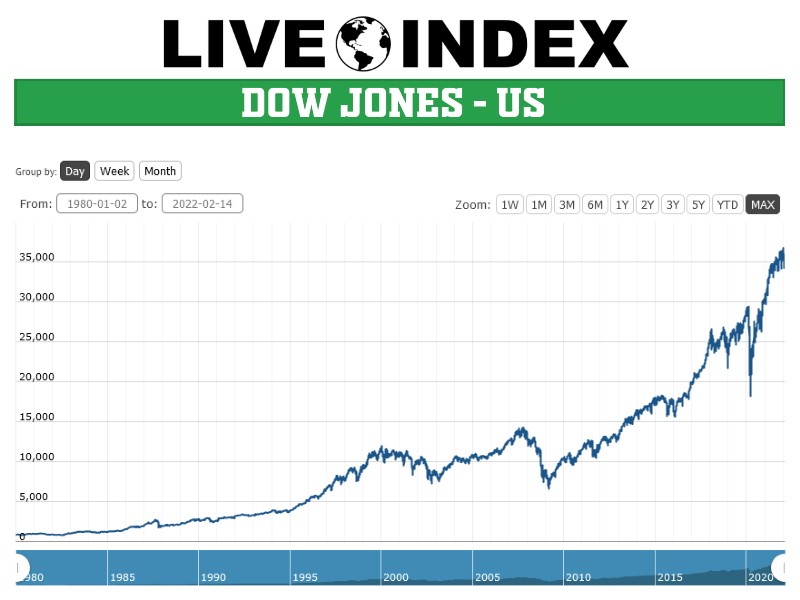
When the news reports “The Dow closed up 200 points today,” it’s easy to focus solely on the absolute number. However, the percentage change is often a more informative metric. A 200-point gain when the Dow is at 35,000 points (approx. 0.57%) is less significant than a 200-point gain when it was at 10,000 points (2%). Furthermore, it’s crucial to compare the Dow’s performance to other major indices like the S&P 500 (which is broader and market-cap weighted) and the tech-heavy Nasdaq Composite. If the Dow is up but the Nasdaq is down significantly, it might indicate a rotation out of tech stocks into more traditional industrial or value stocks, rather than an across-the-board market rally.
Short-Term Volatility vs. Long-Term Trends
Daily fluctuations in the Dow are a normal and inherent part of market behavior. These short-term movements, often driven by temporary news or sentiment shifts, rarely dictate the long-term trajectory of the market or individual investments. A hallmark of successful investing is the ability to filter out the noise of daily volatility and focus on long-term trends and fundamental economic growth. Investors with a diversified portfolio and a long-term horizon typically weather market downturns and benefit from eventual recoveries, demonstrating the power of compounding and patience. Chasing daily gains or panic-selling on dips often leads to suboptimal returns.
Sectoral Impact
While the Dow represents 30 companies, they are not uniformly impacted by market events. Today’s market movements might favor certain sectors within the Dow while others lag. For instance, a rise in oil prices might boost energy companies like Chevron within the Dow, but simultaneously increase costs for airlines like American Express (which is in the financial sector but affected by travel). An interest rate hike might benefit banks like JPMorgan Chase but could dampen enthusiasm for growth stocks that rely on cheaper borrowing. Understanding which sectors are leading or lagging can provide insight into the underlying economic narratives shaping the day’s performance and help investors adjust their sector allocations if deemed necessary for their strategy.
Practical Steps for Tracking and Reacting
In an age of instant information, investors have unprecedented access to real-time market data. However, the sheer volume of information can be overwhelming. Knowing where to look and how to incorporate daily market news into a sound financial strategy is key.
Reliable Sources for Real-Time Data
For up-to-the-minute information on the Dow and broader markets, reliable financial news outlets are indispensable. Websites like Bloomberg, Reuters, The Wall Street Journal, CNBC, and Yahoo Finance offer real-time quotes, news feeds, analyst commentary, and economic calendars. Brokerage platforms also provide detailed market data, charting tools, and personalized portfolio tracking. It’s advisable to cross-reference information from multiple reputable sources to gain a balanced perspective and avoid biased reporting. Pay attention not just to the numbers, but also to the accompanying analysis of why the market moved the way it did.
Aligning Market Movements with Your Investment Strategy
The Dow’s daily performance should not dictate impulsive investment decisions. Instead, it should be viewed through the lens of your established financial plan. If you are a long-term investor with a diversified portfolio, a down day for the Dow might present an opportunity to buy more at a lower price (dollar-cost averaging) rather than a reason to sell. If you are closer to retirement, a significant downturn might prompt a review of your asset allocation to ensure you’re not overexposed to volatile assets.
For day traders or those with more active strategies, daily Dow movements are central to their decision-making. However, even active traders typically rely on pre-defined strategies, risk management protocols, and clear entry/exit points to avoid emotional trading. Regardless of your investment style, consistency, discipline, and a clear understanding of your risk tolerance are paramount.
The Role of Professional Advice
For many, navigating the complexities of the stock market, especially interpreting daily movements like the Dow’s, can be daunting. Engaging with a qualified financial advisor or wealth manager can provide invaluable guidance. These professionals can help you:
- Develop a Personalized Financial Plan: Tailored to your goals, risk tolerance, and time horizon.
- Interpret Market News: Helping you understand the implications of daily Dow movements for your specific portfolio.
- Maintain Discipline: Preventing emotional decisions during volatile periods.
- Ensure Diversification: Building a resilient portfolio that can withstand market fluctuations.
- Stay Informed: Providing insights into economic trends and potential opportunities.
While online tools and self-education are powerful, the personalized insight of an expert can significantly enhance your financial journey and help you make informed decisions amidst daily market noise.
The Broader Economic Narrative and Future Outlook
Ultimately, “how the Dow was today” is a single data point in a continuous, evolving economic narrative. Its performance carries weight not just for investors but for understanding the broader health and direction of the economy.
Dow Performance as a Macroeconomic Signal
The Dow’s performance is often intertwined with consumer confidence and business investment. When the Dow rises, it can create a “wealth effect,” making investors feel richer and more inclined to spend, thus boosting economic activity. Conversely, a prolonged decline can lead to reduced consumer spending and business caution, potentially slowing growth. Furthermore, the Dow reflects the health of major corporations, whose profitability and expansion plans are critical drivers of job creation and innovation. Therefore, keeping an eye on the Dow gives insights into the sentiment and trajectory of the engine driving the U.S. economy.
Navigating Future Market Uncertainty
Looking ahead, the Dow will continue to be influenced by a dynamic interplay of factors: technological advancements, shifts in global trade, evolving monetary policies, and unforeseen geopolitical events. Investors must adopt a forward-looking perspective, understanding that past performance is not indicative of future results, but that fundamental economic principles tend to endure. Strategies focused on diversification, long-term growth, and periodic rebalancing remain crucial for building wealth and navigating inevitable market cycles.
In conclusion, answering “How was the Dow Jones today?” involves much more than just a number. It’s an invitation to explore the intricate web of economic data, corporate performance, global events, and human psychology that shapes our financial world. For the discerning investor, it’s a daily lesson in market dynamics, offering crucial context for making informed and strategic financial decisions that align with long-term prosperity.
aViewFromTheCave is a participant in the Amazon Services LLC Associates Program, an affiliate advertising program designed to provide a means for sites to earn advertising fees by advertising and linking to Amazon.com. Amazon, the Amazon logo, AmazonSupply, and the AmazonSupply logo are trademarks of Amazon.com, Inc. or its affiliates. As an Amazon Associate we earn affiliate commissions from qualifying purchases.