
To understand how many Tesla models there are, one must look beyond the simple classification of automobiles. While traditional manufacturers focus on aesthetics and internal combustion mechanics, Tesla operates as a silicon-valley software company that happens to build hardware on wheels. As of late 2024, Tesla’s consumer-facing lineup consists of five primary passenger models—the Model S, Model 3, Model X, Model Y, and the Cybertruck—alongside specialized industrial ventures like the Tesla Semi.
However, the “tech” of these models is not static. Through iterative hardware updates and continuous software deployments, a Model 3 from 2018 is vastly different from a Model 3 “Highland” produced today. This article explores the current fleet through the lens of technological innovation, software integration, and the engineering breakthroughs that define the Tesla ecosystem.

The Current Core Lineup: The S-3-X-Y Architecture
The foundation of Tesla’s dominance lies in its “S3XY” lineup. This naming convention represents the brand’s transition from a niche luxury manufacturer to a global mass-market tech giant. Each model represents a specific milestone in battery management and software integration.
Model S: The Flagship of Performance and Innovation
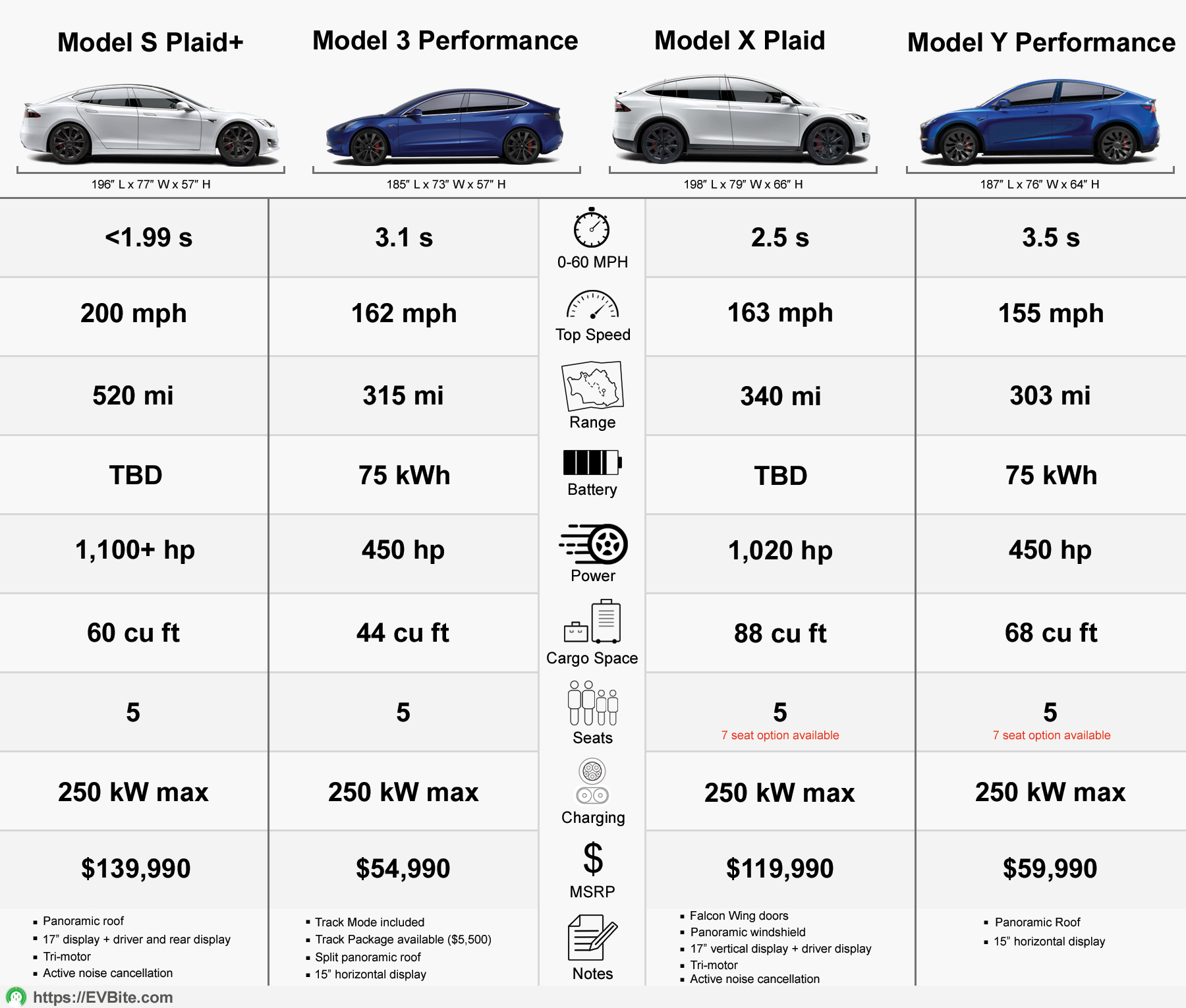
The Model S remains the pinnacle of Tesla’s engineering. While it debuted over a decade ago, the current “Plaid” variant is a masterclass in electrical engineering. It features a tri-motor setup capable of producing 1,020 horsepower, but the true tech marvel is the carbon-sleeved rotors. These allow the motors to maintain peak power all the way to their 200 mph top speed without disintegrating—a feat of material science rarely seen in the automotive world. Inside, the Model S utilizes an AMD Ryzen-powered infotainment system capable of console-quality gaming, emphasizing Tesla’s vision of the car as a mobile computing hub.
Model 3: Engineering Efficiency for the Mass Market
If the Model S proved electric cars could be fast, the Model 3 proved they could be efficient and scalable. The Model 3’s design philosophy is centered on minimalism and aerodynamic efficiency, boasting a drag coefficient of just 0.219. The recent “Highland” refresh introduced significant tech upgrades, including acoustic glass for noise dampening and a dedicated rear screen for passenger climate and entertainment control. From a hardware perspective, the Model 3’s integration of the heat pump system (initially developed for the Model Y) ensures that range remains stable even in extreme cold—a critical hurdle for EV adoption.
Model X: Sophisticated Robotics and Safety Tech
The Model X is arguably the most complex consumer gadget ever mass-produced. Beyond its iconic Falcon Wing doors, which utilize ultrasonic sensors to open in tight spaces without hitting obstacles, the Model X features a medical-grade HEPA filtration system. This “Bioweapon Defense Mode” utilizes advanced air filtration technology to remove 99.97% of particulate matter. The Model X also serves as a showcase for Tesla’s panoramic engineering, featuring the largest continuous glass touchscreen windshield in production.
Model Y: The Pinnacle of Modern Crossover Utility
The Model Y is currently the best-selling vehicle globally, and its success is rooted in manufacturing technology. It was the first model to extensively use “Giga Castings”—massive single-piece rear and front underbody structures that replace hundreds of individual parts. This reduces weight, improves crash safety, and increases manufacturing throughput. The Model Y also features a sophisticated thermal management system that allows it to scavenge heat from the battery and motors to warm the cabin, showcasing Tesla’s lead in energy conservation software.
Next-Generation Hardware and Specialized Vehicles
Beyond the core four passenger cars, Tesla has expanded into specialized segments that push the boundaries of material science and logistics technology.
The Cybertruck: Redefining Material Science and Exoskeletons
The Cybertruck is less of a pickup truck and more of a tech demonstrator. It utilizes an Ultra-Hard 30X Cold-Rolled stainless-steel exoskeleton, which provides structural rigidity and eliminates the need for a traditional frame. Tech-wise, the Cybertruck is Tesla’s first vehicle to utilize a 48-volt electrical architecture. While the rest of the industry has stayed at 12 volts for decades, the 48V system allows for thinner wiring, reducing weight and complexity while increasing power delivery efficiency. Furthermore, it features “steer-by-wire” technology, where there is no physical connection between the steering wheel and the tires, relying instead on high-speed digital signals and redundant actuators.
The Tesla Semi: Revolutionizing Logistics with Electric Power
The Tesla Semi represents the company’s foray into heavy-duty transport. It utilizes an independent tri-motor system on the rear axles, allowing for precise torque vectoring that prevents jackknifing. The Semi’s most impressive tech feature is its energy consumption: it consumes less than 2 kWh per mile. For fleet operators, the integration of Tesla’s “Fleet API” allows for real-time monitoring of every kilowatt-hour used, revolutionizing how logistics companies manage energy costs through software.
The Second-Gen Roadster: Pushing the Limits of Propulsion
While still in development, the second-generation Roadster is intended to be a “halo” car. Tesla has hinted at the “SpaceX Package,” which would involve cold-gas thrusters—technology literally borrowed from rocket science—to improve cornering, braking, and acceleration. It aims to achieve a 0-60 mph time of under 1 second, pushing the absolute limits of tire friction and electric motor torque.
The Software Foundation: Autopilot, FSD, and Over-the-Air Updates
The number of models is almost secondary to the software that runs them. Unlike traditional cars, a Tesla is a “Software-Defined Vehicle” (SDV).
Tesla Vision: The Pivot to Pure Vision Processing
One of the most controversial yet innovative tech shifts in Tesla’s history was the move to “Tesla Vision.” Tesla removed radar and ultrasonic sensors from all new models, relying entirely on a suite of eight high-resolution cameras. This approach mimics human biology, using powerful neural networks to process visual data and determine distances. The FSD (Full Self-Driving) Beta software utilizes “occupancy networks” to predict the movement of every object in a 360-degree radius, a feat made possible by Tesla’s custom-designed AI chips.
Hardware Iterations: From HW3 to HW4
Tesla’s commitment to tech is evident in its hardware evolution. Most current models are transitioning to “Hardware 4” (HW4). This suite includes upgraded cameras with higher megapixel counts and a more powerful FSD computer. Because Tesla controls the full vertical stack—the silicon, the sensors, and the software—they can optimize the neural net performance in ways that companies relying on third-party chips (like Nvidia or Mobileye) cannot.
Battery Technology and the Supercharger Ecosystem
A Tesla model is only as good as its energy source. Tesla’s lead in battery chemistry and infrastructure remains its most significant “moat.”
4680 Cells and Structural Battery Packs
Tesla is currently transitioning several models to the 4680 battery cell format. These larger, “tabless” cells offer five times the energy capacity and six times the power of previous generations. More importantly, Tesla uses these cells to create a “structural battery pack.” In the Model Y and Cybertruck, the battery pack isn’t just a component—it is the floor of the car, providing structural integrity. This reduces the total number of parts and lowers the vehicle’s center of gravity, improving handling and safety.
V4 Supercharging and Megawatt-Scale Delivery
The tech behind the models extends to how they are fueled. Tesla’s V4 Superchargers are designed to support higher voltage architectures (like the 800V system in the Cybertruck). These stations are networked via the Tesla App, allowing for “Plug & Charge” functionality where the car and the charger communicate via encrypted certificates to handle billing automatically. This seamless integration of fintech and energy hardware is a key differentiator for the brand.
The Future Roadmap: AI, Robotics, and the Next-Gen Platform
The question of “how many models” will soon include platforms that look nothing like current cars. Tesla’s future is centered on the democratization of electric transport through AI.
Project Highland and Juniper: Iterative Tech Refinement
Tesla does not wait for “model years.” Instead, they use projects like “Highland” (Model 3) and “Juniper” (the upcoming Model Y refresh) to streamline production technology. These projects focus on “Unboxed” manufacturing, a process where sub-assemblies are completed in parallel and then snapped together at the final stage. This tech reduces the factory footprint by 40% and costs by 50%.

The Cybercab and the Unboxed Process
Looking forward, the “Robotaxi” or “Cybercab” represents the next evolution. This vehicle is designed specifically for autonomous ride-hailing, potentially lacking a steering wheel or pedals. It will be built on a next-generation platform that prioritizes cost-per-mile over luxury features. This transition will mark the shift from Tesla being a provider of “models” to a provider of “autonomy-as-a-service.”
In conclusion, while there are currently five main Tesla models available to consumers, the true count is much higher when considering the various hardware and software versions that exist. Tesla’s relentless focus on vertical integration—from the 4680 battery cells to the FSD AI computer—ensures that each model is not just a car, but a rolling piece of cutting-edge technology. Whether it is the 1,000-hp Model S Plaid or the steer-by-wire Cybertruck, Tesla continues to redefine the boundaries of what a vehicle can be.
aViewFromTheCave is a participant in the Amazon Services LLC Associates Program, an affiliate advertising program designed to provide a means for sites to earn advertising fees by advertising and linking to Amazon.com. Amazon, the Amazon logo, AmazonSupply, and the AmazonSupply logo are trademarks of Amazon.com, Inc. or its affiliates. As an Amazon Associate we earn affiliate commissions from qualifying purchases.