
The cryptocurrency market is renowned for its transformative potential and its staggering volatility. For investors, few experiences are as visceral as watching Bitcoin (BTC), the market’s bellwether asset, undergo a significant price correction. When the “digital gold” begins to lose value, the ripple effects are felt across the entire financial ecosystem, from retail portfolios to institutional balance sheets. Understanding why Bitcoin is dropping requires a multi-faceted approach that moves beyond simple headlines and delves into the mechanics of global finance, market psychology, and liquidity.
In the world of investing, a price drop is rarely the result of a single catalyst. Instead, it is typically a confluence of macroeconomic shifts, technical liquidations, and changes in regulatory sentiment. To navigate these turbulent waters, one must look at the underlying drivers that dictate Bitcoin’s price action within the broader “Money” niche.

The Impact of Global Macroeconomics and Monetary Policy
Bitcoin does not exist in a vacuum. While it was originally envisioned as a decentralized alternative to traditional fiat systems, its maturity as an asset class has intertwined its fate with global macroeconomic trends. Today, Bitcoin is often treated by large-scale institutional investors as a “risk-on” asset, similar to high-growth tech stocks.
The Federal Reserve and Interest Rate Trajectories
The most significant driver of Bitcoin’s price in recent years has been the monetary policy of the U.S. Federal Reserve. When the Fed raises interest rates to combat inflation, the “cost of money” increases. Higher rates make traditional savings vehicles and Treasury bonds more attractive because they offer a guaranteed return with minimal risk.
Conversely, speculative and volatile assets like Bitcoin become less appealing in a high-interest-rate environment. When investors anticipate that rates will remain “higher for longer,” they often rotate capital out of crypto and back into the safety of the U.S. dollar or fixed-income securities. This capital flight is a primary reason for sustained downward pressure on BTC.
The Strengthening of the U.S. Dollar Index (DXY)
There is an inverse correlation between the U.S. Dollar Index (DXY) and Bitcoin. Because Bitcoin is primarily traded against the dollar, a strengthening dollar naturally makes BTC appear cheaper or forces its price downward. When global economic uncertainty rises, investors often flock to the dollar as a “safe haven.” As the DXY climbs, Bitcoin often faces a stiff headwind, leading to the price drops that leave many retail investors puzzled.
Inflationary Pressures and the “Store of Value” Narrative
While Bitcoin is often touted as a hedge against inflation, the reality is more nuanced. In periods of extreme inflation, central banks move aggressively to tighten the money supply. This tightening reduces the overall liquidity available in the financial system. Since Bitcoin thrives on excess liquidity—essentially “overflow” money looking for high returns—a reduction in the global M2 money supply often leads to a cooling off of the crypto markets.
Market Dynamics: Liquidity, Leverage, and ETF Flows
Beyond the “big picture” of the global economy, the internal mechanics of the crypto market play a pivotal role in price volatility. Bitcoin’s market structure is unique, characterized by high levels of leverage and, more recently, the influence of Spot Bitcoin ETFs (Exchange-Traded Funds).
The Cascade of Leveraged Liquidations
One of the most common reasons for a sudden, sharp drop in Bitcoin’s price is a “long squeeze.” Many traders in the crypto space use leverage—borrowing money to increase the size of their positions. While this can amplify gains, it also creates a fragile floor.
If the price of BTC drops to a certain level, these leveraged positions are automatically liquidated by exchanges to cover losses. This forced selling puts further downward pressure on the price, triggering even more liquidations. This “waterfall effect” can erase billions of dollars in market capitalization within minutes, causing a drop that feels disconnected from any specific news event.

The Role of Institutional ETF Outflows
The approval of Spot Bitcoin ETFs in the United States marked a milestone for the asset class, but it also introduced a new variable: institutional exit velocity. When large funds like Grayscale (GBTC), BlackRock, or Fidelity see net outflows, it means the underlying Bitcoin must be sold on the open market to satisfy redemptions. If institutional sentiment sours due to quarterly rebalancing or risk-mitigation strategies, the sheer volume of these ETF sell-offs can overwhelm buyer demand, leading to a steady decline in price.
Exchange Inflows and Whale Activity
Large holders of Bitcoin, often referred to as “whales,” have the power to move the market. By monitoring “exchange inflows”—the movement of BTC from private wallets onto trading platforms—analysts can gauge selling pressure. When whales move large amounts of Bitcoin onto exchanges, it is usually a signal that they intend to sell or use the coins as collateral for short positions. This increase in “active supply” often precedes a price dip as the market prepares to absorb the incoming sell orders.
Regulatory Scrutiny and Geopolitical Uncertainty
Investors crave certainty, and the cryptocurrency landscape is famously uncertain when it comes to legal frameworks. Regulatory news can act as a sudden “black swan” event that triggers mass sell-offs.
Legislative Crackdowns and SEC Oversight
The regulatory environment in the United States and Europe remains a primary concern for the “Money” niche. Announcements of lawsuits against major exchanges, new tax reporting requirements, or restrictive definitions of what constitutes a “security” create an environment of Fear, Uncertainty, and Doubt (FUD). When investors fear that their access to liquidity might be restricted or that the cost of compliance will rise, they often “de-risk” by selling their Bitcoin holdings.
Geopolitical Instability and Risk-Off Sentiment
In times of geopolitical conflict, the immediate reaction of the financial markets is typically a move toward liquidity and safety. While Bitcoin advocates argue that BTC is a neutral, borderless asset that should thrive in such times, the short-term reality is often the opposite. During the onset of international conflicts or trade wars, institutional algorithms are often programmed to sell “risky” assets across the board. In these moments, Bitcoin is sold off alongside the S&P 500 as investors dash for the ultimate safety of cash.
Technical Indicators and the Psychology of the Cycle
Finally, we must consider the cyclical nature of Bitcoin. From a financial perspective, markets move in waves, driven by the collective psychology of participants—ranging from extreme greed to paralyzing fear.
Testing Key Support Levels and Fibonacci Retracements
Technical analysis is a self-fulfilling prophecy in the world of trading. If Bitcoin breaks below a major “support level” (a price point where buying has historically been strong), it signals to traders that the trend has turned bearish. Many professional investors set “stop-loss” orders just below these levels. When a support level fails, a flood of sell orders is triggered. Analysts often look at the 200-day Moving Average or Fibonacci retracement levels to predict where a drop might find its bottom.
The “Sell the News” Phenomenon and Post-Halving Lulls
Bitcoin is famous for its “halving” events, which occur every four years and reduce the rate at which new BTC is created. While halving is fundamentally bullish for the long term due to scarcity, the period leading up to and immediately following the event is often characterized by “sell the news” behavior. Traders who “bought the rumor” months in advance take their profits, leading to a temporary but painful drop in price as the market recalibrates to the new supply dynamics.
The Fear and Greed Index
Investor sentiment is a powerful contrarian indicator. When the “Crypto Fear & Greed Index” reaches extreme levels of greed, the market is often “overbought” and due for a correction. Conversely, when the market drops, fear takes over, and retail investors often sell at the bottom due to panic. Understanding this psychological cycle is essential for any investor looking to understand why Bitcoin is dropping; often, it is simply the market “clearing out” the excess optimism before the next leg up.
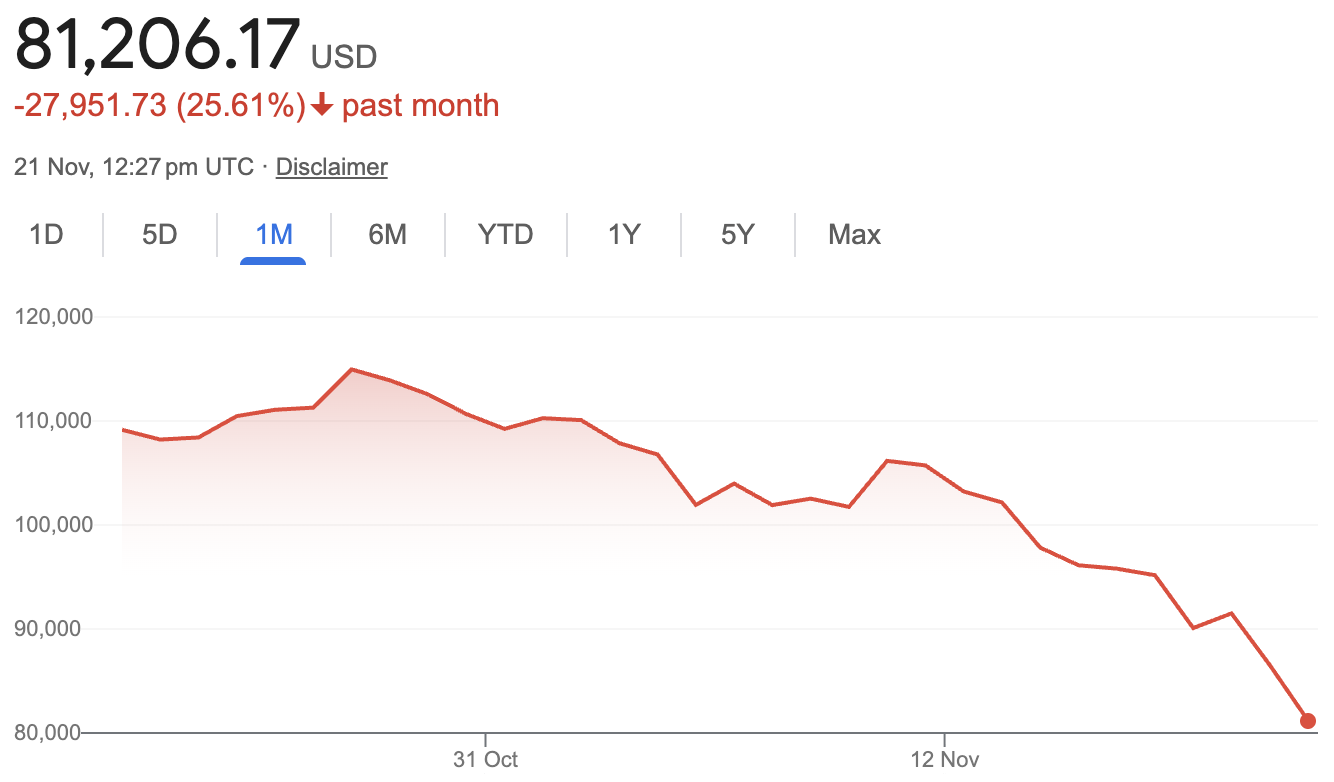
Conclusion: Navigating the Volatility
Bitcoin’s price drops are rarely the result of a failure in the underlying technology; rather, they are the result of complex interactions within the global financial system. From the Federal Reserve’s interest rate decisions to the mechanical liquidations of overleveraged traders, the reasons for a BTC decline are diverse and interconnected.
For the serious investor, these drops represent a period of re-evaluation. While the “Money” niche focuses on the immediate loss of value, it also recognizes that corrections are a healthy and necessary part of any market cycle. They wash out speculative excess and provide more sustainable entry points for long-term capital. By monitoring macroeconomic trends, institutional flows, and regulatory shifts, investors can move past the panic of a dropping price and develop a more professional, disciplined approach to the world’s most prominent digital asset.
aViewFromTheCave is a participant in the Amazon Services LLC Associates Program, an affiliate advertising program designed to provide a means for sites to earn advertising fees by advertising and linking to Amazon.com. Amazon, the Amazon logo, AmazonSupply, and the AmazonSupply logo are trademarks of Amazon.com, Inc. or its affiliates. As an Amazon Associate we earn affiliate commissions from qualifying purchases.