
Navigating the landscape of federal taxes is one of the most critical aspects of personal and business finance. Whether you are a high-net-worth investor, a burgeoning entrepreneur, or a salaried professional, understanding the mechanics of how to pay your federal taxes is more than just a seasonal chore—it is a foundational pillar of financial literacy. In an era where the Internal Revenue Service (IRS) has modernized its infrastructure, taxpayers are met with a variety of digital and traditional pathways to fulfill their obligations. However, the abundance of choices can often lead to confusion. This guide provides a deep dive into the practical methods of tax payment, the strategic financial planning required to manage these outflows, and the tools available to ensure you remain in good standing with the federal government.
Direct and Digital: The Primary Methods for Settling Your Tax Debt
The evolution of financial technology has significantly shifted how the IRS processes payments. Gone are the days when mailing a paper check was the only reliable option. Today, digital-first methods provide security, speed, and immediate confirmation of receipt, which are essential for avoiding late fees and interest.
IRS Direct Pay: The Gold Standard for Individuals
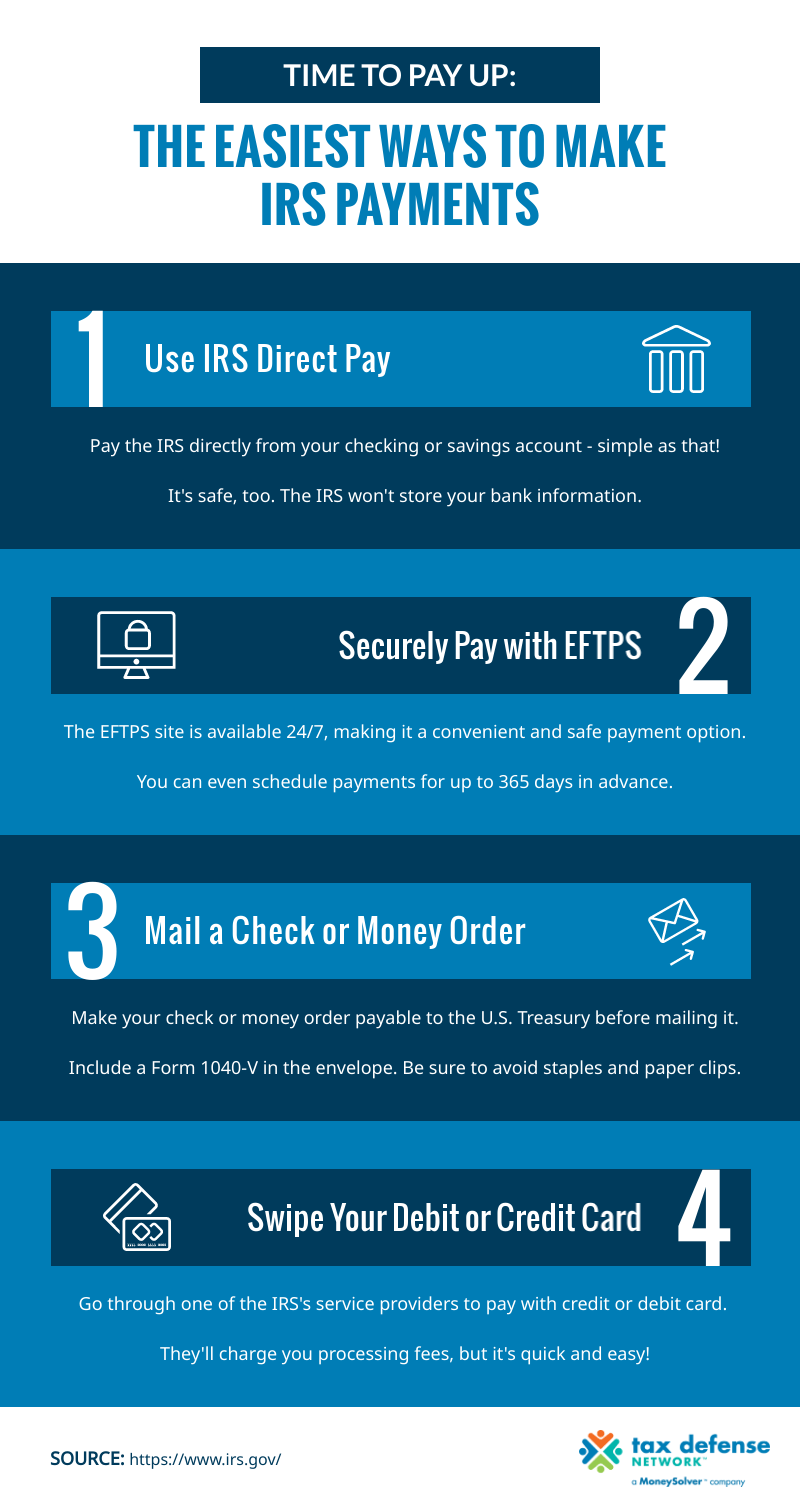
For the vast majority of individual taxpayers, IRS Direct Pay is the most efficient and cost-effective method. This service allows you to pay your tax bill directly from your checking or savings account without any additional processing fees. Because it is an ACH (Automated Clearing House) transfer, the funds are pulled securely, and you receive an instant confirmation number. This is particularly useful for paying Form 1040 taxes, estimated taxes, and extensions. From a financial management perspective, Direct Pay is superior because it eliminates the “float” time and the risk of a check being lost in the mail, allowing for precise cash flow management.
Credit and Debit Card Payments: Balancing Convenience and Cost
The IRS does not process credit or debit card payments directly; instead, they utilize third-party payment processors. While this offers the convenience of paying over time or earning credit card rewards, it comes with a financial trade-off. These processors charge a percentage-based convenience fee (usually ranging from 1.87% to 2% for credit cards). Before choosing this route, a savvy taxpayer must perform a cost-benefit analysis: do the points, miles, or cash-back rewards outweigh the processing fee? For those using this method to bridge a temporary liquidity gap, it is often a cheaper alternative to IRS penalties, provided the credit card balance is paid off quickly to avoid high-interest debt.
The EFTPS: Essential for Businesses and High-Income Earners
The Electronic Federal Tax Payment System (EFTPS) is a free service provided by the U.S. Department of the Treasury. While Direct Pay is designed for quick, one-time individual payments, the EFTPS is a more robust platform intended for businesses and individuals who have complex, recurring tax obligations. To use EFTPS, you must enroll in advance and receive a PIN via mail, making it a highly secure option. It allows users to schedule payments up to 365 days in advance, which is an invaluable feature for business finance managers who need to automate quarterly estimated tax payments and payroll taxes to maintain consistent overhead projections.
Strategic Planning: Managing Estimated Taxes and Withholdings
Paying your taxes is not just about the final transaction; it is about the strategic distribution of your tax liability throughout the fiscal year. Proper financial planning ensures that you are neither giving the government an interest-free loan through excessive withholding nor facing a massive, unexpected bill in April.
Mastering Estimated Tax Payments
For freelancers, independent contractors, and investors, the “pay-as-you-go” nature of the U.S. tax system requires the payment of estimated taxes. If you expect to owe $1,000 or more when you file, the IRS requires quarterly installments. Failing to make these payments can result in underpayment penalties. From a money management standpoint, it is wise to set aside approximately 25% to 30% of your gross business income in a high-yield savings account. This ensures the funds are liquid when the quarterly deadlines arrive (typically April, June, September, and January) while allowing you to earn modest interest on the set-aside capital in the interim.
Optimizing Withholding for Salaried Employees
For W-2 employees, the primary method of “paying” federal taxes is through payroll withholding. However, many individuals treat their tax refund as a “forced savings account.” Financially speaking, a large refund indicates that you have overpaid the government throughout the year, missing out on the opportunity to invest that money or pay down high-interest debt. By adjusting your W-4 form with your employer, you can fine-tune your withholding so that your tax liability at the end of the year is as close to zero as possible, maximizing your monthly take-home pay for more productive financial uses.
Leveraging Deductions and Credits to Reduce Outflow
Before you click “submit” on a payment, it is crucial to ensure you are paying only what is legally required. Financial literacy involves understanding the difference between a deduction (which lowers your taxable income) and a credit (which provides a dollar-for-dollar reduction in your tax bill). Strategies such as maximizing contributions to a 401(k) or an IRA, utilizing Health Savings Accounts (HSAs), and claiming the Child Tax Credit or the Earned Income Tax Credit (EITC) can significantly lower the total amount you need to pay. Integrating these strategies into your annual financial plan is the most effective way to preserve wealth.
Leveraging Financial Tools to Automate and Simplify Tax Payments
In the modern financial landscape, you don’t have to navigate tax payments alone. A suite of digital tools and software integrations can help automate the process, reducing the risk of human error and ensuring you never miss a deadline.
Integration with Tax Preparation Software
Platforms like TurboTax, H&R Block, and TaxSlayer have become sophisticated financial ecosystems. These tools do more than just calculate numbers; they provide direct APIs to the IRS payment portals. When you file electronically through these services, you can schedule your payment for a future date (up to the filing deadline) directly within the software. This integration is particularly helpful for tracking your payment history and ensuring that your filing data matches your payment data, which is essential for future audits or financial verification (such as during a mortgage application).
The IRS2Go Mobile App
For the mobile-savvy taxpayer, the IRS2Go app provides a streamlined interface for making payments via Direct Pay or credit card. It also allows you to track your refund status and access tax records. While it may seem like a simple utility, having a direct line to federal payment portals on your smartphone provides a layer of agility for busy professionals who need to handle financial obligations on the go.
Using Accounting Software for Real-Time Tax Tracking
For small business owners and side-hustlers, tools like QuickBooks, FreshBooks, or Xero are indispensable. By linking your bank accounts to these platforms, you can categorize expenses in real-time, allowing the software to provide an “estimated tax due” figure at any point in the year. This real-time visibility prevents the “tax season shock” and allows for more accurate budgeting. Many of these platforms now offer features that allow you to pay your estimated taxes directly from the dashboard, creating a seamless bridge between your business operations and your federal obligations.
When the Bill is Too High: Financial Solutions for Tax Liabilities
There are instances where, due to a sudden increase in income, a failed business venture, or poor planning, a taxpayer finds themselves unable to pay their federal taxes in full. From a personal finance perspective, the worst thing one can do is ignore the debt. The IRS offers several structured financial solutions to help taxpayers manage their liabilities.
Installment Agreements and Payment Plans
If you cannot pay your full balance immediately, the IRS allows you to apply for an installment agreement. This is essentially a government-sanctioned loan. Short-term plans (180 days or less) typically do not have setup fees, while long-term monthly payment plans (up to 72 months) may require a fee. While interest and late-payment penalties still accrue, an installment agreement prevents the IRS from taking more drastic collection actions, such as wage garnishments or tax liens. Incorporating these payments into your monthly budget is a necessary step in restoring your financial health.
Offer in Compromise (OIC)
An Offer in Compromise is a more advanced financial negotiation that allows you to settle your tax debt for less than the full amount you owe. This is generally only an option for those experiencing true financial hardship where the IRS determines they will likely never be able to collect the full amount. The application process is rigorous and requires a full disclosure of assets, income, and expenses. While difficult to obtain, it represents a “fresh start” for individuals whose tax debt has become an insurmountable barrier to their financial future.

Managing Penalties and Interest
Understanding the cost of delay is vital. The failure-to-pay penalty is 0.5% of the unpaid taxes for each month or part of a month the tax remains unpaid, up to 25%. When combined with the federal underpayment interest rate, the cost of tax debt can escalate rapidly. If you have a history of compliance but faced a one-time hardship, you may qualify for “First-Time Penalty Abatement.” Requesting this can save you hundreds or thousands of dollars, making it a critical tactic in any debt-reduction strategy.
In conclusion, paying federal taxes is a multifaceted financial responsibility that requires a proactive approach. By utilizing digital payment methods like Direct Pay or EFTPS, engaging in year-round withholding optimization, leveraging modern accounting software, and knowing your options for payment plans, you can transform tax season from a period of stress into a streamlined component of your broader financial strategy. Stay informed, stay organized, and treat your tax obligations as a vital metric of your overall financial success.
aViewFromTheCave is a participant in the Amazon Services LLC Associates Program, an affiliate advertising program designed to provide a means for sites to earn advertising fees by advertising and linking to Amazon.com. Amazon, the Amazon logo, AmazonSupply, and the AmazonSupply logo are trademarks of Amazon.com, Inc. or its affiliates. As an Amazon Associate we earn affiliate commissions from qualifying purchases.