
To the casual vacationer, Norwegian Cruise Line (NCL) represents a fleet of vibrant ships, “freestyle” dining, and global itineraries. However, from the perspective of the financial world, NCL is a critical component of a multi-billion-dollar corporate entity known as Norwegian Cruise Line Holdings Ltd. (NCLH). Determining “who owns” NCL is not as simple as pointing to a single billionaire founder; rather, it involves unravelling a complex web of institutional investors, public shareholders, and a sophisticated corporate governance structure.

For those interested in business finance and the mechanics of large-scale investing, NCLH offers a fascinating case study. It is the third-largest cruise operator in the world, listed on the New York Stock Exchange, and its ownership reflects the broader trends of the global financial markets.
The Publicly Traded Powerhouse: Understanding NCLH
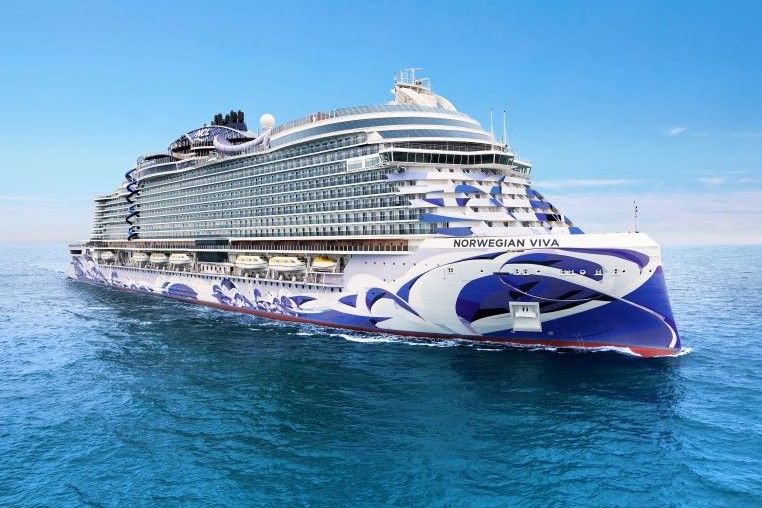
Norwegian Cruise Line is not an independent company but a wholly-owned subsidiary of Norwegian Cruise Line Holdings Ltd. This parent company is a publicly traded entity, meaning its “owners” are the thousands of individuals and institutions that hold its stock under the ticker symbol NCLH on the New York Stock Exchange (NYSE).
The Evolution from Private Ownership to Public Markets
The ownership history of NCL is marked by several high-stakes transitions. Founded in 1966 by Knut Kloster and Ted Arison, the company began as a pioneer in the Caribbean cruise market. Over the decades, ownership shifted through various hands, including a long period under the control of Genting Hong Kong (formerly Star Cruises).
The modern era of NCL’s ownership began in earnest in 2013 when the company launched its Initial Public Offering (IPO). This move transitioned the company from a privately held entity—dominated by private equity firms like Apollo Global Management and TPG Capital—into a public corporation. Today, those private equity giants have largely exited their positions, leaving the company in the hands of the public market.
How Norwegian Cruise Line Holdings Ltd. Functions as a Parent Company
Understanding the ownership of NCL requires looking at the “Holdings” aspect of the name. NCLH operates as a holding company for three distinct brands: Norwegian Cruise Line, Oceania Cruises, and Regent Seven Seas Cruises. By owning all three, NCLH captures a wide spectrum of the market, from the contemporary “freestyle” cruising of NCL to the ultra-luxury segment of Regent Seven Seas.
From a financial perspective, this structure allows the parent company to centralize its capital allocation, debt management, and strategic planning. When an investor buys a share of NCLH, they are not just investing in the blue-hulled NCL ships; they are investing in a diversified portfolio of maritime assets and luxury brands.
Institutional Giants: The Real Power Behind the Shares
While any individual with a brokerage account can own a piece of NCL, the majority of the company is owned by “institutional investors.” These are large organizations—such as mutual funds, pension funds, and insurance companies—that manage money on behalf of millions of people.
The Role of Passive Investment and Index Funds
As of the current fiscal year, the largest shareholders of Norwegian Cruise Line Holdings are household names in the world of finance. Firms like The Vanguard Group, BlackRock, Inc., and State Street Corporation typically hold the largest percentages of shares.
These firms often “own” NCLH through index funds. Because NCLH is a member of major indices like the S&P 500 (at various times) and other mid-cap or consumer discretionary indices, these institutional giants must hold the stock to mirror the performance of the index. This provides NCLH with a level of stock price stability, as these large holders tend to have long-term horizons compared to day traders.
Insider Ownership and the Influence of the Board of Directors
Beyond the institutional giants, a small but significant portion of NCLH is owned by “insiders.” These are the company’s executives and members of the Board of Directors. For instance, the President and CEO of NCLH usually holds a substantial number of shares and stock options.
Insider ownership is a key metric for investors because it aligns the interests of the management team with those of the shareholders. If the executives “own” a part of the company they manage, they are incentivized to make decisions that drive long-term profitability and share price appreciation. In the case of NCLH, the board is composed of veteran financial and maritime experts who oversee the company’s strategic direction on behalf of all owners.
The Financial Ecosystem of the Cruise Industry
To understand why NCLH is owned the way it is, one must look at the capital-intensive nature of the cruise industry. Building a single modern cruise ship can cost upwards of $1 billion. Consequently, the “ownership” of these companies is often a balance between equity (shareholders) and debt (lenders).
Market Share and Comparative Financial Performance
NCLH operates in an oligopoly, competing primarily with Carnival Corporation and Royal Caribbean Group. Together, these “Big Three” control the vast majority of the global cruise market.
From an investment standpoint, NCLH is often viewed as the “growth” play among the three. While it has a smaller fleet than Carnival, its focus on premium brands (Oceania and Regent) often results in higher yields per passenger. Investors who own NCLH are betting on the company’s ability to maintain high occupancy levels while increasing the “onboard spend”—the revenue generated from specialty dining, excursions, and casinos.
Debt Management and Post-Pandemic Recovery
The ownership structure of NCLH underwent significant stress during the global pandemic. With ships docked and revenue at zero, the company had to issue massive amounts of debt and new equity to survive.
This led to “dilution” for existing shareholders. When a company issues new shares to raise cash, each existing share represents a smaller piece of the company. However, this was a necessary trade-off to ensure the company’s solvency. Today, the “owners” of NCLH are focused on the company’s “deleveraging” strategy—using current profits to pay down the high-interest debt incurred during the crisis. The success of this financial maneuvering is what currently dictates the company’s valuation on the NYSE.
Investing in NCL: Risks, Rewards, and Market Valuation
Owning NCLH stock is a play on the broader “experience economy.” As consumers shift their spending from goods to experiences, cruise lines have become a popular vehicle for retail and institutional investment.
Macroeconomic Factors Influencing Share Value
The value of NCLH is highly sensitive to external economic factors. Because cruising is a discretionary expense, the stock price often fluctuates based on consumer confidence, interest rates, and fuel prices.
For an investor, “owning” NCLH means monitoring the Federal Reserve’s interest rate decisions (which affect the cost of the company’s debt) and global oil markets (as fuel is one of the company’s largest operating expenses). Furthermore, geopolitical stability is paramount; any conflict that disrupts major cruise ports in Europe or Asia can have an immediate impact on the company’s bottom line and, by extension, its share price.
Dividends and Long-Term Capital Appreciation
Unlike some blue-chip stocks, NCLH has historically focused on reinvesting its profits into fleet expansion rather than paying out heavy dividends. For the owner of NCLH stock, the primary goal is capital appreciation—the hope that the share price will increase over time as the company grows its fleet and improves its margins.
Analysts often value NCLH based on its Enterprise Value (EV) relative to its EBITDA (Earnings Before Interest, Taxes, Depreciation, and Amortization). This “Money” centric view strips away the romance of the high seas and treats the company as a cash-flow-generating machine. For the serious investor, the “owner” of NCL isn’t a person on a balcony; it’s the entity that successfully navigates the balance sheet to produce the highest return on invested capital.

Conclusion
So, who owns NCL? While the name on the hull says Norwegian, the ownership resides in the global financial markets. It is owned by the millions of people who contribute to Vanguard or BlackRock funds, by the institutional investors who see value in the leisure sector, and by the executives who steer the company through the volatile waters of the global economy.
Norwegian Cruise Line Holdings Ltd. represents a sophisticated intersection of maritime operations and high-stakes corporate finance. For those looking to understand the “Money” behind the cruise industry, NCLH stands as a testament to the power of public markets in scaling a business from a single ship to a multi-brand, global empire. Whether you are a retail investor holding ten shares or a fund manager holding ten million, owning a piece of NCLH means participating in one of the most resilient and capital-intensive industries in the world.
aViewFromTheCave is a participant in the Amazon Services LLC Associates Program, an affiliate advertising program designed to provide a means for sites to earn advertising fees by advertising and linking to Amazon.com. Amazon, the Amazon logo, AmazonSupply, and the AmazonSupply logo are trademarks of Amazon.com, Inc. or its affiliates. As an Amazon Associate we earn affiliate commissions from qualifying purchases.