
In the complex ecosystem of global finance, few numbers carry as much weight for the average consumer and business owner as the prime rate. Often referred to simply as “Prime,” this interest rate serves as the foundational benchmark for a vast array of loan products, from credit cards and home equity lines of credit to small business loans. When the prime rate shifts, the ripples are felt across the entire economy, affecting everything from monthly debt payments to the cost of corporate expansion.
Understanding what the current prime rate is—and, more importantly, how it is determined—is essential for anyone looking to navigate their personal or business finances with precision. As central banks worldwide grapple with inflation and economic cooling, the prime rate has become a focal point of financial strategy.
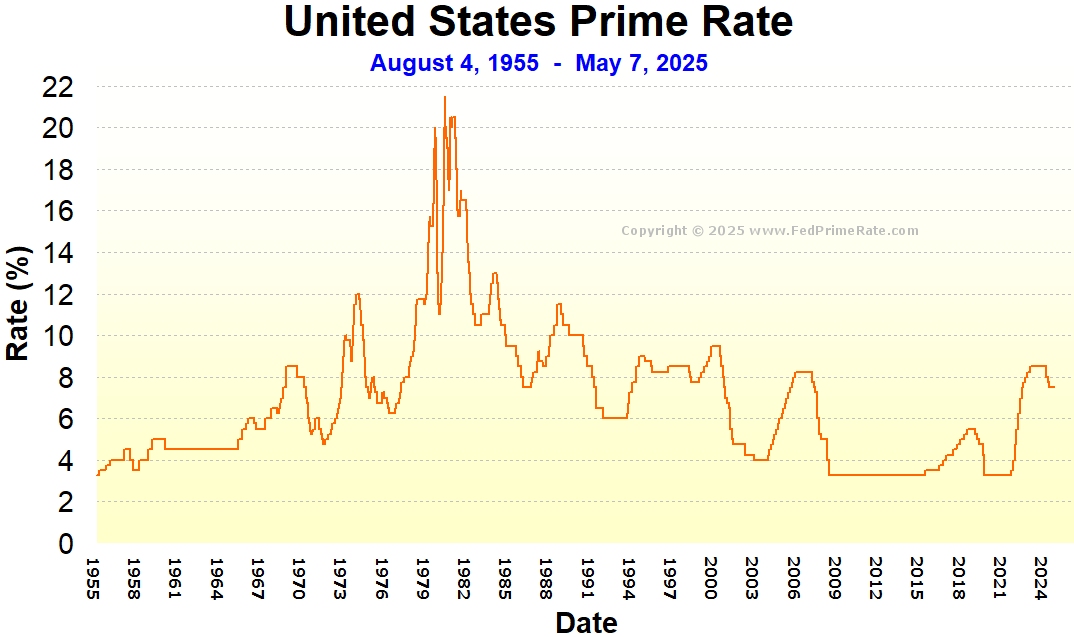
The Mechanics of the Prime Rate: Definition and Determination
At its core, the prime rate is the interest rate that commercial banks charge their most creditworthy corporate customers. While it may seem like a figure set arbitrarily by individual banks, it is actually governed by a very specific formula tied to national monetary policy.
How the Federal Funds Rate Dictates the Prime Rate
The prime rate is inextricably linked to the federal funds rate, which is the target interest rate set by the Federal Open Market Committee (FOMC) of the Federal Reserve. The federal funds rate represents the cost at which commercial banks borrow money from one another overnight to maintain their required reserves.
In the United States, there is a standardized relationship between these two figures: the prime rate is almost universally set at 3 percentage points (300 basis points) above the federal funds target rate. For example, if the Federal Reserve sets the target range for the federal funds rate at 5.25% to 5.50%, the prime rate will typically be adjusted to 8.50%. Because of this mechanical link, whenever the “Fed” meets and decides to hike or cut interest rates to manage the economy, the prime rate moves in lockstep, usually within 24 hours of the announcement.
The Wall Street Journal Prime Rate Standard
While many banks theoretically set their own prime rates, the industry relies on a consensus figure known as the Wall Street Journal (WSJ) Prime Rate. The WSJ surveys the 30 largest banks in the United States. When at least 23 of these 30 institutions (75%) change their prime rate, the WSJ updates its published rate. This serves as the definitive benchmark used by lenders across the country to index their variable-rate financial products. This consensus ensures stability and predictability in the lending market, preventing wild discrepancies between different financial institutions.
How the Prime Rate Influences Your Personal Finances
The prime rate is not just a theoretical concept for Wall Street; it has immediate, tangible effects on the “Main Street” economy. If you carry any form of variable-interest debt, the prime rate is the primary driver of how much interest you pay each month.
Variable-Rate Debt: Credit Cards and HELOCs
Most credit cards are tied to the prime rate. If you look at your credit card agreement, you will likely see an interest rate expressed as “Prime + X%.” This “X” is the margin determined by the lender based on your creditworthiness. When the Federal Reserve raises rates, the prime rate increases, and your credit card APR (Annual Percentage Rate) follows suit almost immediately. For consumers carrying a balance, even a 0.25% increase in the prime rate can add hundreds of dollars in interest charges over the course of a year.
Similarly, Home Equity Lines of Credit (HELOCs) are almost always variable-rate loans tied to the prime rate. Because HELOCs are often used for significant expenses like home renovations or debt consolidation, a rising prime rate can significantly alter a household’s monthly budget. Borrowers who took out HELOCs during periods of record-low rates often find themselves facing much higher monthly payments when the Fed shifts toward a restrictive monetary policy.
The Indirect Impact on Fixed-Rate Mortgages and Auto Loans
It is a common misconception that the prime rate directly dictates fixed-rate mortgage prices. In reality, 15- and 30-year fixed-rate mortgages are more closely tied to the yield on 10-year Treasury notes. However, the prime rate and mortgage rates tend to move in the same general direction because they are both influenced by the same inflationary pressures and Federal Reserve actions.
Auto loans are also influenced by the prime rate. While a five-year auto loan is typically fixed-rate, the starting rate offered to new borrowers is heavily influenced by the prevailing prime rate environment. When the prime rate is high, the cost of capital for the bank is higher, which is passed on to the consumer in the form of higher interest rates for new car purchases.

Macroeconomic Implications: Why the Prime Rate Changes
The movement of the prime rate is a reflection of the Federal Reserve’s attempt to balance the “dual mandate”: achieving maximum employment while maintaining stable prices (low inflation). Understanding why the rate changes can help you predict future financial trends.
Combating Inflation through Monetary Policy
The primary reason the prime rate increases is to combat inflation. When the economy is “overheating”—meaning demand for goods and services outstrips supply, causing prices to rise—the Federal Reserve raises the federal funds rate. This, in turn, raises the prime rate.
A higher prime rate makes borrowing more expensive for both consumers and businesses. When it costs more to borrow money for a car, a house, or a business expansion, spending tends to slow down. This cooling effect reduces the upward pressure on prices, eventually bringing inflation back toward the Fed’s 2% target. Conversely, in times of economic recession or stagnation, the Fed lowers rates to make borrowing cheaper, encouraging spending and investment to jumpstart growth.
Balancing Economic Growth and Stability
The challenge for policymakers is finding the “neutral rate”—a prime rate level that neither over-stimulates nor overly restricts the economy. If the prime rate remains too high for too long, it can lead to a “hard landing” or a recession, as businesses stop hiring and consumers stop spending. If it is kept too low, it can lead to asset bubbles and rampant inflation. Investors and financial analysts watch the prime rate closely because it signals the Fed’s outlook on the health of the economy. A steady or falling prime rate generally suggests a focus on growth, while a rising rate indicates a priority on price stability.
Strategies for Managing Money in a High-Prime-Rate Environment
When the prime rate is high, the “cost of money” is expensive. This requires a shift in financial strategy for both individuals and businesses. Navigating this environment successfully involves a mix of aggressive debt management and opportunistic investing.
Debt Consolidation and Refinancing Tactics
In a high-prime-rate environment, the most critical step is to minimize exposure to variable-rate debt. Consumers should prioritize paying off credit card balances, as these carry the highest interest margins. If you have a variable-rate HELOC or a variable-rate personal loan, it may be prudent to investigate “fixed-rate climb” options or debt consolidation loans that offer a fixed interest rate. By locking in a rate, you protect yourself from future Fed hikes.
For businesses, a high prime rate means that short-term operating lines of credit become more expensive. Savvy business owners often look to refinance short-term debt into longer-term fixed instruments or focus on improving cash flow to reduce the need for borrowing altogether.
Leveraging High-Yield Savings and Fixed-Income Investments
While a high prime rate is a disadvantage for borrowers, it is a significant advantage for savers. Banks typically increase the interest they pay on savings accounts, Certificates of Deposit (CDs), and Money Market Accounts when the prime rate rises.
This is an ideal time to look for “High-Yield Savings Accounts” (HYSA) that offer rates significantly higher than the national average. Additionally, investors might find fixed-income securities, such as Treasury bonds or high-quality corporate bonds, more attractive as yields rise. Locking in high yields on long-term CDs can provide a guaranteed return that acts as a hedge if the prime rate eventually begins to fall.

Conclusion: Staying Informed in a Fluctuating Market
The prime rate is more than just a number on a financial news ticker; it is a fundamental force that shapes the purchasing power of every dollar. Whether you are a first-time homebuyer, a seasoned investor, or a small business owner, the current prime rate dictates the boundaries of your financial decisions.
As the economic landscape continues to evolve—driven by labor market data, geopolitical events, and inflationary trends—staying informed about the prime rate is essential. By understanding the mechanics of how this rate is set and its direct impact on your debt and savings, you can position yourself to thrive regardless of whether the Federal Reserve is in a cycle of tightening or easing. In the world of money, knowledge of the prime rate is the key to maintaining control over your financial destiny.
aViewFromTheCave is a participant in the Amazon Services LLC Associates Program, an affiliate advertising program designed to provide a means for sites to earn advertising fees by advertising and linking to Amazon.com. Amazon, the Amazon logo, AmazonSupply, and the AmazonSupply logo are trademarks of Amazon.com, Inc. or its affiliates. As an Amazon Associate we earn affiliate commissions from qualifying purchases.