
In the modern financial landscape, few questions are asked with as much frequency or fervor as “What is Bitcoin at?” While on the surface this appears to be a simple query about a numerical price point, the answer encompasses a complex web of global economics, investor psychology, and a fundamental shift in how humanity perceives value. For the modern investor, understanding Bitcoin’s current standing is not merely about tracking a ticker symbol; it is about analyzing the maturation of the world’s first decentralized digital asset and its role within a diversified financial portfolio.
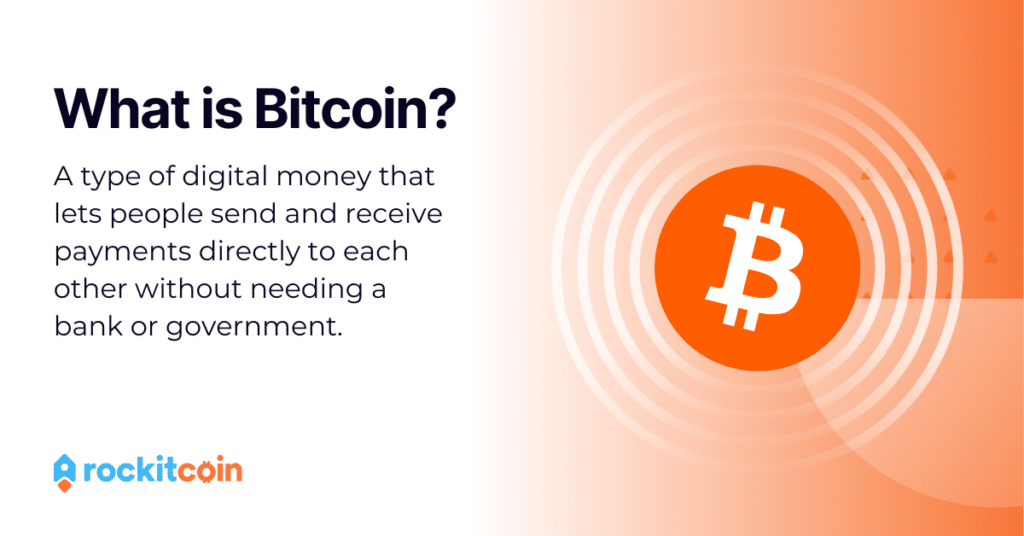
The Foundations of Bitcoin Valuation: Beyond the Daily Ticker
To understand what Bitcoin is “at” in a meaningful sense, one must look beyond the immediate exchange rate against the U.S. Dollar. Valuation in the cryptocurrency space is a multifaceted discipline that combines traditional financial metrics with new, network-based indicators.
Market Capitalization vs. Unit Price
While retail investors often focus on the price of a single Bitcoin, institutional analysts prioritize market capitalization. Market cap is calculated by multiplying the total circulating supply of Bitcoin (which is capped at 21 million) by its current market price. This figure provides a clearer picture of Bitcoin’s “size” relative to other asset classes, such as gold or the S&P 500. When Bitcoin’s market cap crosses the trillion-dollar threshold, it moves from being a speculative “alt-tech” experiment to a systemic financial asset that demands inclusion in institutional balance sheets.
The Role of Global Liquidity and Exchange Pricing
Bitcoin does not trade on a single, centralized exchange. Instead, its price is an aggregate of trading activity across hundreds of global platforms, from Coinbase and Binance to decentralized protocols. Consequently, what Bitcoin is “at” can vary slightly depending on the liquidity of a specific platform. High liquidity—the ease with which Bitcoin can be bought or sold without affecting its price—is a hallmark of a mature market. For the personal financier, monitoring the “spread” and exchange volume is essential for executing trades that maximize returns and minimize slippage.
Factors Influencing Bitcoin’s Current Market Standing
The price of Bitcoin is never static because it reacts to a 24/7 global news cycle. Unlike the stock market, which has “opening bells” and weekend breaks, the Bitcoin market is the first truly global, frictionless financial environment. Several key drivers currently dictate its valuation.
Institutional Adoption and the Impact of Spot ETFs
Perhaps the most significant shift in Bitcoin’s valuation framework in recent years has been the approval and integration of Spot Bitcoin ETFs (Exchange-Traded Funds). By allowing traditional investors to gain exposure to Bitcoin through their existing brokerage accounts, these instruments have funneled billions of dollars of institutional capital into the ecosystem. This “institutionalization” of Bitcoin provides a floor for the price, as large-scale wealth managers and pension funds tend to have longer time horizons and less emotional volatility than retail “day traders.”
Macroeconomic Indicators and Inflation Hedges
Bitcoin is increasingly viewed through the lens of “Digital Gold.” In environments characterized by high inflation or the “debasement” of fiat currencies, Bitcoin often sees an uptick in valuation. When central banks engage in quantitative easing or interest rate adjustments, investors look for assets with a fixed supply. Because Bitcoin’s supply is mathematically capped, it serves as a hedge against the diminishing purchasing power of traditional money. Therefore, when asking what Bitcoin is at, one must also ask what the U.S. Federal Reserve’s current stance on interest rates is, as the two are inextricably linked.
Navigating Volatility: Is Now a Strategic Entry Point?

Volatility is the most cited concern for those looking at Bitcoin’s price. However, for the seasoned investor, volatility is not a deterrent but a characteristic that provides opportunity. Understanding how to navigate these price swings is the difference between emotional reacting and strategic investing.
Dollar-Cost Averaging (DCA) Strategies
Because it is notoriously difficult to “time the bottom” of a Bitcoin market cycle, many financial advisors suggest a Dollar-Cost Averaging (DCA) approach. This involves investing a fixed amount of money at regular intervals, regardless of the price. By doing so, an investor buys more Bitcoin when prices are low and less when prices are high. This strategy mitigates the risk of a “bad entry” and focuses on the long-term accumulation of the asset, rather than the anxiety of daily price fluctuations.
Assessing Risk Tolerance in a Crypto Portfolio
Bitcoin should rarely constitute 100% of an individual’s investment portfolio. Instead, its role is often that of a “high-alpha” asset—one that has the potential for outsized returns but comes with higher risk. A professional approach to “what Bitcoin is at” involves assessing one’s own risk tolerance. For some, a 1% to 5% allocation provides sufficient exposure to the upside of digital assets without jeopardizing their overall financial stability during a market drawdown.
The Four-Year Cycle and the “Halving” Phenomenon
To understand the long-term trajectory of Bitcoin’s price, one must understand the “Halving.” This is a programmed event that occurs approximately every four years, where the reward for mining new blocks is cut in half, effectively reducing the rate at which new Bitcoin enters circulation.
Historical Patterns and Supply Scarcity
Historically, the year leading up to and the year following a Halving event have been periods of significant price appreciation. This is a simple function of supply and demand: if the demand for Bitcoin remains constant or increases while the new supply is cut by 50%, the price must adjust upward. Investors who track these four-year cycles often view “what Bitcoin is at” today in relation to where it sits in the current Halving epoch.
Future Projections and Market Maturity
As the market matures, the extreme “boom and bust” cycles of Bitcoin’s early years are beginning to dampen. While the percentage gains may not be as astronomical as they were in 2013 or 2017, the downside protection has increased. The market is transitioning from a speculative “wild west” into a stabilized asset class. Future projections now rely less on “hype” and more on the actual utility of the network and its adoption as a global reserve asset.
Future Outlook: Bitcoin as “Digital Gold” and Wealth Preservation
As we look toward the future, the question of “What is Bitcoin at?” will likely shift from a focus on price to a focus on purchasing power. In a world of increasing digital surveillance and financial centralization, Bitcoin offers a unique proposition: a borderless, permissionless, and censorship-resistant store of value.
Integration into Traditional Finance (TradFi)
The line between “crypto” and “traditional finance” is blurring. Major banks are now offering custody services for digital assets, and payment processors are integrating Bitcoin into their infrastructure. This integration suggests that Bitcoin is moving toward a period of sustained “price discovery,” where its value is pegged to its utility as a global settlement layer. For the investor, this means that Bitcoin is no longer just a “side hustle” or a tech experiment; it is a core pillar of modern wealth preservation.

Long-term Wealth Preservation
Ultimately, Bitcoin represents a shift in the philosophy of money. It is the first time in history that an individual can hold an asset that cannot be inflated by a government or seized by a central authority, provided they manage their own private keys. When we evaluate what Bitcoin is at, we are essentially evaluating the market’s confidence in this decentralized alternative. As global debt levels rise and trust in traditional institutions wavers, the value proposition of Bitcoin becomes increasingly clear.
In conclusion, “What is Bitcoin at?” is a question that requires a multi-dimensional answer. It is a reflection of current liquidity, institutional sentiment, macroeconomic health, and the relentless march of a programmed supply schedule. For the disciplined investor, the current price is merely a data point in a much larger narrative of financial evolution. By focusing on sound investment principles—such as DCA, risk management, and long-term holding—one can move past the noise of daily fluctuations and participate in the growth of what many consider to be the most important financial innovation of the 21st century.
aViewFromTheCave is a participant in the Amazon Services LLC Associates Program, an affiliate advertising program designed to provide a means for sites to earn advertising fees by advertising and linking to Amazon.com. Amazon, the Amazon logo, AmazonSupply, and the AmazonSupply logo are trademarks of Amazon.com, Inc. or its affiliates. As an Amazon Associate we earn affiliate commissions from qualifying purchases.