
At its core, Amazon is often perceived by the average consumer as a massive digital storefront—a place to order groceries, electronics, or books with the tap of a finger. However, to understand how Amazon actually works, one must look past the retail interface and into the sophisticated technological engine that drives the entire operation. Amazon is not merely a retailer; it is a premier technology company whose infrastructure dictates the pace of the modern internet, artificial intelligence development, and autonomous logistics.
The “Amazon Flywheel” is powered by a complex stack of proprietary software, massive data centers, and advanced robotics. By examining the interplay between cloud computing, machine learning, and hardware automation, we can uncover the technical blueprint that allows this behemoth to function at a scale previously thought impossible.

The Backbone of the Modern Internet: Amazon Web Services (AWS)
Before discussing packages and delivery vans, it is essential to understand Amazon Web Services (AWS). While Amazon began as a bookstore, its greatest technological achievement was the decision to decouple its internal infrastructure into modular services. Today, AWS is the world’s most comprehensive and broadly adopted cloud platform, providing the fundamental “piping” for much of the digital world.
Infrastructure as a Service (IaaS) and the Cloud Revolution
AWS operates on the principle of Infrastructure as a Service (IaaS). In the past, companies had to purchase, house, and maintain their own physical servers—a costly and rigid process. Amazon revolutionized this by virtualizing hardware. Through a global network of “Availability Zones” and “Regions,” Amazon provides on-demand computing power, storage, and databases. When a user asks “how does Amazon work,” the answer starts here: it works by owning the very ground upon which the internet is built. This infrastructure allows Amazon’s own retail site to handle massive spikes in traffic during events like Prime Day without crashing, leveraging the same elasticity it sells to other global enterprises.
Serverless Computing and Microservices
A critical technical shift in Amazon’s operation was the move from a “monolithic” software architecture to “microservices.” Instead of one giant program running the website, Amazon is composed of thousands of small, independent services that communicate with each other. For instance, the “Add to Cart” button is a distinct service from the “Search” bar. This modularity is supported by AWS Lambda, a serverless computing platform. This allows Amazon’s engineers to update or fix individual parts of the platform without taking the whole system offline, ensuring 99.99% uptime and continuous deployment of new features.
Algorithmic Logistics: The Tech Behind the “Buy Now” Button
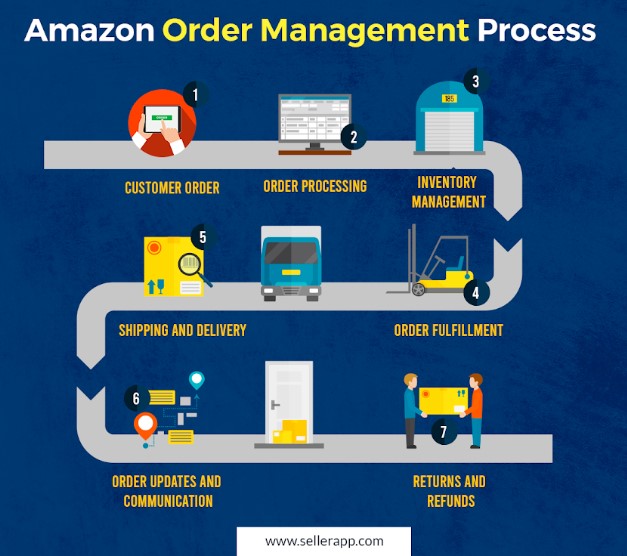
The seamless transition from a digital click to a physical package at a doorstep is the result of one of the world’s most advanced applications of data science and robotics. Amazon’s logistics network is an intricate web of predictive algorithms and automated hardware designed to eliminate “friction” in the supply chain.
Predictive Analytics and Anticipatory Shipping
Amazon works by knowing what you want before you even buy it. Through a process known as “Anticipatory Shipping,” Amazon’s algorithms analyze years of purchasing data, search history, and even how long a user hovers over an item. Using this data, the system predicts demand at a hyper-local level. It then triggers the movement of inventory to a fulfillment center near the predicted customer base. This technical foresight reduces the “last-mile” delivery time, as the product is often already sitting in a nearby warehouse before the order is officially placed.
Robotics and Automation in Fulfillment Centers
Inside the fulfillment centers, the “work” is performed by a synergy of humans and machines. Amazon Robotics (formerly Kiva Systems) utilizes thousands of autonomous mobile robots that navigate the warehouse floor. These robots use computer vision and sensor fusion to identify “pods” of inventory and bring them directly to human pickers.
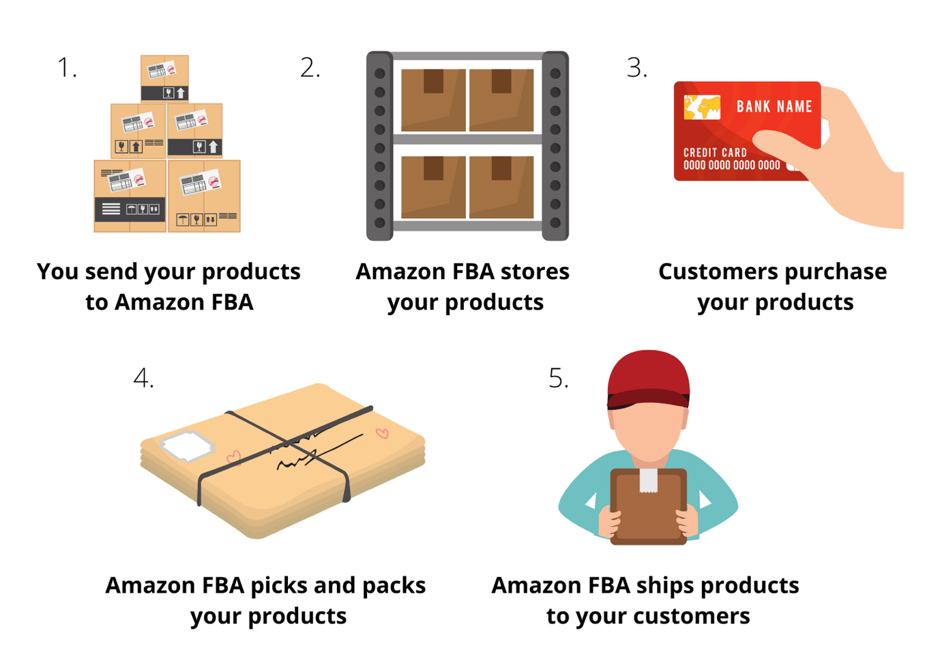
The latest generation of robots, such as “Proteus,” utilizes advanced LiDAR and AI to navigate safely around humans without being confined to caged areas. This hardware-software integration allows Amazon to store 40% more inventory per square foot and process orders in minutes rather than hours, a feat of engineering that defines their operational superiority.
The AI Engine: Personalization and the Alexa Ecosystem
Artificial Intelligence (AI) and Machine Learning (ML) are the “brains” of the Amazon operation. While many companies use AI as a buzzword, Amazon integrates it into every layer of its stack to optimize the user experience and internal efficiencies.
Machine Learning in Recommendation Engines
The “Customers who bought this also bought…” feature is perhaps the most famous application of collaborative filtering in the tech world. Amazon’s recommendation engine uses deep learning models to process trillions of data points. These models don’t just look at what you bought; they look at the sequence of your clicks, the time of day you shop, and even the nuances of product descriptions to find latent connections. This recursive feedback loop ensures that the more a user interacts with the platform, the more accurate the system becomes, creating a highly personalized digital environment.
Natural Language Processing and the Alexa Ecosystem
Beyond the website, Amazon works through voice-activated computing. Alexa, powered by Natural Language Processing (NLP) and Automatic Speech Recognition (ASR), represents a massive leap in ambient computing. When a user speaks to an Echo device, the audio is processed in the AWS cloud using neural networks that convert speech to text, interpret intent, and generate a response in milliseconds. This ecosystem extends Amazon’s technological reach into the “smart home,” creating a multi-modal interface where the “store” is always listening and ready to assist, further embedding Amazon’s tech into the fabric of daily life.
Digital Security and the Trust Framework
Handling the personal data and financial information of hundreds of millions of people requires a robust security architecture. Amazon’s technological reliability is predicated on its ability to maintain a secure environment against increasingly sophisticated cyber threats.
Encryption and Fraud Detection at Scale
Every transaction on Amazon is protected by advanced encryption protocols. However, the real “tech” lies in the automated fraud detection systems. Amazon employs machine learning models that analyze transaction patterns in real-time. If a purchase behavior deviates from a user’s historical profile—such as a sudden high-value purchase from a new geographic location—the system can flag or block the transaction instantly. These models are trained on billions of successful and fraudulent transactions, allowing them to evolve faster than the tactics of cybercriminals.
Zero Trust Architecture and Data Integrity
Internally, Amazon operates on a “Zero Trust” security model. This means that no user or device, whether inside or outside the corporate network, is trusted by default. Every request for access to a database or a service must be authenticated, authorized, and encrypted. This technical rigor ensures that even if one part of the system is compromised, the “blast radius” is contained, protecting the integrity of the overall ecosystem. This high-level security is a major reason why government agencies and financial institutions trust AWS with their most sensitive data.
Conclusion: A Company Built on Code and Silicon
How does Amazon work? It works by being a relentlessly innovative technology firm that views every problem through the lens of engineering. By building the world’s most powerful cloud infrastructure in AWS, it created the foundation for its own retail dominance. By applying advanced AI and robotics to the physical world of logistics, it redefined the possibilities of global commerce.
Amazon is a testament to the power of the “Tech Stack.” It is a multi-layered system where high-level machine learning models dictate the movements of physical robots, and where the world’s digital data lives on the same servers that power a household’s weekly grocery order. As Amazon continues to push into generative AI, autonomous drone delivery, and satellite internet via Project Kuiper, its identity as a technology leader will only become more pronounced. In the end, Amazon isn’t just a place to buy things; it is a global operating system for the 21st century.
aViewFromTheCave is a participant in the Amazon Services LLC Associates Program, an affiliate advertising program designed to provide a means for sites to earn advertising fees by advertising and linking to Amazon.com. Amazon, the Amazon logo, AmazonSupply, and the AmazonSupply logo are trademarks of Amazon.com, Inc. or its affiliates. As an Amazon Associate we earn affiliate commissions from qualifying purchases.