
Navigating the world of used car loans can feel like deciphering a complex financial puzzle, with the interest rate being one of the most significant pieces. For many, a used car represents a practical and often more affordable alternative to a new vehicle, but securing the right financing is paramount to its true cost-effectiveness. The interest rate assigned to your used car loan isn’t just an abstract number; it’s a critical determinant of your monthly payments and the total amount you’ll repay over the life of the loan. Understanding what goes into calculating this rate, the factors that influence it, and how to secure the most favorable terms can save you hundreds, if not thousands, of dollars. This article will demystify used car loan interest rates, equipping you with the knowledge to make informed financial decisions when purchasing your next vehicle.
Understanding Used Car Loan Interest Rates
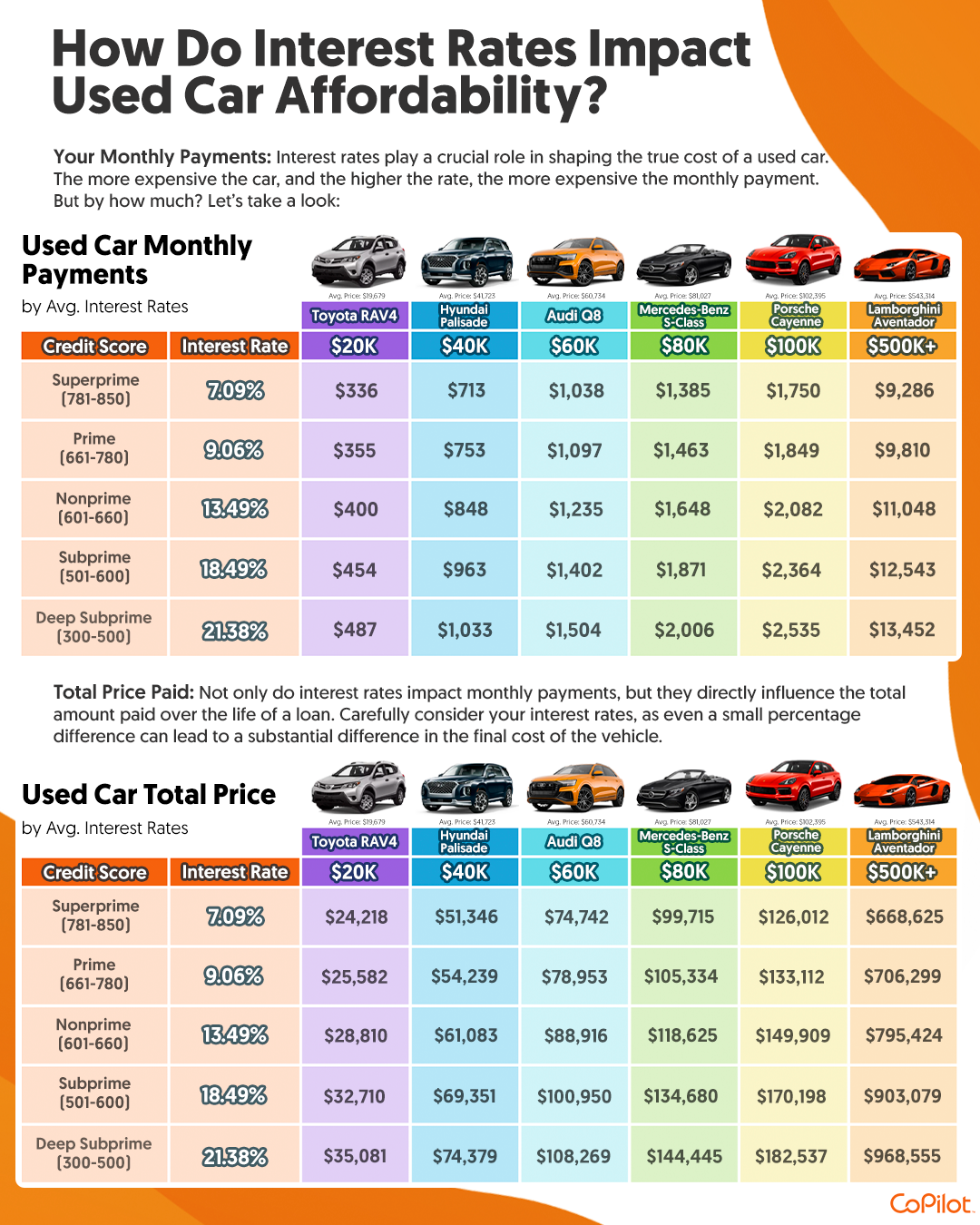
An interest rate is essentially the cost of borrowing money, expressed as a percentage of the principal loan amount. For a used car loan, this rate directly impacts your monthly payment and the overall cost of ownership. It’s crucial to differentiate between the nominal interest rate and the Annual Percentage Rate (APR), which includes the interest rate plus any additional fees and charges, giving you a more accurate picture of the loan’s true cost.
What is an Interest Rate?
At its core, an interest rate is the percentage charged by a lender to a borrower for the use of assets. In the context of a car loan, it’s the cost you pay for borrowing the principal amount to purchase your vehicle. Lenders charge interest as compensation for the risk they take by lending money and for the opportunity cost of not investing that money elsewhere. The APR, or Annual Percentage Rate, is particularly important as it represents the total cost of borrowing over a year, encompassing both the interest rate and any additional fees like origination fees, closing costs, or discount points. When comparing loan offers, always focus on the APR for an apples-to-apples comparison.
Why Used Car Rates Differ from New Car Rates
You might notice that interest rates for used car loans are generally higher than those for new cars. Several factors contribute to this disparity. Firstly, new cars often come with manufacturer incentives, such as special financing rates as low as 0% APR, designed to boost sales of current models. These incentives are rarely available for used vehicles. Secondly, lenders perceive a higher risk with used cars. They depreciate faster in their initial years, and their condition can be more unpredictable, making them less reliable collateral. If a borrower defaults, the lender might recover less money by repossessing and selling a used car compared to a newer one. This increased risk translates into higher interest rates to compensate the lender.
The Impact of Interest Rates on Your Total Loan Cost
Even a seemingly small difference in an interest rate can have a significant impact on the total amount you pay over the life of a used car loan. Consider a $20,000 used car loan over 60 months.
- At 5% APR, your monthly payment might be around $377, and the total interest paid would be approximately $2,620.
- At 8% APR, your monthly payment jumps to about $405, and the total interest paid would be closer to $4,300.
That’s a difference of nearly $1,700 in interest alone. This illustrates why securing the lowest possible interest rate is paramount; it directly reduces both your monthly outflow and the overall financial burden of your car purchase.
Key Factors Influencing Your Used Car Loan Interest Rate
Several interconnected factors determine the interest rate you’ll be offered on a used car loan. Understanding these elements can help you identify areas where you might improve your financial standing or make strategic choices to secure a more favorable rate.
Your Credit Score and History
This is arguably the most critical factor. Your credit score (e.g., FICO score) is a numerical representation of your creditworthiness, reflecting your history of borrowing and repaying debt. Lenders use it to assess the likelihood that you will repay your loan on time.
- Excellent Credit (780-850): Typically qualifies for the lowest rates.
- Good Credit (670-739): Still receives competitive rates.
- Fair Credit (580-669): May face higher rates due to perceived increased risk.
- Poor Credit (300-579): Will likely be offered the highest rates, if approved at all.
Lenders also look at your entire credit history, including payment consistency, credit utilization, length of credit history, and types of credit accounts. A strong, consistent payment history demonstrates reliability.
The Loan Term (Length of Loan)
The loan term, or the repayment period, significantly influences your interest rate. Shorter loan terms (e.g., 36 or 48 months) generally come with lower interest rates because the lender’s money is at risk for a shorter period. While a shorter term means higher monthly payments, it results in less total interest paid over the life of the loan. Conversely, longer loan terms (e.g., 72 or 84 months) often have higher interest rates. While they offer lower monthly payments, you’ll pay substantially more in total interest due to the extended repayment period and the increased risk for the lender.
Down Payment Amount
Making a larger down payment reduces the amount you need to borrow, which can positively impact your interest rate. Lenders view a substantial down payment as a sign of financial stability and commitment. It also lowers the loan-to-value (LTV) ratio, meaning the loan amount is a smaller percentage of the car’s value. A lower LTV reduces the lender’s risk, making them more willing to offer a lower interest rate. A significant down payment can also help avoid being “upside down” on your loan, where you owe more than the car is worth, especially given the rapid depreciation of used cars.
Vehicle Age and Mileage
The characteristics of the used car itself play a role. Older vehicles with higher mileage are generally considered riskier collateral by lenders. They are more prone to mechanical issues, which could lead to missed payments if the owner faces unexpected repair costs. Additionally, older, higher-mileage vehicles have lower resale value, meaning if a lender has to repossess and sell the car, they might recover less of their initial loan. Therefore, loans for older, higher-mileage used cars often come with higher interest rates to compensate for this increased risk.
Lender Type
Different types of lenders have varying rate structures and eligibility requirements.
- Banks: Offer competitive rates, especially to customers with good credit.
- Credit Unions: Often have some of the most competitive rates, as they are non-profit organizations focused on their members’ financial well-being.
- Online Lenders: Provide convenience and quick approvals, often with competitive rates for a wide range of credit scores.
- Dealership Financing: Can be convenient but may not always offer the best rates unless they have special promotions. They often act as intermediaries, connecting you with third-party lenders.
Shopping around and comparing offers from various lender types is crucial.
Market Conditions
Broader economic factors and the prevailing interest rate environment also influence car loan rates. When the Federal Reserve raises its benchmark interest rate, it typically leads to higher interest rates across the board, including for car loans. Conversely, a period of low-interest rates set by the Fed can result in more favorable borrowing conditions. The overall health of the economy, inflation rates, and consumer demand for loans can also play a role in how lenders price their car loan products.
Strategies to Secure a Lower Interest Rate on a Used Car Loan
While some factors are beyond your immediate control, there are proactive steps you can take to position yourself for the lowest possible interest rate on a used car loan. Diligence and preparation are key.
Improve Your Credit Score
Since your credit score is so influential, taking steps to improve it before applying for a loan can significantly impact the rates you’re offered.
- Check Your Credit Report: Obtain free copies from AnnualCreditReport.com and dispute any errors.
- Pay Bills on Time: Payment history is a major component of your score. Set up reminders or automatic payments.
- Reduce Credit Card Debt: Lowering your credit utilization (the amount of credit you use versus the amount available) can boost your score.
- Avoid New Credit Applications: Each hard inquiry can temporarily ding your score.
Save for a Larger Down Payment
As discussed, a larger down payment reduces the loan amount and the lender’s risk. Aim for at least 10-20% of the car’s value. Not only can this secure a lower interest rate, but it also reduces your monthly payments and helps prevent you from being “upside down” on your loan.
Shorten Your Loan Term
If your budget allows for higher monthly payments, opt for a shorter loan term. While the monthly cost will be higher, the total interest paid will be substantially lower, and you’ll typically qualify for a lower interest rate. This also means you’ll own the car outright much sooner.
Shop Around and Compare Offers
This is one of the most effective strategies. Don’t settle for the first loan offer you receive, especially if it’s from the dealership. Apply for pre-approval from multiple lenders—banks, credit unions, and online lenders. Pre-approvals give you a solid offer in hand, allowing you to negotiate confidently at the dealership and ensure you’re getting the best possible rate. Most credit score models treat multiple inquiries for the same type of loan within a short window (typically 14-45 days) as a single inquiry, minimizing the impact on your score.
Consider a Co-signer (Carefully)
If you have a limited credit history or a less-than-stellar credit score, a co-signer with excellent credit can help you qualify for a better interest rate. A co-signer equally shares responsibility for the loan, meaning if you miss payments, their credit will also be affected, and they will be legally obligated to repay the debt. This decision should be approached with careful consideration and clear communication.
Choose the Right Vehicle
While you might have a dream car in mind, being flexible with your vehicle choice can sometimes lead to better financing. Newer used cars (e.g., 1-3 years old) with lower mileage are often viewed more favorably by lenders, potentially qualifying for better rates than much older models, even if they are more expensive upfront.
The Application Process: What to Expect
Once you’ve done your research and prepared your finances, the loan application process itself is fairly straightforward. Knowing what to expect can help streamline the experience.
Gathering Necessary Documents
Lenders will require various documents to verify your identity, income, and financial stability. Be prepared to provide:
- Proof of Identity: Driver’s license or state ID.
- Proof of Income: Pay stubs, W-2s, or tax returns (especially if self-employed).
- Proof of Residency: Utility bills or lease agreement.
- Employment Information: Name and contact for your employer.
- Vehicle Information: If you’ve already selected a car (make, model, VIN, mileage).
Having these ready can speed up the approval process.
Understanding Loan Offers
When you receive loan offers, pay close attention to more than just the monthly payment. Scrutinize the APR, the loan term, and any specific conditions. A lower monthly payment over a longer term might seem appealing but can result in significantly more interest paid. Use an online loan calculator to see how different rates and terms affect your total cost.
Reading the Fine Print
Before signing any loan agreement, meticulously read the fine print. Look for:
- Prepayment Penalties: Fees charged if you pay off the loan early (rare in car loans but worth checking).
- Late Fees: The cost if you miss a payment.
- Default Clauses: What constitutes a default and the consequences.
- Insurance Requirements: Lenders often require full coverage insurance on financed vehicles.
Understanding these terms can prevent unwelcome surprises down the road.
Beyond the Interest Rate: Other Costs to Consider
While the interest rate is a major component of your car’s cost, it’s vital to remember that it’s not the only expense involved in purchasing and owning a used car. A holistic view ensures you budget accurately.
Fees and Charges
Lenders and dealerships may levy various fees. These can include:
- Origination Fees: A fee for processing the loan.
- Documentation Fees: Charged by the dealership for preparing sales paperwork.
- Processing Fees: Additional administrative charges.
- Taxes and Registration Fees: State and local taxes, license plates, and title transfer fees.
Always ask for a detailed breakdown of all fees to understand the “out-the-door” price.
Insurance Costs
Financing a car almost always requires you to carry comprehensive and collision insurance (full coverage) in addition to your state’s minimum liability requirements. The cost of this insurance can vary significantly based on the vehicle’s make and model, your driving history, age, and location. Obtain insurance quotes before finalizing your car purchase to ensure you can afford the premiums, as these are non-negotiable for a financed vehicle.
Maintenance and Repair
Used cars, by their nature, are more likely to require maintenance and repairs than new ones. Budgeting for unexpected costs is crucial, especially for older or higher-mileage vehicles. Consider getting a pre-purchase inspection from an independent mechanic to uncover potential issues before you buy. If the vehicle is still under warranty, understand its terms and remaining duration.

Sales Tax and Registration
These are unavoidable costs that vary by state and local jurisdiction. Sales tax is typically calculated on the purchase price of the vehicle, and registration fees are paid annually to your state’s Department of Motor Vehicles. Factor these into your overall budget, as they can add several hundred to over a thousand dollars to your initial outlay.
In conclusion, understanding “what is the interest rate on a used car loan” goes far beyond a simple percentage. It involves a complex interplay of personal financial health, market conditions, and strategic decision-making. By meticulously preparing your credit, comparing offers from various lenders, and understanding all associated costs, you can secure a favorable interest rate that significantly reduces the overall expense of your used car, paving the way for a smarter, more affordable vehicle purchase.
aViewFromTheCave is a participant in the Amazon Services LLC Associates Program, an affiliate advertising program designed to provide a means for sites to earn advertising fees by advertising and linking to Amazon.com. Amazon, the Amazon logo, AmazonSupply, and the AmazonSupply logo are trademarks of Amazon.com, Inc. or its affiliates. As an Amazon Associate we earn affiliate commissions from qualifying purchases.