
Buying a car is one of the most significant financial decisions many individuals will make, often second only to purchasing a home. It’s a transaction fraught with emotion, complex financing, and high stakes. The question “how much should I pay for a car?” isn’t just about the sticker price; it’s a deep dive into personal finance, budgeting, long-term costs, and strategic negotiation. Approaching this decision with a clear financial roadmap can save you thousands of dollars, prevent buyer’s remorse, and ensure your new vehicle enhances, rather than burdens, your financial well-being. This guide will equip you with the insights and tools to make an informed, financially sound car purchase.
Understanding Your True Affordability: Beyond the Sticker Price
Before you even step foot in a dealership or browse online listings, the most crucial step is to understand what you can truly afford. This goes far beyond the advertised price or the monthly payment quoted. A comprehensive assessment of your financial health is paramount to making a sustainable car purchase.
The Total Cost of Ownership (TCO): Unveiling Hidden Expenses
Many buyers focus solely on the car’s price or the monthly loan payment, overlooking the myriad of additional costs that accompany vehicle ownership. The Total Cost of Ownership (TCO) is a critical metric that provides a holistic view of what a car will genuinely cost you over its lifespan. Ignoring these ‘hidden’ expenses can quickly turn an seemingly affordable car into a financial drain.
- Depreciation: This is often the largest, yet most overlooked, cost. A new car can lose 15-20% of its value in the first year alone, and 40-50% within five years. Understanding depreciation helps you evaluate the long-term value and potential resale of a vehicle, especially when comparing new vs. used options.
- Insurance: Premiums vary dramatically based on the car’s make, model, age, safety features, your driving record, location, and even credit score. Get insurance quotes for specific vehicles before you commit to a purchase. A seemingly cheap car might have sky-high insurance costs.
- Fuel: Consider the vehicle’s fuel efficiency and your typical driving habits. A small difference in miles per gallon (MPG) can add up to hundreds or thousands of dollars over several years, especially with volatile fuel prices.
- Maintenance and Repairs: Every car needs regular servicing, oil changes, tire rotations, and eventual repairs. Research the average maintenance costs for models you’re considering. Luxury or high-performance vehicles often come with significantly higher service expenses. Sites like Edmunds or RepairPal can provide estimates.
- Registration and Taxes: These are often one-time or annual fees required by your state. Sales tax on the purchase can be a substantial upfront cost, and annual registration fees can range from minimal to several hundred dollars.
- Financing Costs: If you’re taking out a loan, the interest you pay over the loan term is a direct cost of ownership. The longer the term or higher the interest rate, the more expensive the car becomes.
The 20/4/10 Rule: A Practical Affordability Guideline
While not a rigid law, the “20/4/10 Rule” is a widely cited guideline that provides a sensible framework for car affordability:
- 20% Down Payment: Aim for at least 20% of the car’s purchase price as a down payment. This reduces the amount you need to finance, lowers your monthly payments, and helps you avoid becoming “upside down” (owing more than the car is worth) early in the loan term due to rapid depreciation.
- 4-Year Loan Term: Keep your car loan term to a maximum of four years (48 months). Longer loan terms (5, 6, or even 7 years) lead to significantly more interest paid over the life of the loan, and you risk driving an aging, potentially more problematic car while still making payments.
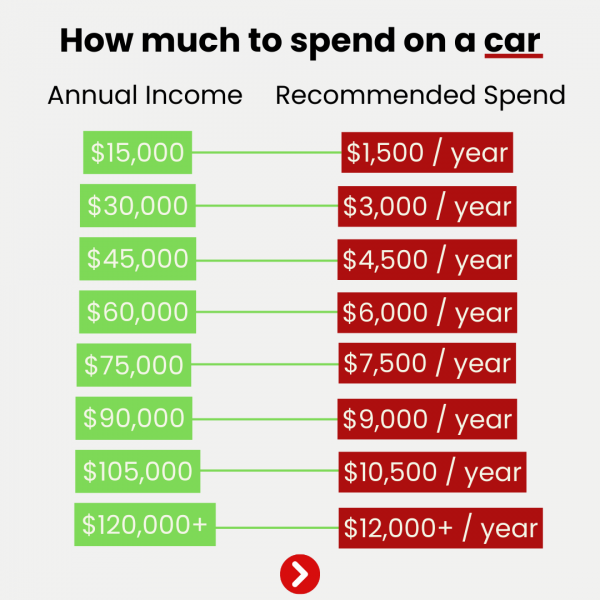
- 10% of Gross Income for Total Car Expenses: All your monthly car-related expenses – loan payment, insurance, fuel, and estimated maintenance – should not exceed 10% of your gross (pre-tax) monthly income. This ensures your car doesn’t consume an outsized portion of your budget, leaving room for other financial goals like savings, investments, and emergencies.
Analyzing Your Budget: Income vs. Expenses
Before any car shopping, perform a rigorous audit of your current budget. Understand your monthly income and itemize all your fixed and variable expenses. This will reveal your true disposable income and how much you can realistically allocate to a car payment without jeopardizing other financial obligations or savings goals. Be honest with yourself. Can you comfortably afford the payment, insurance, and running costs every month, even if an unexpected expense arises? Consider your debt-to-income (DTI) ratio, especially if you have other significant debts. Lenders often look at DTI, but so should you, to ensure your overall debt load is manageable.
Smart Financing Strategies: Maximizing Your Money
Once you know what you can afford, the next step is to strategize how you’ll pay for the vehicle. Your financing choice significantly impacts the total cost of the car and your financial flexibility.
Cash vs. Loan: Weighing the Pros and Cons
Paying cash for a car eliminates interest payments entirely, making it the most financially efficient option in the long run. It also means you own the car outright, simplifying insurance requirements and removing monthly debt obligations. However, paying cash might deplete your emergency fund or divert funds from higher-return investments. Evaluate the opportunity cost of using a large sum of cash versus financing at a low interest rate while keeping your liquid assets intact.
If you opt for a loan, understanding its components is vital:
- Interest Rate (APR): This is the cost of borrowing money, expressed as an annual percentage. A lower APR means lower total interest paid. Your credit score is the primary determinant of your APR.
- Loan Term: As discussed with the 20/4/10 rule, shorter terms generally mean higher monthly payments but significantly less interest paid over time.
- Total Cost of Loan: Calculate the total amount you’ll pay back (principal + interest) over the life of the loan. This is the true financial burden of borrowing.
Navigating Car Loans: Pre-Approval, Lenders, and Understanding APR
Don’t wait until you’re at the dealership to think about financing. Get pre-approved for a loan from multiple lenders before you start serious car shopping. This gives you several advantages:
- Knowing Your Buying Power: You’ll know exactly how much you’re approved for and at what interest rate, giving you a firm budget.
- Negotiating Leverage: With pre-approval in hand, you can negotiate the car’s price as a cash buyer, free from the pressure of dealership financing. If the dealership offers a better rate, great, but you have a strong fallback.
- Credit Unions vs. Banks vs. Dealerships: Explore all avenues. Credit unions often offer highly competitive interest rates. Compare offers from your personal bank, online lenders, and then see if the dealership can beat them.
- Understanding APR vs. Interest Rate: While often used interchangeably, APR (Annual Percentage Rate) includes not only the interest rate but also other fees associated with the loan, providing a more accurate picture of the total cost of borrowing.
The Down Payment Dilemma: How Much is Enough?
A substantial down payment is one of the smartest financial moves you can make when buying a car. Beyond the 20% guideline, aiming for more if possible brings several benefits:
- Reduces Loan Amount & Interest: A larger down payment directly reduces the principal amount you need to borrow, thus decreasing your monthly payments and the total interest you’ll pay over the loan term.
- Builds Equity Faster: You start with more equity in the car, meaning the gap between what you owe and the car’s market value is smaller. This helps prevent negative equity, where you owe more than the car is worth, especially common with new cars due to rapid depreciation.
- Lower Risk for Lender: A larger down payment signals less risk to lenders, potentially qualifying you for better interest rates.
- Lower Insurance Costs (Potentially): If you have significant equity, you might be able to forgo certain optional (but often mandatory for loans) insurance coverages like GAP insurance, though it’s often wise to have it for a new car regardless.
Strategic Negotiation: Saving Thousands on the Purchase Price
The price listed on the sticker is rarely the price you have to pay. Effective negotiation is a skill that can save you thousands of dollars, but it requires preparation, patience, and a calm demeanor.
Research is Your Power: Market Value and Pricing

Knowledge is your most potent tool. Before you engage with a salesperson:
- Research Market Value: Use reputable sites like Kelley Blue Book (KBB), Edmunds, and TrueCar to determine the fair market value for the specific make, model, and trim level you’re interested in, both new and used. Look at local listings to understand regional pricing trends.
- Invoice Price vs. MSRP: Understand the difference. The Manufacturer’s Suggested Retail Price (MSRP) is the sticker price. The invoice price is what the dealership paid the manufacturer. While dealers rarely sell below invoice, knowing this number gives you a lower boundary for negotiation. Aim to negotiate a price somewhere between invoice and MSRP, leaning closer to invoice for popular models and potentially below invoice for less popular ones or at month/quarter-end.
- Know Incentives and Rebates: Research manufacturer rebates, low-interest financing offers, or special incentives available for the model you’re considering. These can significantly reduce the final price.
Separating Price from Trade-in from Financing
A common dealership tactic is to bundle all aspects of the transaction together (car price, trade-in value, and financing terms). This makes it harder for you to track and negotiate effectively. Always negotiate each component separately:
- Negotiate the Car Price First: Focus solely on getting the best possible price for the new car. Treat it as if you’re paying cash.
- Then Discuss Your Trade-in: Once you have a firm price for the new car, then introduce your trade-in. Ideally, get quotes for your trade-in from independent buyers (e.g., CarMax, Carvana) beforehand, so you know its true market value and can use that as leverage.
- Finally, Discuss Financing: Only after you’ve settled on the car’s price and your trade-in value should you discuss financing. If the dealer can beat your pre-approved rate, great. If not, stick with your pre-approval.
Avoiding Add-ons and Upsells
Dealerships make a significant portion of their profit from “F&I” (Finance & Insurance) products. Be vigilant and prepared to decline these often-overpriced extras:
- Extended Warranties: While some might offer peace of mind, many are expensive and have strict coverage limitations. Research third-party warranties or evaluate if your car’s reliability history justifies the cost. Often, manufacturer-backed certified pre-owned (CPO) warranties are better value.
- Paint Protection, Fabric Protection, VIN Etching: These are typically very high-margin items for dealers, often with minimal real-world value or can be done for significantly less elsewhere.
- GAP Insurance: Guaranteed Asset Protection (GAP) insurance covers the difference between what you owe on your loan and what your car is worth if it’s totaled or stolen. It’s often a good idea, especially for new cars with small down payments, but buy it from your own insurance company or a credit union, not necessarily the dealership, where it can be marked up significantly.
New vs. Used: Financial Implications
The age-old debate of new versus used is primarily a financial one, driven by the stark realities of depreciation. Your decision here can have the single largest impact on the “how much should I pay” question.
The Depreciation Hit: Why Used Cars Often Make Financial Sense
New cars lose a substantial portion of their value the moment they’re driven off the lot. This rapid depreciation continues for the first few years. Buying a used car allows you to avoid this initial, steepest drop in value. Someone else has paid that depreciation cost. A 2-3 year old used car can offer similar features and reliability as a new one, but at a significantly lower price point. This financial advantage is a powerful argument for choosing used, especially if you plan to keep the car for many years.
Certified Pre-Owned (CPO): A Middle Ground
Certified Pre-Owned (CPO) vehicles offer a compelling compromise between new and used. These are typically late-model, low-mileage used cars that have undergone a rigorous multi-point inspection by the manufacturer and often come with an extended factory warranty.
- Benefits: The extended warranty provides peace of mind similar to a new car, and the inspection process reduces the risk of buying a “lemon.” CPO programs often include roadside assistance and special financing rates.
- Considerations: CPO cars are more expensive than non-CPO used cars of similar make and model, but the added assurance can be worth the premium for many buyers.
Long-Term Value: Reliability and Resale
When considering any car, new or used, research its long-term reliability and projected resale value. Websites like J.D. Power, Consumer Reports, and Kelley Blue Book provide valuable data on vehicle dependability and future value retention. A car that holds its value well can lead to lower overall ownership costs, whether you sell it or trade it in down the line. Choosing a model with a proven track record for reliability can also mean lower maintenance and repair costs over its lifetime.
The Emotional vs. Logical Decision: Making the Smart Choice
Car buying can be an emotional roller coaster. The sleek lines, the new car smell, the promise of freedom – these can easily override sound financial judgment. Making a smart car purchase requires disciplining your emotions and sticking to your pre-determined financial limits.
Resisting Impulse Buys
Dealerships are designed to encourage impulse decisions. High-pressure sales tactics, limited-time offers, and the excitement of the moment can push you towards a car you haven’t thoroughly vetted or can’t truly afford. Give yourself time. Test drive the car, go home, sleep on it, and re-evaluate your budget and needs. Don’t be afraid to walk away if the deal isn’t right or if you feel pressured. There will always be another car.
Prioritizing Needs vs. Wants
Be brutally honest about what you need in a car versus what you want. Do you need a luxury SUV or would a reliable, fuel-efficient sedan suffice? Do you truly need every optional gadget or are some features simply nice-to-haves that add unnecessary cost? Focus on safety, reliability, fuel efficiency, and functionality that meets your lifestyle. Prioritizing needs helps keep your purchase within budget and prevents overspending on features you might rarely use.
Future Financial Planning
Remember that every major purchase, including a car, has implications for your broader financial goals. Will a higher car payment delay your ability to save for a down payment on a house, contribute to retirement, pay off student loans, or build an emergency fund? A car should be an asset that supports your life, not a liability that prevents you from achieving financial independence. Make sure your car purchase aligns with, rather than detracts from, your long-term financial plan.

Conclusion
The question “how much should I pay for a car?” demands a multifaceted answer rooted in diligent financial planning, thorough research, and disciplined negotiation. By understanding your true affordability through the Total Cost of Ownership, leveraging smart financing strategies, negotiating effectively, and making a rational choice between new and used, you empower yourself to make a car purchase that aligns with your financial well-being. A car is more than just transportation; it’s a significant financial commitment. Approaching it with financial savvy ensures that your new ride brings joy and utility without derailing your journey towards financial freedom.
aViewFromTheCave is a participant in the Amazon Services LLC Associates Program, an affiliate advertising program designed to provide a means for sites to earn advertising fees by advertising and linking to Amazon.com. Amazon, the Amazon logo, AmazonSupply, and the AmazonSupply logo are trademarks of Amazon.com, Inc. or its affiliates. As an Amazon Associate we earn affiliate commissions from qualifying purchases.