
The landscape of personal finance is often crowded with complex acronyms and shifting tax codes, but few tools are as fundamentally important to a secure financial future as the Individual Retirement Account, or IRA. For many, the concept of “saving for retirement” feels like a distant goal or a task handled automatically by an employer. However, relying solely on a workplace 401(k) or Social Security is rarely enough to sustain a comfortable lifestyle in one’s later years.
An IRA is more than just a savings account; it is a powerful, tax-advantaged vehicle designed to help individuals accumulate wealth independently. Whether you are an entry-level professional, a freelancer, or a seasoned executive, understanding the mechanics of an IRA is a critical step in mastering your financial destiny. This guide explores the nuances of IRA accounts, the strategic advantages they offer, and how to leverage them for maximum growth.

Understanding the Fundamentals of the Individual Retirement Account (IRA)
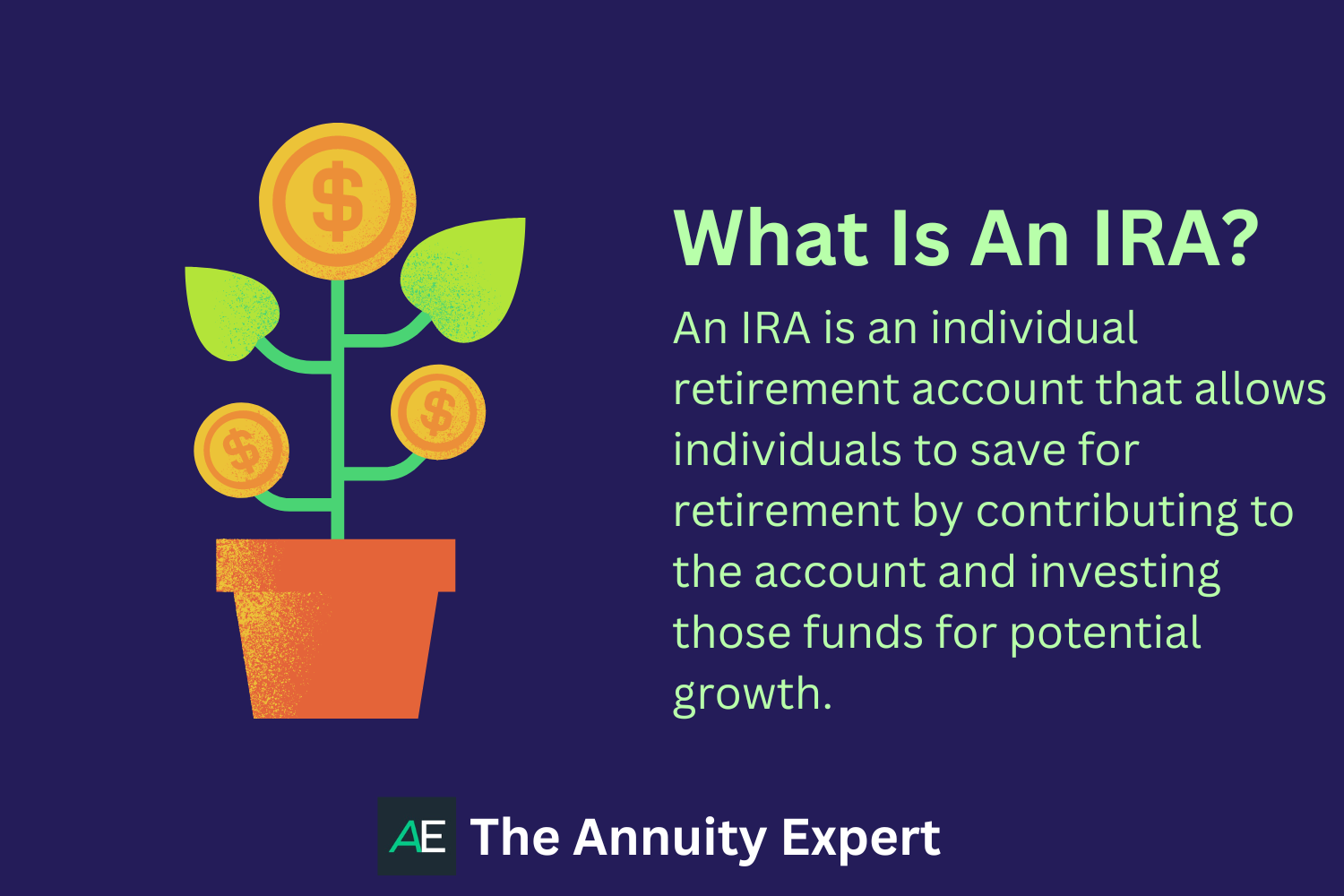
At its most basic level, an IRA is a type of account provided by financial institutions that allows individuals to save for retirement with significant tax advantages. It is important to distinguish that an IRA is not an “investment” in itself, such as a stock or a bond. Rather, it is a “bucket” or a protective shell in which you hold various investments.
Definition and Purpose
The Individual Retirement Account was established by the Employee Retirement Income Security Act (ERISA) of 1974. Its primary purpose was to provide a way for individuals to save for their own retirement, especially those who might not have access to employer-sponsored pension plans. Over the decades, it has evolved into a cornerstone of wealth-building for millions of Americans. By contributing to an IRA, you are essentially signaling to the government that these funds are earmarked for your senior years, and in exchange, the government provides tax incentives to encourage that behavior.
How an IRA Differs from a 401(k)
While both IRAs and 401(k)s are retirement savings vehicles, the primary difference lies in who “owns” and manages the plan. A 401(k) is an employer-sponsored plan. Your employer chooses the provider and the menu of available investment options. In contrast, an IRA is opened by you, the individual. This provides a much higher degree of control. In an IRA, you can choose almost any investment available on the open market—individual stocks, thousands of different mutual funds, exchange-traded funds (ETFs), and even real estate in specific “Self-Directed” IRAs. Furthermore, an IRA stays with you regardless of your employment status, whereas a 401(k) is tied to a specific company.
Exploring the Different Types of IRA Accounts
The “best” IRA depends entirely on your current income level, your expected future tax bracket, and your employment status. There is no one-size-fits-all solution; rather, there are specific tools designed for different financial stages.
Traditional IRA: Tax-Deductible Contributions
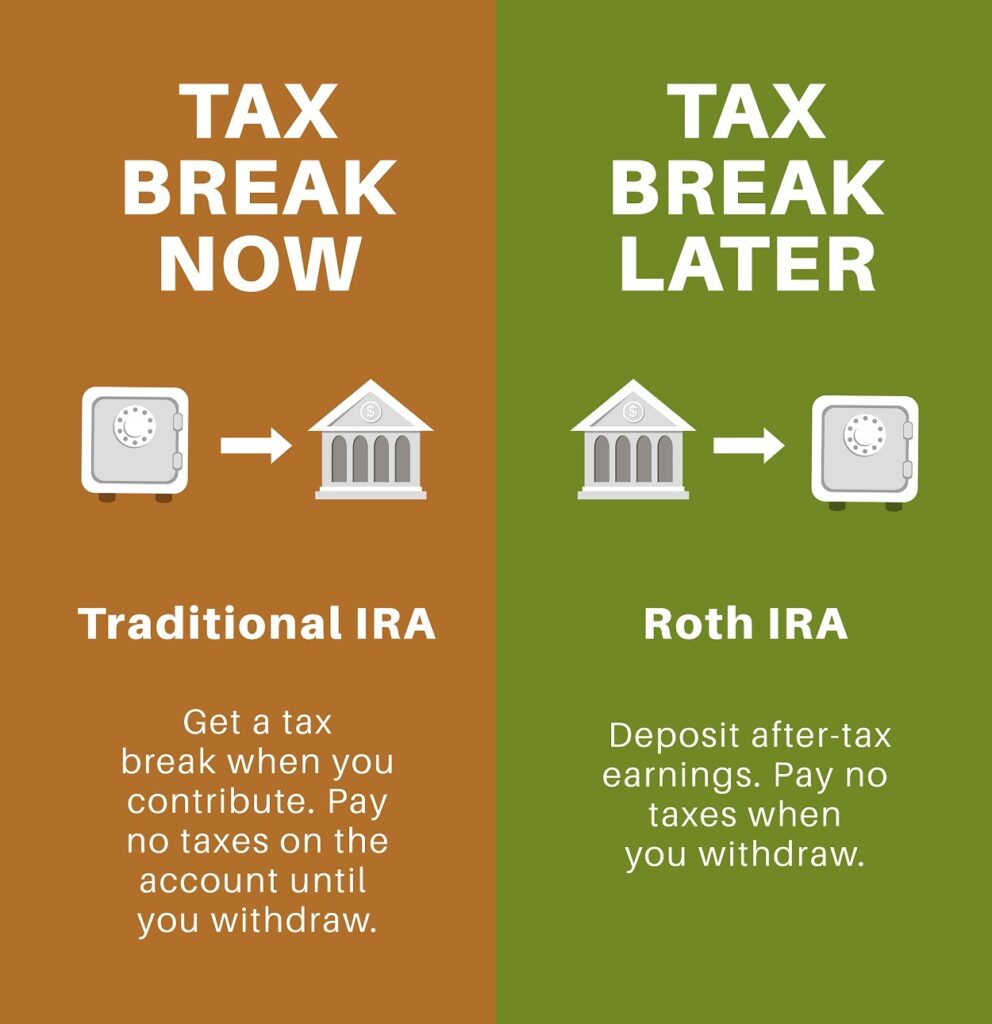
The Traditional IRA is the original version of this account. Its primary draw is the immediate tax benefit. Contributions to a Traditional IRA are often tax-deductible, meaning you can subtract the amount you contribute from your taxable income for the year. For example, if you earn $60,000 and contribute $7,000 to a Traditional IRA, the IRS only taxes you as if you earned $53,000.
The trade-off is that the money is taxed as “ordinary income” when you withdraw it during retirement. This is an ideal strategy for those who believe they are in a higher tax bracket now than they will be when they retire. Your money grows “tax-deferred,” meaning you don’t pay taxes on dividends or capital gains year-over-year, allowing the full power of compounding to work.
Roth IRA: Tax-Free Growth and Withdrawals
The Roth IRA, named after Senator William Roth, flipped the script on retirement savings. Unlike the Traditional IRA, contributions to a Roth are made with “after-tax” dollars. You get no tax break today. However, the incredible advantage is that the money grows tax-free, and—crucially—withdrawals in retirement are completely tax-free.
For young investors or those who expect to be in a higher tax bracket later in life, the Roth IRA is often considered the “holy grail” of personal finance. Because you have already paid taxes on the principal, you can also withdraw your original contributions (but not the earnings) at any time without penalty, providing a level of liquidity that Traditional IRAs do not offer.
SEP and SIMPLE IRAs for Small Business Owners
If you are an entrepreneur, a freelancer, or a small business owner, the standard IRA limits might feel restrictive. To address this, the IRS offers SEP (Simplified Employee Pension) and SIMPLE (Savings Incentive Match Plan for Employees) IRAs.
- SEP IRAs allow business owners to contribute a significant portion of their income (up to 25% of net earnings) into a retirement account, offering much higher contribution limits than standard IRAs.
- SIMPLE IRAs are designed for small businesses with 100 or fewer employees, allowing both employer and employee contributions, acting as a middle ground between a standard IRA and a full-scale 401(k).
Maximizing the Benefits: Contribution Limits and Eligibility Rules
To prevent high-earners from shielding all their wealth from taxes, the IRS imposes strict rules on how much you can put into an IRA and who can contribute.
Annual Contribution Caps
Every year, the IRS sets a maximum limit on how much you can contribute to your IRA accounts. For 2024, the limit is $7,000 for individuals under age 50. To encourage older workers to bolster their savings, those aged 50 and older are allowed a “catch-up contribution,” bringing their total limit to $8,000. It is important to note that this limit applies to the total of all your IRAs. You cannot put $7,000 into a Traditional IRA and another $7,000 into a Roth IRA in the same year.
Income Thresholds and Phase-outs
While anyone with “earned income” (wages, tips, bonuses) can contribute to a Traditional IRA, the ability to deduct those contributions on your taxes may be limited if you or your spouse also have a retirement plan at work.
The Roth IRA has even stricter eligibility rules based on Modified Adjusted Gross Income (MAGI). If you earn too much money, you are legally barred from contributing directly to a Roth IRA. However, many savvy investors utilize the “Backdoor Roth” strategy—contributing to a Traditional IRA and then immediately converting it to a Roth—to bypass these income limits legally.
The Power of Compound Interest
The most compelling reason to start an IRA as early as possible is the phenomenon of compound interest. In a taxable brokerage account, your gains are eroded annually by taxes on dividends and realized gains. Within the “shield” of an IRA, every penny of growth stays in the account to generate more growth. Over 30 or 40 years, the difference between a taxable account and a tax-advantaged IRA can amount to hundreds of thousands of dollars in additional wealth.
Strategic Asset Allocation Within Your IRA
Opening an IRA is only the first step; the second is deciding what to buy inside of it. Because IRAs are meant for the long term, your strategy should reflect your time horizon and risk tolerance.
Diversifying with Stocks, Bonds, and ETFs
Because an IRA offers a wide universe of investment options, it is the perfect place to build a diversified portfolio. Many financial advisors recommend a mix of low-cost index funds or ETFs that track the S&P 500 or the total stock market. This provides broad exposure to the economy while keeping management fees to a minimum.
Inside an IRA, you can also hold “tax-inefficient” assets. For example, Real Estate Investment Trusts (REITs) or high-yield bonds often pay out regular dividends that would be taxed heavily in a standard account. Holding them in an IRA protects that income from the IRS.
Risk Tolerance and Time Horizons
As you age, your strategy within your IRA should shift. A 25-year-old might have 100% of their IRA in aggressive growth stocks, as they have decades to recover from market volatility. However, a 60-year-old approaching retirement would likely shift toward a more conservative allocation, increasing their holdings in bonds and cash equivalents to preserve the capital they have spent a lifetime accumulating.
Navigating Distributions and Potential Penalties
The government provides tax breaks for IRAs on the condition that you keep the money saved until you are 59 ½ years old. Withdrawing early can be a costly mistake.
Required Minimum Distributions (RMDs)
The IRS eventually wants its tax money. For Traditional, SEP, and SIMPLE IRAs, you must begin taking Required Minimum Distributions (RMDs) once you reach age 73 (as per the SECURE Act 2.0). If you fail to take these distributions, the penalty is a staggering 25% of the amount that should have been withdrawn. Roth IRAs, notably, do not have RMDs during the original owner’s lifetime, making them excellent tools for estate planning and passing wealth to heirs.
Early Withdrawal Rules and Exceptions
If you withdraw money from your IRA before age 59 ½, you typically face a 10% early withdrawal penalty in addition to the standard income tax. However, the IRS does allow for certain “hardship” exceptions. You may be able to withdraw funds without penalty for:
- A first-time home purchase (up to $10,000).
- Qualified higher education expenses.
- Unreimbursed medical expenses that exceed a certain percentage of your income.
- The birth or adoption of a child.
While these exceptions exist, they should be used as a last resort. Every dollar taken out of an IRA early is a dollar that loses its ability to compound, potentially costing you significantly more in lost future gains than the value of the withdrawal today.
In conclusion, IRA accounts are essential pillars of a robust financial plan. By understanding the differences between Traditional and Roth structures, staying mindful of contribution limits, and maintaining a disciplined investment strategy, you can turn a modest monthly contribution into a substantial retirement nest egg. The best time to start an IRA was yesterday; the second best time is today.
aViewFromTheCave is a participant in the Amazon Services LLC Associates Program, an affiliate advertising program designed to provide a means for sites to earn advertising fees by advertising and linking to Amazon.com. Amazon, the Amazon logo, AmazonSupply, and the AmazonSupply logo are trademarks of Amazon.com, Inc. or its affiliates. As an Amazon Associate we earn affiliate commissions from qualifying purchases.