
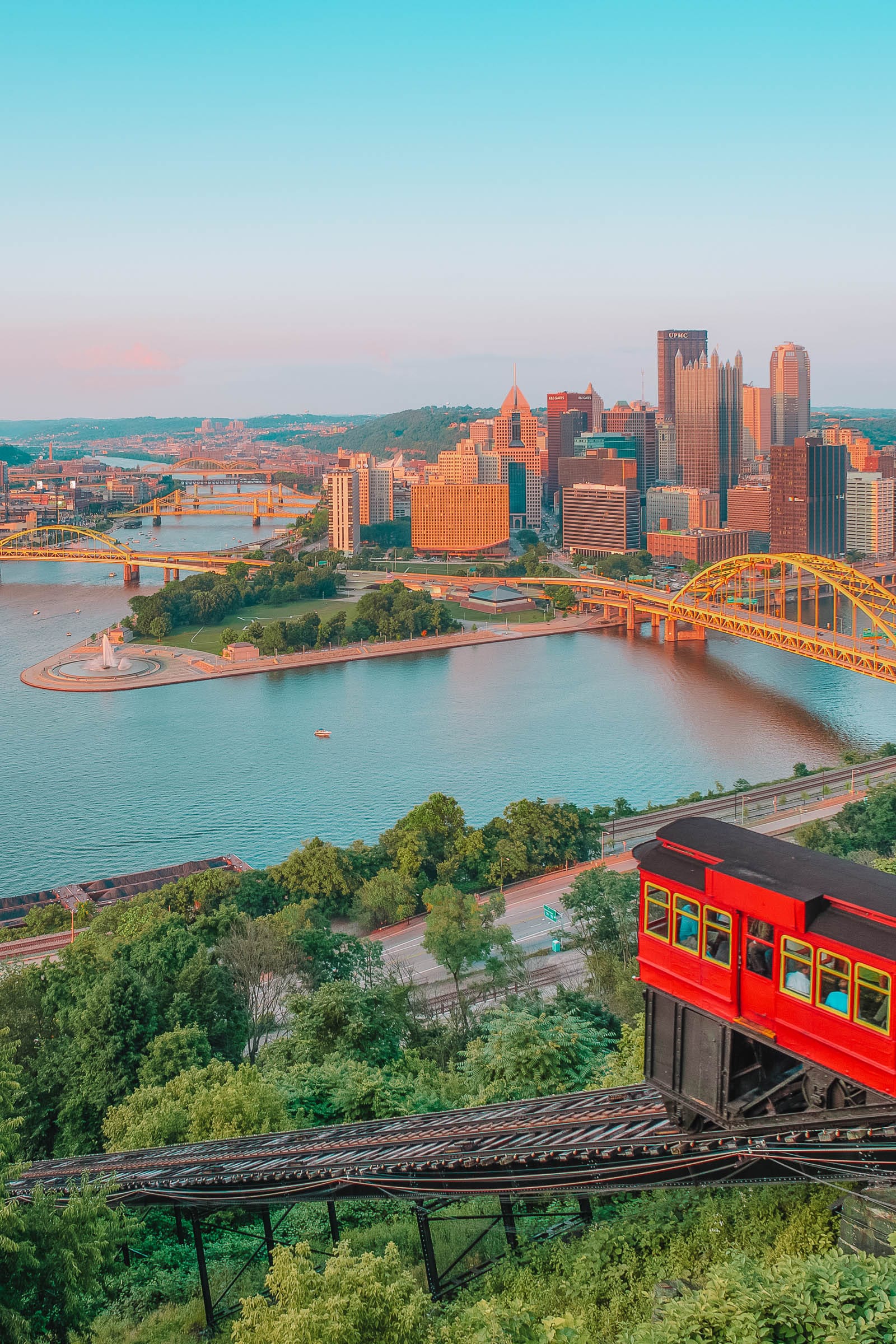
For decades, the mention of Pittsburgh conjured images of towering blast furnaces, soot-covered skylines, and the industrial might of the American steel industry. However, the Pittsburgh of the 21st century has undergone a radical metamorphosis. Today, if you ask “what is there to do in Pittsburgh” from a professional or technological perspective, you aren’t looking for steel mills; you are looking for “Robotics Row,” world-class artificial intelligence laboratories, and a burgeoning startup ecosystem that has earned the city the moniker “The Silicon Valley of the East.”

For the tech enthusiast, the visiting engineer, or the digital entrepreneur, Pittsburgh offers a unique landscape where industrial heritage meets cutting-edge disruption. This guide explores the technological pillars of the city and identifies the key sites, institutions, and hubs that define the modern Pittsburgh experience.
1. Exploring “Robotics Row”: The Heartland of Autonomous Innovation
The most visible sign of Pittsburgh’s tech resurgence is the stretch of land running through the Strip District and into Lawrenceville, colloquially known as “Robotics Row.” This area serves as a living laboratory for some of the most advanced autonomous systems in the world.
The Epicenter of Autonomous Vehicles
If you spend any time in the Strip District, you will inevitably see vehicles outfitted with spinning LiDAR sensors and complex camera arrays. This is the home of the autonomous vehicle (AV) industry. To truly experience what Pittsburgh’s tech scene has to offer, one must observe the interplay between these machines and the city’s notoriously difficult topography. Companies like Aurora Innovation and Motional have established significant footprints here. Unlike the wide, sunny boulevards of Phoenix or Mountain View, Pittsburgh offers AVs the “ultimate test”: narrow streets, bridges, tunnels, and unpredictable weather. For tech professionals, visiting this district provides a firsthand look at the deployment of Level 4 autonomous systems in a dense urban environment.
Innovation Hubs and Shared Workspaces
Beyond the corporate headquarters, Robotics Row is dotted with incubators and collaborative spaces that drive the “bottom-up” innovation of the city. Facilities like Argosight and various co-working spaces host dozens of smaller startups specializing in everything from computer vision to drone logistics. Walking through these neighborhoods, the “to-do” list for a tech professional includes attending “Tech & Taps” networking events or visiting the Robotics Hub, an investment entity that bridges the gap between laboratory research and commercial viability.
2. Academic Excellence: Carnegie Mellon University and the University of Pittsburgh
You cannot discuss the technology of Pittsburgh without acknowledging the gravity exerted by its academic institutions. Carnegie Mellon University (CMU) and the University of Pittsburgh (Pitt) are the twin engines driving the city’s intellectual capital.
The Gates Center and the Future of Computer Science
For anyone interested in the history and future of AI, a visit to the Gates Center for Computer Science at Carnegie Mellon is essential. CMU’s School of Computer Science is consistently ranked among the best in the world, and it was here that many of the foundational principles of artificial intelligence and robotics were authored.
Visitors can explore the campus to see the National Robotics Engineering Center (NREC), which operates as an operating unit of CMU’s Robotics Institute. The NREC is world-renowned for developing unmanned ground vehicles and robotic prototypes for government and industrial clients. Observing the sheer scale of the projects—ranging from autonomous mining trucks to lunar rovers—is a testament to the city’s shift from hardware of the industrial age to hardware of the digital age.
The University of Pittsburgh’s Biotech and HealthTech Corridors
While CMU dominates the silicon and software side, the University of Pittsburgh leads the charge in biotechnology and healthtech. The UPMC Enterprises arm is a powerhouse of corporate venture capital, funneling resources into digital health solutions and translational science. “What to do” in this sector involves visiting the Pittsburgh Technology Center, a former steel mill site that now houses high-tech laboratories and cleanrooms. The synergy between Pitt’s medical research and the city’s software engineering talent has created a unique niche for “MedTech” startups that are currently revolutionizing patient care and data management.
3. The Software and AI Giants: Bakery Square and Beyond
While robotics provides the hardware, the software giants provide the infrastructure for Pittsburgh’s digital economy. The city has successfully attracted “Big Tech” by offering a high quality of life and proximity to elite talent.
Google, Apple, and the Bakery Square Development
Bakery Square is perhaps the most symbolic site of Pittsburgh’s tech pivot. What was once a Nabisco factory is now a gleaming tech campus. Google’s massive presence here serves as an anchor for the East Liberty neighborhood. For a tech-focused visitor, exploring this area reveals how urban planning can be leveraged to create “innovation districts.” Nearby, Apple and Amazon have established engineering offices, focusing on complex problems in speech recognition (Siri/Alexa) and cloud infrastructure.
Duolingo: The Homegrown Success Story
No exploration of Pittsburgh tech is complete without mentioning Duolingo. Headquartered in East Liberty, Duolingo is the poster child for the city’s ability to scale a startup into a global powerhouse. As one of the most successful consumer-facing AI companies, Duolingo’s presence proves that you don’t need to be in Palo Alto to build a world-class app. For those interested in UI/UX design, gamification, and large-scale AI implementation, the Duolingo headquarters is a landmark of the city’s modern identity.
4. Networking, Events, and the Startup Ecosystem
For the entrepreneur or developer, the best thing “to do” in Pittsburgh is to plug into the local ecosystem. The city’s tech community is famously collaborative, lacking the cutthroat insularity often found in larger tech hubs.
The Pittsburgh Technology Council
The Pittsburgh Technology Council (PTC) is the central node for the city’s tech business community. They host a variety of events, from the “Tech 50 Awards,” which celebrates the fastest-growing companies in the region, to specialized meetups focused on cybersecurity, data science, and female leadership in tech. Engaging with the PTC provides a roadmap of the local industry and offers opportunities for high-level networking.
AlphaLab and AlphaLab Gear
If you are interested in the “seed” stage of technology, visiting Innovation Works and their accelerators, AlphaLab (software) and AlphaLab Gear (hardware), is a must. These accelerators have been instrumental in launching hundreds of companies. They offer a glimpse into the “garage phase” of innovation, where founders are iterating on products that might become the next big thing in the Pittsburgh skyline.
5. Immersive Tech Experiences: Museums and Interactive Education
Pittsburgh also offers several ways to engage with technology through the lens of education and public display, making “tech tourism” accessible even to those outside the industry.
The Carnegie Science Center’s High-Tech Exhibits
Located on the North Shore, the Carnegie Science Center features the “Roboworld” exhibit, touted as the world’s largest permanent robotics exhibition. It serves as an excellent introduction to the mechanics of sensing, processing, and acting. For those interested in the technical specs of early computing and the evolution of mechanical systems, this is a vital stop.
Digital Art and New Media
Technology in Pittsburgh isn’t limited to functional code and gears; it also spills into the arts. The Mattress Factory and the Andy Warhol Museum frequently feature installations that utilize new media, projection mapping, and interactive digital art. These venues highlight the “creative technologist” side of the city, showing how AI and digital tools are being used to push the boundaries of human expression.
Conclusion: A City Defined by Bits and Bricks
So, what is there to do in Pittsburgh? The answer lies in the intersection of the physical and the digital. Pittsburgh is a city where you can watch a robot navigate a 19th-century street, where you can discuss the ethics of AI in a building that used to bake crackers, and where some of the world’s most significant scientific breakthroughs are happening in laboratories overlooking three historic rivers.
For the tech-minded individual, Pittsburgh offers a rare opportunity to see a full-stack transformation of an American city. It is a place of deep technical expertise, a thriving venture capital scene, and a collaborative spirit that makes it one of the most exciting hubs for innovation in the world today. Whether you are there to network, to learn, or to build, the “Steel City” is now firmly powered by silicon.
aViewFromTheCave is a participant in the Amazon Services LLC Associates Program, an affiliate advertising program designed to provide a means for sites to earn advertising fees by advertising and linking to Amazon.com. Amazon, the Amazon logo, AmazonSupply, and the AmazonSupply logo are trademarks of Amazon.com, Inc. or its affiliates. As an Amazon Associate we earn affiliate commissions from qualifying purchases.