
For millions of graduates, the transition from the classroom to the workforce is marked by a significant financial milestone: the arrival of the first student loan bill. Understanding exactly when student loan payments start is not merely a matter of tracking a date on a calendar; it is a critical component of personal financial planning. In an era of shifting federal policies, new repayment plans, and varying lender requirements, the “start date” can feel like a moving target.
This guide provides a deep dive into the timelines for federal and private student loans, the impact of recent legislative changes, and the strategic steps you should take before that first payment is due to ensure long-term fiscal health.
The Standard Timeline: Understanding the Grace Period
The most common answer to when student loan payments start is “six months after graduation.” However, this window, known as the grace period, is governed by specific triggers that every borrower must understand to avoid accidental delinquency.
The Mechanics of the Six-Month Grace Period
For the majority of federal student loans—specifically Direct Subsidized and Unsubsidized loans—the government provides a six-month cushion. This period is designed to give graduates time to find employment and stabilize their finances before taking on the monthly obligation of debt service.
It is important to note that the grace period is triggered not just by graduation, but also by any event that causes you to drop below half-time enrollment. If you take a leave of absence, withdraw from a semester, or drop your credit load significantly, the six-month clock starts ticking immediately.
Interest Accumulation During the Wait
While payments may not be due during the grace period, interest might still be working against you. For Direct Unsubsidized loans, interest accrues while you are in school and throughout the grace period. If this interest is not paid before the grace period ends, it is often “capitalized,” meaning it is added to your principal balance. From that point forward, you are paying interest on your interest—a compounding effect that can add thousands of dollars to the total cost of the loan.
Exceptions to the Rule: PLUS and Perkins Loans
Not all federal loans follow the six-month standard. PLUS loans for graduate or professional students technically enter repayment as soon as the loan is fully disbursed. However, they usually receive an automatic deferment while the student is enrolled and for six months after. Parent PLUS loans are different; parents are generally expected to begin repayment immediately after the final disbursement unless they specifically request a deferment. Meanwhile, Federal Perkins Loans (though no longer issued) typically carry a longer nine-month grace period.
Navigating the Post-Pandemic Repayment Landscape
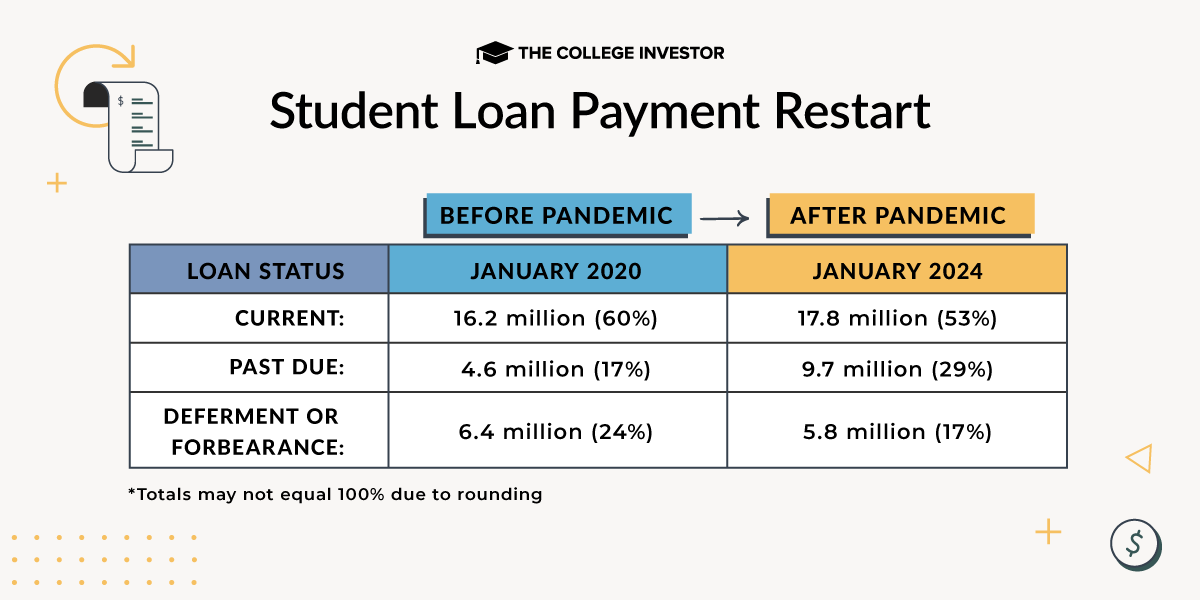
The landscape of student debt changed fundamentally between 2020 and 2024. The unprecedented pause on federal student loan interest and payments (the CARES Act forbearance) has ended, creating a “new normal” for borrowers.
The Return to Repayment
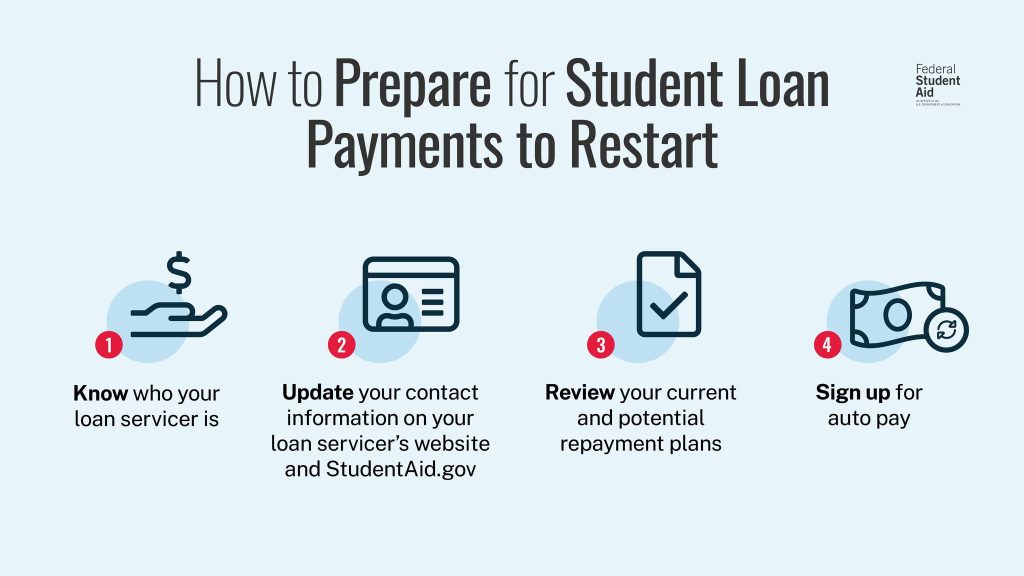
After a three-year hiatus, federal student loan interest resumed on September 1, 2023, and official payments restarted in October 2023. For those who graduated during the pandemic, the traditional grace period may have been superseded by these national shifts. If you are a recent graduate, your timeline now aligns with the standard six-month window following your exit from school, but the infrastructure of the servicers has changed. Many loans were transferred to new servicing companies (such as MOHELA or Nelnet) during the pause, making it vital for borrowers to verify where their payments are actually directed.
The “On-Ramp” Period
To ease the transition back into repayment, the Department of Education implemented a 12-month “on-ramp” period running through September 30, 2024. During this time, borrowers who miss payments will not be reported as delinquent to credit bureaus, nor will they be placed in default or referred to collection agencies. However, interest continues to accrue. While this provides a safety net, it is not a reason to delay; starting payments as early as possible remains the best strategy for minimizing total interest costs.
Private Student Loans: A Different Set of Rules
While federal loans offer a degree of uniformity, private student loans are governed by the specific contracts signed with banks, credit unions, or online lenders. These institutions prioritize different risk factors and often have much stricter start dates.
Immediate vs. Deferred Repayment
Many private lenders offer multiple repayment options at the time of application. Some borrowers opt for “immediate repayment,” where they begin paying principal and interest while still in school to reduce the total loan cost. Others choose “interest-only” payments during school. If you chose a “full deferral” option, most private lenders provide a six-month grace period similar to federal loans, but some may limit this to only three months.
The Lack of Federal Protections
The most significant difference in when private payments start involves the lack of flexibility. Private lenders are not required to follow federal pauses or “on-ramp” periods. If you lose your job or experience a financial hardship, your private loan payments will likely still be due on the date specified in your contract. Understanding these dates is paramount because private lenders report to credit bureaus much more aggressively than federal programs.
Strategic Financial Planning Before the First Bill
Once you identify the date your payments will start, the intervening months should be used to build a robust financial strategy. This is the window where you can choose the path that best fits your income and long-term goals.
Selecting the Optimal Repayment Plan
Federal borrowers have the luxury of choice. By default, you are placed on the Standard Repayment Plan (10 years of fixed payments). However, if your starting salary doesn’t support those payments, you should look into Income-Driven Repayment (IDR) plans.
The new SAVE (Saving on a Valuable Education) Plan is particularly revolutionary. It calculates payments based on 10% (and eventually 5% for undergraduate loans) of your discretionary income. Crucially, if your calculated payment is $0, the government waives the remaining monthly interest, preventing your balance from growing. Switching to such a plan before your grace period ends can ensure your first “due” payment is manageable.
The Consolidation vs. Refinancing Dilemma
Before payments start, you must decide whether to consolidate your federal loans or refinance with a private lender.
- Federal Consolidation: Combines multiple federal loans into one, simplifying the bill. It does not typically lower your interest rate, but it can help you qualify for certain forgiveness programs.
- Private Refinancing: This involves taking out a new loan with a private company to pay off your federal loans. While this can lower your interest rate if you have excellent credit, you permanently lose access to federal protections like SAVE, Public Service Loan Forgiveness (PSLF), and administrative pauses.
Automating for Success
Almost all lenders offer a 0.25% interest rate deduction if you sign up for auto-pay. Setting this up during your grace period ensures you never miss a start date and helps you shave a small but meaningful percentage off your debt over time.
Options for Delaying the Start Date
Life rarely follows a linear path. If the start date of your student loans arrives and you are financially unable to meet the obligation, there are mechanisms to hit the “pause” button legally.
Deferment and Forbearance
Deferment allows you to temporarily stop making payments under specific circumstances, such as returning to graduate school, unemployment, or military service. For subsidized loans, the government may pay the interest during deferment.
Forbearance is a similar temporary pause but is generally easier to obtain. However, interest always accrues during forbearance, regardless of the loan type. These should be viewed as short-term fixes rather than long-term solutions, as they significantly increase the total cost of the loan.
Loan Forgiveness Pathways
If you are entering certain fields, such as nursing, teaching, or non-profit work, your “start date” for payments is also the “start date” for your forgiveness clock. Programs like Public Service Loan Forgiveness (PSLF) require 120 qualifying monthly payments while working for a qualifying employer. In these cases, the goal is not to pay off the loan as fast as possible, but to pay the minimum required amount under an IDR plan until the balance is forgiven.
Conclusion: Taking Control of the Timeline
The start of student loan payments represents a major shift in a graduate’s cash flow. Whether your first payment is due exactly six months after graduation or has been adjusted by federal policy, the key to financial success lies in proactive management.
By identifying your specific loan types, calculating the impact of interest capitalization, and choosing a repayment plan that aligns with your current income, you can transform a daunting debt obligation into a manageable part of your monthly budget. Remember, the grace period is not just a break from payments—it is a strategic window to build the foundation of your financial future.
aViewFromTheCave is a participant in the Amazon Services LLC Associates Program, an affiliate advertising program designed to provide a means for sites to earn advertising fees by advertising and linking to Amazon.com. Amazon, the Amazon logo, AmazonSupply, and the AmazonSupply logo are trademarks of Amazon.com, Inc. or its affiliates. As an Amazon Associate we earn affiliate commissions from qualifying purchases.