
In the realm of personal finance, few expenditures are as volatile or as psychologically taxing as the purchase of airline tickets. For the modern consumer, airfare represents a significant line item in the annual budget, yet the pricing mechanisms used by carriers often seem opaque, if not entirely arbitrary. However, beneath the surface of fluctuating prices lies a sophisticated system of yield management and dynamic pricing that, when understood through a financial lens, can be navigated to save hundreds, if not thousands, of dollars.
Mastering the “when” of airline ticket acquisition is not merely about finding a bargain; it is about strategic capital allocation. In a world where inflation impacts every sector of the economy, optimizing travel costs is a vital component of a comprehensive personal finance strategy. By treating airfare as a commodity subject to market forces, travelers can move from reactive purchasing to proactive financial planning.

The Economics of Dynamic Pricing and Market Volatility
To understand when to buy, one must first understand how airlines set prices. Unlike traditional retail, where a price tag remains static until a clearance sale, airlines utilize “dynamic pricing.” This is a sophisticated algorithmic approach where the cost of a seat fluctuates based on real-time demand, competitor pricing, and historical data.
The Mechanism of Yield Management
Yield management is the engine behind airfare volatility. Airlines categorize seats into various “fare buckets” or booking classes. As seats in the cheapest buckets are sold, the algorithm automatically moves to the next, more expensive tier. From a financial perspective, this means that the price of a ticket is rarely a reflection of the service provided, but rather a reflection of the remaining inventory and the consumer’s perceived urgency. Understanding that you are participating in a high-frequency trading environment allows you to approach the purchase with the discipline of an investor rather than the impulse of a shopper.
Identifying the “Sweet Spot” for Capital Allocation
Data analytics suggest that there is a statistically significant window where prices bottom out before the “urgency premium” kicks in. For domestic flights within North America or Europe, the financial “sweet spot” typically occurs between 28 and 60 days before departure. For international long-haul flights, this window expands to three to six months. Purchasing too early—more than six months out—often means paying a “premium for certainty,” as airlines have not yet released their most competitive promotional fares. Conversely, purchasing within the 21-day window before departure subjects the buyer to the “business traveler tax,” where prices spike to capture revenue from last-minute, price-insensitive corporate bookings.
Strategic Financial Planning for Travel Expenses
Successful travel budgeting requires looking beyond the sticker price and considering the broader economic impact of the purchase. Timing the market is only one half of the equation; the other half is integrating that purchase into a larger financial framework.
Budgeting for Seasonal Fluctuations and Peak Demand
From a personal finance standpoint, one must account for the “seasonal premium.” Traveling during peak periods—such as December holidays or summer vacations—requires a different financial approach. In these instances, the standard “wait for the dip” strategy rarely works because demand consistently outstrips supply. Financial prudence dictates that for peak travel, the “earlier is better” rule applies. By securing a ticket six to nine months in advance for a peak holiday, you are effectively hedging against the inevitable price surges that occur as the date approaches. This is a form of risk management for your household budget.
The Opportunity Cost of Last-Minute Booking
Every dollar spent on an inflated last-minute airfare is a dollar that could have been diverted into an interest-bearing savings account or an investment portfolio. For example, if a domestic flight averages $300 but jumps to $700 within two weeks of departure, the $400 difference represents a significant loss of capital. When viewed as an opportunity cost, the importance of timing becomes clear. Proper planning allows for the preservation of capital, which can then be deployed into assets that appreciate, rather than a service that is consumed and depreciates instantly.
Leveraging Financial Tools and Credit Optimization
The “when” of purchasing is also heavily influenced by “how” you pay. In the modern financial ecosystem, the method of payment can significantly alter the net cost of the ticket through rewards, protections, and cash-back incentives.
Maximizing Rewards and Credit Arbitrage
For those with disciplined financial habits, credit card rewards programs offer a way to subsidize travel costs. The strategic timing of a ticket purchase can coincide with “spend hurdles” for new credit card sign-up bonuses. By timing a large international ticket purchase to help meet a minimum spend requirement, a traveler can earn a windfall of points that can be redeemed for future travel, effectively lowering the “effective cost” of the current ticket. Furthermore, using cards that offer high multipliers on travel spend (e.g., 3x or 5x points per dollar) ensures that every purchase contributes to a virtuous cycle of reduced future expenditures.
Travel Insurance as a Risk Management Strategy
A critical, yet often overlooked, financial component of ticket purchasing is risk mitigation. When purchasing tickets—especially non-refundable ones—the timing of when you buy insurance is vital. Many premium credit cards offer built-in trip cancellation and interruption insurance, provided the ticket is purchased with that specific card. From a business finance perspective, this is “self-insurance” that protects the traveler from the total loss of the ticket cost due to unforeseen circumstances. If your financial tool (the credit card) does not provide this, purchasing a separate policy at the time of booking is a prudent move to protect your investment.
Debunking Myths: The Reality of Modern Fare Cycles
In the pursuit of saving money, many travelers rely on outdated advice that no longer holds up under the scrutiny of modern financial data. Discarding these myths is essential for making informed, data-driven decisions.
The Tuesday Myth vs. Data-Driven Reality
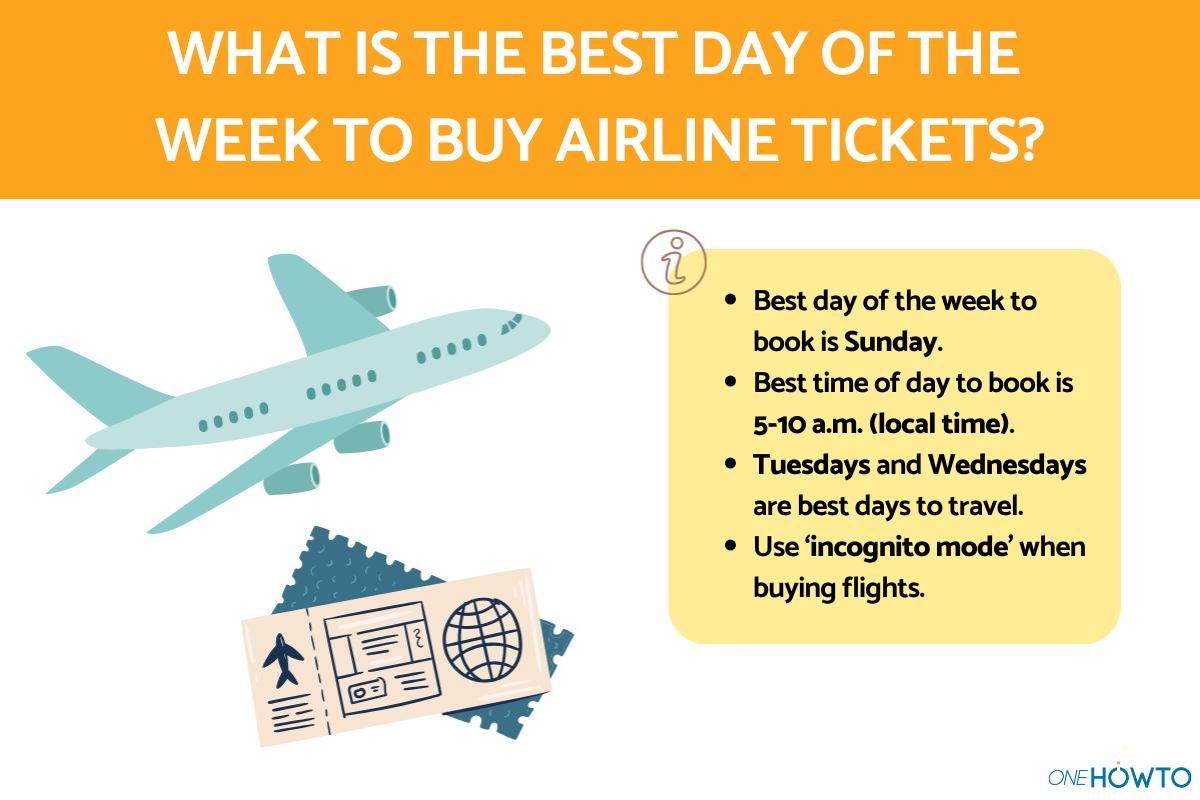
One of the most persistent myths in travel finance is that tickets are cheaper if purchased on a Tuesday at midnight. While this may have been true two decades ago when airlines manually updated their fares, modern algorithms are active 24/7. Financial data shows that the day of the week you fly has a much larger impact on the price than the day of the week you buy. Generally, flying on Tuesdays, Wednesdays, or Saturdays—days with lower business travel demand—results in lower fares. For the budget-conscious traveler, flexibility in scheduling is a far more powerful financial lever than trying to time a specific hour for clicking “buy.”
The Role of Currency Fluctuations in Global Bookings
For international travelers, “when” to buy is also affected by the foreign exchange market. If the traveler’s home currency is particularly strong against the currency of the airline’s home country, it may be financially advantageous to purchase the ticket through the airline’s local website in the local currency. This is a form of retail currency arbitrage. However, one must be wary of foreign transaction fees on credit cards, which can negate the savings. Monitoring exchange rate trends can provide an additional 2-5% savings on top of the timing of the fare itself.

Building a Long-Term Financial Travel Strategy
Ultimately, the goal of timing an airline ticket purchase is to ensure that travel remains a sustainable part of one’s lifestyle without compromising long-term financial goals. This requires a shift from viewing travel as an “extra” expense to viewing it as a managed category within a portfolio.
By utilizing price tracking tools—the financial equivalent of a “limit order” in stock trading—travelers can set a target price and wait for the market to come to them. This removes the emotional stress of checking prices daily and ensures that the purchase is made only when it aligns with the predefined budget.
In conclusion, the decision of when to purchase an airline ticket is a complex financial calculation involving market analysis, risk management, and capital optimization. By understanding the mechanics of dynamic pricing, respecting the statistical windows of opportunity, and leveraging the right financial instruments, you can transform airfare from a volatile expense into a controlled, strategic investment in your quality of life. In the world of money management, it is often said that a penny saved is a penny earned; in the world of airfare, a few weeks of patience can be worth hundreds of dollars in earned interest on your personal bottom line.
aViewFromTheCave is a participant in the Amazon Services LLC Associates Program, an affiliate advertising program designed to provide a means for sites to earn advertising fees by advertising and linking to Amazon.com. Amazon, the Amazon logo, AmazonSupply, and the AmazonSupply logo are trademarks of Amazon.com, Inc. or its affiliates. As an Amazon Associate we earn affiliate commissions from qualifying purchases.