
In the modern financial landscape, your bank account number is more than just a string of digits; it is the fundamental identifier that enables the movement of capital across the global economy. For customers of JPMorgan Chase, one of the largest financial institutions in the world, knowing how to quickly and securely access this information is essential for managing personal cash flow, setting up investments, and ensuring seamless business transactions.
Whether you are setting up a direct deposit for a new career opportunity, linking your accounts to a high-yield savings vehicle, or simply organizing your monthly expenses, your account number serves as the primary key to your financial identity. This guide explores the multiple avenues—both digital and physical—available to Chase customers to retrieve their account information, while emphasizing the critical role of financial security in an increasingly interconnected world.
Understanding the Importance of Your Chase Account Number
Before diving into the “how,” it is vital to understand the “what” and “why.” A bank account number is a unique set of digits assigned to your specific account. Unlike a routing number, which identifies the financial institution as a whole, the account number is specific to your individual checking, savings, or business account.
Account Number vs. Routing Number
Many consumers confuse their account number with their routing number. To navigate your finances successfully, you must distinguish between the two. The routing transit number (RTN) is a nine-digit code that identifies the specific bank—in this case, Chase—within the United States. It tells the financial system where the money is going. The account number, however, tells the system who the money belongs to. When setting up an Automated Clearing House (ACH) transfer or a wire transfer, you will invariably need both. Chase utilizes several different routing numbers based on the region where your account was opened, so never assume one routing number fits all.
When You’ll Need Your Account Number
You will frequently be called upon to provide your Chase account number during significant financial milestones. These include:
- Direct Deposit Enrollment: Providing your employer with these details ensures your salary reaches your account without delay.
- External Transfers: Linking your Chase account to an external brokerage or a different banking institution for wealth management.
- Tax Documentation: The IRS requires account and routing numbers for direct deposit of tax refunds.
- Automated Bill Pay: Setting up recurring payments for mortgages, utilities, or insurance premiums to avoid late fees and maintain a high credit score.
Methods for Locating Your Account Number Online
In the digital-first era, Chase has optimized its user interface to ensure that customers can access their sensitive data through encrypted portals. The Chase Mobile® app and the Chase Online℠ website are the most efficient tools for retrieving your account number from anywhere in the world.
Using the Chase Mobile App
The Chase Mobile app is a powerhouse of financial management. To find your account number via the app:
- Log In: Use your biometric data (Face ID or fingerprint) or your username and password to enter the secure environment.
- Select Your Account: On the main dashboard, tap the specific checking or savings account you are inquiring about.
- Account Details: Look for the “See Details” link, usually located near the top of the screen or under the account balance.
- Reveal Information: For security purposes, Chase often masks the account number (e.g., ****1234). Tap on the masked number or the “Show” icon to reveal the full string of digits.
Accessing the Chase Website (Online Banking)
For those who prefer a desktop experience for more complex financial planning, the Chase website offers a clear path to your information:
- Secure Sign-In: Navigate to the official Chase website and log in.
- Dashboard Overview: Once on the “Accounts” summary page, click on the specific account name.
- The “Account Details” Tab: Located prominently below the account balance, clicking “Account Details” will expand a menu showing your full account number and the specific routing number associated with your branch’s region.
Viewing Electronic Statements (eStatements)
If you need a formal document that includes your account number for verification purposes, eStatements are the gold standard. In your online portal, navigate to the “Statements & Documents” tab. By downloading a PDF of a recent monthly statement, you will find your account number clearly printed in the header. This document is often required by mortgage lenders or when applying for business credit.
Offline Ways to Find Your Account Number

Despite the shift toward digital banking, many traditional methods remain highly effective and are often the quickest way to find your information if you do not have immediate internet access.
Locating it on a Physical Check
For those who still utilize paper checks, your account number is literally at your fingertips. At the bottom of every Chase check, you will see a series of numbers printed in a special magnetic ink (MICR line).
- The First Set: This is typically your 9-digit routing number.
- The Second Set: This is your unique account number.
- The Third Set: This is the specific check number.
Understanding this layout allows you to grab a checkbook and find your data in seconds without needing to log in to any software.
Checking Your Paper Statements and Welcome Packets
If you have opted out of paperless billing, Chase mails physical statements to your registered address monthly. Your account number is located in the top right or left corner of these documents. Additionally, if you are a new customer, the “Welcome Packet” provided during the account opening process contains all your vital account details. Storing these documents in a fireproof safe or a secure filing cabinet is a hallmark of good personal financial management.
Visiting a Local Branch
If you are unable to access your information via the app or have lost your checks, you can visit any Chase branch. To protect your identity, you will need to provide a valid government-issued photo ID. A banker can then provide you with your account details and even print a “voided check” letter, which is often required by HR departments for payroll setup.
Protecting Your Account Information in a Digital Age
While knowing your account number is necessary for transactions, it is equally important to treat this number with the same level of secrecy as your Social Security number. In the wrong hands, an account and routing number can be used for unauthorized ACH withdrawals or fraudulent check creation.
Best Practices for Financial Security
To safeguard your assets, follow these professional security protocols:
- Enable Multi-Factor Authentication (MFA): Ensure that every login attempt to your Chase account requires a secondary code sent to your mobile device.
- Avoid Public Wi-Fi: Never log in to your banking app or website while connected to an unsecured public network, such as those in coffee shops or airports.
- Be Wary of Phishing: Chase will never call, text, or email you asking for your full account number or password. If you receive an unsolicited request, contact Chase directly through the official number on the back of your debit card.
What to Do if Your Account Number is Compromised
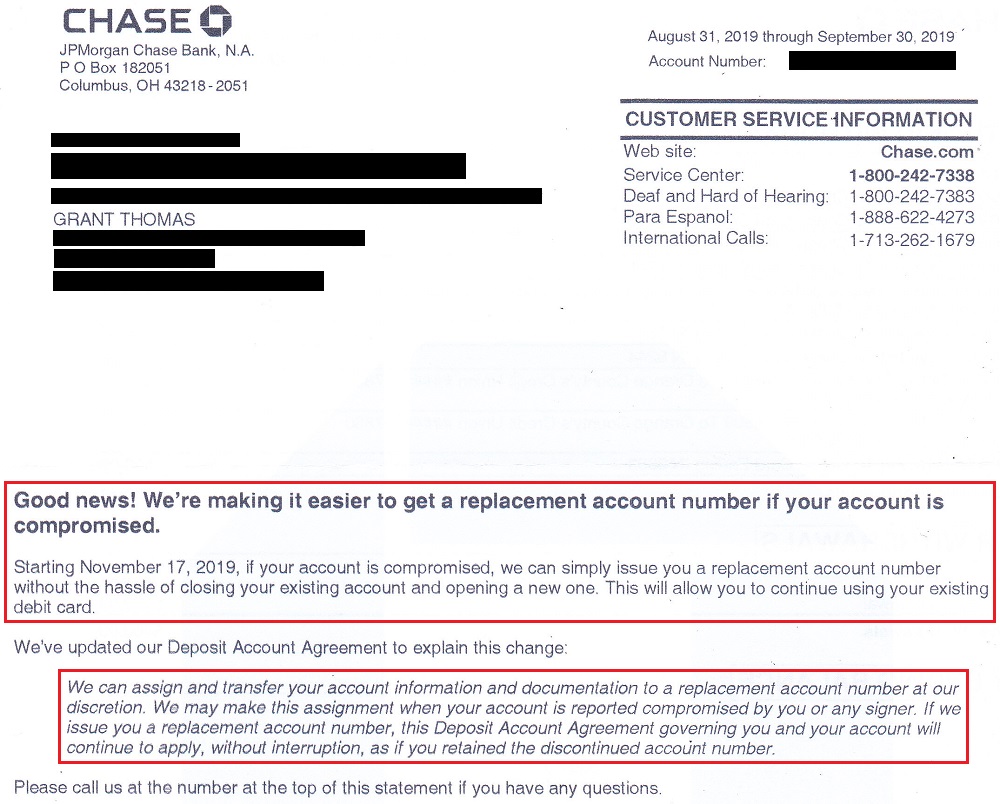
If you believe your account information has been leaked or stolen, time is of the essence. You should immediately contact Chase’s fraud department to freeze the account. In many cases, the bank will recommend closing the compromised account and opening a new one to prevent unauthorized liquidity drains. Monitoring your transaction history daily can help you spot “micro-charges,” which are often used by hackers to test if an account is active before attempting a larger theft.
Leveraging Your Account Details for Better Financial Health
Once you have mastered the ability to retrieve and protect your account number, you can use this information to optimize your financial strategy. Professional wealth management often begins with the seamless automation of funds.
Setting Up Direct Deposits and Automated Payments
The foundation of a “lazy” but effective savings plan is automation. By providing your account number to your employer and setting up “Pay From” instructions for your high-interest debt or investment accounts, you ensure that your financial goals are met before you have the chance to spend your discretionary income. This is a key principle in building long-term wealth.

Streamlining Business Finances
For entrepreneurs and small business owners, your Chase business account number is the lifeline of your operations. Efficiently managing accounts receivable (money coming in) and accounts payable (money going out) requires constant use of your account details. By keeping these numbers organized and accessible within a secure password manager or encrypted file, you can speed up the reconciliation process and maintain a clearer picture of your business’s net worth.
In conclusion, retrieving your Chase account number is a straightforward process whether you choose to use the mobile app, the website, or traditional paper methods. However, the true value lies in how you manage this information. By combining ease of access with rigorous security habits, you can take full control of your financial life, ensuring that your capital is always where it needs to be, when it needs to be there.
aViewFromTheCave is a participant in the Amazon Services LLC Associates Program, an affiliate advertising program designed to provide a means for sites to earn advertising fees by advertising and linking to Amazon.com. Amazon, the Amazon logo, AmazonSupply, and the AmazonSupply logo are trademarks of Amazon.com, Inc. or its affiliates. As an Amazon Associate we earn affiliate commissions from qualifying purchases.