
In the landscape of personal finance, every dollar saved contributes to greater financial well-being. For many consumers, one of the most significant recurring expenses, beyond housing and groceries, is transportation, with gasoline costs often taking a sizable bite out of monthly budgets. Enter Costco, the membership-only warehouse giant, renowned not only for bulk groceries and electronics but also for its consistently competitive fuel prices. The question, “How much is gasoline at Costco?” isn’t just a simple query about a numerical figure; it’s an entry point into understanding a sophisticated business model, leveraging membership benefits, and mastering a tangible aspect of personal financial management. This article delves deep into the financial implications of fueling up at Costco, offering insights into its pricing strategies, the true value proposition for members, and how savvy consumers can maximize their savings.
The Costco Gasoline Advantage: Why Members Flock to the Pumps
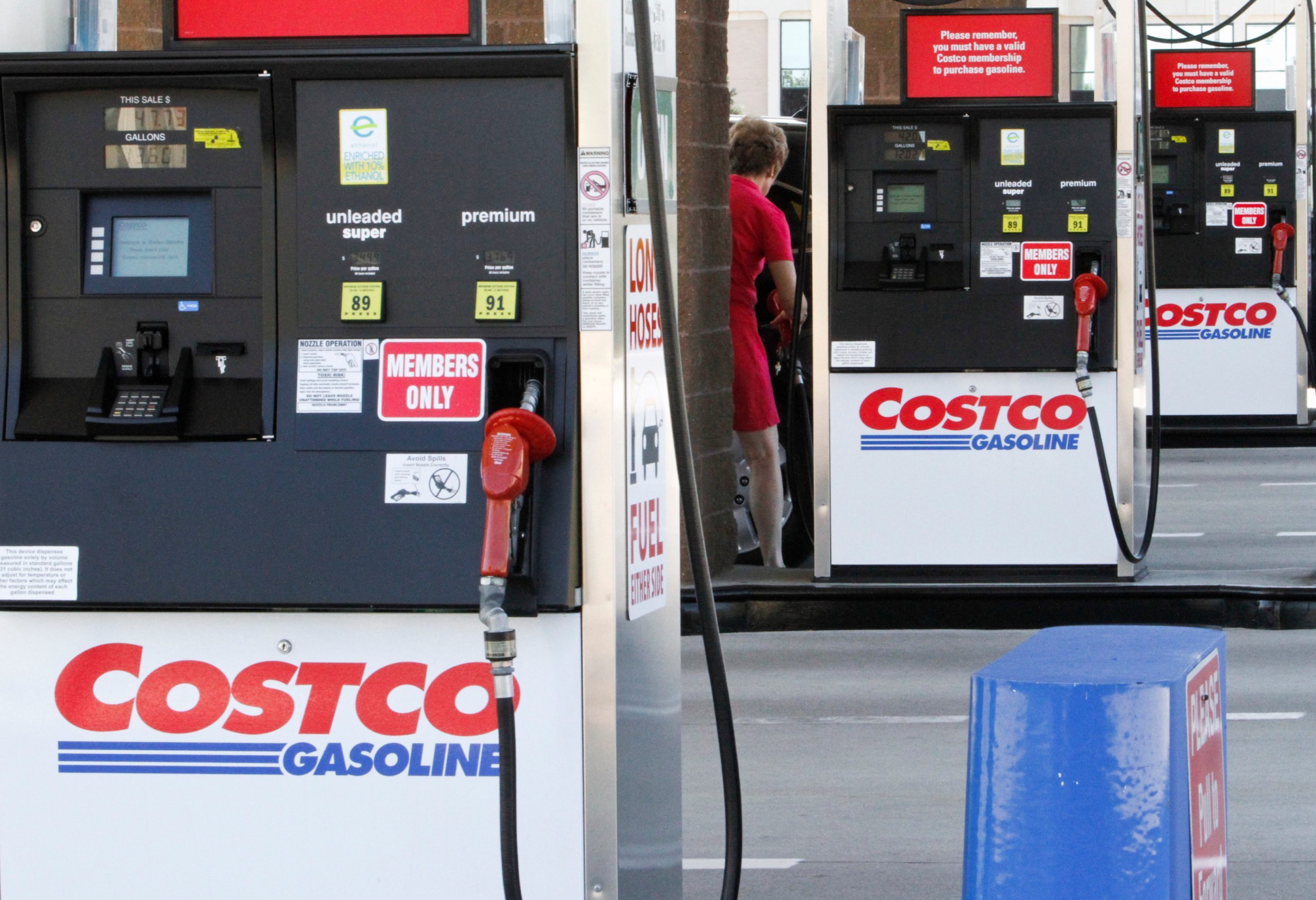
Costco’s foray into the fuel market is a cornerstone of its member retention strategy, offering a compelling incentive beyond its warehouse aisles. The consistent perception, and often reality, is that Costco offers some of the lowest gasoline prices in any given local market. This isn’t by accident; it’s a meticulously engineered part of their overall value proposition to members.
Understanding Costco’s Business Model and Fuel Pricing
Costco operates on a lean margin strategy, particularly evident in its fuel sales. Unlike traditional gas stations that rely heavily on fuel profits and convenience store sales, Costco views gasoline as a loss leader or, at best, a break-even venture designed primarily to drive membership value and foot traffic. The real profit for Costco comes from its membership fees and the higher-margin sales within its warehouses. By offering fuel at prices often several cents, and sometimes even tens of cents, below the prevailing market rate, Costco creates a powerful incentive for members to renew their annual fees and visit the store frequently. These frequent visits inevitably lead to additional purchases inside the warehouse, thus completing the virtuous cycle of their business model. Their ability to purchase fuel in massive bulk directly from refineries and transport it efficiently further reduces their per-gallon cost, allowing them to pass those savings onto their members without compromising their overarching financial strategy.
The Membership Value Proposition: Is It Worth It for Gas Alone?
A critical financial question for many individuals is whether the annual Costco membership fee (currently $60 for Gold Star or Business, and $120 for Executive) can be justified solely by gasoline savings. The answer, as with many personal finance queries, depends heavily on individual driving habits and local fuel prices.
Let’s consider a hypothetical scenario: if Costco gasoline is consistently $0.20 per gallon cheaper than the average local price, and an individual fills up 10 gallons per week (approximately 520 gallons per year), the annual savings would be $104 ($0.20 x 520). In this scenario, a basic Gold Star membership ($60) would be more than covered by gas savings alone, resulting in a net gain of $44, not even factoring in other warehouse savings. For higher-mileage drivers or larger vehicles, these savings escalate rapidly. However, if the price difference is minimal, or if the individual drives infrequently, the gas savings alone might not offset the membership fee. This requires a personal financial calculation, weighing average weekly fuel consumption against the typical local price differential. It’s an exercise in opportunity cost and direct savings that can significantly influence a household budget.
A Look at Average Price Discrepancies
While specific prices fluctuate daily and vary by location, numerous independent studies and consumer reports consistently show Costco gasoline prices averaging 5 to 25 cents per gallon lower than competitors in the same market. This discrepancy is often more pronounced in highly competitive urban areas or during periods of rapidly rising fuel costs, where every cent counts. Apps like GasBuddy and local news reports frequently highlight Costco as a top contender for the cheapest fuel. This consistent competitive edge underscores Costco’s commitment to member value and reinforces its position as a significant player in the retail fuel market, despite its limited number of stations compared to conventional chains.
Maximizing Your Fuel Savings Beyond the Pump Price
While the inherently lower per-gallon price at Costco is the primary draw, astute members can employ additional strategies to amplify their fuel savings, turning a good deal into an even better financial advantage.
Leveraging Executive Membership Benefits and Rewards
For those who spend a substantial amount at Costco, an Executive Membership ($120 annually) offers an additional layer of financial benefit: a 2% annual reward on qualified Costco purchases, up to a maximum of $1,000. Gasoline purchases are included in this reward program. This means that in addition to the initial per-gallon savings, Executive members effectively receive an extra 2% back on their fuel expenses in the form of an annual reward certificate.
Continuing the earlier example, if an Executive member spends $1,560 annually on gasoline ($3 per gallon x 520 gallons), they would receive an additional $31.20 back (2% of $1,560) as part of their reward certificate. When combined with the $104 direct savings from lower pump prices, the total annual benefit from gasoline alone would be $135.20. This amount not only covers the $120 Executive membership fee but also yields a net gain, illustrating how higher-tier memberships can be a sound financial decision for frequent shoppers and high-volume fuel consumers.
The Power of the Costco Anywhere Visa Card by Citi
Another potent financial tool for Costco members is the Costco Anywhere Visa® Card by Citi. This co-branded credit card offers an impressive 4% cash back on eligible gas purchases worldwide, including at Costco and other gas stations, on the first $7,000 per year (then 1%). This cash back is provided in the form of an annual reward certificate redeemable at Costco.
Consider the combined effect:
- Direct pump savings: Assume $0.20/gallon savings compared to competitors.
- Executive Membership 2% reward: If applicable.
- Citi Visa 4% cash back: On top of everything else.
Using the same example of $1,560 annual gas expenditure at Costco:
- Direct savings: $104
- Executive reward (if applicable): $31.20
- Citi Visa cash back: $62.40 (4% of $1,560)
The total annual savings and rewards from gasoline alone could reach $197.60 for an Executive member using the Citi Visa card. This significantly surpasses both membership fees and provides substantial net savings, highlighting a robust financial strategy for mitigating transportation costs. It transforms the act of fueling up from a simple transaction into a strategic accumulation of financial benefits.
Strategic Fueling: Timing Your Visits and Avoiding Peak Hours
While not directly impacting the per-gallon price, strategic fueling at Costco can save valuable time, which, for many, is a form of currency. Costco gas stations are notorious for long lines, especially during peak hours such as evenings, weekends, and lunchtime. By fueling during off-peak times—early mornings, late evenings, or during less busy weekday hours—members can minimize wait times. This efficiency indirectly contributes to financial well-being by preserving time that can be allocated to more productive or enjoyable activities, rather than idling in a queue. Additionally, reducing engine idle time also slightly conserves fuel, contributing to marginal, albeit real, savings.
Factors Influencing Costco’s Fuel Pricing

Understanding the underlying mechanisms that allow Costco to offer competitive fuel prices provides a deeper financial insight into their operations and helps consumers appreciate the value proposition.
Local Market Dynamics and Competition
Costco’s fuel pricing is highly dynamic and reactive to local market conditions. They don’t operate in a vacuum. Their pricing algorithms constantly monitor competitor prices within a given radius, including national chains, independent stations, and other warehouse clubs. The goal isn’t necessarily to be the absolute cheapest in every single instance but to consistently offer a price that is significantly attractive and below the local average. In areas with high competition, Costco may lower its prices even further to maintain its competitive edge and uphold its image as a low-cost leader. This competitive pressure from Costco often benefits all consumers in a given area, as other stations may be forced to lower their prices to compete.
Supply Chain Efficiencies and Bulk Purchasing Power
A fundamental pillar of Costco’s low-price strategy, not just for fuel but for all its products, is its immense purchasing power and highly efficient supply chain. By buying gasoline in enormous volumes directly from refineries or major distributors, Costco bypasses multiple layers of intermediaries that often add margins. Their streamlined logistics, often involving dedicated transportation fleets and efficient storage facilities, further reduce per-gallon costs. This vertically integrated approach allows them to secure favorable pricing terms and minimize operational overhead, directly translating into lower prices at the pump for their members.
The Impact of Crude Oil Prices and Refining Costs
While Costco aims to be consistently cheaper than its rivals, its prices are not immune to the broader macroeconomic factors influencing the global oil market. Fluctuations in crude oil prices, geopolitical events, refinery capacity, and seasonal demand all play a significant role in the base cost of gasoline. Costco, like all retailers, must absorb these variable costs. However, their strategic procurement and willingness to operate on thinner margins mean they can often cushion members from the most extreme price spikes, or at least pass on price increases more slowly and less aggressively than some competitors. Understanding these external factors helps members contextualize Costco’s pricing within the larger economic landscape.
Weighing the Convenience Against the Cost-Benefit
While the financial benefits of Costco gasoline are clear, a comprehensive financial assessment must also consider the non-monetary costs, particularly convenience. Time, after all, is a valuable asset, and sometimes the cheapest option isn’t always the most practical.
The Reality of Queues and Wait Times
The most frequently cited drawback of Costco gasoline is the potential for long lines. Especially at popular locations and peak hours, members may find themselves waiting 10-20 minutes or more to reach a pump. This wait time represents an opportunity cost: time that could be spent on work, leisure, or other errands. For individuals whose time is highly valuable or who are on tight schedules, the monetary savings from Costco gas might be partially offset by the “cost” of wasted time. A financial analysis should include an estimation of the value of one’s time when considering whether the savings are truly worthwhile.
Location Accessibility and Detour Considerations
Costco warehouses and their accompanying gas stations are typically located in suburban areas, often requiring a specific trip or detour for many members. If a Costco gas station is significantly out of the way from a member’s regular commute or errands, the extra mileage and associated fuel consumption for the detour itself can negate some of the per-gallon savings. For example, driving an extra 5 miles round trip to save $0.20 per gallon on a 15-gallon fill-up means spending roughly an extra dollar in fuel to save three dollars, effectively reducing the net savings. Savvy financial planning involves integrating Costco fuel stops into existing travel routes to minimize or eliminate these extra travel costs.
Beyond Fuel: The Holistic Value of a Costco Membership
Ultimately, for most members, the decision to maintain a Costco membership is not solely driven by gasoline prices. The membership offers a holistic value proposition encompassing competitive pricing on a vast array of products, from groceries and electronics to pharmaceuticals and travel services. While fuel savings can often cover the membership fee, the true financial benefit lies in the cumulative savings across all categories. When viewed through this lens, the discounted gasoline becomes another powerful layer of incentive, making the overall membership an even more compelling financial decision for households seeking to optimize their spending.
A Comprehensive Financial Perspective on Fueling Habits
The question of “how much is gasoline at Costco” extends beyond a simple price check; it prompts a broader examination of personal fueling habits and their financial implications. Integrating Costco into one’s financial strategy can yield significant annual savings.
Integrating Fuel Costs into Your Household Budget
For most households, fuel is a variable expense that can fluctuate wildly, making budgeting challenging. By consistently leveraging Costco’s lower prices, members can introduce a greater degree of predictability into their fuel expenditure. Building “Costco fuel” into the monthly or weekly budget as a line item that is inherently lower than market rates allows for better financial planning and reallocation of funds to other savings or spending goals. It’s a proactive step in managing one of the most volatile household costs.
Calculating Your Annual Fuel Savings with Costco
To truly understand the financial impact, every Costco member should undertake a simple calculation:
- Estimate annual fuel consumption: Average gallons per week x 52.
- Estimate average local price difference: Compare Costco’s average price to competitors.
- Calculate direct pump savings: Annual gallons x price difference.
- Add Executive Membership rewards: 2% of annual fuel spend (if applicable).
- Add Citi Visa cash back: 4% of annual fuel spend (if applicable, up to limit).
- Subtract membership fee(s).
- Consider time/detour costs.
This comprehensive calculation provides a clear, personalized financial picture of the net benefit or cost, empowering informed decisions about membership tiers and fueling strategies.

The Broader Economic Impact of Discounted Fuel
From a macroeconomic perspective, the presence of major discount fuel retailers like Costco contributes to overall consumer welfare by exerting downward pressure on prices across the market. This competitive dynamic ensures that consumers pay less for a critical commodity, freeing up disposable income that can be spent elsewhere, thereby stimulating other sectors of the economy. For individuals, this translates into greater purchasing power, lower cost of living, and an enhanced ability to meet their financial goals, whether it’s saving for retirement, paying off debt, or investing in personal development.
In conclusion, “how much is gasoline at Costco” is a question with a complex, financially rewarding answer. It’s not just about a few cents per gallon; it’s about a strategic approach to personal finance that leverages membership benefits, specialized credit cards, and efficient planning to transform a recurring expense into a consistent source of savings. For the financially savvy consumer, Costco gasoline isn’t merely a convenience; it’s an integral component of a well-managed household budget.
aViewFromTheCave is a participant in the Amazon Services LLC Associates Program, an affiliate advertising program designed to provide a means for sites to earn advertising fees by advertising and linking to Amazon.com. Amazon, the Amazon logo, AmazonSupply, and the AmazonSupply logo are trademarks of Amazon.com, Inc. or its affiliates. As an Amazon Associate we earn affiliate commissions from qualifying purchases.