
In the landscape of American retail, few entities command as much respect from investors and consumers alike as Costco Wholesale Corporation. To the casual shopper, the question of “how many Costco stores are in the US” is a matter of convenience and proximity. However, to the financial analyst or the institutional investor, that number represents a sophisticated roadmap of capital expenditure, market penetration, and sustainable revenue growth. As of late 2023 and moving into 2024, Costco operates over 600 warehouses across the United States, a figure that continues to climb as the company identifies new pockets of high-income, high-density demographics.
This expansion is not merely about physical presence; it is a calculated financial maneuver. Each new warehouse represents a multi-million dollar investment in real estate and infrastructure, backed by a business model that prioritizes volume and membership loyalty over traditional retail margins. By examining the current US store count through a financial lens, we can uncover the underlying mechanics of one of the world’s most successful business operations.
The Unit Economics of the American Warehouse
The sheer volume of Costco’s US footprint is a testament to its operational efficiency. While competitors focus on rapid, small-format expansion, Costco’s strategy remains rooted in the “Big Box” philosophy, where the store count is secondary to the quality and profitability of each individual location.
Current US Store Count and Growth Trajectory
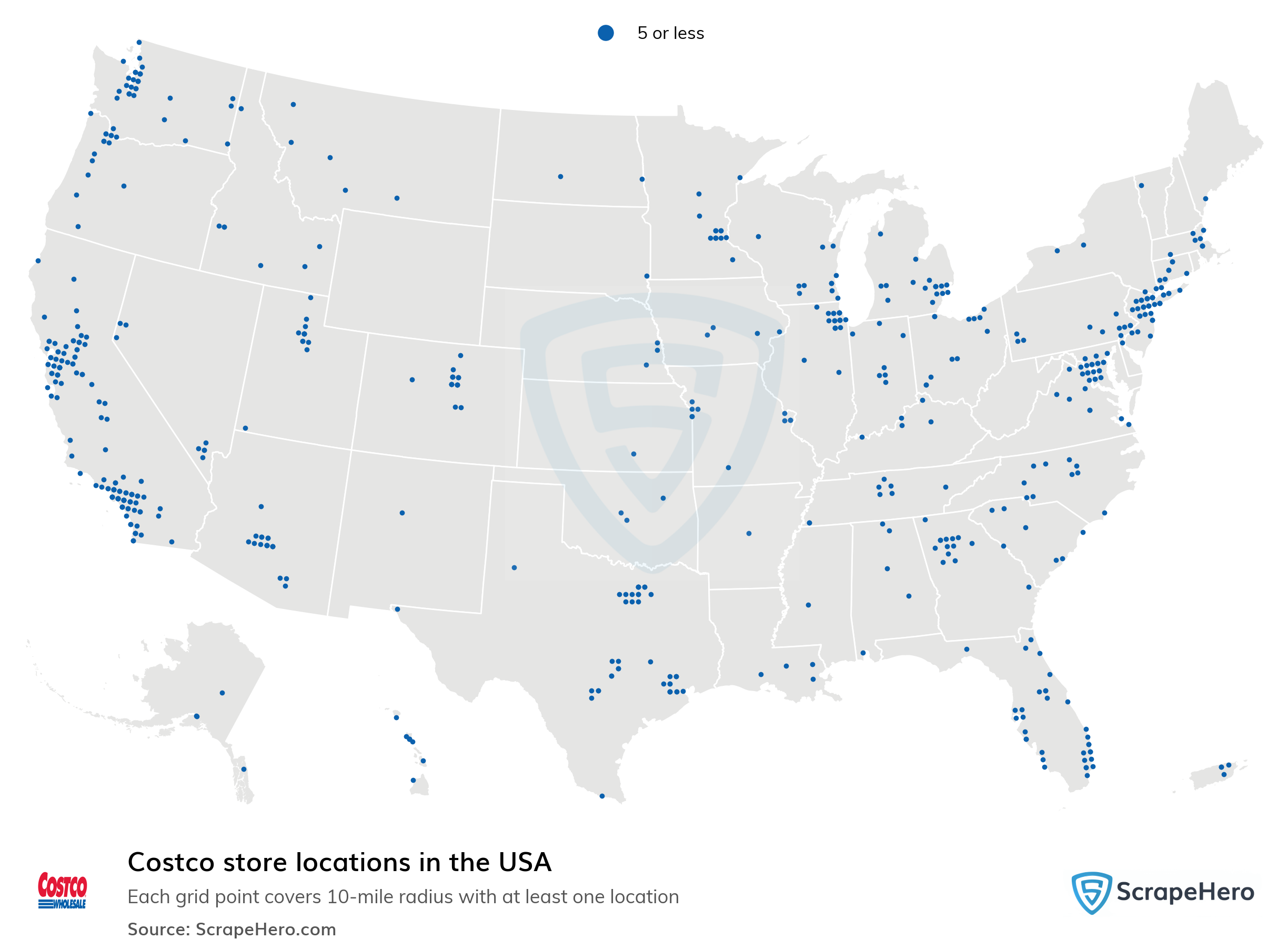
As of the most recent fiscal reports, Costco operates approximately 600 locations within the United States and Puerto Rico. While this number is dwarfed by the store counts of retail giants like Walmart or even Target, the revenue generated per location is significantly higher. For Costco, the growth trajectory is deliberate. Unlike many retailers that suffered during the “retail apocalypse” caused by e-commerce, Costco has maintained a steady pace of opening 20 to 30 new warehouses globally each year, with a significant portion allocated to the US domestic market. This controlled expansion ensures that the brand does not suffer from “market cannibalization”—a financial phenomenon where new stores eat into the profits of existing ones.
Revenue Per Square Foot: Why Store Count Matters
In the world of business finance, “revenue per square foot” is a critical metric. Costco consistently outperforms its peers in this category. By maintaining a relatively low number of stores compared to its total revenue, Costco maximizes the utility of its physical assets. Each US store serves as a high-velocity distribution center where inventory turnover is exceptionally fast. Because the company stocks fewer Stock Keeping Units (SKUs) than a traditional supermarket—roughly 4,000 compared to 30,000—the financial efficiency of each square foot of warehouse space is optimized for maximum cash flow.
Geographic Concentration and Tax Optimization
The distribution of Costco stores across the US reveals a strategic focus on high-growth states. California, Texas, and Washington hold the highest concentrations of warehouses. These states represent robust economic hubs with high disposable income levels. From a business finance perspective, this geographic clustering allows for streamlined supply chain management. Lowering the distance between regional distribution centers and the warehouses reduces logistics costs, directly impacting the company’s bottom line and allowing them to maintain their famously low prices.
The Membership Model as a Financial Engine
To understand why the number of Costco stores is so vital, one must look past the products on the shelves and toward the membership desk. Costco is essentially a subscription service disguised as a retail warehouse. The store count is the primary driver of this subscription growth.
How Store Density Drives Membership Retention
The primary financial moat for Costco is its membership fee revenue, which accounts for the vast majority of its net profit. As the company increases its store count in the US, it effectively lowers the barrier to entry for new members. A consumer is much more likely to pay a $60 or $120 annual fee if a warehouse is within a 20-minute drive. Consequently, the expansion of stores is a direct investment in recurring revenue. With renewal rates in the US and Canada hovering around 92%, each new store adds a predictable, long-term stream of high-margin income that is independent of fluctuating product sales.
The Role of Auxiliary Services in Unit Economics
Costco’s US locations are more than just grocery stores; they are comprehensive ecosystems including gas stations, pharmacies, optical centers, and hearing aid clinics. The store count is a multiplier for these services. For example, Costco is one of the largest dispensers of gasoline in the US. While gas is often sold as a “loss leader” or at a break-even price to drive traffic, it serves a vital financial purpose: it increases the frequency of visits. A member who visits the warehouse twice a month for fuel is more likely to enter the store and make a high-ticket purchase, thereby increasing the “average ticket” value—a key metric for retail analysts.
Membership Tiers and Up-Selling Strategies
The financial health of each store is further bolstered by the “Executive Membership” tier. As Costco expands into new US markets, it aggressively markets the higher-tier membership, which offers a 2% reward on purchases. From a corporate finance standpoint, this creates a “stickiness” in consumer behavior. Members who are invested in the Executive program are financially incentivized to consolidate their spending at Costco, ensuring that the capital invested in building the store yields a high return on investment (ROI).

Strategic Real Estate and Capital Expenditure
Costco’s approach to real estate is a masterclass in long-term asset management. While many retailers lease their locations to keep liabilities off the balance sheet, Costco owns the majority of its properties.
Site Selection: The High-Barriers-to-Entry Strategy
The process of adding to the US store count involves rigorous financial scrutiny. Costco does not simply look for available land; it looks for strategic positioning near major arterial highways and within specific “goldilocks” demographic zones. This high-barrier-to-entry strategy ensures that once a store is built, it is difficult for competitors to displace. The “Money” story here is one of land appreciation and equity building. By owning their real estate, Costco protects itself from rising lease rates and creates a significant asset base that strengthens its balance sheet.
Logistics and Supply Chain Efficiencies
Every new store added to the US count is integrated into a highly “cross-docked” supply chain. This means products are moved from manufacturer trucks directly to store-bound trucks with minimal storage time. The financial implication of this is a reduction in “carrying costs”—the expenses associated with holding inventory. Because Costco moves goods so quickly, they often sell the inventory to customers before they have even paid their suppliers, creating a “negative cash conversion cycle.” This is a powerful financial position that allows Costco to use its suppliers’ capital to fund its own operations.
Resilience Against E-commerce Disruptions
While many retailers have been forced to close stores due to the rise of Amazon, Costco’s store count has remained resilient. This is due to the “Treasure Hunt” shopping experience, which is difficult to replicate online. Financially, this means that the physical footprint remains a viable and necessary component of the business model. The company’s limited e-commerce presence is a deliberate choice to avoid the high shipping and “last-mile” delivery costs that erode the margins of other retailers. The physical store remains the most cost-effective way for Costco to distribute goods.
Costco vs. The Competition: A Financial Comparison
The question of “how many Costco stores are in the US” often leads to a comparison with its primary rival, Sam’s Club (owned by Walmart) and BJ’s Wholesale Club.
Comparative Analysis: Costco vs. Sam’s Club
Sam’s Club has more locations in the US than Costco, yet Costco generates significantly more revenue. This discrepancy highlights the difference in financial strategy. Sam’s Club often targets a broader, lower-to-middle-income demographic, whereas Costco focuses on a higher-income demographic. In financial terms, Costco’s “revenue per warehouse” is nearly double that of Sam’s Club. This efficiency allows Costco to maintain a higher market capitalization and offer more attractive returns to shareholders, despite having a smaller physical footprint.
Market Saturation and Future Growth
Is the US market for Costco reaching saturation? Analysts are divided, but the financial data suggests there is still significant “white space.” As suburban populations shift and new economic centers emerge (particularly in the Sun Belt), Costco continues to find profitable opportunities for expansion. The company’s disciplined approach—opening stores only when the data supports a high probability of success—prevents the over-leverage that has plagued other retail chains.
The Equilibrium of E-commerce and Physical Stores
In the modern financial landscape, a retail company’s value is often tied to its “omnichannel” strategy. While Costco’s US store count is its backbone, the company is slowly integrating digital tools to enhance the physical experience. This includes mobile apps for pharmacy refills and online booking for tire centers. However, the core financial philosophy remains: the warehouse is the profit center. By keeping the digital experience as a supplement to the physical store, Costco avoids the margin-diluting pitfalls that many of its competitors face.

Conclusion: The Number Behind the Name
When we ask how many Costco stores are in the US, we are looking at more than a list of addresses. We are looking at a calculated financial fortress. Each of the 600+ locations is a cog in a massive wealth-generation machine that leverages membership fees, rapid inventory turnover, and strategic real estate ownership to dominate the retail sector.
For the investor, the store count is a leading indicator of health. It shows a company that is growing at a sustainable pace, avoiding the traps of over-expansion while maximizing the profitability of every square foot. For the business professional, Costco serves as a case study in how a clear financial identity—one based on volume, value, and loyalty—can thrive even in a volatile economic environment. As Costco continues to dot the American map with its iconic warehouses, its financial legacy remains as sturdy as the concrete floors of its stores.
aViewFromTheCave is a participant in the Amazon Services LLC Associates Program, an affiliate advertising program designed to provide a means for sites to earn advertising fees by advertising and linking to Amazon.com. Amazon, the Amazon logo, AmazonSupply, and the AmazonSupply logo are trademarks of Amazon.com, Inc. or its affiliates. As an Amazon Associate we earn affiliate commissions from qualifying purchases.