
In the modern financial landscape, the boundary between traditional banking and digital liquidity has become increasingly fluid. Cash App, a flagship product of Block, Inc., has revolutionized the way millions of users manage their daily finances, bridging the gap between peer-to-peer (P2P) transfers and real-world spending via the Cash Card. However, one of the most common challenges for users who still handle physical currency is finding a reliable way to deposit that cash into their digital ecosystem.
Whether you are a freelancer receiving cash tips, a student with a gift from a relative, or an entrepreneur managing a side hustle, knowing exactly where and how to “load” your Cash App card is essential for maintaining financial flexibility. This guide explores the diverse network of retail partners, the step-by-step procedures for in-store deposits, and the strategic financial implications of using Cash App as a primary financial tool.

Major Retail Partners: Where to Load Your Cash App Card
Finding a location to deposit physical currency into your Cash App account is more convenient than ever, thanks to an expansive network of retail partnerships. Cash App utilizes a “Paper Money” feature that allows users to deposit cash at thousands of brick-and-mortar locations across the United States.
Big Box Retailers and National Chains
The most reliable locations for loading your Cash App card are large-scale national retailers. These establishments have integrated Cash App’s API into their point-of-sale (POS) systems, ensuring a seamless transaction.
- Walmart: As the largest retailer in the U.S., Walmart is a primary hub for Cash App users. Deposits can typically be made at the MoneyCenter or any customer service desk.
- Target: Many Target locations support paper money deposits, offering a convenient stop for users during their regular shopping trips.
- 7-Eleven: For those needing 24/7 access, 7-Eleven is often the most accessible option, allowing for late-night or early-morning deposits when traditional banks are closed.
Pharmacies and Convenience Stores
Beyond the massive retail hubs, neighborhood pharmacies provide an added layer of accessibility. These locations are often situated in urban centers where large big-box stores may be less common.
- Walgreens and Duane Reade: Most Walgreens locations allow you to load funds directly at the register.
- CVS Pharmacy: Similar to its competitors, CVS offers widespread support for Cash App deposits, though it is always recommended to check the specific store’s participation via the app’s map.
- Rite Aid: This chain remains a staple for financial services in various regions, supporting the “Paper Money” feature.
Specialized and Regional Grocers
Depending on your geographic location, regional grocery chains also play a significant role in the Cash App ecosystem.
- Kroger and its subsidiaries: Stores like Ralphs, Dillons, and Smith’s frequently support these transactions.
- Dollar General and Family Dollar: These “value” retailers are crucial for users in rural or underserved areas where traditional banking infrastructure might be sparse.
- H-E-B and Meijer: Regional powerhouses in Texas and the Midwest, respectively, often serve as local loading zones for Cash App users.
The Step-by-Step Process: How to Deposit Cash In-Store
Understanding where to go is only half the battle; knowing the technical process ensures that your transaction is secure and successful. Cash App does not rely on your physical card for the deposit; instead, it uses a unique, time-sensitive barcode generated within the app.
Generating the Paper Money Barcode
To initiate a cash deposit, you must use the “Paper Money” feature located within the Banking tab of your Cash App.
- Open Cash App and tap the Banking (House/Balance) icon on the bottom left.
- Select “Paper Money.”
- A map will appear showing nearby authorized locations. Once you are at the store, tap “Show Barcode.”
- This barcode is the bridge between your physical cash and your digital balance. It contains the routing instructions necessary for the retailer’s system to identify your account.
Executing the Transaction at the Register
Once you have the barcode ready, approach the cashier. It is important to specify that you want to “load money using a barcode” rather than simply “putting money on a card.” Many POS systems require the cashier to scan the barcode before they can accept the cash.
- The Hand-off: Present your barcode to the cashier for scanning.
- The Deposit: Hand the physical cash to the cashier. Note that there is usually a $1 service fee per transaction, which is deducted from the total amount or added to your payment depending on the store’s policy.
- Verification: Once the transaction is processed, the funds are typically available within minutes. Always keep your physical receipt until you see the balance reflect in your Cash App activity feed.
Understanding Limits and Fees
From a personal finance perspective, it is vital to track the costs and constraints associated with loading cash.
- Transaction Limits: Most users are limited to $500 per transaction, $1,000 per 7 days, and $4,000 per 30 days. These limits are designed to prevent money laundering and ensure account security.
- Minimum Deposits: There is typically a $5 minimum for paper money deposits.
- The Convenience Fee: While the $1 fee per deposit may seem nominal, frequent small deposits can erode your balance over time. Strategic users often wait to deposit larger lump sums to minimize the percentage of their capital lost to fees.
Digital Alternatives for Funding Your Cash App Card
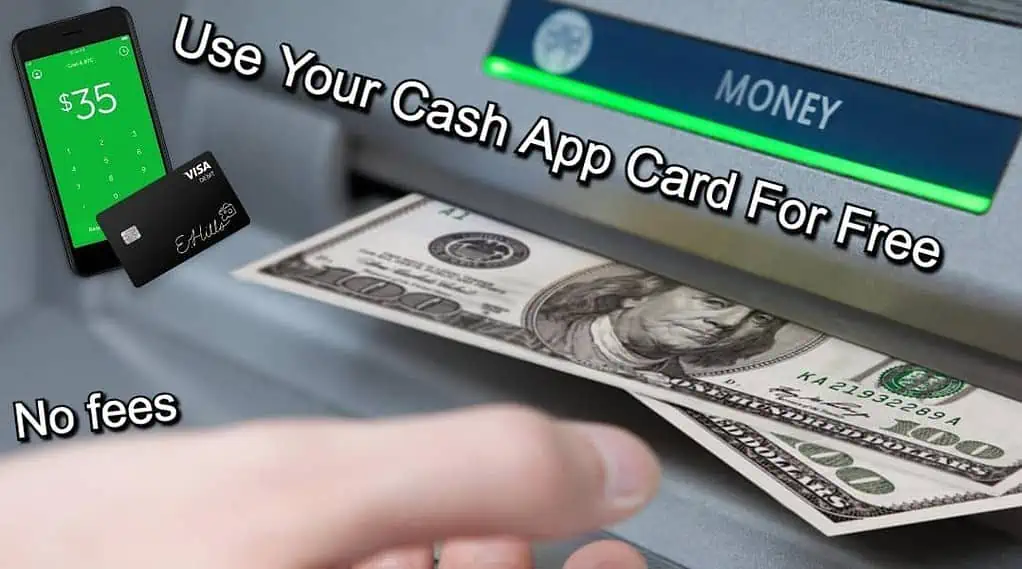
While physical cash deposits are necessary for some, the true power of Cash App lies in its ability to integrate with other digital financial instruments. For those looking to avoid the $1 retail fee or the trip to a store, several digital alternatives exist.
Linking Traditional Bank Accounts and Debit Cards
The most efficient way to fund a Cash App card is by linking a traditional bank account or a debit card. This creates a “bridge” for electronic fund transfers (EFTs). By linking a primary bank, you can pull funds into your Cash App balance instantly. This is particularly useful for users who use Cash App for its “Boost” rewards program, which offers discounts at various retailers when using the Cash Card.
Direct Deposit for Consistent Funding
For those using Cash App as a primary financial tool, setting up direct deposit is a game-changer. Cash App provides users with a routing and account number, allowing them to receive paychecks, tax refunds, and government benefits directly into the app.
- Early Access: Cash App often makes direct deposit funds available up to two days earlier than traditional banks.
- Financial Organization: Direct deposit eliminates the need for physical “loading” entirely, automating your personal finance pipeline.
Peer-to-Peer (P2P) Transfers
If you have friends or family members who also use Cash App, they can send you funds instantly from their balance. In a “gig economy” or shared-living situation, this is often the most common way accounts are funded. Whether splitting a dinner bill or receiving payment for a side hustle, P2P transfers are free and instantaneous, making them a superior alternative to physical cash deposits when possible.
Security Best Practices and Financial Safety
In the realm of personal finance, security is paramount. When loading your Cash App card—whether physically or digitally—following best practices can protect you from fraud and technical errors.
Avoiding “Loading” Scams
A common scam involves individuals or websites claiming they can “flip” your money or “load” your Cash App card remotely if you pay them a fee. Cash App does not have official “agents” who load cards manually via the internet. The only way to load physical cash is through the official “Paper Money” barcode at a verified retail partner. Never share your sign-in code, PIN, or full card number with anyone claiming to help you load your account.
Verifying Real-Time Transactions
One of the advantages of digital finance tools is the immediate feedback loop. As soon as a cashier finishes a transaction, you should receive a push notification. If you do not see the update within 10–15 minutes, check the “Activity” tab. If a discrepancy occurs, your physical receipt from the retailer is your only legal proof of the transaction. Store it in a safe place until the funds are fully cleared.
Protecting Your Digital Wallet
Since your Cash App card is linked directly to your balance, ensuring your phone and app are secure is essential. Use biometric locks (FaceID or TouchID) and enable the “Security Lock” feature within Cash App settings, which requires your PIN for every outgoing payment.
The Strategic Role of Cash App in Personal Finance
Loading your Cash App card is more than just a logistical task; it is a step toward modern financial management. For many, Cash App serves as a gateway to investing and budgeting that traditional banks fail to provide.
Using Loaded Funds for Investing
Once you have loaded your card, those funds don’t have to sit idle. Cash App allows users to buy fractional shares of stocks or purchase Bitcoin with as little as $1. By loading physical cash into the app, a user can effectively convert paper currency into an appreciating asset, democratizing access to the stock market for those who primarily operate in a cash-based economy.

Budgeting and the “Side Hustle” Economy
Many users treat their Cash App balance as a “discretionary spending” bucket. By loading a specific amount of cash onto the card each month, you can create a hard limit for “fun money” or dining out, separate from your main savings or checking accounts. Additionally, for side hustlers—such as those selling items on Facebook Marketplace or working local events—the ability to quickly turn physical sales into digital, spendable capital via a local CVS or Walmart is an invaluable business tool.
In conclusion, knowing “where can I load my Cash App card near me” is the first step in mastering a versatile financial tool. By leveraging the vast network of retail partners like Walmart and 7-Eleven, understanding the “Paper Money” barcode system, and integrating digital funding strategies, you can ensure your money is always where you need it to be—ready to spend, save, or invest at a moment’s notice.
aViewFromTheCave is a participant in the Amazon Services LLC Associates Program, an affiliate advertising program designed to provide a means for sites to earn advertising fees by advertising and linking to Amazon.com. Amazon, the Amazon logo, AmazonSupply, and the AmazonSupply logo are trademarks of Amazon.com, Inc. or its affiliates. As an Amazon Associate we earn affiliate commissions from qualifying purchases.