
When navigating the complex world of personal finance, few decisions carry as much weight as the purchase of a vehicle. For the average consumer, a car is often the second-largest investment they will ever make, trailing only the purchase of a home. In this high-stakes environment, information is the most valuable currency. This is where CARFAX enters the equation. While many view it simply as a history report, in the realm of personal finance and investing, CARFAX is a sophisticated financial tool designed to mitigate risk, protect asset value, and ensure transparency in the used-vehicle marketplace.

To understand what CARFAX is, one must look past the digital interface and see it as a comprehensive risk-management resource. It aggregates data from thousands of sources to provide a snapshot of a vehicle’s financial and physical health, allowing buyers and sellers to make informed decisions that protect their bottom line.
Understanding CARFAX as a Critical Financial Tool
At its core, a CARFAX Vehicle History Report is a due-diligence document. In the world of business finance and personal investing, due diligence is the process of verifying facts before entering into a contract. When you are preparing to spend tens of thousands of dollars on a depreciating asset, the “asymmetric information” problem—where the seller knows more about the product than the buyer—poses a significant financial threat.
The Cost of Information vs. The Price of Ignorance
In personal finance, we often weigh the cost of a tool against its potential savings. A CARFAX report typically costs around $40, a nominal fee when compared to the average price of a used car. However, the “price of ignorance”—buying a vehicle with a hidden salvage title or a history of severe structural damage—can cost a consumer thousands in lost equity and unforeseen repair bills. By investing in this data upfront, a buyer is essentially purchasing “financial insurance” against the unknown.
Protecting Your Investment Value
A vehicle is a depreciating asset, but the rate of depreciation is not uniform. A car with a clean history retains its value far better than one with a “branded” title. CARFAX helps buyers identify vehicles that are likely to hold their value over time. From a wealth-management perspective, choosing a vehicle with a documented service history and no accident records is a strategy to minimize the “Total Cost of Ownership” (TCO), a metric every savvy investor should track.
How a CARFAX Report Influences Asset Valuation
In the financial world, an asset’s value is determined by its condition, its history, and the market’s trust in its longevity. CARFAX provides the paper trail that substantiates a vehicle’s asking price. Without this data, a buyer is essentially gambling on the valuation provided by the seller, which is often biased.
The “Lemon” Factor and Depreciating Assets
“Lemon” laws exist to protect consumers, but they are often difficult to navigate after a transaction is complete. CARFAX acts as a proactive financial filter. By identifying vehicles that have been bought back by manufacturers due to persistent defects, the report prevents a buyer from sinking capital into a “money pit.” In financial terms, avoiding a lemon is the equivalent of avoiding a “value trap” in the stock market—an investment that looks cheap but is actually destined to fail.
Resale Value and ROI (Return on Investment)
While we don’t typically think of a daily-driver car as an investment that yields a profit, we should think of it in terms of capital preservation. When the time comes to sell the vehicle, having a comprehensive CARFAX report that shows a history of regular maintenance and no accidents allows the owner to command a premium price. In this sense, the “Money” niche of CARFAX extends to the seller’s side as well; it is a tool for maximizing the resale value of a personal asset.
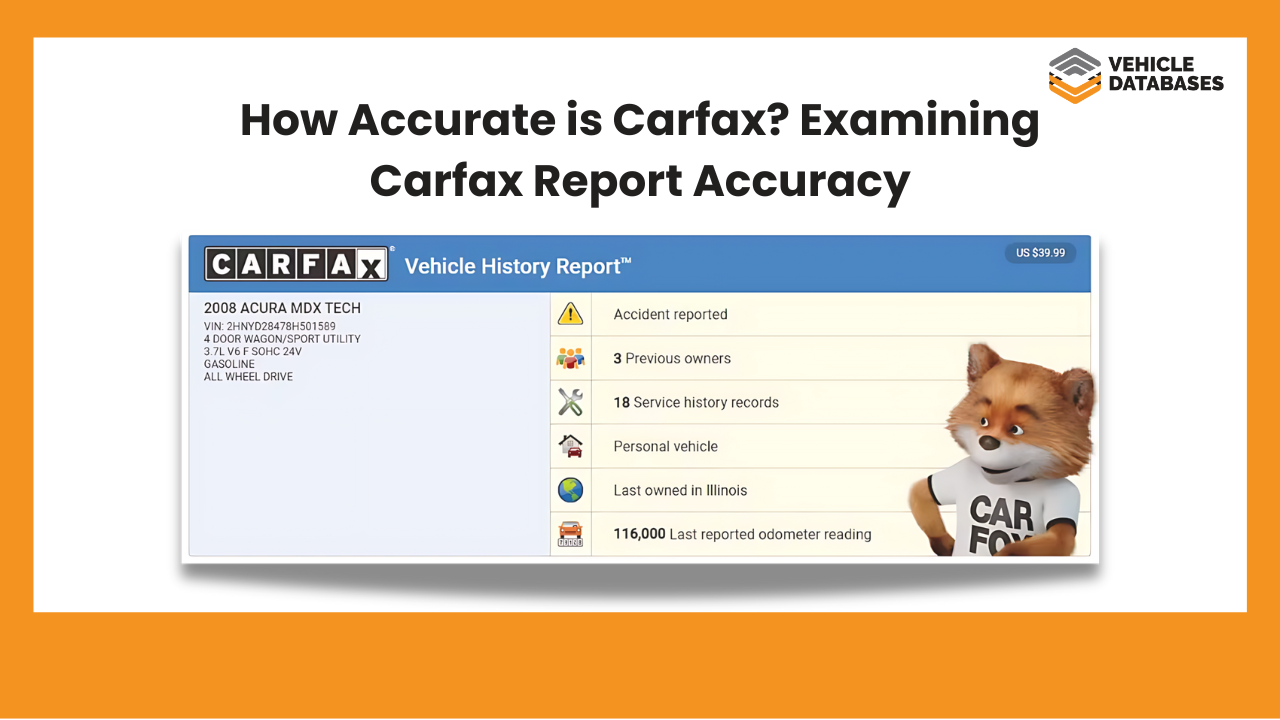
Mitigating Financial Risk: What the Report Reveals
To manage money effectively, one must be able to identify and quantify risk. A CARFAX report breaks down the history of a vehicle into specific data points that correlate directly to financial liability.
Title History and Liens
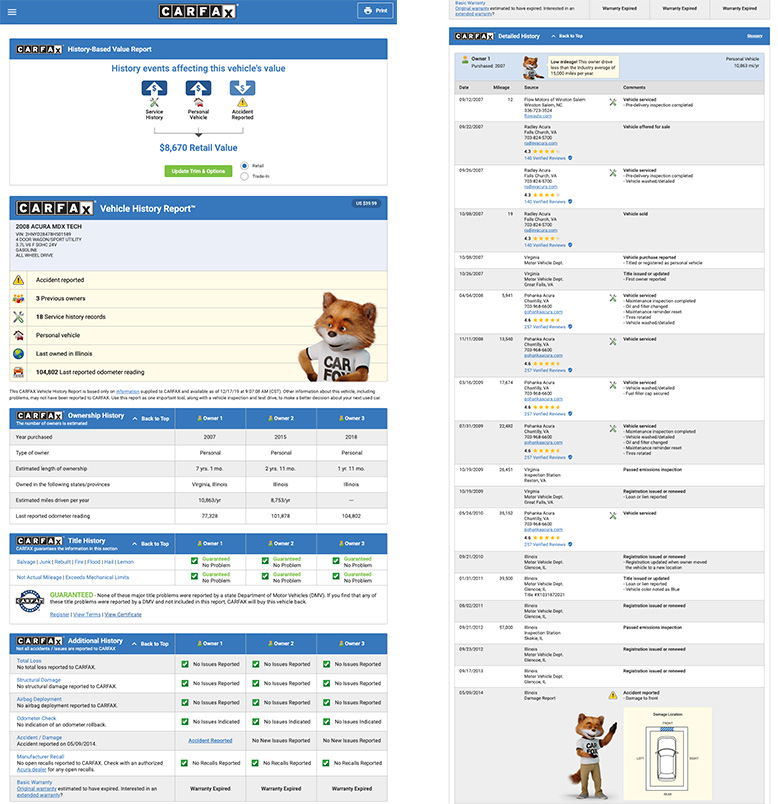
One of the most critical financial aspects of the CARFAX report is the title search. If a vehicle has a “Lien” reported, it means a bank or financial institution still has a legal claim to the car. Buying a car with an undisclosed lien is a financial nightmare that can result in the vehicle being repossessed, leaving the buyer with a total loss of their investment. CARFAX alerts the buyer to these legal encumbrances, ensuring the title is clear and the transaction is legally sound.
Maintenance Logs as Equity
In the world of personal finance, maintenance is an expense, but in the context of vehicle valuation, maintenance is an investment in equity. A CARFAX report that shows consistent oil changes, brake services, and mileage intervals serves as proof that the asset has been cared for. For a buyer, this reduces the risk of “catastrophic failure”—expensive engine or transmission repairs that can derail a monthly budget. A well-maintained car is a more predictable financial obligation.
Accident History and Insurance Implications
The financial impact of an accident extends far beyond the repair bill. A vehicle that has been in a major accident suffers from “diminished value.” Even if the car is repaired perfectly, it will never be worth as much as an identical car with no accident history. Furthermore, insurance companies use vehicle history to determine premiums. A car with a history of structural damage or airbag deployment may be more expensive to insure or, in some cases, uninsurable. CARFAX provides the transparency needed to calculate these secondary financial costs before the purchase.
Using Data to Negotiate: The Buyer’s Financial Leverage
In any financial transaction, the party with the most data has the most leverage. CARFAX is the ultimate negotiation tool for the used-car market. It levels the playing field, allowing the buyer to approach a deal with the confidence of an institutional investor.
Lowering the Asking Price
If a CARFAX report reveals a minor accident, multiple previous owners, or a gap in service history, these become powerful talking points for price negotiation. From a financial standpoint, these “flaws” represent future risks or decreased resale value. A buyer can use this data to justify a lower offer, potentially saving hundreds or thousands of dollars on the purchase price. This is the essence of “value investing” in the automotive world—finding the right price for the level of risk involved.
Avoiding Costly Future Repairs
The most significant “hidden” cost of a car isn’t the monthly payment; it’s the repair bills. CARFAX reports often include information on “open recalls.” These are safety or mechanical issues that the manufacturer has agreed to fix for free. If a buyer identifies an open recall via CARFAX, they can ensure the repair is made before they take ownership, or use it as a point to negotiate who covers the logistics. Additionally, identifying a vehicle that was used as a rental car or a taxi can signal a high-wear-and-tear history, prompting a buyer to walk away from a potential financial drain.
Conclusion: Data as the Ultimate Financial Currency
In conclusion, CARFAX is much more than a simple history report; it is a comprehensive financial tool that sits at the intersection of personal finance and risk management. By providing a transparent look at a vehicle’s past, it allows consumers to protect their capital, verify the value of their assets, and mitigate the risks associated with the second-hand market.
In an era where every dollar counts, and financial literacy is the key to building wealth, utilizing tools like CARFAX is a non-negotiable step in the vehicle-buying process. Whether you are a first-time buyer looking to protect your savings or a seasoned seller looking to maximize your resale value, the data contained within a CARFAX report is the ultimate currency. It transforms a high-risk gamble into a calculated financial decision, ensuring that your automotive investments support, rather than hinder, your long-term financial goals. By treating a vehicle purchase with the same analytical rigor as a stock or real estate investment, you position yourself for financial stability and success on the road ahead.
aViewFromTheCave is a participant in the Amazon Services LLC Associates Program, an affiliate advertising program designed to provide a means for sites to earn advertising fees by advertising and linking to Amazon.com. Amazon, the Amazon logo, AmazonSupply, and the AmazonSupply logo are trademarks of Amazon.com, Inc. or its affiliates. As an Amazon Associate we earn affiliate commissions from qualifying purchases.