
For many Americans, Social Security serves as the bedrock of their retirement strategy. Whether you are decades away from leaving the workforce or are currently eyeing the exit, the question of “how much” is central to your financial independence. However, the Social Security Administration (SSA) uses a complex series of calculations, adjustments, and age-related variables that can make the final number feel like a moving target.
Understanding your potential benefit is not just about knowing a monthly figure; it is about understanding how your career choices, filing age, and even your marital status dictate your long-term financial security. In this guide, we will break down the mechanics of the Social Security system to help you project your benefits and optimize your claiming strategy.
The Foundation: How Your Benefit is Calculated
The first step in answering how much you will receive is understanding that Social Security is not a flat-rate pension. It is a progressive benefit designed to replace a portion of your pre-retirement earnings. The SSA looks at your entire work history, but the calculation is specifically distilled down to your “35 highest-earning years.”
Average Indexed Monthly Earnings (AIME)
To determine your benefit, the SSA first calculates your Average Indexed Monthly Earnings (AIME). They take your earnings for each year, index them for inflation (to ensure that the $20,000 you earned in 1990 is weighted appropriately against today’s dollars), and then select your top 35 years. If you worked fewer than 35 years, the SSA enters zeros for the remaining years, which can significantly drag down your average. This is a critical point for personal finance planning: working even a few extra years to replace “zero” or low-earning years from your youth can substantially increase your monthly check.
The Primary Insurance Amount (PIA) and Bend Points
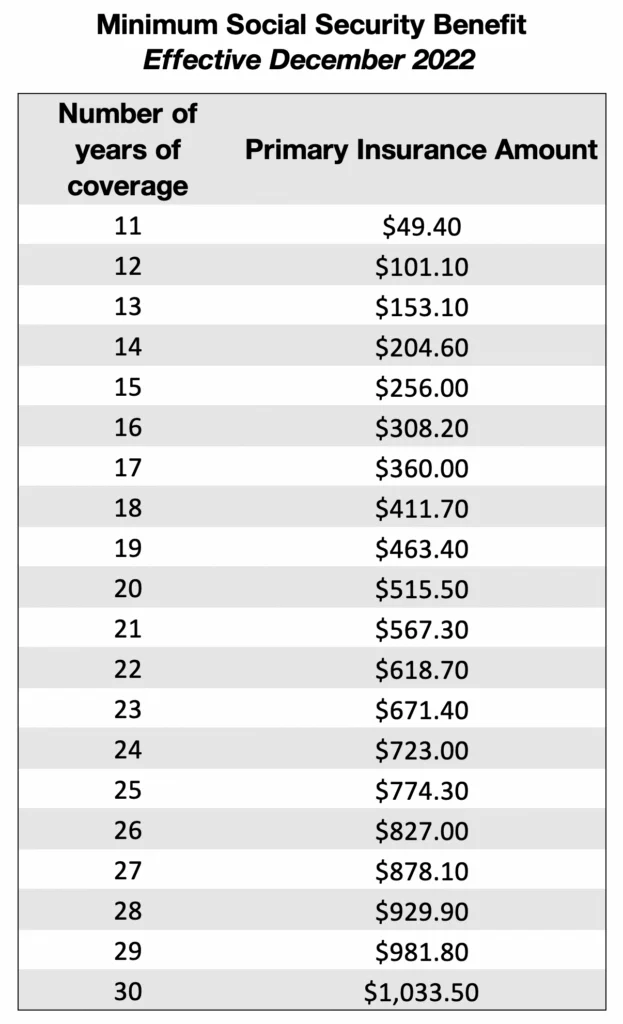
Once your AIME is established, the SSA applies a formula to determine your Primary Insurance Amount (PIA). The formula is progressive, meaning it replaces a higher percentage of lower earnings than higher earnings. This is done through “bend points”—specific dollar thresholds that change annually.
For example, in a simplified scenario, you might receive 90% of the first $1,100 of your AIME, 32% of earnings between $1,100 and $6,700, and 15% of earnings above that. Because of this structure, high earners do receive larger checks in absolute terms, but lower earners receive a higher “replacement rate” relative to their previous lifestyle.
The Timing Factor: Full Retirement Age vs. Early Filing
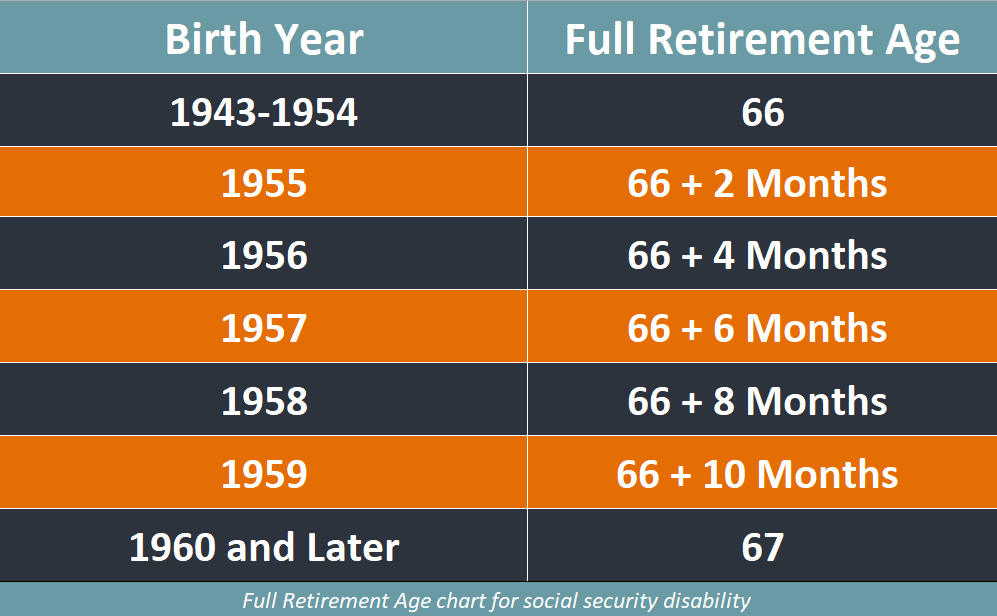
While your earnings history sets the baseline, the age at which you choose to claim your benefit is the most significant factor you can control. The SSA defines a “Full Retirement Age” (FRA), which is currently between 66 and 67 depending on your birth year.
The Cost of Claiming Early
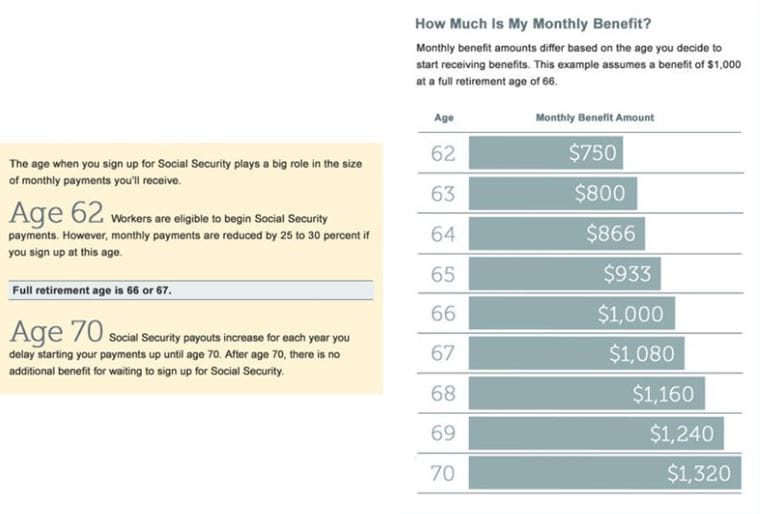
You can begin taking Social Security as early as age 62. However, doing so comes at a permanent cost. If your FRA is 67 and you claim at 62, your monthly benefit will be reduced by approximately 30%. This reduction is actuarial; it assumes that because you are starting earlier, you will receive more checks over your lifetime, so each check must be smaller. For a retiree who expects to live a long life, claiming at 62 can result in hundreds of thousands of dollars in “lost” potential income over several decades.
The Reward for Delayed Retirement Credits
Conversely, for every year you wait beyond your FRA up until age 70, your benefit increases by 8% per year. This is known as “Delayed Retirement Credits.” There is no financial incentive to wait past age 70, as the credits stop accumulating then.
If your benefit at an FRA of 67 was $2,000, waiting until age 70 would increase that monthly payment to $2,480 (plus any cost-of-living adjustments). This 8% guaranteed annual increase is nearly impossible to find in any other low-risk investment vehicle, making “the wait” a powerful wealth-building tool for those who have the health and resources to do so.
Earnings Limits and Taxation: The Hidden Deductions
Many retirees plan to work part-time while receiving Social Security. While this is a great way to stay active and boost income, you must be aware of the “Earnings Test” and the potential tax implications of your benefits.
Working While Receiving Benefits
If you have not yet reached your Full Retirement Age and you continue to work while receiving benefits, the SSA imposes an earnings limit. If you earn over a certain threshold ($22,320 in 2024), the SSA will deduct $1 from your benefits for every $2 you earn above the limit. In the year you reach FRA, the rule becomes more lenient ($1 for every $3 over a higher threshold).
The good news is that these “withheld” benefits are not lost forever. Once you reach FRA, the SSA recalculates your benefit amount to account for the months they withheld payment, effectively giving you a raise. However, from a cash-flow perspective, it often makes more sense to delay claiming if you are still earning a high salary.
How Benefits are Taxed
A common misconception is that Social Security income is tax-free. In reality, depending on your “combined income” (adjusted gross income + tax-exempt interest + half of your Social Security benefits), you may owe federal income tax on a portion of your benefits.
- If your combined income is between $25,000 and $34,000 (individual), you may pay tax on up to 50% of your benefits.
- If it is above $34,000, up to 85% of your benefits may be taxable.
Understanding these thresholds is vital for tax planning. Many retirees use strategies like Roth IRA conversions or strategic withdrawals from taxable accounts to keep their “combined income” below these thresholds.
Maximizing Your Payout: Spousal and Survivor Benefits
Social Security is not just an individual benefit; it is a family-based insurance system. Many people are eligible for benefits based on a spouse’s or even an ex-spouse’s work record, which can significantly increase the total household “Social Security pot.”
Spousal and Divorced Spouse Benefits
A spouse is entitled to up to 50% of the higher earner’s PIA, provided they claim at their own Full Retirement Age. If you are the lower earner, the SSA will automatically give you whichever is higher: your own benefit or 50% of your spouse’s.
Notably, if you were married for at least 10 years and are currently unmarried, you may be eligible to claim benefits based on your ex-spouse’s record. This does not affect your ex-spouse’s benefit or the benefit of their current spouse. It is a “hidden” provision that many divorcees overlook, often leaving thousands of dollars on the table.
Survivor Benefits: Protecting the Household
One of the most critical roles of Social Security is providing for a surviving spouse. When one member of a married couple passes away, the survivor is entitled to the higher of the two checks the couple was receiving. This is why it is often recommended that the “high earner” in a marriage wait until age 70 to claim. By maximizing their own check, they are effectively buying a larger “life insurance policy” for the surviving spouse, ensuring that the household income does not drop precipitously upon their death.
Conclusion: Crafting Your Social Security Strategy
So, “how much Social Security can you get?” The answer depends on a blend of your past (your 35 highest-earning years), your present (your current health and employment status), and your future (how long you expect to live).
To get a precise estimate, your first step should be to create a “my Social Security” account on the official SSA.gov website. This portal provides a personalized statement showing your estimated benefits at ages 62, FRA, and 70 based on your actual earnings history.
Once you have that number, look at it through the lens of a broader financial plan. Consider your other retirement assets—like 401(k)s, IRAs, and real estate—and determine where Social Security fits. If you have a significant gap in your savings, delaying Social Security to age 70 might be the most effective “investment” you can make. If you are in poor health or have an immediate need for cash flow, claiming early might be the pragmatic choice. By understanding the rules of the game, you can transition from simply “receiving a check” to strategically maximizing an asset that will support you for the rest of your life.
aViewFromTheCave is a participant in the Amazon Services LLC Associates Program, an affiliate advertising program designed to provide a means for sites to earn advertising fees by advertising and linking to Amazon.com. Amazon, the Amazon logo, AmazonSupply, and the AmazonSupply logo are trademarks of Amazon.com, Inc. or its affiliates. As an Amazon Associate we earn affiliate commissions from qualifying purchases.