
The question “How much should I have in retirement?” is perhaps the most significant financial inquiry any working professional will ever face. It is a question that bridges the gap between today’s labor and tomorrow’s liberty. However, the answer is rarely a single, static number. It is a moving target influenced by inflation, lifestyle choices, market volatility, and longevity.
Achieving a comfortable retirement requires more than just passive saving; it demands a strategic understanding of personal finance, investment vehicles, and risk management. This guide explores the benchmarks, variables, and strategies necessary to determine and reach your personal retirement “number,” ensuring that your golden years are defined by security rather than scarcity.

The Benchmarks: Measuring Progress Through Milestones
While every financial journey is unique, economists and financial planners have developed several “rules of thumb” to help individuals gauge whether they are on track. These benchmarks serve as a vital diagnostic tool for assessing your current savings rate against your future needs.
The Age-Based Salary Multiples
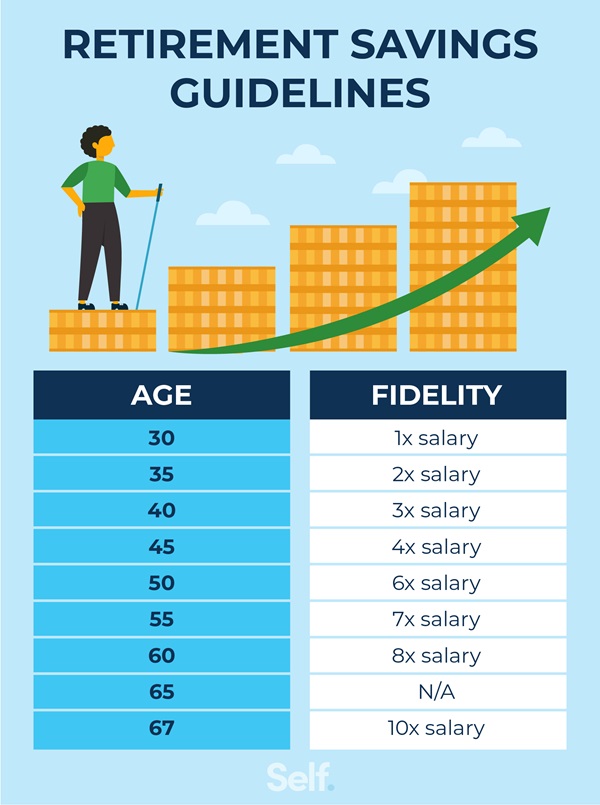
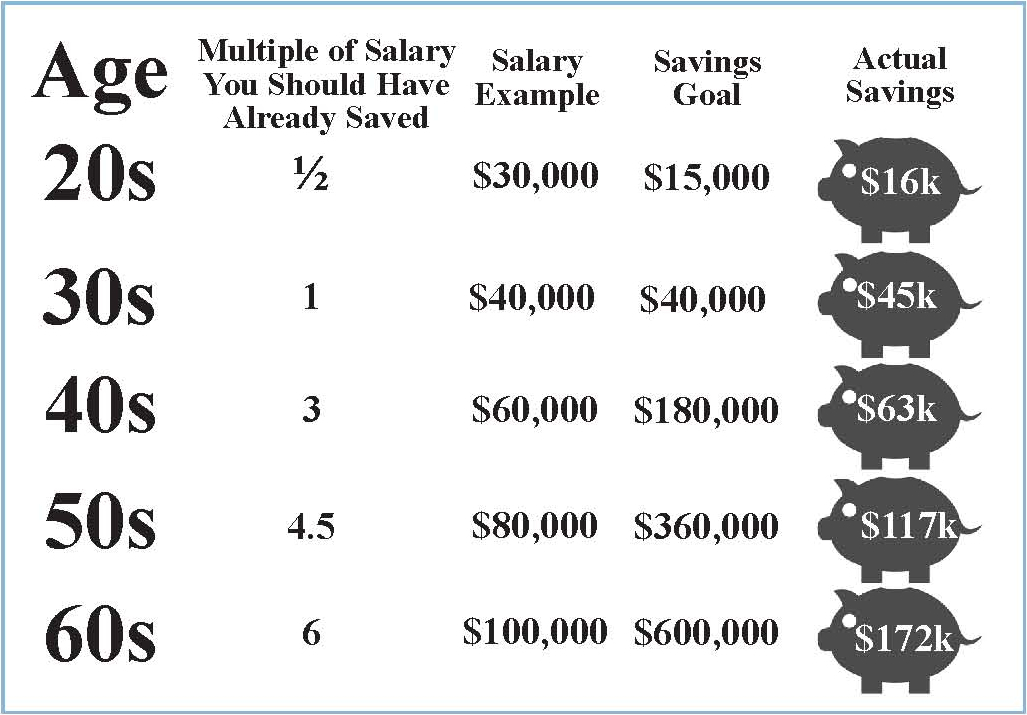
One of the most widely accepted frameworks for tracking retirement readiness is the salary multiple approach. This method suggests that you should have saved specific multiples of your annual income by certain age milestones:
- By Age 30: Aim to have 1x your annual salary saved.
- By Age 40: Aim for 3x your annual salary.
- By Age 50: Aim for 6x your annual salary.
- By Age 60: Aim for 8x your annual salary.
- By Age 67: Aim for 10x your annual salary.
These multiples assume a standard retirement age and a consistent lifestyle. If you earn $100,000 a year at age 40, having $300,000 in total retirement assets suggests you are maintaining a healthy trajectory toward replacing your income later in life.
The 4% Rule and Sustainable Withdrawal Rates
Once you transition from the “accumulation phase” to the “distribution phase,” the primary concern shifts to how much you can safely withdraw without exhausting your portfolio. The “4% Rule,” derived from the Trinity Study, suggests that if you withdraw 4% of your total portfolio in the first year of retirement and adjust that amount for inflation annually thereafter, your money has a high probability of lasting 30 years.
For example, if you want to withdraw $40,000 per year to cover expenses, you would need a nest egg of $1,000,000 ($40,000 divided by 0.04). While this rule is a helpful baseline, modern retirees often adjust this to 3% or 3.5% to account for longer life expectancies and lower projected market returns.
The Income Replacement Ratio
Another common metric is the 70% to 80% income replacement ratio. This theory posits that you will need approximately 70-80% of your pre-retirement gross income to maintain your current standard of living after you stop working. The reduction accounts for the fact that you will no longer be paying payroll taxes, you will likely have a paid-off mortgage, and, most importantly, you will no longer be saving for retirement itself.
Factors That Influence Your Personal Retirement Number
A “one-size-fits-all” number is often a myth because individual variables can swing a retirement budget by hundreds of thousands of dollars. To calculate a realistic goal, you must look beyond the generic benchmarks and analyze your specific financial ecosystem.
Lifestyle Expectations and Geographic Arbitrage
Your “burn rate”—the amount of money you spend each month—is the ultimate determinant of how much you need. A retiree who plans to travel internationally four times a year will require a significantly larger portfolio than one who intends to focus on local gardening and community volunteering.
Furthermore, where you choose to live plays a massive role. Through “geographic arbitrage,” some retirees move from high-cost-of-living areas (like New York or San Francisco) to lower-cost states or even expatriate to countries with lower overhead. Reducing your housing and tax costs can effectively “lower” your retirement number, making a smaller nest egg go much further.
Healthcare Costs and Longevity Risk
Healthcare is often the largest “wildcard” in retirement planning. According to recent estimates, a healthy 65-year-old couple retiring today may need approximately $315,000 to cover healthcare expenses in retirement, excluding long-term care. Longevity risk—the risk of outliving your money—is also increasing as medical advancements extend life expectancy. When calculating your retirement needs, it is prudent to plan for a horizon that extends to age 90 or 95 to ensure you do not run out of capital in your final years.
The Impact of Inflation on Purchasing Power
Inflation is the silent killer of retirement plans. Even at a modest 2% or 3% annual inflation rate, the purchasing power of a dollar can be cut in half over 20 to 30 years. This means that a $50,000 annual budget today might require $90,000 or more in 25 years just to buy the same goods and services. Your retirement strategy must include assets that historically outpace inflation, such as equities and real estate, rather than relying solely on fixed-income instruments like bonds or CDs.
Strategic Vehicles for Wealth Accumulation
To reach the substantial numbers suggested by benchmarks, you must utilize the right financial tools. The structure of your accounts can be just as important as the amount of money you put into them, particularly regarding tax efficiency.
Leveraging Tax-Advantaged Accounts
The foundation of most retirement plans should be tax-advantaged accounts like the 401(k), 403(b), or IRAs.
- Traditional Accounts: These offer an immediate tax deduction, allowing your investments to grow tax-deferred. You pay taxes upon withdrawal in retirement, presumably when you are in a lower tax bracket.
- Roth Accounts: Contributions to a Roth 401(k) or Roth IRA are made with after-tax dollars, but the growth and subsequent withdrawals are entirely tax-free. This is a powerful tool for younger investors or those who believe tax rates will rise in the future.
Utilizing employer matching programs is also essential; failing to contribute enough to receive a full employer match is essentially turning down a 100% return on your investment.
The Power of Compound Interest and Time
The most potent tool in the investor’s arsenal is time. Compound interest allows your earnings to generate their own earnings. For example, an investor who starts saving $500 a month at age 25 will likely have significantly more at age 65 than someone who starts saving $1,500 a month at age 45, despite the latter contributing more total principal. The “cost of waiting” is the single greatest hurdle to reaching your retirement number.
Asset Allocation and Risk Management
As you pursue your retirement goal, your asset allocation—the mix of stocks, bonds, and cash—must evolve. In your 20s and 30s, your portfolio should be heavily weighted toward equities to capture long-term market growth. As you approach retirement age, the strategy shifts toward capital preservation. Diversification across different sectors, asset classes, and even international markets helps mitigate the risk of a single market downturn devastating your savings right before you intend to retire.
Actionable Steps to Bridge the Savings Gap
If you find that your current savings are lagging behind the benchmarks, there are several proactive steps you can take to recalibrate your financial future.
Catch-Up Contributions and Delayed Retirement
For those over age 50, the IRS allows “catch-up contributions” to 401(k)s and IRAs, permitting you to squirrel away thousands of extra dollars annually beyond the standard limits. Additionally, delaying retirement by even two or three years can have a massive compounding effect. It gives your investments more time to grow, reduces the number of years you need to draw from your portfolio, and can significantly increase your monthly Social Security benefits.
Diversifying Income Streams
Relying solely on a 401(k) can be risky. Modern retirement planning often involves building multiple “buckets” of income. This might include:
- Dividend-paying stocks: Providing a passive stream of cash flow without selling shares.
- Rental Real Estate: Offering inflation-protected income and potential property appreciation.
- Side Hustles/Consulting: Many “retirees” continue to work part-time in a consulting capacity, which keeps them mentally engaged while reducing the strain on their investment portfolio.
Continuous Monitoring and Adjustment
A retirement plan is not a “set it and forget it” endeavor. Financial markets change, tax laws evolve, and personal goals shift. It is essential to conduct an annual “financial physical” to review your net worth, adjust your budget, and rebalance your portfolio. Using financial tools and software to run “Monte Carlo simulations”—which test how your portfolio would perform in thousands of different market scenarios—can provide a clearer picture of your probability of success.
Conclusion
Determining how much you need for retirement is a deeply personal calculation that balances mathematical reality with lifestyle aspirations. While the benchmarks of 10x salary or the 4% rule provide a necessary compass, the true answer lies in understanding your own spending habits, tax liabilities, and risk tolerance.
By starting early, maximizing tax-advantaged accounts, and remaining flexible in your strategy, you can build a financial foundation that provides not just a “number,” but the ultimate luxury: peace of mind. Retirement is not the end of your financial life; it is a transition into a new phase of wealth management where your assets work for you, rather than you working for them.
aViewFromTheCave is a participant in the Amazon Services LLC Associates Program, an affiliate advertising program designed to provide a means for sites to earn advertising fees by advertising and linking to Amazon.com. Amazon, the Amazon logo, AmazonSupply, and the AmazonSupply logo are trademarks of Amazon.com, Inc. or its affiliates. As an Amazon Associate we earn affiliate commissions from qualifying purchases.