
Understanding your monthly income is the cornerstone of financial literacy. While it may seem as simple as glancing at a pay stub, the reality of modern finance is often far more complex. Whether you are a salaried employee, a freelance professional with fluctuating earnings, or someone juggling multiple side hustles, knowing exactly how much capital you have at your disposal is the prerequisite for effective budgeting, investing, and long-term wealth building.
In this guide, we will break down the nuances of income calculation, moving beyond basic arithmetic to explore how taxes, deductions, and variable pay structures impact your bottom line.

1. The Critical Distinction: Gross vs. Net Income
Before you can determine how much you can afford to spend on rent or invest in the stock market, you must understand the difference between gross and net income. This distinction is where many financial plans fall apart.
Defining Gross Monthly Income
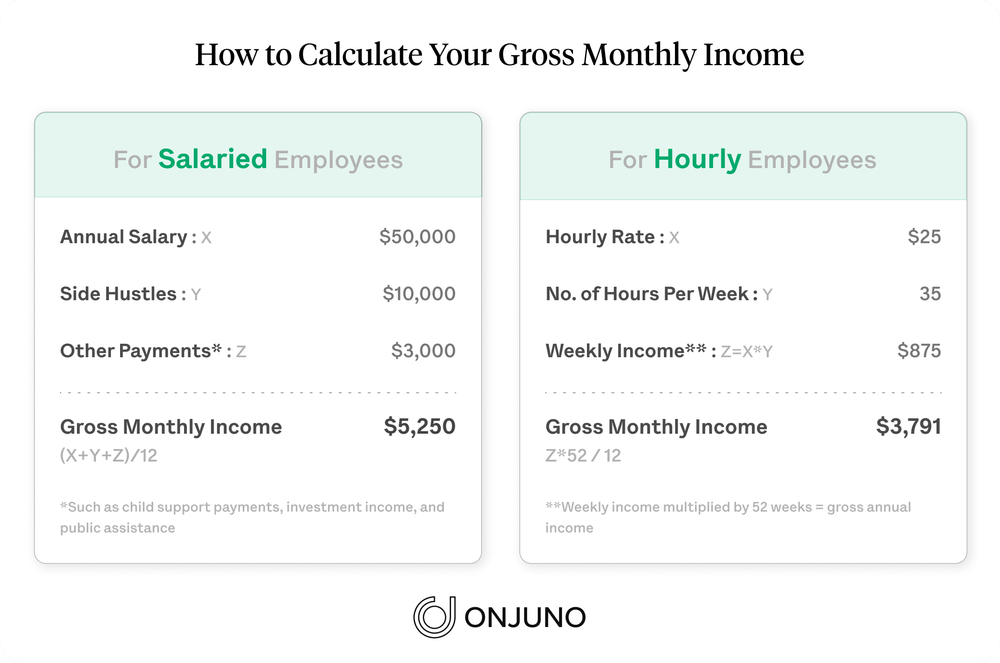
Gross monthly income is the total amount of money you earn before any taxes or deductions are removed. For a salaried employee, this is typically your annual salary divided by twelve. For an hourly worker, it is your hourly rate multiplied by the number of hours worked in a month. While gross income is the figure used by lenders to determine your debt-to-income ratio for mortgages or car loans, it is an “imaginary” number in terms of your daily spending power. It represents your earning potential rather than your actual liquidity.
The Impact of Taxes and Deductions (Net Income)
Net income, often referred to as “take-home pay,” is the amount that actually lands in your bank account. To calculate this, you must subtract several key components from your gross pay:
- Federal and State Taxes: Depending on your jurisdiction and tax bracket, this can consume 10% to 35% of your earnings.
- FICA Contributions: This includes Social Security and Medicare taxes.
- Pre-tax Deductions: These are often beneficial, such as contributions to a 401(k) or 403(b) retirement plan, or Health Savings Account (HSA) allocations.
- Insurance Premiums: Health, dental, and vision insurance premiums are often deducted directly from your paycheck.
Understanding your net income is essential because it represents your “true” budget. If you base your lifestyle on your gross income, you will find yourself in a perpetual cycle of debt.
2. Calculating Income Across Different Employment Models
The methodology for calculating monthly income varies significantly depending on how you are employed. A stable salary requires a different approach than a commission-based sales role or a freelance career.
Salaried Professionals and Annual Conversions
For those with a fixed annual salary, the calculation is the most straightforward, yet there is a common pitfall: the bi-weekly pay schedule. If you are paid every two weeks, you will receive 26 paychecks a year. Many people simply multiply one paycheck by two to get their monthly income. However, this ignores the two months of the year where you receive three paychecks. To be precise, take your total annual net pay and divide it by 12. This gives you a consistent “average” to build your monthly budget around.
Hourly Workers and Variable Shifts
If your hours fluctuate, your monthly income calculation requires historical data. To get an accurate figure, look at the last three to six months of pay stubs. Add the total net income from this period and divide by the number of months. This “averaging” method accounts for weeks where you may have worked overtime as well as weeks where your hours were reduced. It provides a conservative baseline that prevents overspending during shorter work months.
Freelancers and the Self-Employed (The “Floor” Method)
For the self-employed, income calculation is notoriously difficult due to “lumpy” cash flow. One month might bring in $10,000, while the next brings in $2,000. In this scenario, it is best to calculate your “Floor Income”—the minimum amount you consistently earn even in a slow month.
- Track your net profit (Revenue minus Business Expenses) over 12 months.
- Identify your lowest-earning month.
- Set aside 25-30% of your earnings for quarterly estimated taxes.
- The remaining amount from your average or “floor” month is your safe monthly income.
3. Accounting for Variable and Passive Income Streams
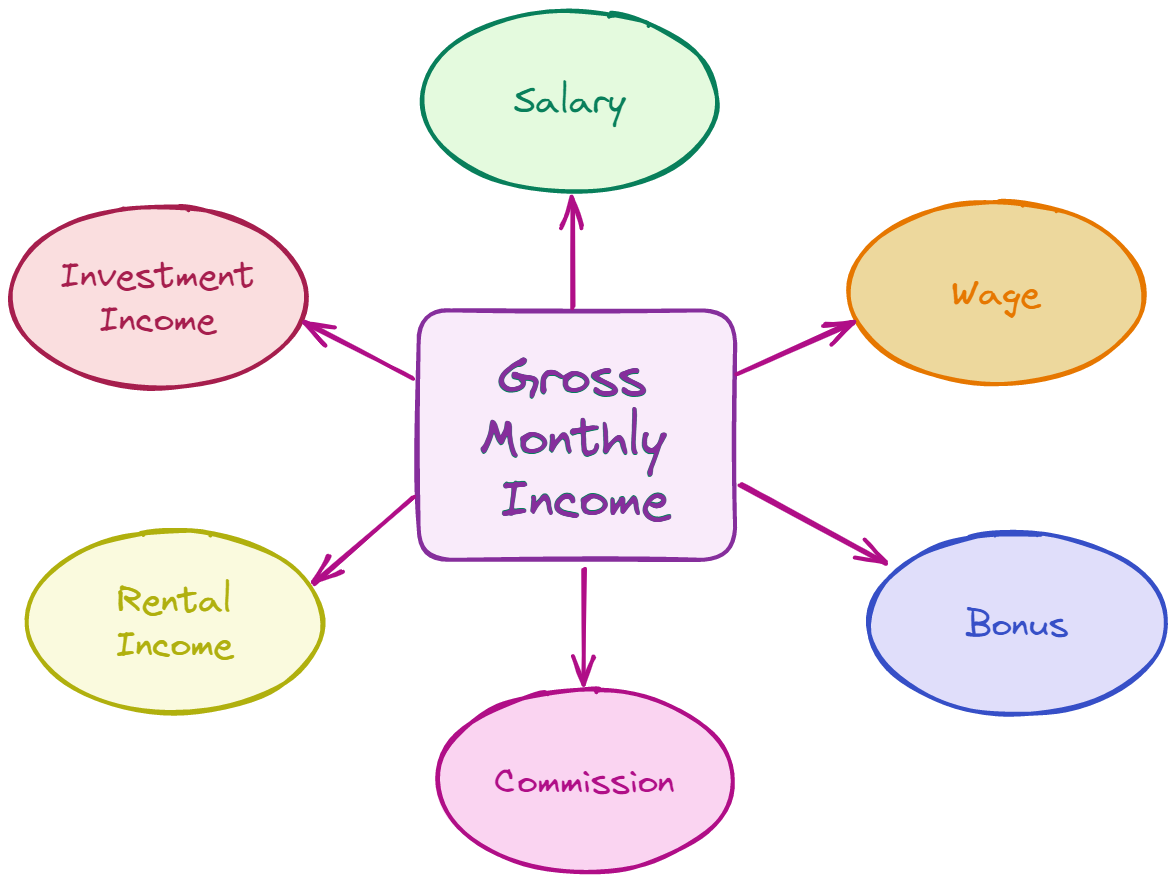
In the modern economy, many individuals possess “diversified” income. This includes bonuses, commissions, and passive streams like dividends or rental income. These must be treated with caution when calculating a monthly budget.
Commissions, Bonuses, and Overtime
Variable pay should generally be treated as “supplemental” rather than “fundamental” income. If you rely on a quarterly bonus to pay your monthly rent, you are in a precarious financial position. The most professional way to calculate this is to treat your base pay as your monthly income for living expenses, while designating bonuses and commissions for “financial goals,” such as debt repayment, emergency funds, or investments. If you must include them in your monthly average, use a conservative 12-month trailing average and then subtract a 20% “safety margin” to account for market volatility.
Dividend Income and Real Estate Returns
If you have an investment portfolio that pays dividends or a rental property, this income is part of your monthly total. For rental property, remember that your “income” is not the rent check you receive; it is the rent minus the mortgage, property taxes, insurance, and a “sinking fund” for repairs. For dividends, sum up the total annual payouts and divide by 12 to see how much they contribute to your monthly cash flow. Even if you reinvest these dividends, knowing their value helps you understand your total wealth-building velocity.
4. Using Your Monthly Income for Strategic Financial Planning
Once you have arrived at a solid net monthly income figure, the next step is applying that data to a financial framework. Calculation without application is merely an academic exercise.
The 50/30/20 Rule
A gold standard in personal finance is the 50/30/20 rule, which uses your calculated net monthly income as its base:
- 50% for Needs: Housing, utilities, groceries, and minimum debt payments.
- 30% for Wants: Dining out, travel, hobbies, and entertainment.
- 20% for Savings and Debt Paydown: Contributions to brokerage accounts, IRAs, or aggressive principal payments on loans.
If your “Needs” exceed 50% of your net monthly income, you are “house poor” or over-leveraged. Knowing your exact income allows you to see which category needs adjustment.
Building an Emergency Fund
Your monthly income calculation also dictates the size of your safety net. Most financial advisors recommend an emergency fund of three to six months of expenses. However, for those with highly variable monthly incomes (like freelancers), it is often smarter to save six months of income. This ensures that if your income stream dries up entirely, your lifestyle and financial obligations remain uninterrupted.
5. Tools and Systems for Continuous Income Tracking
The calculation of monthly income is not a one-time event; it is an ongoing process of financial monitoring. As your career progresses and your investment portfolio grows, your numbers will shift.
Spreadsheets vs. Automated Finance Apps
For those who want maximum control, a manual spreadsheet (using Excel or Google Sheets) is the best tool. It allows you to categorize every deduction and see the granular breakdown of your gross vs. net earnings. You can create formulas that automatically calculate your 12-month rolling average, which is particularly useful for those in the gig economy.
Alternatively, automated financial tools and apps can sync with your bank accounts to track incoming transfers. These are excellent for identifying trends over time and visualizing your income growth through charts and graphs. However, be wary of apps that misidentify “transfers” between accounts as “income.” Always verify the data to ensure your monthly total is accurate.
The Psychological Benefit of Accuracy
Beyond the math, there is a psychological component to knowing your monthly income. Financial anxiety often stems from the “unknown.” When you can point to a specific number and say, “This is exactly what I have to work with this month,” you reclaim power over your life. You move from a reactive state—where you wonder if you can afford a purchase—to a proactive state—where you decide exactly where every dollar goes.
In conclusion, calculating your monthly income is an exercise in honesty and precision. By distinguishing between gross and net, averaging variable pay, accounting for passive streams, and applying the 50/30/20 rule, you create a robust roadmap for your financial future. Whether you are aiming for early retirement or simply trying to get through the month without stress, the journey begins with the math.
aViewFromTheCave is a participant in the Amazon Services LLC Associates Program, an affiliate advertising program designed to provide a means for sites to earn advertising fees by advertising and linking to Amazon.com. Amazon, the Amazon logo, AmazonSupply, and the AmazonSupply logo are trademarks of Amazon.com, Inc. or its affiliates. As an Amazon Associate we earn affiliate commissions from qualifying purchases.