
In the modern landscape of personal finance, travel is often viewed as a significant discretionary expense. However, for the financially savvy individual, the pursuit of cheap flights is not merely about finding a “deal”; it is an exercise in resource optimization, market arbitrage, and strategic asset management. Understanding where and how to get cheap flights requires a shift in perspective—from seeing airfare as a fixed cost to viewing it as a volatile commodity that can be traded and acquired through sophisticated financial tactics.
By treating travel as a line item in a broader wealth management strategy, travelers can unlock global experiences without compromising their long-term financial goals. This guide explores the financial mechanisms behind airline pricing and the specific tools and strategies used to minimize capital outlay while maximizing the return on investment for every mile flown.

The Financial Strategy of Travel Hacking
At its core, “travel hacking” is the practice of leveraging financial products and loyalty programs to minimize the out-of-pocket cost of flights. This is the cornerstone of a sophisticated personal finance strategy for anyone looking to see the world on a budget.
Leveraging Credit Card Rewards and Sign-up Bonuses
The most efficient way to secure “cheap” or even “free” flights is through the strategic acquisition and use of credit card rewards. In the realm of personal finance, this is known as “leveraging spend.” By opening high-yield travel rewards cards, consumers can earn significant sign-up bonuses—often ranging from 50,000 to 100,000 miles—after meeting a minimum spending requirement.
From a financial perspective, these points should be viewed as a form of “rebate” or “tax-free currency.” If you are already planning to spend money on necessities like groceries, utilities, or business expenses, channeling that spending through a rewards card allows you to build a travel fund as a byproduct of your regular cash flow. The key to this strategy is fiscal discipline: the interest accrued on a carried balance will quickly outpace the value of any points earned, so paying the balance in full every month is a non-negotiable requirement.
The Velocity of Points: Earning vs. Burning
In the world of investing, we talk about the velocity of money; in travel finance, we look at the velocity of points. Points and miles are inflationary assets. Unlike a traditional savings account or an index fund, airline miles do not appreciate in value; in fact, airlines frequently “devalue” their loyalty programs by increasing the number of miles required for a specific route.
The savvy financial traveler follows the “earn and burn” philosophy. Once you have acquired the necessary points for a flight, it is fiscally prudent to use them rather than hoarding them. Holding onto points for years is a losing investment strategy. By redeeming them for high-value international flights—where the “cent per point” (CPP) value is highest—you effectively achieve a higher ROI on your initial spending.
Strategic Timing and the Macroeconomics of Airline Pricing
Airlines utilize some of the most complex dynamic pricing algorithms in the world. To find cheap flights, one must understand the macroeconomic factors that drive these price fluctuations.
Understanding Dynamic Pricing and Revenue Management
Airlines operate on a “per-seat” revenue management model. Each aircraft is divided into “fare buckets,” with a specific number of seats allocated to different price points. As the lower-priced buckets sell out, the price automatically jumps to the next tier.
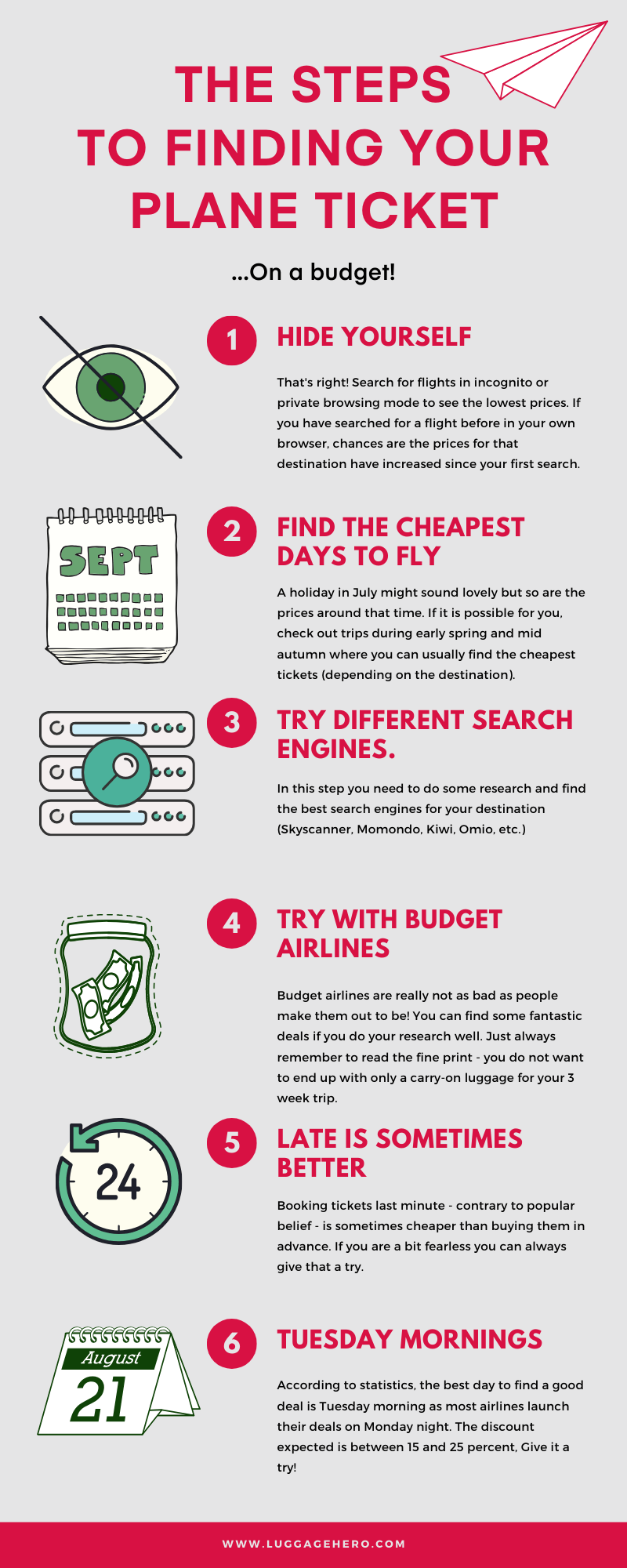
To capitalize on this, the financial objective is to identify when supply exceeds demand. Contrary to popular myths about “clearing your browser cookies,” the reality of flight pricing is rooted in data and historical trends. Generally, the most cost-effective window for domestic flights is 1 to 3 months in advance, while international travel requires a 2 to 8-month lead time. By treating your flight purchase like a limit order in the stock market—setting a target price and waiting for the market to hit it—you avoid the “emotional premium” of last-minute booking.
Seasonal Arbitrage: Traveling During Shoulder Seasons
Market timing is just as important in travel as it is in the equity markets. The concept of “shoulder season”—the period between peak and off-peak travel—is a prime example of geographic arbitrage. During peak summer or holiday periods, demand is inelastic, and prices skyrocket.
By traveling during the shoulder season (such as visiting Europe in late September or the Caribbean in May), you benefit from a massive reduction in the “convenience premium.” Financially, this allows you to reallocate the savings toward higher-quality accommodations or long-term investments. For those with flexible income streams or remote work capabilities, the ability to travel when the market is “low” is one of the most effective ways to reduce annual travel expenditures by 30% to 50%.

Digital Financial Tools for Comparison and Optimization
In the digital age, information asymmetry is the enemy of the budget-conscious traveler. Fortunately, several financial tools exist to help consumers find the “true market value” of a flight.
Utilizing Price Tracking and Volatility Alerts
Tools like Google Flights, Skyscanner, and Hopper serve as the Bloomberg Terminals of the travel world. They provide historical data and predictive analytics to help you decide whether to “buy” or “hold.”
A professional approach to flight booking involves setting up price alerts for specific routes. This automates the process of market monitoring. Instead of manually checking prices every day—which is an inefficient use of “time-capital”—you receive a notification when the price drops below the historical average. This data-driven approach removes the guesswork and ensures that you are entering the market at a point of high value.
Currency Arbitrage: Paying in Local vs. Home Currency
A lesser-known financial tactic for securing cheaper flights is currency arbitrage. When booking on international carriers, the website may default to your home currency (e.g., USD). However, because of exchange rate fluctuations and localized pricing strategies, it is often cheaper to pay in the airline’s “base” currency (e.g., EUR for Lufthansa or GBP for British Airways).
When using this strategy, it is vital to use a credit card with no foreign transaction fees. By paying in the local currency, you avoid the unfavorable exchange rates baked into the airline’s conversion tool. While the savings per flight might range from $20 to $100, when compounded over a lifetime of travel, this practice represents a significant optimization of capital.
Low-Cost Carriers vs. Full-Service Value: A Cost-Benefit Analysis
Not all “cheap” flights are created equal. A disciplined financial mindset requires a rigorous cost-benefit analysis of budget airlines versus full-service carriers.
The Hidden Costs of Budget Airlines
Ultra-low-cost carriers (ULCCs) like Spirit, Ryanair, or Frontier offer “unbundled” pricing. While the base fare (the “sticker price”) may look incredibly low, the ancillary fees—for carry-on bags, seat selection, and even printing a boarding pass—can quickly inflate the total cost.
From a financial accounting perspective, you must calculate the “fully loaded cost” of the flight. If a $50 flight on a budget carrier ends up costing $150 after fees, but a full-service carrier offers a $160 ticket that includes a checked bag and a meal, the marginal difference of $10 may be worth the increased utility and comfort. Always perform a total-cost-of-ownership (TCO) analysis before clicking “purchase.”
Maximizing ROI on Business Class Upgrades
For many, business class seems like an unnecessary luxury. However, from a business-finance perspective, time and physical readiness are assets. If a long-haul flight in economy results in two days of lost productivity due to jet lag and exhaustion, the “cost” of that cheap flight includes the value of your lost time.
Savvy travelers often use “points-plus-cash” strategies to upgrade to premium cabins. By paying a baseline economy fare and using miles to upgrade, the traveler achieves a high-luxury experience at a fraction of the retail price. This is an example of “value investing” in travel—paying for the underlying asset (the flight) and using rewards to capture the premium experience (the upgrade), resulting in a much higher return on the total capital deployed.
Conclusion: Travel as an Optimized Asset
Finding cheap flights is far more than a simple search; it is a comprehensive financial discipline. By integrating credit card strategy, market timing, data-driven tools, and rigorous cost-benefit analysis, individuals can transform travel from a burdensome expense into an optimized lifestyle asset.
Whether it is through the strategic use of sign-up bonuses to bypass the cash market or the use of currency arbitrage to shave percentages off a ticket price, the goal remains the same: to maximize global mobility while maintaining a trajectory of wealth accumulation. In the economy of travel, the most successful participants are those who treat every dollar—and every mile—with the same level of scrutiny and strategic intent as a traditional investment portfolio.
aViewFromTheCave is a participant in the Amazon Services LLC Associates Program, an affiliate advertising program designed to provide a means for sites to earn advertising fees by advertising and linking to Amazon.com. Amazon, the Amazon logo, AmazonSupply, and the AmazonSupply logo are trademarks of Amazon.com, Inc. or its affiliates. As an Amazon Associate we earn affiliate commissions from qualifying purchases.