
In the world of finance, percentages are the primary language of progress, risk, and value. Whether you are a business owner calculating a markup, an investor projecting annual returns, or a consumer trying to understand the impact of inflation on your purchasing power, knowing how to add a percentage to a number is a fundamental skill. While the mathematical operation may seem elementary, its application in personal and business finance is deep and multifaceted.
Understanding how to accurately increase a figure by a specific percentage allows for better budgeting, more precise investment forecasting, and more profitable pricing strategies. This guide explores the mechanics of adding percentages through a financial lens, providing you with the tools to manage your capital with greater precision.
The Fundamentals of Percentage Addition in Finance
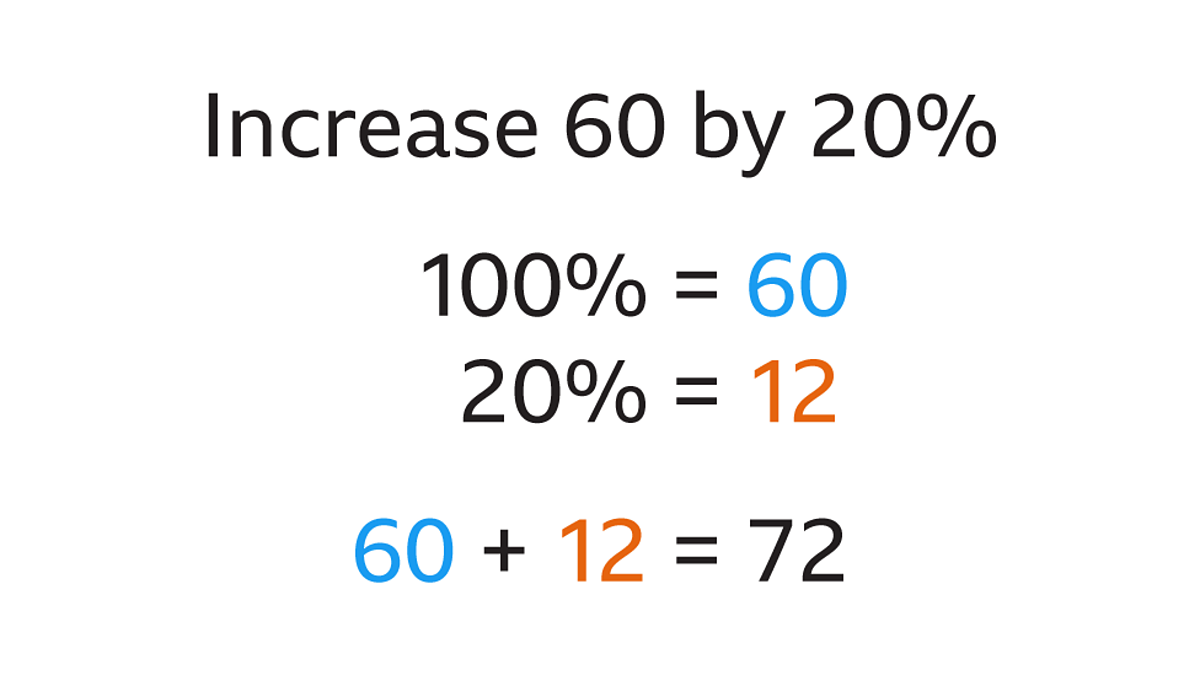
Before diving into complex financial models, one must master the basic arithmetic that governs percentage increases. In finance, adding a percentage isn’t just about finding a part of a whole; it is about determining a new total after growth or an additional cost has been applied.
The Standard Formula for Financial Growth
The most straightforward way to add a percentage to a number is to use the multiplier method. If you have an original amount (the principal) and you want to increase it by a certain percentage, you use the following formula:
New Total = Original Number × (1 + Percentage as a Decimal)
For example, if you are looking at a $1,000 investment that is expected to grow by 7%, you convert 7% to a decimal (0.07), add it to 1 (1.07), and multiply: $1,000 × 1.07 = $1,070. The “1” in this equation represents the original 100% of your money, while the “.07” represents the growth.
Understanding the Multiplier Effect
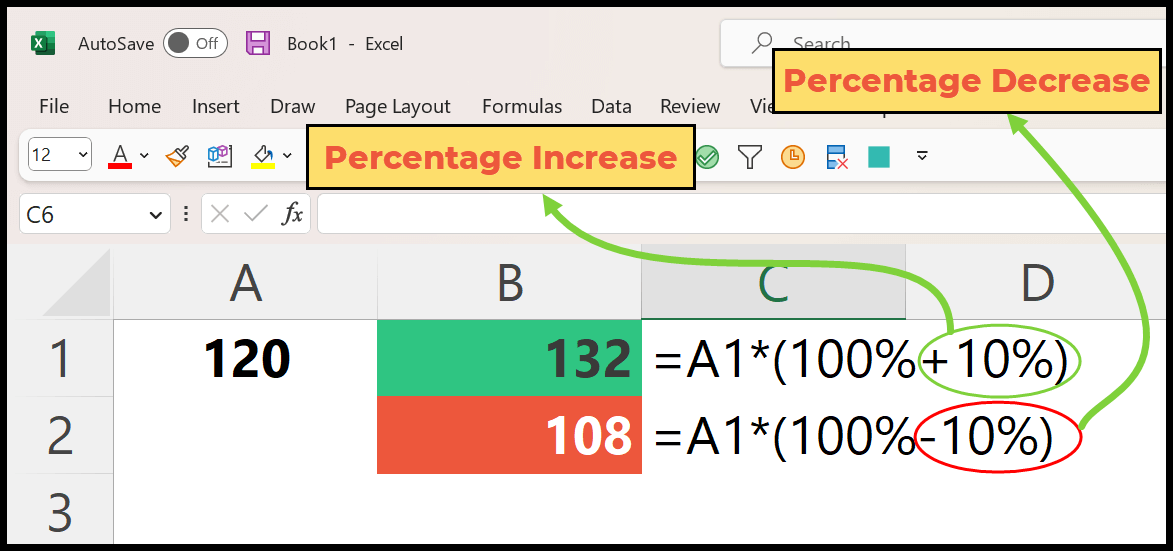
In professional finance, we often refer to the “1 + r” factor (where ‘r’ is the rate of return). This multiplier is essential because it allows for rapid calculations across multiple periods. If you are calculating a year-over-year increase in revenue, using a multiplier is more efficient than calculating the increase separately and then adding it back to the original sum. This approach reduces the margin for error in complex spreadsheets and financial statements.
Personal Finance Applications: Taxes, Tips, and Inflation
On a day-to-day basis, adding percentages is a constant requirement for managing personal cash flow. From the checkout counter to long-term retirement planning, these calculations dictate how much money actually leaves your pocket.
Calculating Sales Tax and Gratuity
One of the most common instances of adding a percentage to a number is calculating the final cost of goods and services. Sales tax varies significantly by jurisdiction, and failing to account for it can lead to budgeting errors. If you are purchasing $500 worth of equipment in a state with an 8.25% sales tax, you are adding $41.25 to the base price ($500 × 1.0825 = $541.25).
Similarly, in the service industry, gratuity is a standard percentage addition. A professional understanding of these costs ensures that your “sticker price” budget aligns with your “actual out-of-pocket” expenses.
Adjusting for Inflation and Cost of Living
Inflation is the silent devaluer of currency. To maintain the same standard of living year-over-year, you must be able to add the annual inflation percentage to your previous year’s expenses. If inflation is running at 4%, a $5,000 monthly budget needs to be increased to $5,200 ($5,000 × 1.04) just to keep pace. For individuals negotiating salaries, understanding this calculation is vital; if your raise is 3% but inflation is 4%, you are effectively taking a 1% pay cut in terms of purchasing power.
Business Finance: Markups and Profit Margins
For entrepreneurs and corporate finance professionals, adding a percentage to a number is the cornerstone of pricing strategy. However, there is often a dangerous confusion between a “markup” and a “margin,” and understanding the difference is key to maintaining a healthy bottom line.
Determining Wholesale to Retail Markups
A markup is the percentage added to the cost of a product to determine its selling price. If a wholesaler buys a widget for $100 and applies a 50% markup, the selling price is $150.
Formula: Cost + (Cost × Markup %)
In this scenario, the business has added a percentage to the cost to ensure they cover overhead and generate profit. It is a “top-down” approach to pricing. High-end luxury brands may apply markups of 300% or more, while high-volume grocery retailers may work with markups as low as 5-10%.
Scaling Revenue Targets
When a company sets its goals for the next fiscal year, it often expresses those goals as a percentage increase over the current year. If a firm generates $2 million in revenue and sets a target of a 15% increase, the management team is looking to add $300,000 to their top line, aiming for a new total of $2.3 million. This calculation serves as the basis for hiring plans, marketing spend, and infrastructure investment. By adding these percentages accurately, businesses can create realistic roadmaps for expansion.
Investment Growth and Compound Interest
In the realm of wealth building, adding a percentage to a number takes on a temporal dimension. This is where the concept of compound interest transforms simple addition into exponential growth.
Calculating Annual Returns and Yields
When you review your investment portfolio, you are essentially looking at how many “percentage additions” have occurred over a set period. If you hold a dividend-paying stock, the yield is a percentage added to your cash balance. If you own a bond with a 5% coupon rate, you are adding 5% of the par value to your income annually.
For an investor, the ability to calculate the “Ending Value” of an asset after a percentage gain is the first step in assessing performance. If your portfolio was worth $100,000 at the start of the year and gained 12%, your new balance is $112,000.
The Power of Reinvestment
The true “magic” of finance happens when you add a percentage to a number that has already had a percentage added to it. This is compound interest. If your $100,000 grows by 10% in Year 1, you have $110,000. In Year 2, you aren’t just adding 10% to the original $100,000; you are adding 10% to $110,000, resulting in $121,000.
Understanding this compounding effect is crucial for long-term financial planning. It encourages the habit of reinvesting gains rather than withdrawing them, as each percentage added builds a larger base for the next cycle of growth.
Digital Tools for Financial Precision
While mental math is a great skill, professional financial management requires the precision of digital tools. Modern software makes adding percentages to large datasets instantaneous and error-free.
Using Spreadsheets for Financial Modeling
In programs like Microsoft Excel or Google Sheets, adding a percentage to a range of numbers is a daily task for analysts. If you have a column of prices in Column A and you want to increase them all by 10% in Column B, you would use the formula =A1*1.1.
Spreadsheets also allow for “what-if” analysis. By linking the percentage to a specific cell (e.g., $C$1), you can change the percentage in that one cell and watch your entire financial model update. This is invaluable for stress-testing a business plan—for instance, seeing what happens to your net profit if your raw material costs increase by 5%, 10%, or 20%.
Financial Calculators and Specialized Apps
Beyond spreadsheets, there are specialized financial calculators designed to handle percentage additions in the context of loans and mortgages. When a bank quotes you an interest rate, they are telling you the percentage they will add to your principal balance over time.
Amortization schedules are essentially complex maps of percentage additions (interest) and subtractions (principal payments). Using apps that automate these calculations helps consumers understand the “Total Cost of Loan,” which is the original principal plus the sum of all percentage-based interest additions over the life of the loan.
Conclusion: The Strategic Value of Percentage Calculations
Adding a percentage to a number is more than a simple math problem; it is a vital financial operation that impacts every level of economic life. For the individual, it is the key to understanding the true cost of living and the growth of savings. For the business owner, it is the mechanism for ensuring profitability and sustainable scaling. For the investor, it is the fundamental metric of success and the engine of wealth creation.
By mastering the various ways to apply these calculations—whether through simple multipliers, understanding the nuance of markups, or leveraging the power of compounding—you move from being a passive observer of your finances to an active, informed manager of your wealth. In the world of money, those who understand the percentages are the ones who ultimately control the numbers.
aViewFromTheCave is a participant in the Amazon Services LLC Associates Program, an affiliate advertising program designed to provide a means for sites to earn advertising fees by advertising and linking to Amazon.com. Amazon, the Amazon logo, AmazonSupply, and the AmazonSupply logo are trademarks of Amazon.com, Inc. or its affiliates. As an Amazon Associate we earn affiliate commissions from qualifying purchases.