
Understanding when the market opens today is more than just a matter of checking a clock; it is the fundamental starting point for any successful investment strategy. For the modern investor, the “market” is no longer a single building on Wall Street, but a global, interconnected web of exchanges that operate across every time zone. Knowing the precise moment the opening bell rings—and what happens in the hours preceding it—can be the difference between capturing a profitable opportunity and falling victim to overnight volatility.
In this guide, we will break down the operational hours of the world’s major financial hubs, explore the nuances of extended trading sessions, and analyze why market timing is a critical component of personal finance and wealth management.
1. The Core Engines: Standard Trading Hours in the United States
For the majority of retail investors in the West, “the market” refers primarily to the two giants of American finance: the New York Stock Exchange (NYSE) and the NASDAQ. Both of these exchanges follow a standardized schedule that dictates the flow of trillions of dollars daily.
The Regular Trading Session
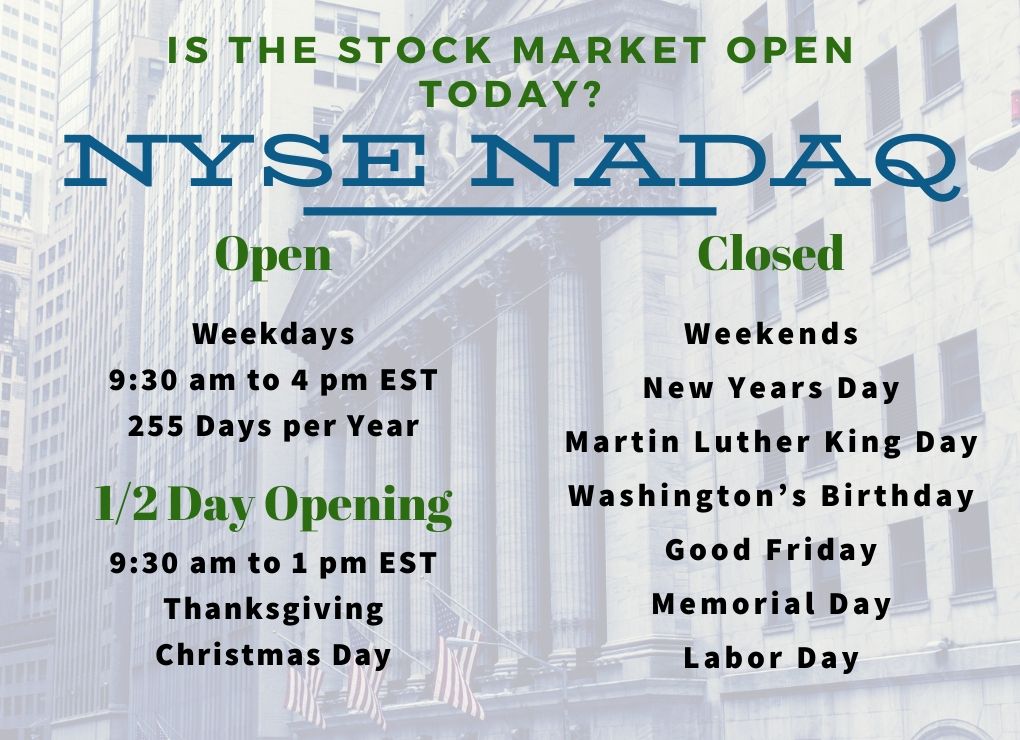
The standard trading hours for the NYSE and NASDAQ are from 9:30 AM to 4:00 PM Eastern Time (ET), Monday through Friday. These hours are designed to provide a concentrated period of high liquidity, where the maximum number of buyers and sellers are active. During this window, bid-ask spreads—the difference between the price a buyer is willing to pay and a seller is willing to accept—are typically at their narrowest, making it the most cost-effective time for the average investor to execute trades.
The Significance of the Opening Bell
The 9:30 AM ET opening is often characterized by a surge in volume. This is known as “price discovery,” where the market reacts to news, earnings reports, or geopolitical events that occurred while the exchange was closed. For a disciplined investor, the first 30 minutes of the market opening can be the most volatile period of the day. Professional traders often watch this window closely to gauge the “market sentiment” before committing capital.
Holiday Schedules and Early Closures
It is vital to remember that the market does not open every day. In the United States, the markets are closed on major federal holidays, including New Year’s Day, Martin Luther King Jr. Day, President’s Day, Good Friday, Memorial Day, Juneteenth, Independence Day, Labor Day, Thanksgiving, and Christmas. Additionally, the market often observes “early close” days (typically 1:00 PM ET), such as the day after Thanksgiving or Christmas Eve, depending on the calendar year. Staying updated on the NYSE holiday calendar is a basic yet essential habit for managing a portfolio.
2. Beyond the Bell: Pre-Market and After-Hours Trading
While the official opening occurs at 9:30 AM, the digital nature of modern finance allows for trading to occur long before and after the physical floor opens. This is known as Extended-Hours Trading, facilitated by Electronic Communication Networks (ECNs).
Pre-Market Trading Sessions
Pre-market trading in the U.S. can begin as early as 4:00 AM ET, though the bulk of the volume typically moves between 8:00 AM and 9:30 AM ET. Investors use this period to get a head start on reacting to overnight news. For example, if a major tech company releases a surprise announcement at 6:00 AM, the stock price will begin moving in the pre-market. However, retail investors should exercise caution: pre-market trading is characterized by much lower liquidity and higher volatility than the regular session.
After-Hours Trading
The after-hours session runs from 4:00 PM to 8:00 PM ET. This is arguably the most critical time for corporate news, as most public companies release their quarterly earnings reports immediately after the 4:00 PM closing bell. This prevents “flash crashes” during the regular session and allows investors to digest the data. Like pre-market trading, after-hours sessions have wider spreads, meaning you might pay a higher premium to enter or exit a position.
Risks and Rewards of Extended Hours
The primary benefit of knowing when the market opens “unofficially” is the ability to act on information quickly. However, the lack of a centralized clearinghouse during these hours means that prices can swing wildly on very low volume. For the long-term “buy and hold” investor, it is often wiser to wait for the regular market open to ensure a more stable execution price.
3. The Global Relay Race: International Market Cycles
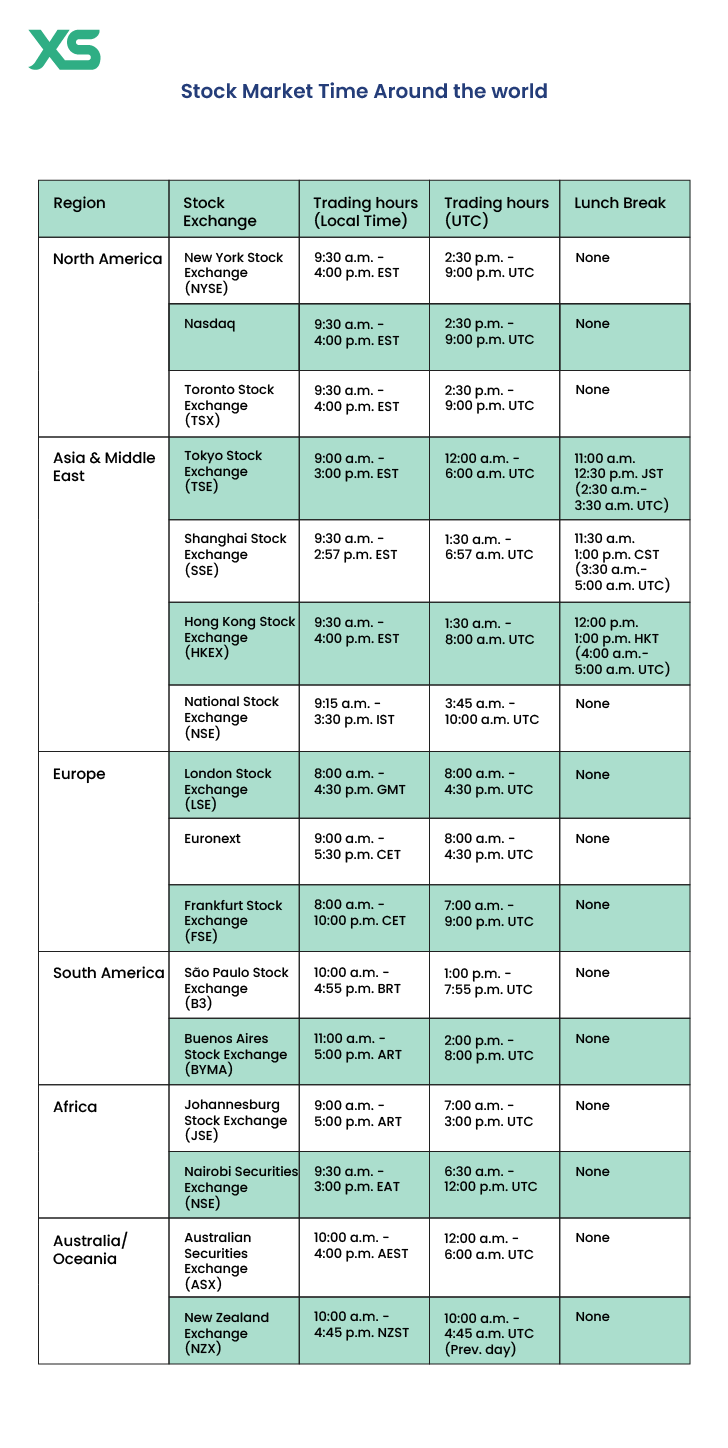
The sun never truly sets on the global financial markets. As an investor focused on a diversified portfolio, understanding when international markets open today provides a broader perspective on global economic health.
The European Session: London and Euronext
As the U.S. East Coast is still asleep, the European markets are in full swing. The London Stock Exchange (LSE) generally opens at 8:00 AM and closes at 4:30 PM Greenwich Mean Time (GMT). Because London is a global hub for currency and commodity trading, the “overlap” period—when London is in its final hours and New York is opening (roughly 9:30 AM to 11:30 AM ET)—is often the most liquid and volatile period for global forex and equity markets.
The Asian-Pacific Powerhouses
The trading day actually begins in the East. The Tokyo Stock Exchange (TSE) in Japan, the Hong Kong Stock Exchange (HKEX), and the Shanghai Stock Exchange in China are the primary movers in the Asian session. These markets typically open around 9:00 PM or 10:00 PM ET (the previous day for U.S. observers). Interestingly, many Asian exchanges still observe a lunch break, closing for an hour or 90 minutes in the middle of their trading day—a practice largely abandoned by Western exchanges.
Integrating Global Data into Local Strategy
If you wake up at 7:00 AM ET and ask “when does the market open today?”, looking at how the Nikkei 225 (Japan) or the DAX (Germany) performed overnight can give you a “tell” for how the U.S. markets will likely open. Global markets are highly correlated; a slump in Asian manufacturing stocks often leads to a cautious opening on Wall Street a few hours later.
4. Why Market Timing and Hours Matter for Your Money
In the realm of personal finance and investing, time is just as important as capital. Understanding market hours is not about “timing the market” (a risky endeavor) but about “market timing”—the strategic choice of when to execute trades to minimize costs and maximize clarity.
Avoiding the “Noon Slump”
Statistically, the middle of the trading day (12:00 PM to 2:00 PM ET) sees a significant drop in volume and volatility as institutional traders take lunch breaks and the initial morning fervor dies down. For retail investors looking to make minor portfolio adjustments without the chaos of the opening bell, this “midday lull” can offer a more stable environment for execution.
The Power Hour
The final hour of trading, from 3:00 PM to 4:00 PM ET, is colloquially known as the “Power Hour.” This is when institutional investors, pension funds, and mutual funds rebalance their positions. Volatility often spikes again during this window. Many significant price trends are established in the final minutes of trading, setting the stage for how the market will open the following day.
The Role of Economic Calendars
To truly master market hours, an investor must pair the clock with an economic calendar. Knowing that the market opens at 9:30 AM is one thing; knowing that the Bureau of Labor Statistics is releasing Inflation Data (CPI) at 8:30 AM is another. These “pre-market” data releases often dictate the direction of the market the moment it opens. Successful financial management requires synchronizing your trading activity with these pivotal windows of information.
5. Tools for Navigating Market Hours in the Digital Age
In the current financial landscape, you don’t need a Bloomberg Terminal to keep track of market hours. A variety of tools can help you stay synchronized with global exchanges.
Financial News Aggregators and Apps
Most modern brokerage apps provide real-time countdowns to the market open. Setting push notifications for “Market Open” and “Market Close” can help you stay disciplined. Furthermore, websites like CNBC, Yahoo Finance, and Reuters provide world clock features that show the status of every major exchange in real-time.
Using Limit Orders for Off-Hour Management
One of the best ways to handle the “when does the market open” question is to use limit orders. If you cannot be at your computer at 9:30 AM, you can set a limit order the night before. This tells your broker to only buy or sell a stock if it hits a specific price. This removes the emotional pressure of the opening bell and ensures you don’t overpay during a morning volatility spike.
Conclusion: Time as a Financial Asset
In conclusion, “when does the market open today” is a question that opens the door to understanding the complex machinery of global finance. By mastering the standard hours of the NYSE and NASDAQ, respecting the volatility of extended-hours trading, and keeping an eye on international market cycles, you position yourself as a more informed and capable investor.
In the world of money, those who respect the clock are often the ones who best protect their capital. Whether you are a day trader looking for the morning’s first big move or a long-term investor checking in on your retirement fund, the opening bell is your signal that the world’s greatest engine of wealth creation is back in gear. Stay informed, stay synchronized, and use the structure of the market hours to your strategic advantage.
aViewFromTheCave is a participant in the Amazon Services LLC Associates Program, an affiliate advertising program designed to provide a means for sites to earn advertising fees by advertising and linking to Amazon.com. Amazon, the Amazon logo, AmazonSupply, and the AmazonSupply logo are trademarks of Amazon.com, Inc. or its affiliates. As an Amazon Associate we earn affiliate commissions from qualifying purchases.