
The term “stock market crash” often conjures images of panicked traders on a chaotic floor, flashing red screens, and sensationalist news headlines. For the average investor, these words trigger a visceral sense of anxiety, calling into question the safety of retirement accounts, college funds, and personal savings. However, beneath the drama of the headlines lies a complex financial phenomenon governed by economic cycles, investor psychology, and market mechanics.
Understanding what it truly means when the market crashes is the first step toward becoming a resilient investor. A crash is not merely a “bad day” on Wall Street; it is a significant, sudden, and often unanticipated drop in stock prices across a broad cross-section of the market. To navigate these turbulent waters, one must look past the immediate fear and analyze the structural causes, historical precedents, and strategic responses required to protect and grow wealth.

Understanding the Mechanics of a Stock Market Crash
A stock market crash is generally defined as a double-digit percentage drop in a stock index over the course of a few days. While there is no universal numerical threshold, a decline of 10% to 20% is typically categorized as a “correction,” while a drop exceeding 20%—especially when it happens rapidly—is considered a crash.
Defining the Threshold: Correction vs. Crash vs. Bear Market
It is essential to distinguish between these three terms to avoid unnecessary panic. A correction is a natural part of the market cycle, often seen as a “breather” after a period of sustained growth. It helps bring asset prices back in line with their intrinsic value. A bear market is a more prolonged period of decline, usually defined as a 20% drop from recent highs that lasts for several months or years.
A crash, by contrast, is defined by its velocity. It is an abrupt collapse in prices caused by a sudden loss of investor confidence. While a bear market is a slow erosion of value, a crash is a structural break that forces the market to reset almost overnight.
The Catalyst Effect: Why Prices Plummet Suddenly
What causes the floor to drop out? Often, it is a combination of macroeconomic triggers and technical “tripwires.” Macroeconomic triggers might include a sudden spike in interest rates, geopolitical instability, or a catastrophic economic report that suggests a recession is imminent.
Technically, modern markets are influenced by high-frequency trading (HFT) and algorithmic selling. When prices hit certain “stop-loss” levels, automated systems may trigger sell orders simultaneously. This creates a feedback loop where selling begets more selling, draining liquidity from the market and causing prices to crater faster than human intervention can prevent. To mitigate this, exchanges use “circuit breakers”—temporary halts in trading—to give investors time to digest information and prevent a total systemic meltdown.
The Economic and Psychological Anatomy of a Crash
While the numbers on the screen are the most visible sign of a crash, the underlying cause is almost always rooted in human behavior. Economics is as much a study of psychology as it is of mathematics.
The Role of Panic Selling and Behavioral Finance
In a stable market, investors make decisions based on fundamentals: earnings, dividends, and growth potential. During a crash, fundamentals are often discarded in favor of survival instincts. This is known as “herd behavior.” When an investor sees their peers selling, the fear of missing the exit becomes stronger than the logic of holding a quality asset.
Behavioral finance studies show that humans feel the pain of a loss twice as intensely as the joy of a gain—a concept known as “loss aversion.” This psychological bias leads many to sell at the bottom of a crash, locking in their losses, only to miss the eventual recovery. A crash, therefore, is a test of emotional discipline as much as financial literacy.
From Wall Street to Main Street: The Real-World Impact
A stock market crash does not exist in a vacuum; it has profound implications for the broader economy. When equity values decline, the “wealth effect” is reversed. Investors feel less wealthy and, as a result, curtail their discretionary spending.
For corporations, a lower stock price makes it more expensive to raise capital. This can lead to a freeze in hiring, a reduction in research and development, and, in severe cases, mass layoffs. Furthermore, because many consumer loans and business credits are tied to the health of the financial system, a market crash can lead to a “credit crunch,” where banks become hesitant to lend, further slowing economic growth.
Historical Precedents: Lessons from the Past
To understand where we are going, we must look at where we have been. History is littered with market crashes, each with its own unique cause but sharing similar patterns of recovery.
The Great Depression and the 1929 Crash
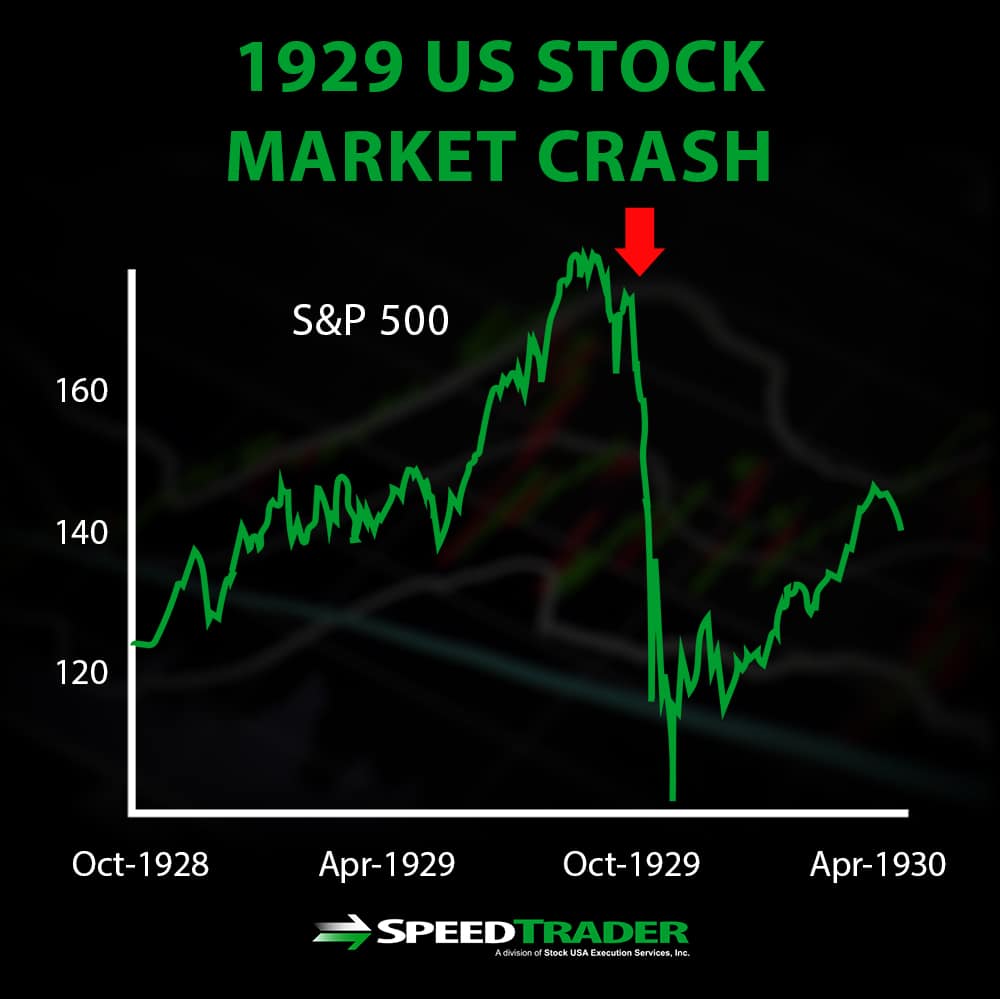
The crash of 1929 remains the most infamous in history. Following the “Roaring Twenties,” a decade of unprecedented speculation and debt-fueled growth, the market collapsed on “Black Tuesday.” This event was unique because it was followed by a decade-long economic depression. It taught the world the dangers of excessive leverage (buying stocks with borrowed money) and led to the creation of the Securities and Exchange Commission (SEC) to regulate the markets.
The 2008 Financial Crisis and the 2020 Flash Crash
In 2008, the crash was precipitated by the collapse of the housing market and the subprime mortgage crisis. It highlighted the interconnectedness of global banks. In contrast, the 2020 crash—sparked by the COVID-19 pandemic—was the fastest decline in history, but also one of the fastest recoveries.
The 2020 “flash crash” demonstrated the power of central bank intervention. By injecting massive amounts of liquidity into the system, the Federal Reserve was able to stabilize the market far more quickly than in previous eras. These examples show that while crashes are inevitable, the tools used to combat them have become increasingly sophisticated.
Strategic Response: Navigating Market Volatility
For the individual investor, a crash is not a signal to exit the market, but a signal to evaluate their strategy. History shows that the most significant gains often occur in the days immediately following a massive sell-off.
The Importance of Diversification and Asset Allocation
The best way to survive a crash is to prepare for it while the sun is still shining. Diversification—spreading investments across stocks, bonds, real estate, and cash—ensures that a total loss in one sector does not destroy your entire portfolio.
Proper asset allocation is your primary defense mechanism. If you are close to retirement, your portfolio should be weighted more heavily toward “defensive” assets like high-quality bonds or treasury bills, which tend to hold their value or even rise when stocks crash. If you are young, a crash is less of a threat and more of an opportunity, as you have the “time horizon” to wait for the market to rebound.
To Sell or to Buy? Identifying Value in the Rubble
One of the most famous adages in finance comes from Warren Buffett: “Be fearful when others are greedy, and greedy when others are fearful.”
A stock market crash essentially puts the world’s greatest companies “on sale.” When the entire market drops, high-quality companies with strong balance sheets and consistent earnings are often dragged down alongside failing ones. For the disciplined investor with liquid cash on hand, a crash provides an entry point to buy shares of premium companies at a discount. This approach requires a “contrarian” mindset—the ability to act against the prevailing mood of the market.
The Path to Recovery and Long-Term Wealth Building
While a crash feels like the end of the world in the moment, it is historically a temporary state. The trajectory of the stock market over the last century has been decidedly upward, despite wars, pandemics, and financial crises.
Why Markets Historically Trend Upward
The stock market is a reflection of human productivity and corporate innovation. As long as companies continue to find new ways to create value, provide services, and improve technology, the long-term value of the market will increase. Markets recover because the underlying drivers of the economy—population growth, technological advancement, and consumer demand—eventually outweigh the temporary shock of a crash.

Automating Your Financial Resilience
To protect yourself from the emotional volatility of a crash, many experts recommend “Dollar-Cost Averaging” (DCA). This strategy involves investing a fixed amount of money at regular intervals, regardless of whether the market is up or down.
When the market crashes, your fixed investment buys more shares at a lower price. When the market recovers, those extra shares accelerate your wealth accumulation. By automating your investments, you remove the “human element” that often leads to panic selling.
In conclusion, a stock market crash is a significant financial event characterized by a rapid decline in asset prices, driven by economic shifts and amplified by human psychology. For the uninformed, it is a period of ruin; for the prepared, it is a period of transition and opportunity. By understanding the mechanics of the market, maintaining a diversified portfolio, and keeping a long-term perspective, you can transform a market crash from a financial disaster into a stepping stone toward long-term financial independence.
aViewFromTheCave is a participant in the Amazon Services LLC Associates Program, an affiliate advertising program designed to provide a means for sites to earn advertising fees by advertising and linking to Amazon.com. Amazon, the Amazon logo, AmazonSupply, and the AmazonSupply logo are trademarks of Amazon.com, Inc. or its affiliates. As an Amazon Associate we earn affiliate commissions from qualifying purchases.