
The journey toward financial independence often begins with a single decision: the decision to make your money work as hard for you as you work for it. Historically, the stock market has been one of the most effective vehicles for long-term wealth creation, outperforming savings accounts, bonds, and inflation over multi-decade horizons. However, for the uninitiated, the world of tickers, charts, and financial jargon can feel like an impenetrable fortress.
Getting started in stocks is not about “timing the market” or finding the next “moonshot” stock; it is about discipline, strategy, and understanding the fundamental principles of equity ownership. This guide provides a roadmap for the novice investor, moving from the foundational requirements of personal finance to the execution of your first trade and the long-term management of a portfolio.

Establishing a Strong Financial Foundation
Before you purchase your first share of a company, you must ensure that your personal finances are resilient enough to withstand the inherent volatility of the stock market. Investing is a marathon, not a sprint, and you should never invest money that you might need for immediate expenses.
Emergency Funds and Debt Management
The first step in any investment journey is securing an emergency fund. Most financial experts recommend having three to six months of essential living expenses tucked away in a high-yield savings account. This “buffer” ensures that if the market takes a temporary downturn, you aren’t forced to sell your stocks at a loss just to pay for a car repair or medical bill.
Simultaneously, you must address high-interest debt. If you are carrying credit card debt with an 18% to 25% interest rate, no stock market return can reliably beat that cost. Paying down high-interest debt is a guaranteed return on your money. Once your high-interest liabilities are cleared and your emergency fund is set, you are ready to put your capital to work.
Defining Your Investment Goals and Risk Tolerance
Every investor has a different “risk appetite.” This is a combination of your emotional ability to handle market swings and your “time horizon”—how long you have until you need the money. A 25-year-old saving for retirement in 40 years can afford to be aggressive because they have time to recover from market crashes. Conversely, a 55-year-old may prefer a more conservative approach. Defining whether you are looking for long-term capital appreciation, passive income through dividends, or wealth preservation will dictate every decision you make hereafter.
Understanding the Mechanics of the Stock Market
To invest successfully, you must understand what you are actually buying. A stock, or a share, represents a claim on a portion of a corporation’s assets and earnings. When you buy a stock, you become a partial owner of that business.
What is a Stock?
Publicly traded companies issue stock to raise capital for expansion, research, and operations. As the company grows and becomes more profitable, the value of your ownership stake generally increases. Some companies also distribute a portion of their profits back to shareholders in the form of dividends. Understanding that a stock is an interest in a living, breathing business—rather than just a fluctuating number on a screen—is the hallmark of a sophisticated investor.
How the Exchange Works
Stocks are traded on exchanges, such as the New York Stock Exchange (NYSE) or the Nasdaq. These exchanges act as a secondary market where buyers and sellers meet. In the modern era, these transactions happen almost instantaneously via electronic networks. While the mechanics are complex, the principle is simple: supply and demand. If more people want to buy a stock than sell it, the price goes up, and vice versa.
Key Terminology for New Investors
Navigating the market requires a basic grasp of its vocabulary. You will frequently hear terms like “Market Capitalization,” which is the total value of all a company’s shares. “Bull Markets” refer to periods when prices are rising and optimism is high, while “Bear Markets” describe a decline of 20% or more from recent highs. Understanding these terms helps you filter through the noise of financial news and focus on the data that matters.
Choosing Your Investment Strategy

One of the biggest hurdles for beginners is deciding what to buy. While individual stock picking is popularized in movies, it is often not the most efficient way for a beginner to build wealth.
Passive vs. Active Investing
Active investing involves trying to beat the market by carefully timing trades and picking individual winners. Passive investing, on the other hand, involves buying a broad cross-section of the market and holding it for the long term. Study after study has shown that the vast majority of active investors—including professionals—fail to beat the average return of the overall market over long periods. For most beginners, a passive or “index-based” strategy is the most logical starting point.
The Power of Index Funds and ETFs
An Index Fund or an Exchange-Traded Fund (ETF) is a basket of stocks that allows you to buy hundreds of companies in a single transaction. For example, an S&P 500 index fund gives you exposure to 500 of the largest, most successful companies in the United States. This provides instant diversification; if one company in the index fails, the other 499 are there to stabilize your portfolio. This “set it and forget it” approach is the cornerstone of modern wealth building.
Growth vs. Value Investing
As you become more comfortable, you may want to diversify your strategy. Growth investing focuses on companies that are expected to grow at an above-average rate compared to the market, often in the technology or biotech sectors. Value investing involves looking for “bargains”—companies that are currently undervalued by the market but have strong fundamentals. Balancing these two styles can help create a more robust portfolio.
Opening Your Account and Making Your First Trade
Once you have a strategy, you need a place to execute it. In the digital age, the barrier to entry for the stock market has never been lower.
Selecting a Brokerage Platform
A brokerage is the intermediary that allows you to buy and sell stocks. When choosing a platform, look for three things: low fees (most modern brokers offer $0 commissions), a user-friendly interface, and robust educational resources. Whether you choose a traditional powerhouse or a mobile-first “fintech” app, ensure the firm is a member of the SIPC (Securities Investor Protection Corporation), which protects your assets in the event the brokerage fails.
Understanding Order Types
When you go to buy your first stock or ETF, you will be presented with different “order types.” The most common are Market Orders and Limit Orders. A Market Order tells the broker to buy the stock immediately at the best available current price. A Limit Order tells the broker to only buy the stock if it hits a specific price or lower. For most long-term investors, a market order is sufficient, but limit orders offer more control over the price you pay.
Tax-Advantaged Accounts
In the “Money” niche, efficiency is king. Before opening a standard taxable brokerage account, consider tax-advantaged accounts like a 401(k) or an Individual Retirement Account (IRA). These accounts offer significant tax breaks, either by lowering your taxable income today or by allowing your investments to grow tax-free for the future. Utilizing these accounts can drastically increase your “net” returns over several decades.
Long-Term Maintenance and Portfolio Management
The hardest part of investing isn’t buying the stocks; it’s holding onto them. The market is prone to “corrections”—temporary drops in value—that can test an investor’s resolve.
The Importance of Diversification
The only “free lunch” in investing is diversification. By spreading your money across different sectors (tech, healthcare, energy), different company sizes, and even different geographic regions, you reduce the risk of a single event wiping out your savings. If your entire portfolio is in one stock, you are gambling. If your portfolio is spread across the global economy, you are investing.
Rebalancing Your Portfolio
Over time, some of your investments will perform better than others. This might cause your portfolio to become “top-heavy” in one area. Rebalancing is the process of selling a bit of what has grown too much and buying more of what has lagged behind. This disciplined approach forces you to do the very thing most investors struggle with: “buy low and sell high.”
Emotional Discipline and the Long Game
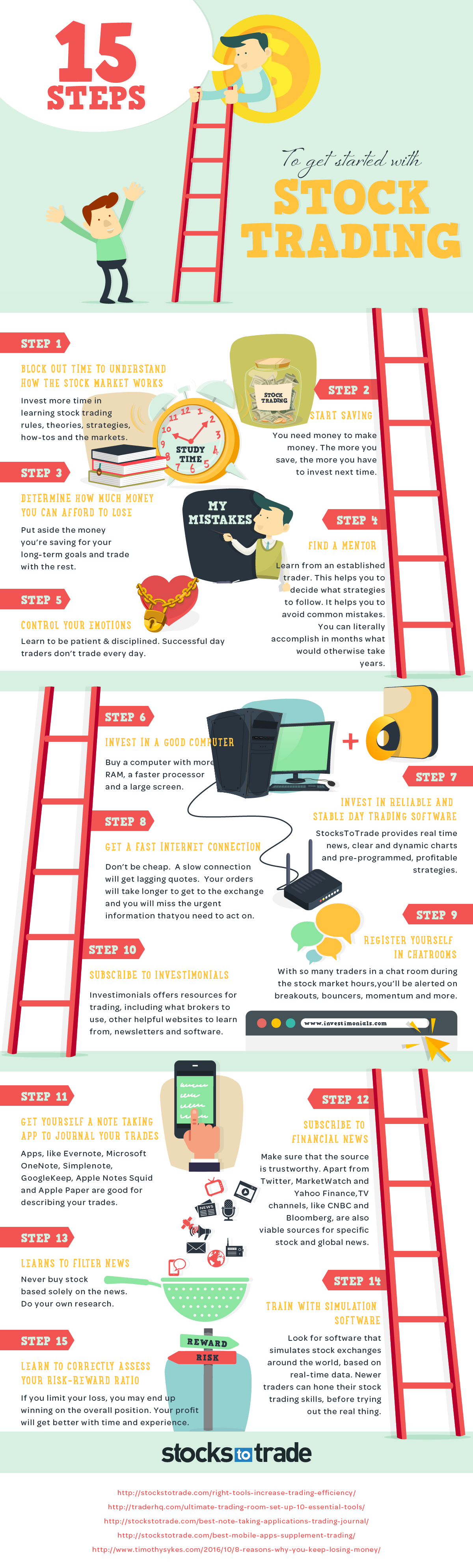
The greatest enemy of the investor is not the market, but the mirror. Emotional decisions—selling in a panic during a crash or buying into a “hype” bubble—are the primary reasons individual investors underperform the market. Successful investing requires a “boring” consistency. By automating your investments through “dollar-cost averaging”—investing a fixed amount of money at regular intervals regardless of the price—you remove emotion from the equation and harness the power of compound interest.
In conclusion, getting started in stocks is a journey of education and temperament. By building a solid financial base, understanding how the market functions, utilizing diversified funds, and maintaining a long-term perspective, you can transform the stock market from a source of confusion into a powerful engine for your personal prosperity. The best time to start was ten years ago; the second best time is today.
aViewFromTheCave is a participant in the Amazon Services LLC Associates Program, an affiliate advertising program designed to provide a means for sites to earn advertising fees by advertising and linking to Amazon.com. Amazon, the Amazon logo, AmazonSupply, and the AmazonSupply logo are trademarks of Amazon.com, Inc. or its affiliates. As an Amazon Associate we earn affiliate commissions from qualifying purchases.