
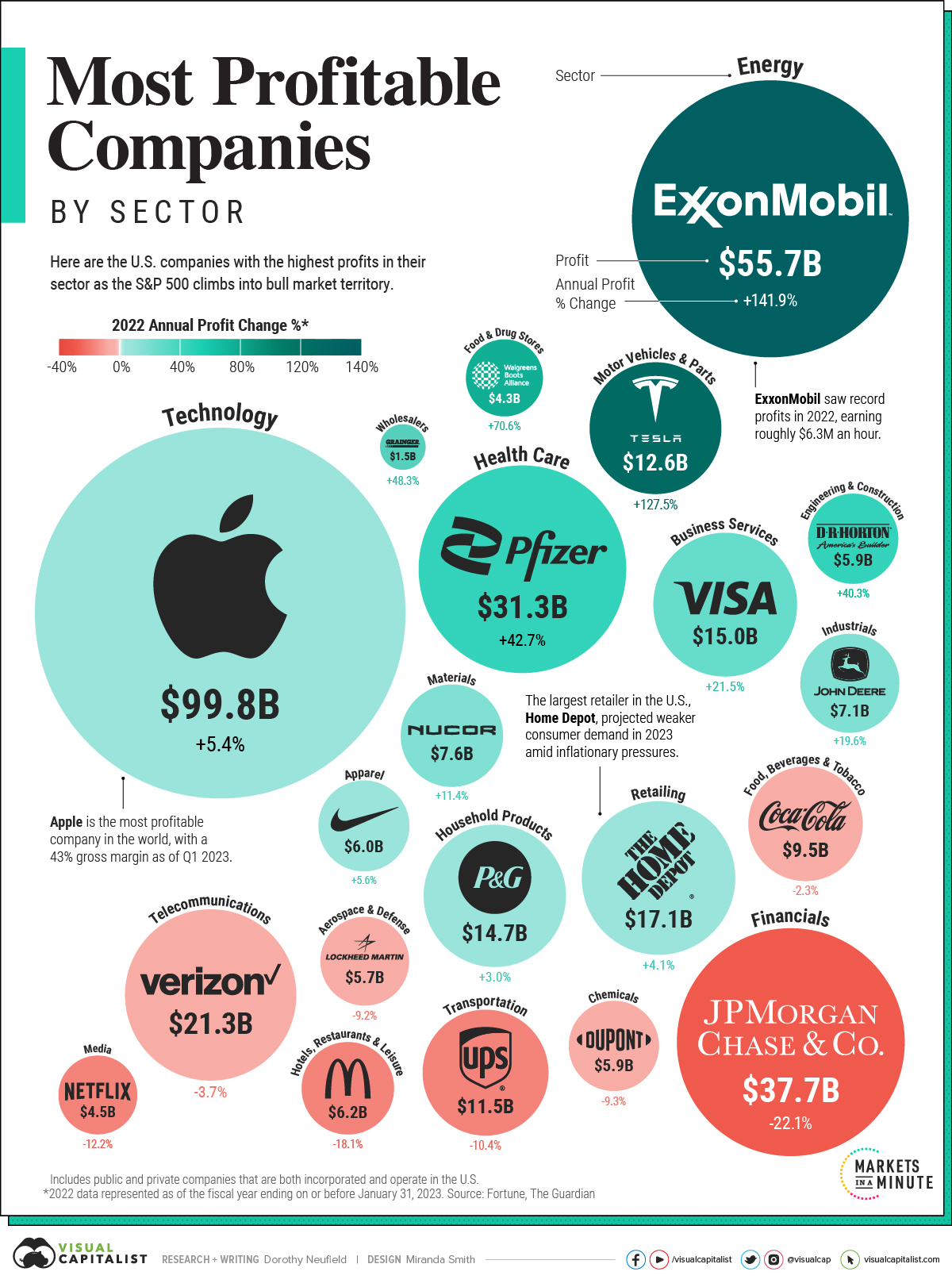
When evaluating the landscape of modern entrepreneurship, the term “lucrative” is often misunderstood. Many equate high revenue with profitability, yet some of the world’s largest companies operate on razor-thin margins. To truly identify the most lucrative businesses, one must look at the intersection of high profit margins, scalability, and low capital intensity. In the realm of finance and wealth creation, a lucrative business is one that generates significant free cash flow relative to the owner’s investment of time and capital.
This guide explores the most profitable sectors within the “Money” niche, focusing on business models that prioritize return on investment (ROI), sustainable cash flow, and long-term equity growth.

1. High-Margin Professional Service Firms
The most immediate path to high profitability often lies in the sale of specialized expertise. Service-based businesses are uniquely lucrative because they typically require minimal upfront capital investment. There are no factories to build or inventory to manage; the primary “product” is intellectual capital.
Specialized Consulting and Strategic Advisory
Business-to-business (B2B) consulting remains one of the highest-margin sectors in existence. Firms that specialize in high-stakes areas—such as mergers and acquisitions (M&A) advisory, tax strategy, or operational efficiency—can command premium fees that far outweigh their operational costs. Because the value provided is often tied to a percentage of a deal or a specific financial outcome for the client, these businesses can scale their pricing based on value rather than hours worked. A successful independent consultant or a boutique firm can maintain profit margins exceeding 50% by keeping overhead low and focusing on high-ticket contracts.
Legal and Private Wealth Management
In the financial sector, managing other people’s money is a classic example of a lucrative business model. Wealth management firms and private equity groups operate on a fee-plus-performance structure. As the assets under management (AUM) grow, the cost to manage those assets does not increase at the same rate. This creates incredible operating leverage. Similarly, specialized legal services—particularly those dealing with corporate law, intellectual property, or estate planning—leverage high barriers to entry to maintain premium pricing power.
Specialized Accounting and Fractional CFO Services
As the economy becomes more complex, the demand for high-level financial oversight has surged. Fractional CFO (Chief Financial Officer) services allow small to mid-sized businesses to hire expert financial strategy on a contract basis. For the provider, this is a highly lucrative model because it offers the stability of recurring revenue (retainers) without the liability of being a full-time employee. By managing a portfolio of 5–10 clients, a fractional CFO can generate a high six-figure income with almost zero overhead.
2. Scalable Digital Asset and Information Models
In the digital age, the most lucrative businesses are those with a “marginal cost of zero.” Once the initial product is created, the cost of selling it to an additional customer is negligible. This creates an environment where profit margins can expand exponentially as the business scales.
Digital Education and Information Products
The global e-learning market is a powerhouse for personal income. Creating a comprehensive masterclass, a certification program, or a specialized financial newsletter allows an entrepreneur to package their knowledge once and sell it indefinitely. Unlike physical goods, digital products do not suffer from supply chain disruptions or inventory costs. High-end information products—those that teach specific, money-making skills like options trading, real estate investing, or high-ticket sales—often see profit margins as high as 80-90%.
Subscription-Based Financial Research
Investors are always looking for an edge. Businesses that provide proprietary data, financial research, or market analysis via a subscription model (SaaS for information) are incredibly stable. These businesses benefit from “sticky” revenue; once a subscriber integrates a specific research tool or newsletter into their investment workflow, they are unlikely to cancel. The predictability of recurring revenue allows these businesses to be valued at high multiples when it comes time to sell.
Affiliate Marketing and Financial Lead Generation
While often overlooked, lead generation for high-value financial products is immensely profitable. Financial institutions are willing to pay significant “bounties” for qualified leads for mortgages, credit cards, or investment accounts. A lean business that focuses on SEO or paid media to drive traffic to these financial offers can operate with very few employees and high automated cash flow. In this model, the business acts as a high-margin bridge between a consumer’s need and a bank’s capital.
3. High-Yield Real Estate and Asset-Backed Ventures
For those with access to capital, the most lucrative businesses involve the strategic acquisition and management of physical assets. These businesses provide a unique combination of monthly cash flow, tax advantages (such as depreciation), and long-term capital appreciation.
Short-Term Rental Arbitrage and Management
The shift in travel trends has made short-term rental (STR) businesses more lucrative than traditional long-term leasing. By utilizing platforms like Airbnb and Vrbo, investors can generate 2x to 3x the monthly revenue of a standard rental. A variation of this, known as “rental arbitrage,” involves leasing a property long-term and sub-leasing it on short-term platforms (with permission). This allows an entrepreneur to build a lucrative hospitality business without actually owning the underlying real estate, significantly increasing the “cash-on-cash” return.
Self-Storage Facilities
Often described as the “darling” of the commercial real estate world, self-storage is a low-maintenance, high-margin business. The operational costs are minimal—there are no toilets to fix, no paint to refresh between tenants, and the staff requirements are very low. During economic downturns, self-storage often sees an increase in demand as people downsize, making it a “recession-resistant” lucrative venture. The business model scales easily through automation, such as digital keypads and online booking.
Commercial Property Syndication
For the sophisticated financier, real estate syndication is a method of pooling capital from multiple investors to purchase large assets like apartment complexes or shopping centers. The “General Partner” (the person organizing the deal) earns fees for finding the deal, managing the asset, and a “carried interest” (a share of the profits) once a certain return threshold is met. This allows the organizer to build a lucrative business using “Other People’s Money” (OPM), creating a high-upside scenario with limited personal capital at risk.
4. The Financial Mechanics of High Profitability
To understand why these businesses are lucrative, one must look at the underlying financial principles that govern them. A business is not lucrative by accident; it is lucrative by design.
Understanding Operating Leverage
Operating leverage occurs when a business can increase its revenue without a proportional increase in operating expenses. For example, a software company or a digital course creator has high operating leverage. Once the “fixed cost” of development is paid, every dollar of new revenue is almost pure profit. When searching for a lucrative business, one should always look for models where the variable costs are low.
Customer Lifetime Value (LTV) vs. Acquisition Cost (CAC)
The most lucrative businesses have a high LTV to CAC ratio. If it costs $100 to acquire a customer (marketing/sales) but that customer generates $5,000 in profit over their lifetime (through subscriptions or repeat high-ticket purchases), the business is a money-printing machine. Financial services and specialized consulting often boast the highest LTVs in the market, as clients tend to stay for years or even decades.
Low Capital Intensity
A business is more lucrative if it does not require constant reinvestment in “heavy” assets like machinery, vehicles, or large office spaces. In the modern economy, “asset-light” models are preferred. By focusing on intellectual property, digital distribution, or outsourced logistics, a business owner can keep more of the profit rather than sinking it back into the maintenance of physical goods.
5. Conclusion: Choosing the Right Lucrative Path
Determining the most lucrative business depends on an individual’s capital, skills, and risk tolerance. However, the common thread among all highly profitable ventures is the ability to decouple time from money. Whether it is through the scalability of digital assets, the high hourly value of specialized consulting, or the passive cash flow of real estate, the goal remains the same: maximizing the bottom line.
For the aspiring entrepreneur or investor, the focus should not merely be on “top-line” revenue. Instead, one should analyze the “Money” fundamentals: How much of every dollar stays in the business? How easily can this business double its income without doubling its stress and expenses? By focusing on high-margin, scalable, and asset-efficient models, you can build a business that is not just busy, but truly lucrative.
aViewFromTheCave is a participant in the Amazon Services LLC Associates Program, an affiliate advertising program designed to provide a means for sites to earn advertising fees by advertising and linking to Amazon.com. Amazon, the Amazon logo, AmazonSupply, and the AmazonSupply logo are trademarks of Amazon.com, Inc. or its affiliates. As an Amazon Associate we earn affiliate commissions from qualifying purchases.