
The global financial landscape is currently navigating a period of profound transformation. Investors who were once accustomed to the low-interest-rate environment of the last decade are now facing a reality defined by persistent inflation, shifting central bank policies, and a bifurcated market performance. Understanding what is happening with the stock market requires a multi-layered approach that looks beyond daily price fluctuations to the underlying macroeconomic drivers and structural changes in how capital is deployed.
The Macroeconomic Engine: Interest Rates and the Inflationary Tug-of-War
To understand the current state of the stock market, one must first look at the Federal Reserve and other global central banks. For years, “cheap money” fueled equity growth, but the pivot toward tightening monetary policy has fundamentally rewritten the rules of valuation.
The Role of Central Bank Policy and “Higher for Longer”
The primary driver of market sentiment over the past 18 months has been the trajectory of interest rates. When interest rates rise, the present value of future cash flows diminishes, which hits growth-oriented stocks particularly hard. We are currently in a “higher for longer” regime, where the market is constantly recalibrating its expectations for rate cuts. Each release of economic data—whether it is the Consumer Price Index (CPI) or employment figures—acts as a catalyst for volatility. If the data suggests the economy is too hot, investors fear that rates will remain elevated, putting downward pressure on equities.
Inflationary Pressures and Corporate Profitability
While inflation has begun to cool from its 40-year highs, it remains a “sticky” problem in the service sector. For the stock market, inflation is a double-edged sword. On one hand, it allows companies with strong pricing power to increase revenues. On the other hand, rising input costs and wage growth can compress profit margins. Current market trends show a clear divide between companies that can pass costs on to consumers and those that are being squeezed by the rising cost of doing business. Investors are increasingly scrutinizing “quality” factors, such as high free cash flow and low debt-to-equity ratios, as a defense against inflationary erosion.
The Yield Curve and Recessionary Fears
The bond market often leads the stock market, and the inversion of the yield curve—where short-term Treasury yields are higher than long-term yields—has been a persistent signal of economic caution. While a recession has not yet materialized in the way many analysts predicted, the “looming shadow” of a slowdown keeps market participants on edge. This uncertainty leads to “choppy” trading sessions where the market lacks a clear direction, swinging between optimism for a “soft landing” and fear of a cyclical downturn.
Sector Divergence: The Rise of the “Magnificent Seven” vs. the Rest of the Market
A unique characteristic of the current stock market is its extreme lack of breadth. A small handful of mega-cap companies have disproportionately driven the major indices, creating a deceptive sense of overall market health.
The Impact of AI and High-Cap Growth
The surge in interest surrounding generative artificial intelligence has funneled massive amounts of capital into a few select names, often referred to as the “Magnificent Seven.” These companies—including leaders in semiconductors, cloud computing, and software—have seen their valuations soar, decoupled from the performance of the average stock. From a Money and Investing perspective, this creates a concentration risk. While the S&P 500 may appear to be reaching new highs, the “equal-weighted” version of the same index often tells a story of stagnation for the other 493 companies.
Defensive vs. Cyclical Rotations
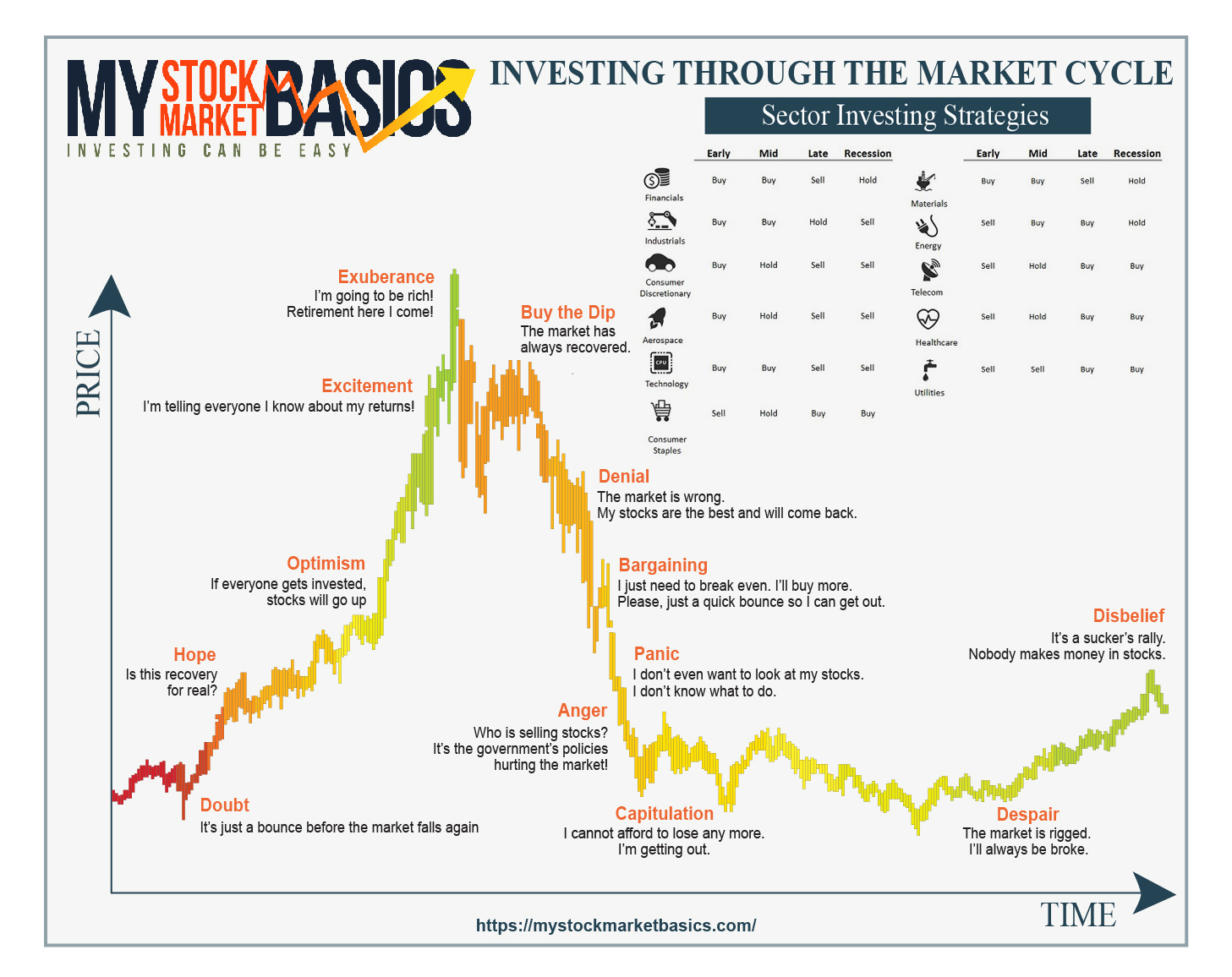
As investors grapple with uncertainty, we are seeing significant sector rotation. Cyclical sectors like Financials and Industrials often fluctuate based on the latest GDP growth forecasts. Conversely, defensive sectors—such as Consumer Staples and Healthcare—have become attractive for those looking to park capital in assets that are less sensitive to economic swings. The current market is a battlefield between those betting on continued growth and those seeking the safety of dividends and stable earnings.
The Valuation Gap and Value Investing
The massive run-up in growth stocks has left value stocks trading at significant discounts relative to historical averages. For the disciplined investor, this represents a potential opportunity. Small-cap and mid-cap stocks, which are more sensitive to interest rate changes due to their higher reliance on floating-rate debt, have lagged significantly. However, if and when the Federal Reserve begins a meaningful easing cycle, these undervalued sectors could see a rapid “catch-up” trade as capital rotates out of expensive mega-caps and into broader market participants.
Institutional Sentiment and the Mechanics of Modern Trading

What’s happening with the stock market isn’t just about the “what” (the stocks), but also the “how” (the trading mechanics). The way money moves through the system has changed, influenced heavily by institutional shifts and algorithmic dominance.
The Influence of Quantitative and Algorithmic Trading
A significant portion of daily trading volume is now driven by algorithms and high-frequency trading (HFT) systems. These programs are designed to react to specific technical levels or keyword triggers in news cycles. This often results in “exaggerated” moves, where a minor earnings miss or a slightly hawkish comment from a Fed official leads to a cascading sell-off. For the individual investor, understanding this helps contextualize why the market often feels disconnected from “rational” fundamental value in the short term.
The Shift Toward Passive Indexing and ETFs
The rise of the Exchange-Traded Fund (ETF) has changed the liquidity profile of the stock market. Because so much money is tied up in passive indexes, when people buy “the market,” they are forced to buy the underlying stocks regardless of their individual valuations. This reinforces the dominance of the largest companies (as they have the highest weights in the indices) and can create “blind spots” in risk management. We are seeing a market where “price discovery”—the process of determining a stock’s individual worth—is sometimes secondary to the flow of funds into and out of broad-based ETFs.
Sentiment Analysis: Fear, Greed, and the VIX
The CBOE Volatility Index (VIX), often called the “fear gauge,” provides insight into how much protection institutional investors are buying against a market drop. Currently, we see periods of “complacency” where the VIX remains low despite geopolitical tensions, followed by sharp spikes. Professional money managers are currently balancing a “Fear of Missing Out” (FOMO) on the AI rally with a “Fear of Falling” (FOF) due to high valuations. This psychological tension is a hallmark of the current market cycle.
Strategic Asset Allocation in an Uncertain Environment
Given the complexities of today’s market, the approach to personal finance and wealth management must be more nuanced than the “buy and hold” strategies of the previous decade.
Diversification Beyond Traditional Equities
In a high-rate environment, the “60/40” portfolio (60% stocks, 40% bonds) has made a comeback. For the first time in years, fixed income—such as Treasuries and high-quality corporate bonds—is providing a meaningful yield, acting as a true ballast against stock market volatility. Additionally, many investors are looking toward “alternative” assets, including private credit and real estate investment trusts (REITs), to find non-correlated returns that don’t move in lockstep with the S&P 500.
The Importance of Dollar-Cost Averaging (DCA)
Trying to “time” the bottom of a market move is notoriously difficult, especially in a landscape dominated by macro headlines. Systematic investing through Dollar-Cost Averaging remains one of the most effective tools for the individual investor. By investing a fixed amount at regular intervals, investors naturally buy more shares when prices are low and fewer when they are high, effectively smoothing out the “cost basis” of their portfolio over time.
Risk Management and Rebalancing
With the outperformance of certain tech sectors, many portfolios have become “top-heavy.” A portfolio that started as 10% tech might now be 30% tech due to price appreciation alone. What’s happening in the market necessitates active rebalancing—selling some of the “winners” to buy undervalued “laggards.” This disciplined approach ensures that an investor’s risk profile remains aligned with their long-term financial goals, preventing a single sector downturn from derailing an entire retirement plan.
Future Outlook: Preparing for the Next Phase of the Cycle
As we look toward the coming months, the stock market remains at a crossroads. The transition from a liquidity-driven market to an earnings-driven market is rarely a smooth process.
Geopolitical Impacts and Global Markets
Beyond domestic concerns, global events continue to cast a shadow. From energy price fluctuations influenced by Middle Eastern stability to supply chain shifts in Asia, the “global” in global finance has never been more relevant. Investors must stay informed on how international relations impact trade and, by extension, the corporate earnings of multinational companies.

The Final Word on Market Resilience
Despite the headlines of volatility and the pressures of inflation, the stock market has historically shown incredible resilience. The “market” is ultimately a collection of companies striving to innovate, grow, and generate profit. While the path forward is likely to be marked by continued fluctuations as the world adjusts to a new economic “normal,” the fundamental principles of investing—patience, diversification, and a focus on quality—remain the best tools for navigating what’s happening in the stock market today. Focusing on long-term value rather than short-term noise is the key to maintaining financial health in an era of rapid change.
aViewFromTheCave is a participant in the Amazon Services LLC Associates Program, an affiliate advertising program designed to provide a means for sites to earn advertising fees by advertising and linking to Amazon.com. Amazon, the Amazon logo, AmazonSupply, and the AmazonSupply logo are trademarks of Amazon.com, Inc. or its affiliates. As an Amazon Associate we earn affiliate commissions from qualifying purchases.