
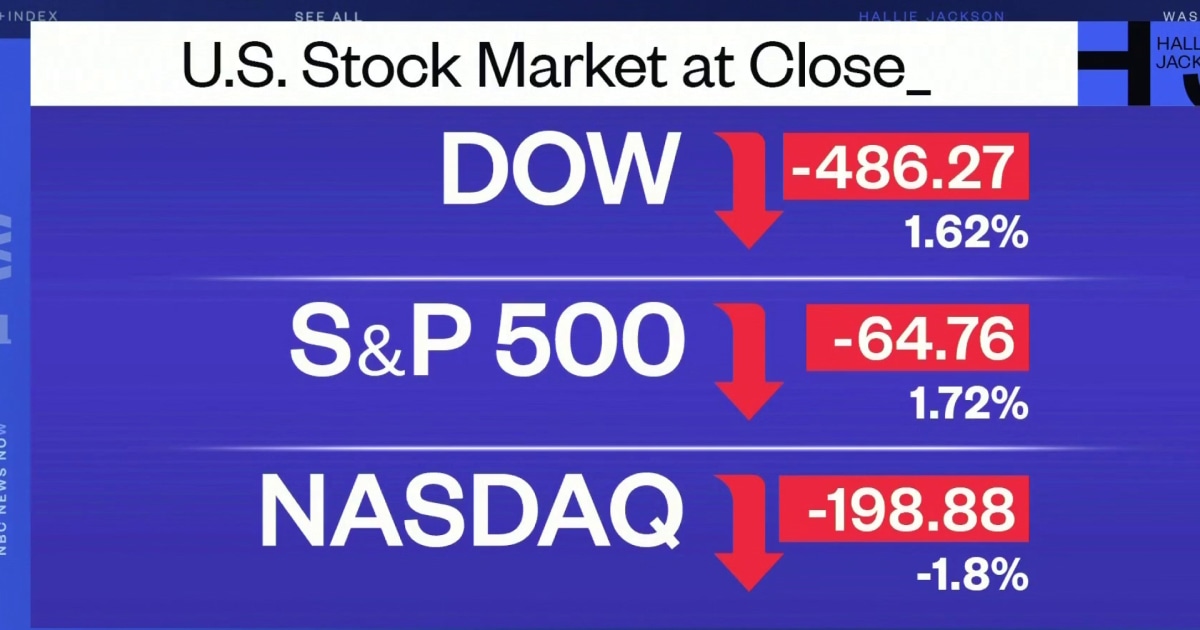
The daily ebb and flow of the stock market are a constant source of fascination, anxiety, and opportunity for millions. Among the various indices, the Dow Jones Industrial Average (DJIA), often simply called “the Dow,” holds a unique place in the public consciousness. When headlines trumpet a significant “Dow drop,” it inevitably sparks questions: how much did it fall? Why did it fall? And what does it mean for my investments and the economy at large?
Understanding the Dow’s daily movements, particularly its declines, requires looking beyond the immediate numbers. It’s about contextualizing volatility, deciphering underlying economic signals, and maintaining a disciplined approach to financial planning. This article delves into the intricacies of market dips, offering insights into their causes, implications, and strategies for navigating them effectively within the realm of personal and business finance.

Deciphering the Dow’s Daily Performance
The Dow Jones Industrial Average is more than just a number; it’s a snapshot of the health and sentiment of a significant portion of the U.S. economy. Its daily performance is closely watched by investors, economists, and the general public, serving as a primary indicator of market trends.
The Dow Jones Industrial Average Explained
Established in 1896, the Dow is one of the oldest and most recognized stock market indices globally. It comprises 30 large, publicly-traded companies representative of various major industries in the U.S. economy. These aren’t just any companies; they are typically “blue-chip” firms with long histories of stable earnings and widespread recognition, ranging from technology giants and financial institutions to consumer goods conglomerates and industrial behemoths. Unlike other market-capitalization-weighted indices like the S&P 500 or Nasdaq Composite, the Dow is a price-weighted index. This means that stocks with higher share prices have a greater influence on the index’s value, regardless of their total market capitalization. While some critics argue this weighting method can be less representative of the broader market, its historical significance and inclusion of bellwether companies ensure its continued relevance as an economic barometer. A movement in the Dow often reflects broader investor sentiment about the corporate earnings outlook and the macroeconomic environment.
Factors Influencing Daily Fluctuations
The factors that can cause the Dow to drop on any given day are numerous and complex, often interacting in intricate ways. Economic data releases are primary drivers; a higher-than-expected inflation report, weaker-than-anticipated job growth figures, or a disappointing GDP announcement can quickly trigger selling pressure. Corporate earnings reports also play a crucial role. If major Dow components or other influential companies miss their earnings targets or provide cautious outlooks, it can dampen overall market sentiment. Geopolitical events, such as international conflicts, trade disputes, or significant policy changes from central banks, can introduce considerable uncertainty, leading investors to flee riskier assets like stocks. Interest rate expectations, particularly those set by the Federal Reserve, are another powerful determinant. Higher interest rates can make borrowing more expensive for businesses and consumers, potentially slowing economic growth and making fixed-income investments more attractive relative to equities. Finally, sheer investor sentiment – a collective mood of optimism or pessimism, often fueled by news cycles or technical trading patterns – can itself create momentum, leading to self-fulfilling prophecies of upward or downward movement.
Interpreting the Numbers: Points vs. Percentages
When the news reports “the Dow dropped 500 points today,” it can sound alarming. However, understanding the true significance of such a drop requires looking beyond raw point figures and considering percentages. For an index that currently hovers around 38,000 to 40,000 points, a 500-point drop represents a decline of roughly 1.25% to 1.3%. While certainly noticeable, this is a relatively modest daily movement in the context of historical market volatility. Decades ago, when the Dow was much lower (e.g., 10,000 points), a 500-point drop would have constituted a 5% decline, which is significantly more severe and typically classified as a “correction.” This highlights why percentage changes offer a more accurate and consistent measure of market movement across different periods. Seasoned investors typically focus on percentage changes to gauge the severity of a move, recognizing that daily fluctuations of 1-2% are a normal part of market operations and do not necessarily signal the beginning of a sustained bear market. Contextualizing these daily moves against longer-term trends and average daily volatility helps in preventing overreactions and maintaining a rational perspective.
Beyond the Headlines: What a Dow Drop Really Means for Investors
While a daily drop in the Dow can be unsettling, it’s crucial for investors to understand its broader implications, particularly differentiating short-term noise from long-term trends and the psychological impact on decision-making.
Short-Term Pain vs. Long-Term Perspective
For many long-term investors, a single-day Dow drop, even a significant one, often represents short-term pain rather than a fundamental shift in their financial trajectory. History shows that market corrections and bear markets are an inevitable, albeit uncomfortable, part of the investment cycle. The stock market has a remarkable tendency to recover from downturns over time, driven by innovation, economic growth, and corporate adaptability. Focusing too intently on daily fluctuations can lead to impulsive decisions, such as panic selling at a loss, which can severely undermine long-term returns. Instead, a long-term perspective encourages investors to view dips as potential opportunities to buy quality assets at lower prices, adhering to their pre-defined investment strategy rather than reacting emotionally to immediate market news. This discipline is a cornerstone of successful investing, recognizing that true wealth accumulation is a marathon, not a sprint.
Impact on Different Asset Classes
A significant Dow drop doesn’t occur in a vacuum; its effects often ripple across various asset classes, albeit with differing magnitudes and directions. While the Dow primarily reflects large-cap U.S. stocks, other major indices like the S&P 500 (broader U.S. market) and the Nasdaq Composite (technology-heavy) typically move in tandem, though their percentage changes might differ based on sector-specific influences. For instance, a Dow drop fueled by interest rate concerns might hit growth stocks (often prevalent in the Nasdaq) harder. Conversely, during periods of equity market turmoil, “safe-haven” assets often see inflows. Government bonds, particularly U.S. Treasuries, are frequently viewed as such, leading to increased demand and potentially lower yields. Commodities like gold can also act as a store of value during uncertainty. International markets might react differently depending on the global economic linkages and the specific drivers of the U.S. market’s decline. Emerging markets, for example, might be particularly vulnerable to a stronger dollar, which often accompanies U.S. market uncertainty. A truly diversified portfolio acknowledges these interrelationships, aiming to smooth out returns across different market conditions.
Behavioral Finance in Action
Market drops are prime examples of behavioral finance principles at play. Fear and greed are powerful emotions that can significantly influence investment decisions. When the Dow experiences a sharp decline, the natural human tendency is to feel fear, which can trigger panic selling, leading investors to lock in losses. This irrational behavior is often driven by a desire to avoid further pain, even if it means deviating from a sound long-term strategy. Conversely, during bull markets, “fear of missing out” (FOMO) can lead to speculative buying at inflated prices. Understanding these psychological biases is crucial for investors. Recognizing that a Dow drop can trigger an emotional response allows investors to consciously counteract it. Strategies like setting predetermined rules for buying or selling, or simply stepping away from daily market monitoring during volatile periods, can help maintain emotional discipline. A rational approach, based on fundamental analysis and personal financial goals, is a powerful antidote to market-induced anxiety.
Strategies for Navigating Market Downturns
Successfully navigating periods of market volatility, including Dow drops, requires a well-thought-out strategy rather than reactive decision-making. Prudent financial management during these times can transform potential setbacks into opportunities.
The Importance of Diversification
Diversification stands as one of the most fundamental principles in investing, and its value becomes particularly evident during market downturns. A diversified portfolio spreads investment risk across various asset classes, industries, geographies, and investment styles. Instead of putting “all your eggs in one basket,” you hold a mix of stocks, bonds, real estate, and potentially alternative investments. If the Dow, which is heavily weighted towards large-cap U.S. equities, experiences a significant drop, a well-diversified portfolio might see other components (like international stocks, specific bond funds, or commodities) perform differently, cushioning the overall impact. For example, during a stock market correction, bonds might rally as investors seek safer havens, partially offsetting equity losses. While diversification does not guarantee profits or protect against all losses, it significantly reduces portfolio volatility and the risk of catastrophic losses from a single asset class or sector performing poorly. It ensures that your financial future isn’t solely dependent on the daily whims of the Dow.
Rebalancing and Dollar-Cost Averaging
Market drops present unique opportunities for disciplined investors employing strategies like rebalancing and dollar-cost averaging. Rebalancing involves periodically adjusting your portfolio back to its original target asset allocation. For instance, if a Dow drop causes your equity allocation to fall below its target percentage, rebalancing would involve selling some outperforming assets (like bonds) and buying more of the underperforming assets (stocks) to restore your desired allocation. This forces you to “buy low” during market downturns and “sell high” during upturns, a counter-intuitive but often highly effective strategy. Dollar-cost averaging, another powerful technique, involves investing a fixed amount of money at regular intervals, regardless of market conditions. When prices are high, your fixed investment buys fewer shares; when prices are low (like during a Dow drop), it buys more shares. Over time, this strategy helps to average out your purchase price and reduces the risk of making a large investment at an unfavorable market peak. Both strategies remove emotion from investment decisions, allowing investors to systematically take advantage of market volatility rather than being victimized by it.
Focusing on Your Financial Goals
Amidst the noise of daily market movements, it’s easy to lose sight of why you’re investing in the first place. A Dow drop can be a powerful reminder to anchor your investment strategy firmly to your personal financial goals and timeline. Are you saving for retirement decades away? Then daily market fluctuations are largely irrelevant compared to the long-term compounding growth. Are you saving for a down payment on a house next year? Then your portfolio might need to be more conservative, with less exposure to volatile assets, to protect your principal. Your investment strategy should always align with your unique objectives, risk tolerance, and time horizon. If a market downturn causes undue stress, it might be a signal to revisit your risk allocation or reconfirm your long-term commitment. By keeping your eyes on the prize – whether it’s retirement, education, or financial independence – you can avoid making rash decisions based on short-term market headlines and maintain a steady course toward your financial aspirations.
The Role of Cash and Emergency Funds
During periods of market uncertainty or a Dow drop, the importance of maintaining adequate cash and an emergency fund cannot be overstated. An emergency fund, typically 3-6 months’ worth of living expenses held in an easily accessible, liquid account, provides a crucial financial buffer. It ensures that unforeseen expenses (job loss, medical emergency, car repair) don’t force you to sell investments at an inopportune time, potentially locking in losses during a market downturn. Beyond the emergency fund, some investors strategically hold a portion of their investment capital in cash during uncertain times. This “dry powder” allows them to capitalize on significant market dips by buying assets at lower prices without disrupting their long-term holdings. While holding too much cash can lead to missed opportunities during bull markets, having a strategic cash reserve provides peace of mind and tactical flexibility, especially when the Dow is experiencing pronounced drops. It empowers you to make financial decisions from a position of strength, rather than desperation.
Historical Context and Future Outlook
Understanding how the market has behaved in the past and what economic indicators to watch can provide a valuable framework for interpreting current Dow drops and anticipating future trends.
Learning from Past Market Crashes and Corrections
History offers invaluable lessons about market volatility. The stock market has endured numerous crises throughout its existence – from the Great Depression and the Black Monday crash of 1987 to the Dot-com bubble bust, the 2008 financial crisis, and the brief but sharp COVID-19 plunge in 2020. Each event saw significant Dow drops, often accompanied by widespread fear and predictions of long-term economic collapse. Yet, in every instance, the market eventually recovered and went on to reach new highs. This historical resilience underscores a fundamental truth: while downturns are painful and unpredictable in their timing and severity, the long-term trend of the stock market has been upwards, driven by human ingenuity, corporate profits, and economic expansion. Studying these past events teaches investors that market corrections (drops of 10-20%) and bear markets (drops of 20% or more) are normal, albeit infrequent, occurrences. This historical perspective can temper emotional reactions to current Dow drops, reinforcing the importance of patience and a long-term investment horizon.
Economic Indicators to Watch
While daily Dow movements can be noisy, a deeper understanding of key economic indicators can help investors gauge the broader health of the economy and potential market turning points. Gross Domestic Product (GDP) reports offer a comprehensive measure of economic output; sustained weakness here can signal recessionary pressures. Inflation data, such as the Consumer Price Index (CPI) and Producer Price Index (PPI), are critical, as high inflation often prompts central banks to raise interest rates, potentially slowing growth and impacting corporate earnings. Employment figures, including non-farm payrolls and unemployment rates, are vital gauges of consumer health and spending power. Manufacturing and service sector surveys (like the ISM indices) provide forward-looking insights into business sentiment and activity. Furthermore, monitoring the Federal Reserve’s monetary policy decisions, particularly on interest rates, is paramount, as these directly influence borrowing costs and investment attractiveness. By tracking these and other indicators, investors can build a more informed picture of the economic landscape, helping them distinguish between temporary market jitters and more systemic shifts that might warrant adjustments to their long-term financial strategy.
Expert Opinions and Market Sentiment
In the aftermath of a significant Dow drop, a deluge of expert opinions and analyses typically emerges. Economists, market strategists, and financial analysts offer their interpretations of what happened, why, and what might come next. While these insights can be valuable for understanding various perspectives and potential scenarios, it’s crucial for individual investors to weigh them critically. No single expert has a crystal ball, and forecasts often diverge. Market sentiment, the overall mood or attitude of investors towards a particular market or asset, can also play a significant role. Highly optimistic sentiment can lead to overvaluation, while excessive pessimism can lead to undervaluation. While it’s wise to be aware of prevailing sentiment, investors should guard against allowing it to dictate their actions. Succumbing to collective fear or euphoria can lead to poor decisions. Instead, use expert opinions and sentiment indicators as part of a broader research process, cross-referencing information and always aligning decisions with your personal financial plan and risk tolerance, rather than blindly following the crowd.
Leveraging Financial Tools and Professional Advice
In today’s complex financial landscape, investors have access to an array of digital tools and professional guidance that can prove invaluable, especially during periods of market volatility.
Digital Tools for Market Monitoring and Analysis
The digital age has democratized access to financial information and sophisticated analytical tools, allowing individual investors to monitor markets with unprecedented detail. Numerous apps and platforms provide real-time stock quotes, charting capabilities, news feeds, and personalized watchlists. Tools like Morningstar, Yahoo Finance, Google Finance, and brokerage firm platforms offer extensive data on company fundamentals, historical performance, and analyst ratings. For those interested in technical analysis, charting software can help identify trends and patterns. Portfolio trackers can provide an aggregated view of all your investments, helping you understand your overall exposure and diversification. Additionally, financial calculators can assist with retirement planning, goal setting, and risk assessment. By leveraging these digital resources, investors can stay informed, conduct their own research, and make more data-driven decisions, rather than relying solely on headlines about Dow drops. However, it’s important to use these tools judiciously, focusing on relevant data that aligns with your long-term strategy rather than getting bogged down in every minor fluctuation.

When to Consult a Financial Advisor
While digital tools empower self-directed investors, there are distinct advantages to consulting a qualified financial advisor, especially during tumultuous market periods. A good financial advisor offers more than just investment recommendations; they provide personalized financial planning that encompasses your entire financial life, including budgeting, debt management, retirement planning, tax strategies, and estate planning. During a Dow drop, an advisor can help you maintain emotional discipline, preventing impulsive decisions driven by fear. They can re-evaluate your risk tolerance, rebalance your portfolio according to your goals, and explain the context of market movements, putting them into perspective for your specific situation. For those with complex financial situations, significant assets, or who simply feel overwhelmed by the intricacies of investing, professional guidance offers invaluable peace of mind and a structured approach to wealth management. An advisor acts as a trusted partner, helping you navigate market downturns with a clear head, ensuring your investment strategy remains aligned with your long-term aspirations, regardless of the daily performance of the Dow.
Ultimately, a Dow drop, whether large or small, is an inherent part of investing. While the immediate headlines might cause concern, a deeper understanding reveals that such movements are influenced by a myriad of factors, often creating opportunities for the disciplined investor. By focusing on long-term goals, maintaining a diversified portfolio, employing strategic approaches like dollar-cost averaging and rebalancing, and leveraging both digital tools and professional advice, individuals can confidently navigate market volatility. Rather than succumbing to fear, viewing a Dow drop through an informed lens allows investors to manage their finances proactively, positioning themselves for sustained growth over time.
aViewFromTheCave is a participant in the Amazon Services LLC Associates Program, an affiliate advertising program designed to provide a means for sites to earn advertising fees by advertising and linking to Amazon.com. Amazon, the Amazon logo, AmazonSupply, and the AmazonSupply logo are trademarks of Amazon.com, Inc. or its affiliates. As an Amazon Associate we earn affiliate commissions from qualifying purchases.