
In the world of personal finance and global investing, few questions are as common—or as significant—as “What is the S&P today?” For the seasoned hedge fund manager and the novice retail investor alike, the S&P 500 serves as the primary barometer for the health of the American economy and, by extension, the global financial landscape. When people ask what the “market” is doing, they are almost always referring to the Standard & Poor’s 500.
Understanding the S&P 500 goes far beyond looking at a single numerical value on a ticker. It involves grasping how 500 of the most influential companies in the United States are weighted, how they interact with macroeconomic trends, and what their daily fluctuations mean for your long-term wealth. This article explores the anatomy of the index, the factors that drive its daily movements, and how you can leverage this information to build a robust financial future.

1. Decoding the S&P 500: The Engine of the Modern Portfolio
The S&P 500 is more than just a list of companies; it is a meticulously curated index managed by the S&P Dow Jones Indices. To understand what the S&P is “today,” one must first understand the structural logic that governs its existence.
What Exactly Is the Index?
The S&P 500 tracks the stock performance of 500 of the largest companies listed on stock exchanges in the United States. Unlike the Dow Jones Industrial Average, which only tracks 30 companies and uses a price-weighted system, the S&P 500 covers approximately 80% of the available market capitalization in the U.S. This makes it a much more accurate reflection of the actual state of the equity markets.
To be included in the index, a company must meet strict liquidity and profitability requirements. It must have a market capitalization of at least several billion dollars, be a U.S. company, and have positive reported earnings over the most recent four quarters. This ensures that when you look at the S&P today, you are looking at the “best of the best” in the corporate world.
Market-Cap Weighting Explained
One of the most critical aspects of the S&P 500 is its “float-adjusted market capitalization” weighting. This means that larger companies have a more significant impact on the index’s movement than smaller ones. For example, a 1% move in a trillion-dollar company like Apple or Microsoft will shift the S&P 500 far more than a 1% move in a smaller constituent like a regional utility company.
This weighting reflects the reality of the economy—the giants of industry drive growth and employment. However, it also means that the “S&P today” can sometimes be skewed by the performance of a handful of massive technology and consumer discretionary firms, a phenomenon often referred to as “market concentration.”
2. Why Investors Check “The S&P Today”: Understanding Market Sentiment
When you search for the current status of the S&P, you are likely looking for a snapshot of investor sentiment. The daily price movement of the index is a real-time reaction to a complex web of global events, data releases, and psychological shifts.
Macroeconomic Indicators: Inflation and Interest Rates
In the current financial era, the “S&P today” is heavily dictated by the Federal Reserve and its management of interest rates. When the Fed signals that it may raise rates to combat inflation (as measured by the Consumer Price Index or CPI), the S&P often reacts negatively. Higher interest rates increase the cost of borrowing for companies and make the “discount rate” for future earnings higher, which lowers current stock valuations.
Conversely, if economic data suggests that inflation is cooling, the index often rallies. Investors check the S&P daily to see how the market is “pricing in” these macroeconomic shifts. A “green” day often suggests optimism about economic stability, while a “red” day may indicate fears of a looming recession or prolonged high-interest rates.
Corporate Earnings Seasons
Four times a year, the S&P 500 enters “earnings season.” During these periods, the index’s daily movements are driven by the quarterly reports of its constituent companies. If the major players—such as the “Magnificent Seven” (Nvidia, Amazon, Meta, etc.)—report profits that exceed analyst expectations and provide strong future guidance, the index typically climbs.
Earnings season provides a reality check. It moves the conversation from speculative macroeconomics to the hard data of corporate profitability. Checking the S&P today during earnings season tells you whether the backbone of the American economy is actually making money or if the “bottom line” is beginning to crack under economic pressure.
3. Strategies for Investing in the S&P 500
Knowing “what the S&P is today” is the first step, but the second step is deciding how to use that information for your personal wealth. You cannot “buy” the S&P 500 directly because it is an index, but you can invest in products that track it with near-perfect precision.
Index Funds vs. ETFs
The most common way to gain exposure to the S&P 500 is through Exchange-Traded Funds (ETFs) or Mutual Funds. ETFs like the SPDR S&P 500 ETF Trust (SPY) or the Vanguard S&P 500 ETF (VOO) allow investors to buy a “slice” of all 500 companies in a single transaction.
The primary advantage here is low cost. Because these are “passive” investments—meaning a human manager isn’t picking stocks but simply following the index—the expense ratios are incredibly low, often less than 0.05%. For a long-term investor, this means more of your money stays in the market compounding over time rather than being eaten away by fees.
The Power of Dollar-Cost Averaging
Because the S&P today might be higher or lower than it was yesterday, many investors fall into the trap of “market timing.” They try to buy only when the index is low and sell when it is high. However, history shows that even professional traders struggle to do this consistently.
A more effective strategy is Dollar-Cost Averaging (DCA). By investing a fixed amount of money into an S&P 500 fund at regular intervals (e.g., every payday), you buy more shares when the price is low and fewer when the price is high. Over decades, this smooths out the “S&P today” volatility and builds a significant position in the world’s most profitable companies.
4. Risks and Realities of Market Benchmarking
While the S&P 500 is often seen as the gold standard of investing, it is not without its risks. Relying solely on the “S&P today” as your financial North Star requires an understanding of what the index does not provide.
Concentration Risk and the “Magnificent Seven”
As mentioned earlier, the market-cap weighting of the S&P 500 has led to a high degree of concentration. In recent years, a small group of massive technology companies has accounted for a disproportionate amount of the index’s gains. While this is great when tech is booming, it creates a “concentration risk.” If a specific sector—like AI or cloud computing—faces a downturn, the S&P 500 can drop significantly even if the other 490 companies are doing well.
Volatility vs. Long-Term Growth
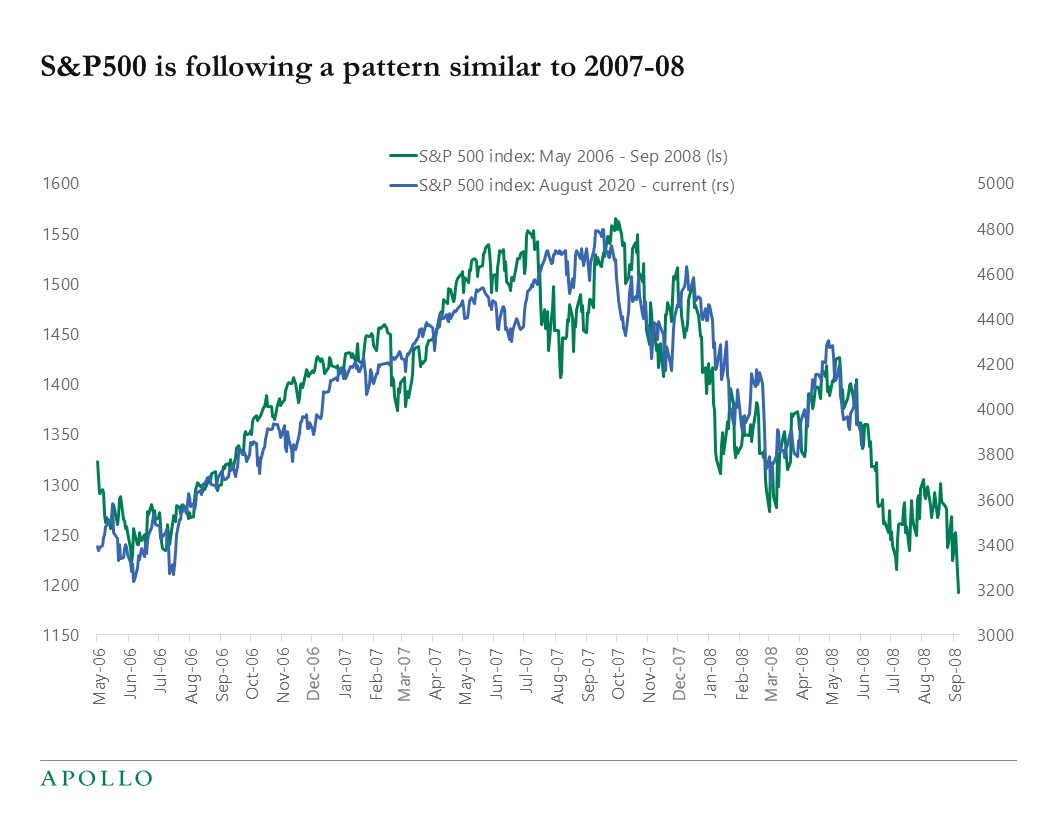
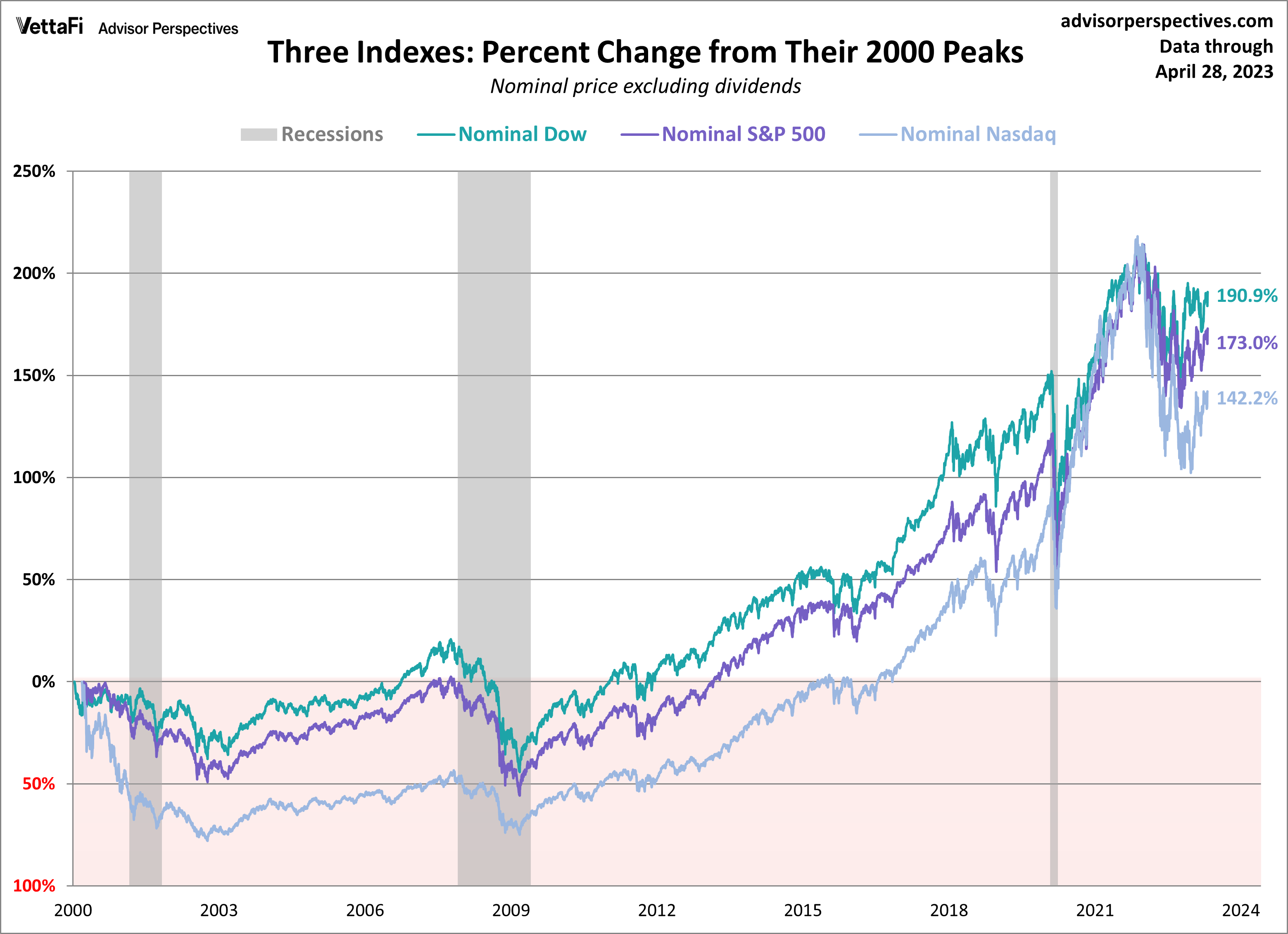
The “S&P today” can be deceptive. On any given day, the index can swing by 2% or 3% based on a single news headline or a geopolitical event. This daily “noise” can cause emotional stress for investors. However, when you zoom out to a 10-year or 20-year chart, these daily fluctuations appear as tiny blips on an upward-sloping line.
Historically, the S&P 500 has provided an average annual return of approximately 10% (before inflation). The risk is not in the market’s long-term trajectory, but in the investor’s inability to withstand short-term volatility. Realizing that the S&P today is just one data point in a decades-long journey is essential for financial peace of mind.
5. Tools for Real-Time Analysis and Beyond
For those who want to go deeper than a simple Google search for the S&P’s price, several tools and metrics provide a clearer picture of what is happening under the hood.
Using Financial Dashboards and Ratios
To understand the S&P today, savvy investors look at the P/E Ratio (Price-to-Earnings). This tells you how much investors are willing to pay for every dollar of the index’s earnings. A high P/E ratio compared to historical averages might suggest the market is “expensive” or overvalued, while a lower ratio might indicate a buying opportunity.
Platforms like Bloomberg, Reuters, and specialized financial dashboards provide heat maps of the S&P 500. These visual tools show which sectors (Energy, Tech, Healthcare, etc.) are driving the index’s movement on that specific day.
Interpreting Technical Indicators
For more active participants, technical indicators like moving averages (the average price over the last 50 or 200 days) help determine if the “S&P today” is in a bullish or bearish trend. When the current price is above its 200-day moving average, the long-term trend is considered healthy. If it dips below, it may signal a period of broader market weakness.
In conclusion, “what is the s and p today” is a question that opens the door to the entire world of high finance. By understanding the index’s structure, the factors that move it, and the best ways to invest in it, you transform from a passive observer into an informed participant in the global economy. Whether the ticker is green or red today, the S&P 500 remains the most powerful tool ever created for long-term wealth building and economic benchmarking.
aViewFromTheCave is a participant in the Amazon Services LLC Associates Program, an affiliate advertising program designed to provide a means for sites to earn advertising fees by advertising and linking to Amazon.com. Amazon, the Amazon logo, AmazonSupply, and the AmazonSupply logo are trademarks of Amazon.com, Inc. or its affiliates. As an Amazon Associate we earn affiliate commissions from qualifying purchases.