
The quest to identify “good” companies to invest in is the fundamental challenge of every investor, from the novice opening their first brokerage account to the seasoned institutional fund manager. However, the definition of a good company is often subjective, depending heavily on an individual’s financial goals, risk tolerance, and investment horizon. In the broadest sense, a good investment is a business that possesses a durable competitive advantage, a robust balance sheet, and a proven track record of generating value for its shareholders.
In today’s volatile economic landscape, characterized by fluctuating interest rates and rapid technological shifts, the criteria for a “good” company have evolved. It is no longer enough to simply look at a rising stock price; one must peel back the layers of corporate governance, financial health, and market positioning. This guide explores the core pillars of investment selection within the “Money” niche, providing a framework for identifying the businesses that deserve a place in your portfolio.

The Pillars of Quality: Identifying High-Performing Businesses
Before looking at specific tickers, an investor must understand the qualitative and quantitative traits that separate market leaders from the rest. Investing is, at its core, the act of purchasing a piece of a future cash flow stream. Therefore, the most important question is: how certain is that future cash flow?
Economic Moats and Competitive Advantages
The term “moat,” popularized by Warren Buffett, refers to a company’s ability to maintain its competitive advantages over its rivals in order to protect its long-term profits and market share. A company with a wide moat is difficult for competitors to disrupt.
Moats come in several forms. Some companies benefit from high “switching costs,” where it becomes too expensive or cumbersome for a customer to move to a competitor. Others rely on the “network effect,” where the value of a service increases as more people use it. Brand power is another critical moat; companies that can charge a premium price simply because of their name often enjoy higher margins than their peers. When looking for good companies, prioritize those that possess a clear, defensible barrier to entry.
Financial Ratios and Health Indicators
While qualitative factors are essential, the numbers provide the ultimate proof of a company’s success. A good company to invest in should demonstrate high “Return on Invested Capital” (ROIC). This metric tells you how efficiently a management team is turning investor capital into profit. A consistently high ROIC is often the hallmark of a superior business model.
Furthermore, an investor must examine the debt-to-equity ratio. In high-interest-rate environments, companies burdened with excessive debt face higher servicing costs, which can eat into profits or even lead to insolvency. A strong balance sheet—characterized by ample cash reserves and manageable debt—gives a company the “optionality” to survive downturns and acquire competitors when prices are low.
Growth vs. Value: Aligning Investments with Your Strategy
In the world of finance, companies are often categorized into two camps: growth and value. Identifying which type of company is “good” depends entirely on your personal investment strategy and stage of life.
Blue-Chip Stalwarts for Stability
Value investing involves finding companies that are trading for less than their intrinsic worth. These are often “Blue-Chip” companies—well-established firms with a long history of stable earnings. These companies might not grow by 20% or 30% a year, but they offer lower volatility and often pay reliable dividends.
Good value companies are often found in defensive sectors such as consumer staples, healthcare, or utilities. These businesses provide essential products and services that people need regardless of the state of the economy. For an investor nearing retirement or someone with a low risk tolerance, these are often the “best” companies because they offer capital preservation and steady income.
High-Growth Disruptors in Emerging Markets
On the other end of the spectrum are growth companies. These are businesses that are reinvesting most, if not all, of their earnings back into the company to fuel expansion. These companies often operate in sectors like cloud computing, renewable energy, or biotechnology.
A good growth company is one that is not just growing revenue, but is also moving toward profitability. Many investors fell into the trap of “growth at any cost” in recent years, investing in companies with massive revenues but no path to positive cash flow. Today, a good growth investment is defined by “efficient growth”—the ability to scale operations while maintaining or improving margins. If you have a long time horizon (10+ years), these companies offer the potential for exponential wealth creation.
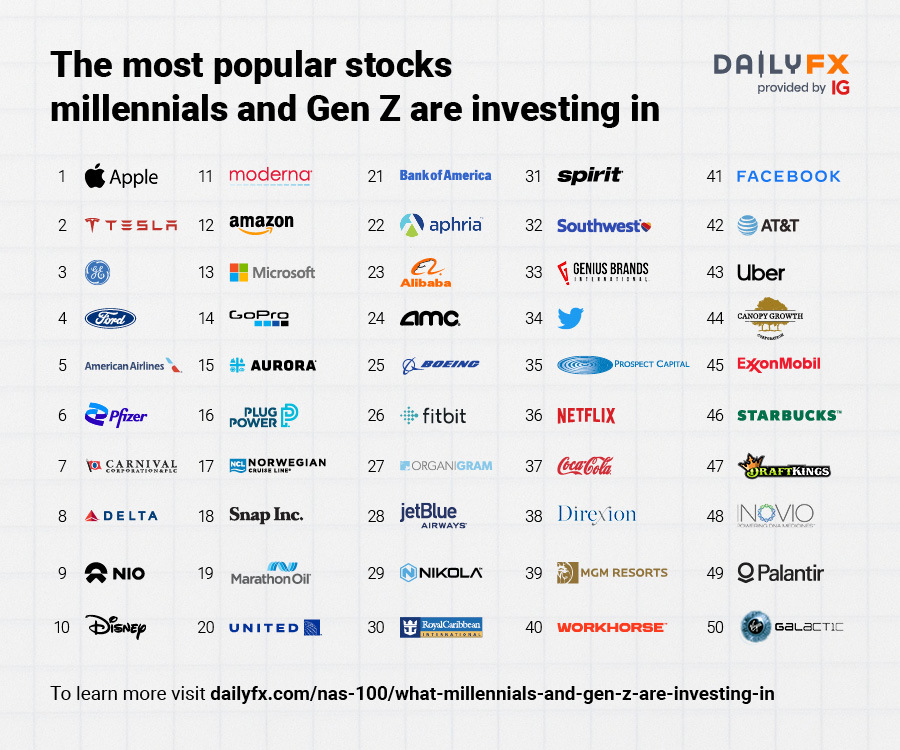
The Role of Dividend Stocks in a Robust Portfolio
For many investors, the ultimate goal of the “Money” niche is to create a source of passive income. This is where dividend-paying companies become invaluable. A company that pays a dividend is essentially sharing its profits directly with its owners.
Dividend Aristocrats and Kings
If you are looking for the gold standard of dividend-paying companies, look no further than the “Dividend Aristocrats” and “Dividend Kings.” An Aristocrat is a company in the S&P 500 that has increased its dividend payout for at least 25 consecutive years. A Dividend King has done so for 50 years or more.
These companies are excellent investments because the ability to raise a dividend through recessions, wars, and market crashes suggests a deeply resilient business model. It signals that management is disciplined with capital and committed to shareholder returns. Investing in these companies allows you to benefit from “yield on cost”—where the dividend you receive eventually represents a massive percentage of your original investment over time.
Reinvestment Strategies: The Power of DRIP
A good company becomes a great investment when you utilize a Dividend Reinvestment Plan (DRIP). By automatically using your dividends to buy more shares of the company, you harness the power of compounding. Over decades, the accumulation of additional shares, coupled with the company’s organic growth, can turn a modest investment into a significant fortune. When evaluating a company for dividends, always look at the “payout ratio”—the percentage of earnings paid out as dividends. A ratio that is too high (e.g., over 80%) may indicate that the dividend is unsustainable.
ESG and the Future of Sustainable Investing
Modern investing has moved beyond pure profit-and-loss statements. Increasingly, “good” companies are also defined by their performance in Environmental, Social, and Governance (ESG) metrics. While some view this as a purely ethical choice, there is a strong financial argument for ESG-focused investing.
Environmental and Social Governance Metrics
Companies that ignore environmental regulations or social responsibilities often face “tail risk”—sudden, catastrophic events like massive lawsuits, regulatory fines, or consumer boycotts that can devalue a stock overnight. Conversely, companies that prioritize sustainability are often better prepared for the transition to a low-carbon economy and tend to have higher employee retention rates and stronger brand loyalty.
Governance, the “G” in ESG, is perhaps the most critical for investors. It refers to how a company is policed from the inside. A company with a diverse, independent board of directors and transparent accounting practices is far less likely to engage in the kind of corporate malfeasance that wiped out investors in scandals like Enron or WorldCom.
Why Ethics Lead to Longevity
Long-term wealth is built on the foundation of sustainability. A company that exploits its workers or pollutes its environment may see short-term margin expansion, but it is building its house on sand. Good companies to invest in are those that view their shareholders, employees, customers, and the environment as stakeholders. This holistic approach tends to result in a more resilient business that can withstand societal shifts and regulatory changes.
Risk Management: Building a Diversified Portfolio
Even the best company in the world can be a bad investment if you pay too high a price for it, or if it represents too large a portion of your total wealth. Diversification remains the “only free lunch” in finance.
Avoiding Concentration Risk
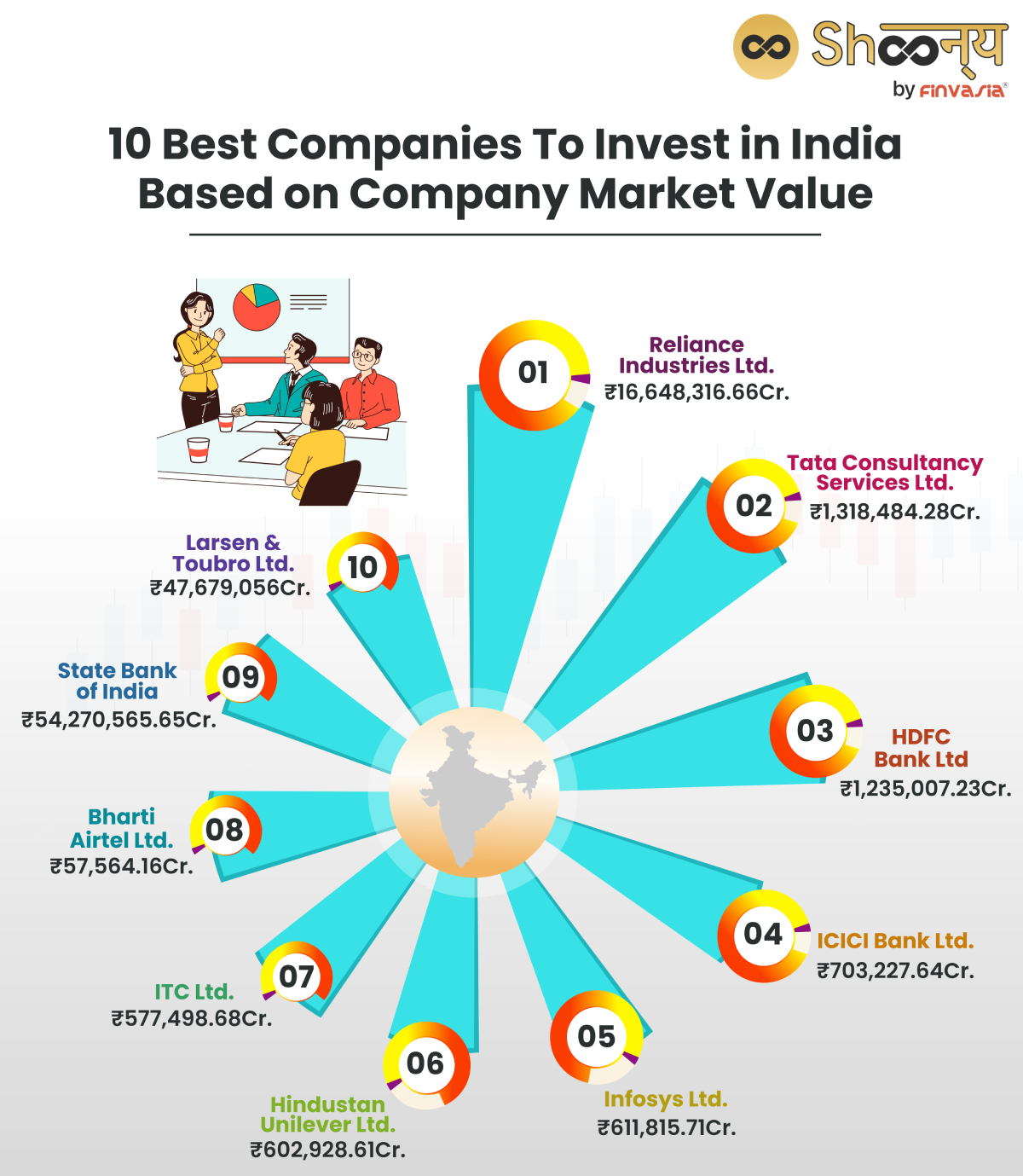
Identifying five or ten “good” companies is a great start, but putting all your money into one sector—such as tech or energy—exposes you to sector-specific shocks. A robust portfolio should be diversified across different industries, market caps (small-cap vs. large-cap), and even geographic regions. This ensures that if one “good” company hits a rough patch, the rest of your portfolio can carry the weight.
The Importance of Regular Portfolio Audits
The definition of a good company is not static. A market leader today can become an industry laggard tomorrow due to mismanagement or technological disruption (consider the decline of companies like Kodak or Blockbuster).
To be a successful investor, you must conduct regular audits of your holdings. This doesn’t mean “day trading” or reacting to every headline; rather, it means checking once or twice a year to ensure that the original “investment thesis”—the reason you bought the stock in the first place—is still valid. If the company’s moat is eroding or its debt is spiraling out of control, it may no longer be a “good” company to hold, regardless of its past performance.
In conclusion, finding good companies to invest in is a disciplined process of evaluating competitive advantages, financial health, and management integrity. Whether you prefer the steady income of Dividend Kings or the high-octane potential of growth stocks, the key is to stay focused on the fundamentals and maintain a long-term perspective. By doing so, you transform the stock market from a place of uncertainty into a powerful engine for personal wealth creation.
aViewFromTheCave is a participant in the Amazon Services LLC Associates Program, an affiliate advertising program designed to provide a means for sites to earn advertising fees by advertising and linking to Amazon.com. Amazon, the Amazon logo, AmazonSupply, and the AmazonSupply logo are trademarks of Amazon.com, Inc. or its affiliates. As an Amazon Associate we earn affiliate commissions from qualifying purchases.