
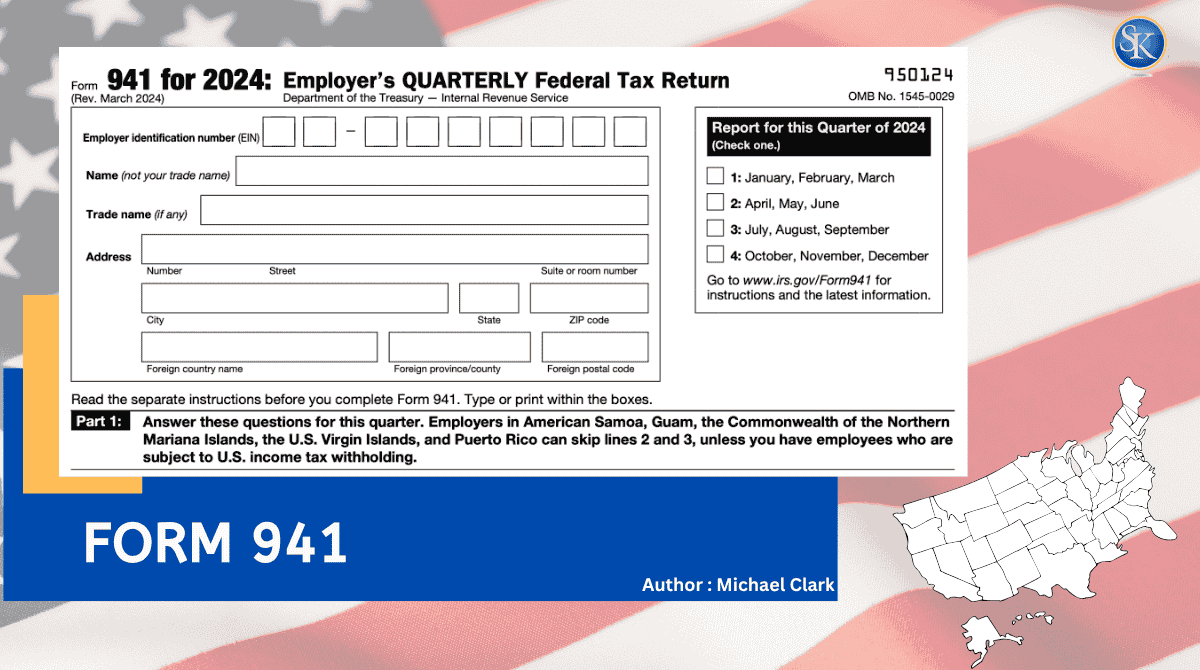
In the complex landscape of business finance, understanding and complying with various tax obligations can often feel like navigating a maze. Among the most critical federal tax responsibilities for employers is the filing of Form 941, the Employer’s Quarterly Federal Tax Return. Commonly referred to simply as “941 taxes,” these are not a separate tax category but rather the mechanism through which businesses report and remit the federal income taxes they withhold from employees’ paychecks, along with their own and their employees’ shares of Social Security and Medicare taxes.
For any employer, whether a burgeoning startup or an established enterprise, mastering the intricacies of Form 941 is not just about compliance; it’s about responsible financial management, avoiding costly penalties, and ensuring the smooth operation of your payroll system. This guide will demystify 941 taxes, providing a detailed breakdown of who needs to file, what’s reported, how to calculate liabilities, and best practices for staying compliant.

The Fundamentals of Form 941
At its core, Form 941 serves as a quarterly snapshot of an employer’s federal payroll tax obligations. It’s the IRS’s primary tool for tracking employer contributions to the nation’s social safety nets and for ensuring that withheld income taxes are properly accounted for.
Who Needs to File?
The requirement to file Form 941 is broad, encompassing virtually every business that pays wages subject to income tax withholding, Social Security, or Medicare taxes. If your business has employees, odds are you need to file Form 941.
- General Rule: Most employers who pay wages subject to federal income tax withholding, Social Security tax, and Medicare tax must file Form 941 quarterly. This applies regardless of the size of your business or the number of employees.
- Exceptions: While widespread, there are a few exceptions. For instance, employers of household employees (like nannies or housekeepers) typically report these taxes annually on Schedule H (Form 1040). Agricultural employers generally use Form 943, Employer’s Annual Federal Tax Return for Agricultural Employees. Some seasonal employers may not need to file for quarters in which they have no employees and pay no wages. However, if you’re uncertain, it’s always best to assume you need to file or consult with a tax professional.
What Taxes Does Form 941 Report?
Form 941 is a consolidated reporting mechanism for several crucial federal payroll taxes:
- Federal Income Tax Withholding: This is the portion of an employee’s gross wages that the employer is legally required to withhold and send to the IRS. The amount withheld is based on the employee’s Form W-4, Employee’s Withholding Certificate, which they fill out when starting employment.
- Social Security Tax: Also known as Old-Age, Survivors, and Disability Insurance (OASDI), this tax is split between the employer and the employee. For 2024, the rate is 6.2% for both the employer and the employee, totaling 12.4% on wages up to an annual limit (the “wage base,” which is $168,600 for 2024). Once an employee’s wages exceed this limit, neither they nor the employer pay Social Security tax on earnings above it for that year.
- Medicare Tax: This tax funds hospital insurance for the elderly and disabled. Unlike Social Security, there is no wage base limit for Medicare tax. For 2024, the rate is 1.45% for both the employer and the employee, totaling 2.9% on all wages.
- Additional Medicare Tax: This is an extra 0.9% Medicare tax imposed on employees’ wages that exceed a certain threshold ($200,000 for single filers, $250,000 for married filing jointly, and $125,000 for married filing separately). Employers are responsible for withholding this additional tax from employee wages but do not contribute a matching share. It’s crucial for employers to accurately identify employees who meet this threshold.
The Quarterly Filing Requirement
The “quarterly” aspect of Form 941 is key to its name and function. Businesses must file Form 941 four times a year, typically by the last day of the month following the end of the quarter.
- Quarter 1 (January 1 to March 31): Due April 30
- Quarter 2 (April 1 to June 30): Due July 31
- Quarter 3 (July 1 to September 30): Due October 31
- Quarter 4 (October 1 to December 31): Due January 31 of the next year
These deadlines are firm. If a due date falls on a weekend or holiday, the deadline shifts to the next business day. Timely filing and payment are paramount, as the IRS imposes penalties for late submissions or deposits, which can quickly accumulate and become a significant financial burden.
Calculating and Reporting Your 941 Liabilities
Accurately calculating your 941 liabilities is a multi-step process that requires meticulous record-keeping and a clear understanding of taxable wages and various tax rates.
Understanding Taxable Wages
The starting point for all 941 calculations is identifying “taxable wages.” While this generally aligns with an employee’s gross pay, there can be nuances. Taxable wages for Social Security and Medicare purposes (often referred to as FICA wages) include not only regular salary or hourly pay but also commissions, bonuses, tips, and certain fringe benefits. It’s vital to differentiate between wages subject to income tax withholding and those subject to FICA taxes, as certain pre-tax deductions (like contributions to a 401(k) or cafeteria plan) might reduce income tax withholding wages but not necessarily FICA wages. For Social Security, remember the annual wage base limit; for Medicare, there is no limit.
Step-by-Step Calculation
The calculation process involves summing up the relevant figures for all employees for the quarter:
- Total Wages Paid: Start by summing the gross wages paid to all employees during the quarter.
- Federal Income Tax Withheld: Add up the total federal income tax withheld from all employee paychecks for the quarter.
- Social Security Wages: Determine the total wages subject to Social Security tax, ensuring no employee’s wages exceed the annual wage base limit. Multiply this sum by 12.4% (6.2% employee share + 6.2% employer share).
- Medicare Wages: Determine the total wages subject to Medicare tax (all wages, no limit). Multiply this sum by 2.9% (1.45% employee share + 1.45% employer share).
- Additional Medicare Tax Withheld: Add up any additional Medicare tax withheld from high-earning employees. Remember, only the employee share is accounted for here.
- Total Tax Liability: Sum up the amounts from steps 2, 3, 4, and 5. This figure represents your total tax liability for the quarter.
- Adjustments (If Applicable): In some periods, the IRS has provided tax credits for specific situations, such as qualified sick and family leave wages during the COVID-19 pandemic. While these are less common now, always check for any current credits that might reduce your overall tax liability.
The Deposit Schedule: Monthly vs. Semi-Weekly
While Form 941 is filed quarterly, the corresponding tax payments are often required much more frequently. The IRS mandates that employers deposit their 941 taxes through the Electronic Federal Tax Payment System (EFTPS). Your deposit schedule—either monthly or semi-weekly—is determined by your total tax liability during a specific “lookback period.”
- Lookback Period: This is a 12-month period ending on June 30 of the previous year. For example, to determine your deposit schedule for 2024, the IRS looks at your total 941 tax liability from July 1, 2022, to June 30, 2023.
- Monthly Schedule: If your total taxes reported during the lookback period were $50,000 or less, you are a monthly depositor. You must deposit taxes by the 15th of the following month. For example, taxes for January would be due by February 15.
- Semi-Weekly Schedule: If your total taxes reported during the lookback period exceeded $50,000, you are a semi-weekly depositor.
- For payments related to payday on Wednesday, Thursday, or Friday, deposits are due by the following Wednesday.
- For payments related to payday on Saturday, Sunday, Monday, or Tuesday, deposits are due by the following Friday.
- $100,000 Next-Day Rule: A critical exception: if your accumulated tax liability reaches $100,000 or more on any day during a deposit period, you must deposit the tax by the next business day, regardless of your regular deposit schedule. Failing to adhere to the correct deposit schedule and deadlines can result in severe penalties.
Common Pitfalls and Best Practices for 941 Compliance
Navigating payroll taxes successfully requires more than just knowing the rules; it demands diligent execution and proactive management.
Avoiding Penalties and Interest
The IRS is vigilant about payroll tax compliance, and penalties for non-compliance can be substantial. These include:
- Failure to File: Penalties for not filing Form 941 by the due date.
- Failure to Pay: Penalties for not paying the taxes due by the due date.
- Failure to Deposit: Perhaps the most common and often largest penalty, levied when deposits are not made on time, are for incorrect amounts, or are made using the wrong method.
- Accuracy-Related Penalties: For significant errors in reporting.
Interest can also accrue on unpaid taxes and penalties, further increasing your financial burden. The best way to avoid these is meticulous adherence to deadlines and accurate calculations.
Record-Keeping Essentials
Robust record-keeping is the backbone of payroll tax compliance. Employers must maintain detailed records for at least four years after the date the tax becomes due or is paid, whichever is later. These records should include:
- Employee names, addresses, Social Security numbers, and dates of employment.
- Dates and amounts of all wage payments.
- Copies of employees’ W-4 forms.
- Records of tips received by employees.
- Fringe benefits provided.
- Copies of all Form 941s filed.
- Confirmation of all tax deposits made (EFTPS confirmations).
- Records of any adjustments or amended returns.
Good record-keeping not only helps you prepare accurate returns but also serves as your defense in the event of an IRS audit.
The Role of Payroll Software and Professionals
For many businesses, especially as they grow, managing 941 taxes manually becomes inefficient and prone to error.
- Payroll Software: Utilizing dedicated payroll software (e.g., QuickBooks Payroll, Gusto, ADP, Paychex) can automate many aspects of 941 compliance. These systems calculate withholdings, track taxable wages, generate reports, and often even handle tax deposits and form filings directly. This significantly reduces the risk of calculation errors and missed deadlines.
- Tax Professionals: Engaging a certified public accountant (CPA) or a specialized payroll service can be an invaluable investment. These professionals stay up-to-date with evolving tax laws, can ensure accurate calculations and timely filings, and can represent you in case of an IRS inquiry or audit. They offer peace of mind, allowing you to focus on your core business operations.
Adjustments and Amendments (Form 941-X)
Mistakes happen. If you discover an error on a previously filed Form 941, you can correct it by filing Form 941-X, Adjusted Employer’s Quarterly Federal Tax Return or Claim for Refund. This form allows you to correct errors related to tax previously reported on Form 941, such as underpayments or overpayments.
- When to Use 941-X: Use it to correct errors in withheld federal income tax, Social Security tax, or Medicare tax.
- Statute of Limitations: Generally, you must file Form 941-X within three years from the date Form 941 was filed or two years from the date you paid the tax, whichever is later.
- Process: Form 941-X requires you to explain the error and provide the correct figures. If you owe additional tax, you’ll need to pay it with the amended return. If you’re claiming a refund or credit, the IRS will review your claim.
Beyond the Basics: Related Forms and Considerations
While Form 941 is central, it’s part of a larger ecosystem of employer tax responsibilities.
Form W-2 and W-3 Link
The information reported on your quarterly 941 forms must reconcile with your annual wage reporting. At the end of the year, employers issue Form W-2, Wage and Tax Statement, to each employee, detailing their wages and taxes withheld for the entire year. A summary of all W-2s, Form W-3, Transmittal of Wage and Tax Statements, is then sent to the Social Security Administration. The totals reported on your four quarterly 941s should generally align with the combined totals on your annual W-2s and W-3. Discrepancies can trigger IRS inquiries.
State Payroll Taxes
It’s crucial to remember that 941 taxes are federal obligations. Most states also have their own set of payroll taxes, including state income tax withholding, state unemployment insurance (SUI), and sometimes other specific taxes. These state requirements run parallel to federal ones and have their own forms, deposit schedules, and compliance rules. Employers must comply with both federal and state regulations.
Special Situations
Certain business scenarios can affect 941 filing:
- New Businesses: New employers will need to establish their deposit schedule for their first year.
- Seasonal Businesses: If a business has no employees and pays no wages in a particular quarter, it might not need to file Form 941 for that quarter, but should clearly communicate this to the IRS.
- Businesses Closing: When a business ceases operations and no longer pays wages, it must file a final Form 941 and indicate on the form that it is the last return.
Conclusion: Navigating Payroll Taxes with Confidence
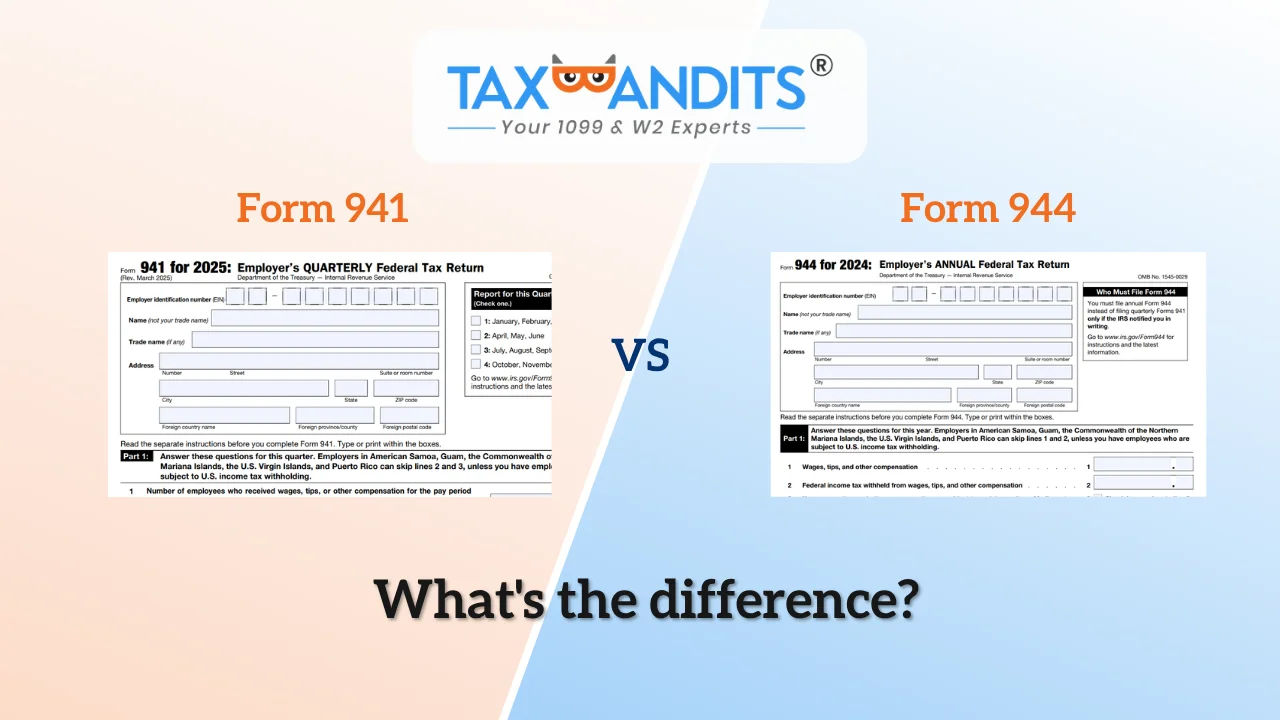
“What are 941 taxes?” is a question every employer must answer with clarity and precision. These aren’t just abstract numbers; they represent your contribution to vital social programs and your fulfillment of legal obligations as an employer. By understanding the fundamentals of Form 941, diligently calculating and depositing taxes, maintaining impeccable records, and leveraging technology or professional expertise, businesses can navigate their payroll tax responsibilities with confidence.
Proactive management of 941 taxes safeguards your business from penalties, ensures smooth operations, and reflects a commitment to financial integrity. It’s an indispensable component of sound business finance, laying the groundwork for sustainable growth and long-term success.
aViewFromTheCave is a participant in the Amazon Services LLC Associates Program, an affiliate advertising program designed to provide a means for sites to earn advertising fees by advertising and linking to Amazon.com. Amazon, the Amazon logo, AmazonSupply, and the AmazonSupply logo are trademarks of Amazon.com, Inc. or its affiliates. As an Amazon Associate we earn affiliate commissions from qualifying purchases.