
In the modern financial landscape, few events carry as much weight as the quarterly earnings announcement from Nvidia Corporation (NVDA). As the primary architect of the hardware powering the artificial intelligence revolution, Nvidia has transitioned from a niche graphics card manufacturer to a global economic bellwether. For investors, analysts, and financial enthusiasts, the question of “when is Nvidia’s next earnings report” is not merely a matter of scheduling; it is a pivotal moment that can redefine market sentiment across the entire technology sector and the broader S&P 500.

Marking the Calendar: Understanding Nvidia’s Fiscal Cycle
Nvidia operates on a fiscal year that differs from the standard calendar year. Their fiscal year typically ends in late January. Consequently, their quarterly reports follow a specific cadence that investors must track carefully to stay ahead of market volatility.
Anticipating the Next Release Date
Nvidia typically releases its quarterly results in the middle to late weeks of February, May, August, and November. Based on historical patterns and the company’s typical reporting cycle, the next earnings report—covering the second quarter of fiscal year 2025—is projected to occur in late August 2024.
While the company usually confirms the exact date and time approximately two to three weeks in advance via its Investor Relations website, the financial community generally prepares for a Wednesday afternoon announcement following the market close. This timing allows the market to digest the raw data before the official conference call, where CEO Jensen Huang and CFO Colette Kress provide deeper context.
Why the Timing Matters for Volatility
The days leading up to an Nvidia earnings report are often characterized by heightened “implied volatility.” In the options market, the cost of hedging positions tends to spike as traders anticipate a significant “move” in the stock price. Historically, Nvidia has shown the capacity to move 8% to 10% in either direction following a report. Understanding the date allows investors to manage their risk, whether through adjusting stop-loss orders or utilizing options to protect their capital.
Key Financial Metrics to Watch in the Upcoming Call
When the report finally drops, the “headline” numbers—Revenue and Earnings Per Share (EPS)—are just the tip of the iceberg. To truly understand the financial health of the company, investors must dive into the specific metrics that drive long-term valuation.
Revenue Growth and Segment Performance
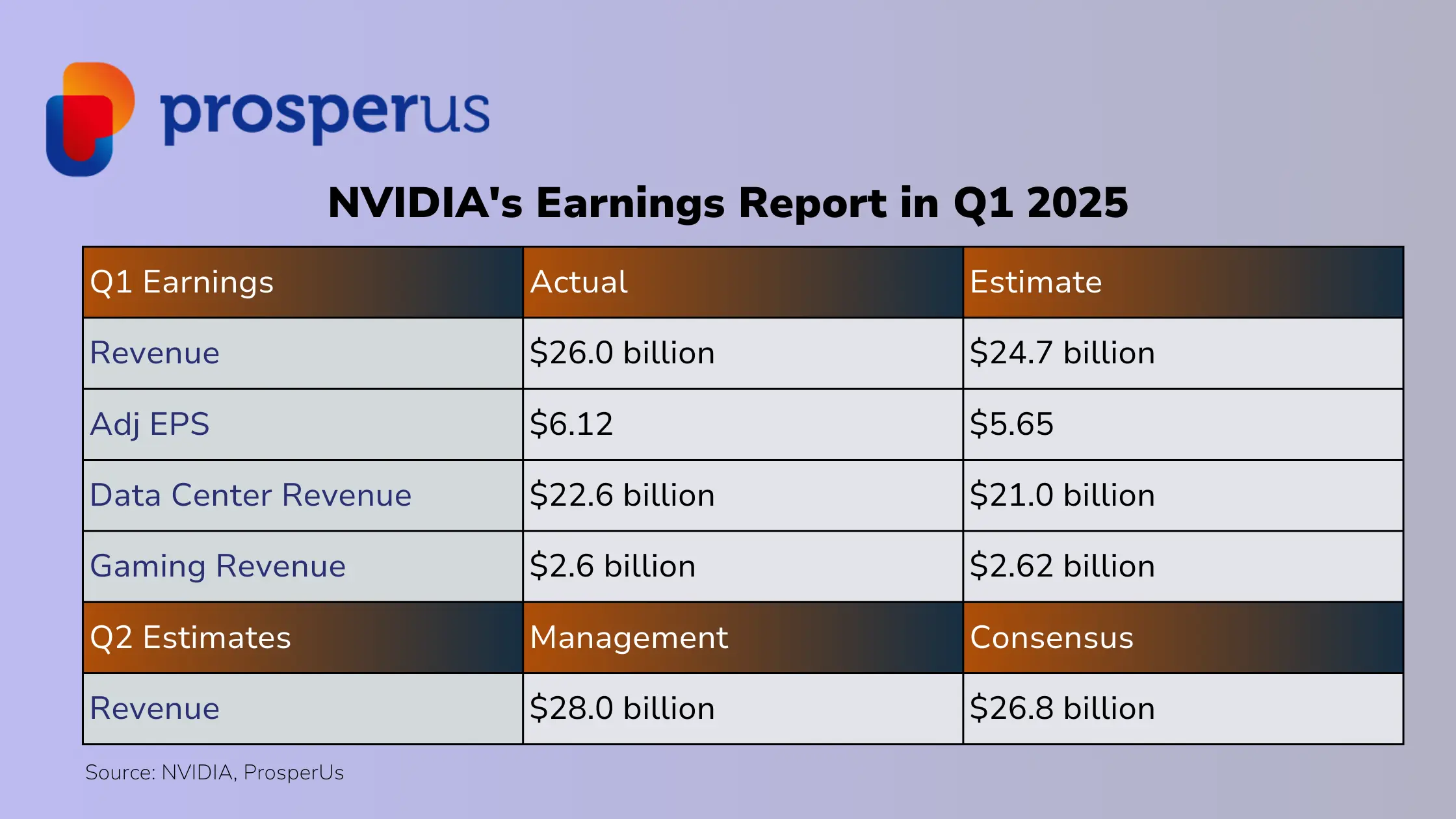
The most critical figure in recent reports has been the Data Center revenue. This segment includes the sales of the H100 and the upcoming Blackwell GPU architectures. Investors will be looking for continued triple-digit year-over-year growth. However, as the law of large numbers takes effect, the rate of growth is as important as the absolute number. A “beat” on revenue that shows decelerating growth might still result in a downward price correction.
Gross Margins: The Gold Standard
Nvidia has maintained enviable gross margins, often exceeding 70% in recent quarters. This indicates immense pricing power and an efficient supply chain. In the next report, analysts will scrutinize whether these margins are sustainable. Any contraction in gross margins could signal rising competition from rivals like AMD or custom silicon efforts from big tech players like Google and Amazon.
Forward Guidance: The Market’s North Star
In the world of investing, the past is already priced in. The “Forward Guidance”—Nvidia’s own projection for the upcoming quarter—is arguably more important than the results of the quarter just ended. If Nvidia raises its outlook, it signals that the demand for AI infrastructure remains insatiable. If they provide a conservative estimate, it may suggest a “digestion period” where customers are setting up existing hardware before ordering more.
The Data Center Dominance: Assessing Sector Growth
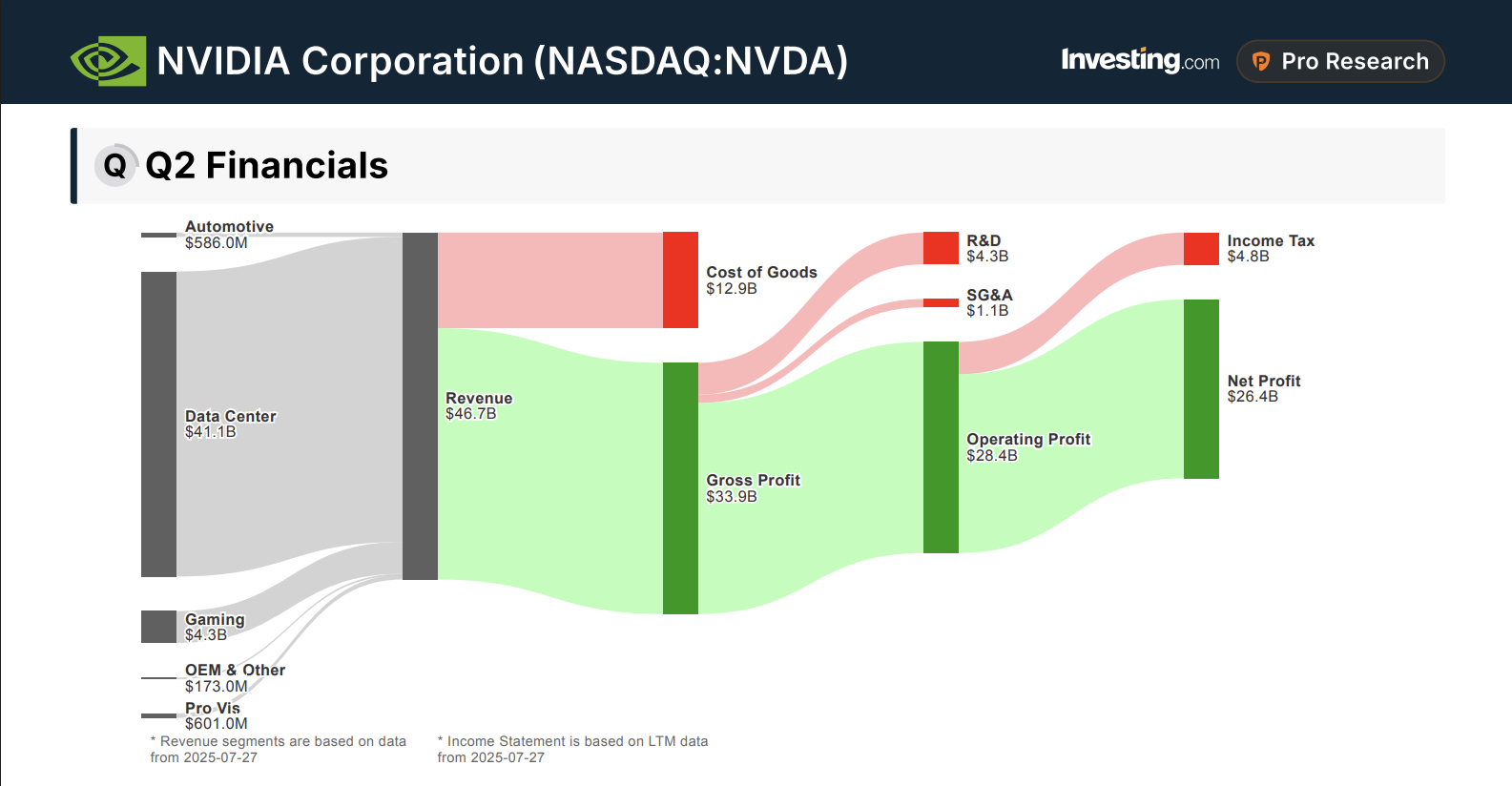
Nvidia’s financial identity is now inextricably linked to the Data Center. To understand the “Money” aspect of this company, one must understand how enterprise spending is shifting.
The Hyperscaler Spending Spree
A significant portion of Nvidia’s revenue comes from “Hyperscalers”—companies like Microsoft, Meta, and Alphabet. During their own earnings calls, these giants have committed to tens of billions of dollars in capital expenditure (CapEx) for AI infrastructure. The Nvidia report acts as the “receipt” for that spending. Investors look for a direct correlation: if Microsoft increases its CapEx, Nvidia’s Data Center revenue should theoretically rise in tandem.
Diversification of Revenue Streams
While the Data Center is the king, the “Money” story also involves the Professional Visualization, Automotive, and Gaming segments. While Gaming was once Nvidia’s primary breadwinner, it is now a secondary, albeit stable, source of cash flow. Investors are particularly interested in the Automotive sector, where Nvidia’s DRIVE platform aims to monetize the future of autonomous vehicles and software-defined transportation. Growth in these “minor” sectors provides a safety net should the AI hardware boom eventually cool.
Valuation and Market Sentiment: Is the Hype Justified?
With the stock price reaching historic highs, the conversation inevitably turns to valuation. Is Nvidia an overpriced bubble, or is it a fairly valued engine of the new economy?
The Price-to-Earnings (P/E) Equation
Looking at Nvidia through a trailing P/E lens often makes it look expensive. However, many professional investors prefer the “Forward P/E,” which accounts for projected earnings growth. Because Nvidia’s earnings have grown so rapidly, its forward P/E has occasionally been lower than that of slower-growing competitors. The upcoming earnings report will provide the “E” (Earnings) part of this equation, potentially lowering the P/E ratio if the company significantly outperforms expectations.
Institutional Ownership and “Priced for Perfection”
Nvidia is a “crowded trade,” meaning a vast number of institutional funds and retail investors hold the stock. This creates a “priced for perfection” scenario. When a company is expected to do extraordinarily well, even a “good” report can lead to a sell-off if it wasn’t “perfect.” Investors must be prepared for the “sell the news” phenomenon, where the stock drops after a positive report because the market had already moved up in anticipation.
The Buyback and Dividend Strategy
Another financial lever to watch is Nvidia’s capital return program. Historically, Nvidia has not been a high-dividend-yielding stock, preferring to reinvest in R&D. However, with massive cash flows, the company has the capacity to increase share buybacks. Buybacks reduce the number of shares outstanding, which can increase EPS and support the stock price. Any announcement regarding an expansion of the buyback program would be a strong bullish signal for shareholders.
Long-term Financial Outlook: Beyond the Immediate Quarter
While the focus is often on the “next” report, seasoned investors use the earnings call to gauge the trajectory of the company over the next three to five years.
The Shift from Hardware to Software
Nvidia is strategically moving toward a recurring revenue model through software like NVIDIA AI Enterprise. This is a crucial shift for the “Money” side of the business. Hardware sales are cyclical, but software subscriptions provide “sticky,” high-margin recurring revenue. During the earnings call, listening for mentions of software adoption rates can give clues about the company’s future stability.
Supply Chain and Geopolitical Risks
No financial analysis of Nvidia is complete without considering the risks. Nvidia relies heavily on TSMC for manufacturing. Any disruptions in the semiconductor supply chain or changes in export regulations (particularly regarding the Chinese market) can have an immediate impact on the bottom line. The CFO’s commentary on “supply constraints” or “regulatory headwinds” is often where the most significant risks are disclosed.
Conclusion: Preparing for the Announcement
When the next Nvidia earnings report arrives in August, it will be more than just a spreadsheet of numbers. It will be a testament to the current state of the global digital economy. For the investor, success lies in looking past the initial headlines and understanding the underlying financial mechanics—the margins, the guidance, and the sector-specific growth.
By marking the calendar and understanding these key financial pillars, you can move from being a reactive observer to a proactive investor. Whether Nvidia beats expectations again or provides a reality check to the market, the upcoming report will undoubtedly be the most important financial event of the quarter. Stay disciplined, monitor the debt-to-equity ratios, and keep a close eye on the forward guidance; that is where the real story of Nvidia’s future wealth resides.
aViewFromTheCave is a participant in the Amazon Services LLC Associates Program, an affiliate advertising program designed to provide a means for sites to earn advertising fees by advertising and linking to Amazon.com. Amazon, the Amazon logo, AmazonSupply, and the AmazonSupply logo are trademarks of Amazon.com, Inc. or its affiliates. As an Amazon Associate we earn affiliate commissions from qualifying purchases.